
Teaching Face Read Fundamentals in Mug Presentation Pressures

By Mike Kuchar
Senior Researcher/Co-Founder
X&O Labs
Twitter: @MikekKuchar


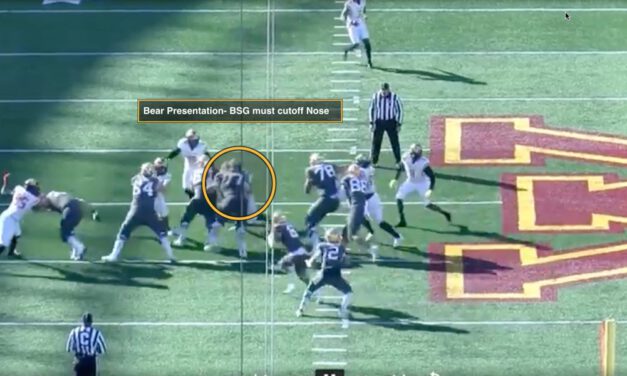
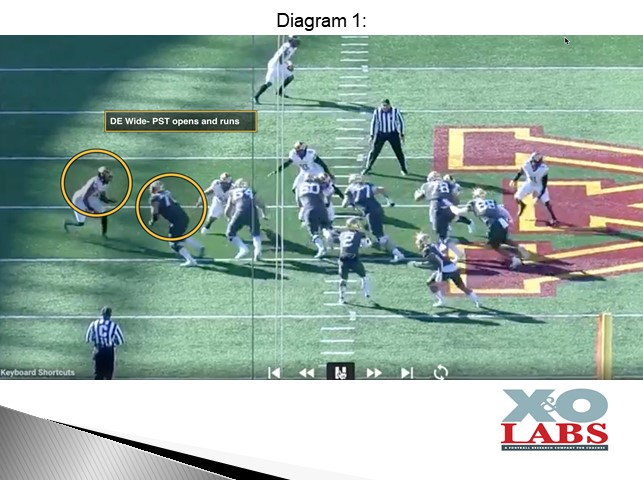
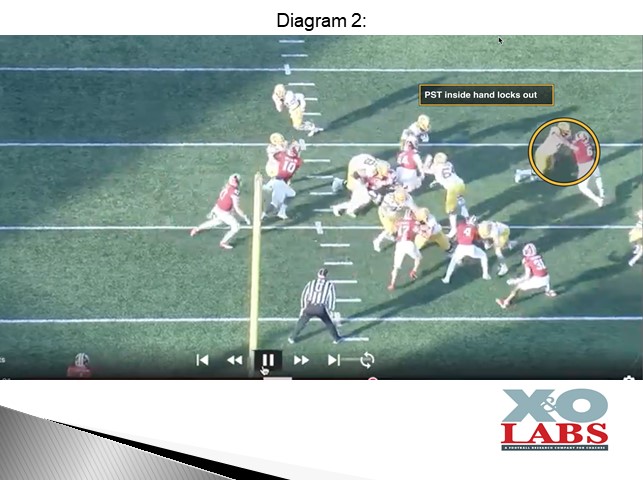
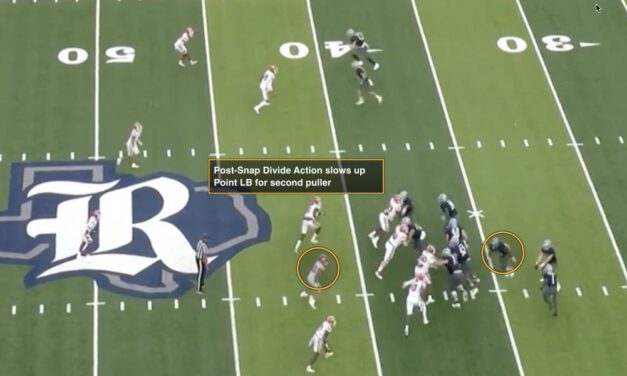
For years, DC’s have taught a long stick fundamental in pressure scenarios. But recently they have made the shift away from traditional first-level horizontal movements and have now gone to “face reading” linemen to vertically affect gaps in pressure scenarios. When taught correctly, these face reads can not only alter protections but can also generate free rushers at the line of scrimmage. In this report, X&O Labs highlights six programs (Illinois State, Indiana, Baylor, Austin Peay, Angelo State, University of St. Thomas) and how each of them teaches the face read fundamental in its pressure packages.


“Face” Read Fundamental:

Source: Travis Niekamp, Defensive Coordinator, Illinois State University

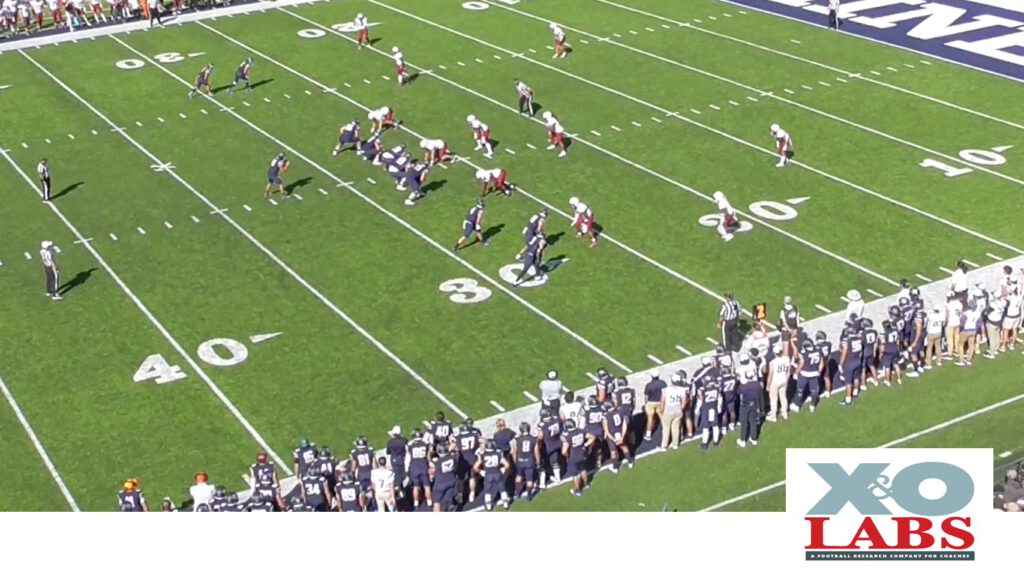
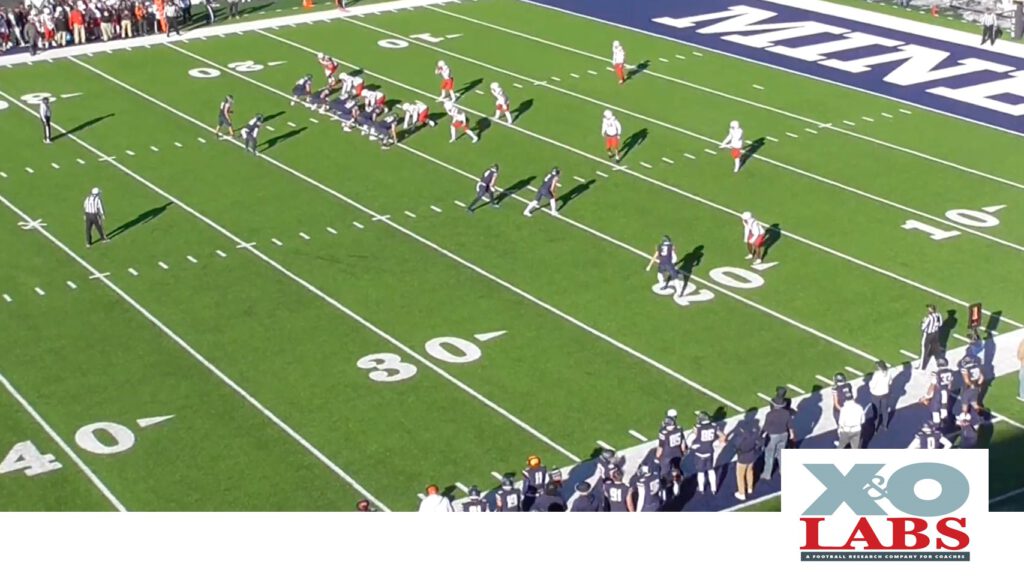
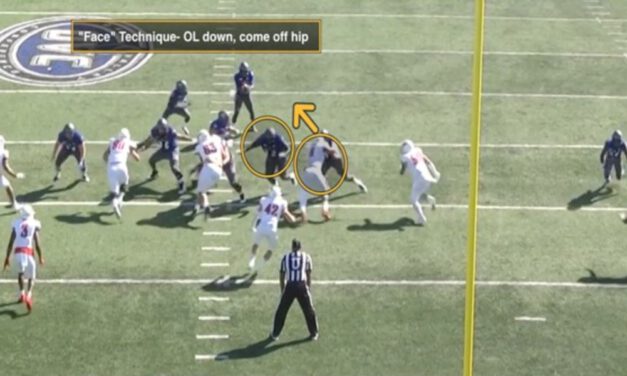
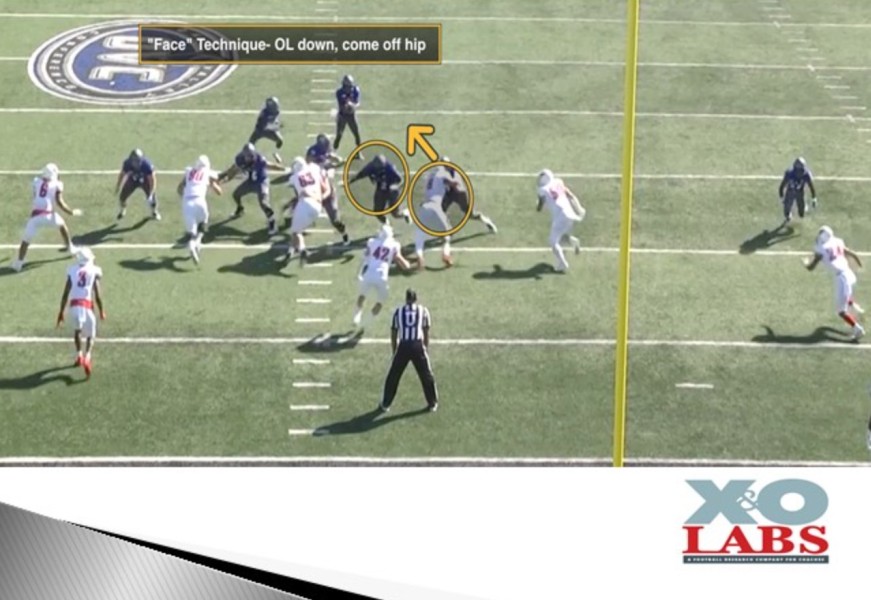
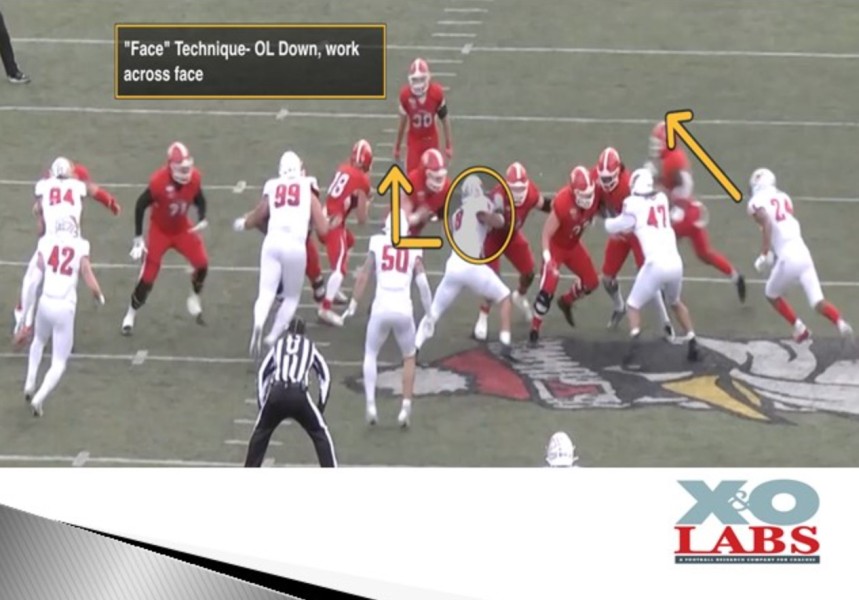
Here is where the advancement of the scheme comes in. Illinois State doesn’t rely on any long-sticking in its zone pressures. Instead, all players are taught a “face technique” for both first and second level defenders. The footwork is more lateral in nature and is used any time the front is being moved. Rather than having a gap mindset, first level defenders will read the next interior offensive lineman for the following reads:

  • If the offensive lineman blocks down, he’s off his ass.


  • If the offensive lineman is out, he works across his face.


According to Coach Niekamp, this has been one of the most efficient tweaks they have made to the scheme and it’s done across the board with both first and second level defenders. “Some coaches prefer long sticking to the pressure side and gap fitting away from the pressure but we are a face technique with all of them now,” he told me.

He prefers not to put a lot of responsibility on his front three defenders. They just get good at reading the demeanor of offensive linemen. The benefit comes not just in the pass game but in the run game as well. “It’s really good vs. gap schemes because you’re facing all guys up front and creating issues with movement and you still have a hard spill and contain player (both rushers),” he said. “Often times we’ll bring two off the edge and send the ball away, getting guys chasing the ball from behind with two linebackers that can scrape and fit.”

Read More

5 Sequences to Protect the Open Side Mid Zone

By Mike Kuchar with Brian Callahan
Run Game Coordinator/Offensive Line Coach
University of Minnesota
Twitter: @Callybrian


The two-surface mid zone continues to be a staple in Minnesota’s menu for good reason- it had the back in Mo Ibrahim who understood how to run it- and when the Gophers build its 12/13 “Elephant” personnel groupings, defenses across the Big 10 had to over shift their structure to account for it.


So, for run game coordinator/offensive line coach Brian Callahan the answer was simple: create a mid-zone concept to exploit the bubble of the defense. Teams like Penn State, Illinois and Iowa all majored in Under front reductions, so the scheme could easily exploit a three for three matchup to the two-surface.


It became the bread-and-butter concept for Coach Callahan and the offensive staff in Minnesota. Not only was it efficient, but it was explosive. It was generally mixed with tight zone from the same grouping, which we worked with Coach Callahan on previously (insert link).

Because of this, the concept generated explosive runs that hit to the front side. In fact, five different running backs ran for over 100 yards in a game in ’22 and the majority of them came in these mid-zone concepts.

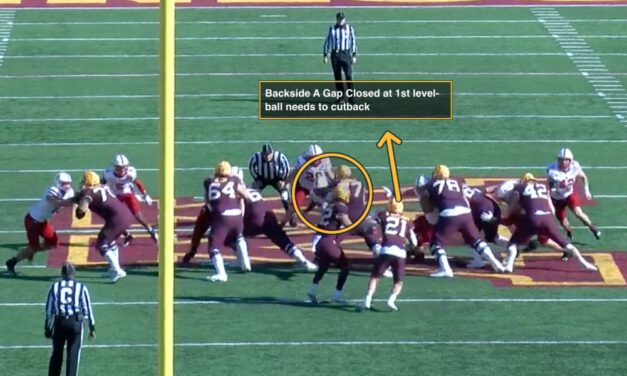
We’re going to take a look at how programs like the University of Minnesota are able to protect the play side Tackle from penetration in the mid zone and how you can use these same tools to heighten the efficiency of the concept in your system.

Read More

Same Side Mesh Mechanics in Pin/Pull Runs

By Mike Kuchar with Sanders Davis
Offensive Line Coach
Rice University (TX)
Twitter: @SandersDavis225


At Rice University, the offensive mindset has shifted from being a pure outside zone team to being more pin and pull based. It’s essentially supplemented wide zone and has been the perfect complement for the tight zone concept, the Owls top run scheme since head coach Mike Bloomgren took the program over in 2018. Because of the success of tight zone, which averaged nearly six yards a carry last season, there became a continual presence of tight 3-techniques at the line of scrimmage working straight through the Guard’s sternum and getting vertically. The Pin and Pull advantage are having angles with those defenders on pin blocks. “Teams start to play a lot more aggressive, a lot more downhill and thicker through offensive lineman,” said offensive line coach Sanders Davis. “People want to dive into the C or D gap, so we take advantage of that by pinning them and separating the defense. It takes advantage of how they want to try to attack our inside zone stuff.”

It’s also been a good complement to Power, another Bloomgren favorite. With a wide 9-technique outside a tight end/wing formation, a simple answer would be to let the tight end block out and fold the F underneath for a safety.


Call System:

One of the challenges in varying the back alignment is communicating the back alignment. For Rice, which is a West Coast system, the call system is a two-number system. The first digit tells back where he is aligning- whether it be in Pistol, in “I”, coming across the quarterback or on the same side. The second number is the direction of the concept, while the third number is the play concept. For example, “96 Power,” denotes the back being in Pistol (9) running to the right (6) in the Power concept. So, when the back alignment is altered, so is the numbers in the call.


First Puller Rules:

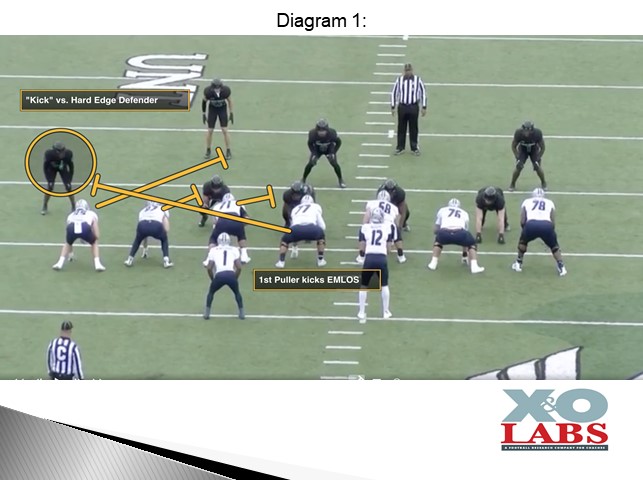
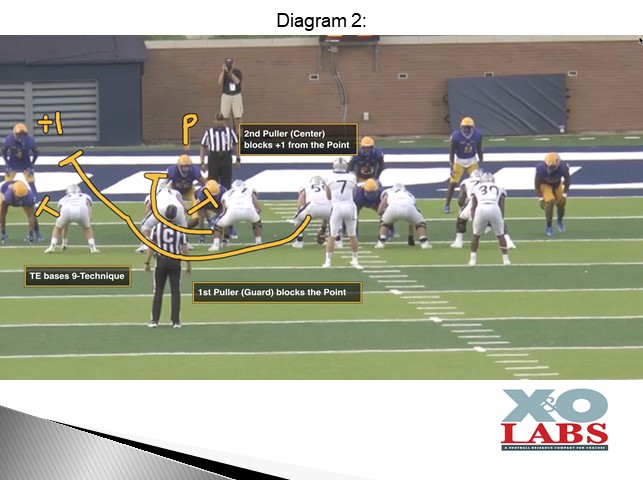
One of the complexities in the Pin/Pull scheme is determining who the first puller is. The first puller is responsible for the kick, the second puller is responsible for the point.

Base install will denote the following:

  • If play side Tackle blocks down- Guard is the first puller
  • If the Tackle is pulling, he’s always first.
  • If there is no 3-technique, the Tackle knows he’s the first puller.
  • If the Center is pulling, he’s always second.


So, essentially, it’s the Guard who needs to figure out if he’s the first or second puller. “Pullers need to know if they are the first puller or the second puller and if they are responsible for the point or plus one of the point,” said Coach Sanders. “If you know those two things, you can block this play a ton of different ways.”


Play Side 9-Technique Methodology:

Defenses work tirelessly to produce a hard edge at the D gap, which forces the first puller to recognize and block force quickly. Rice has two answers to these issues. The first of which is the hard “G” play, telling the first puller to kick the 9-technique while the second puller works inside the kick to the point linebacker.


Another build-in is switching responsibilities of pullers. It’s done with a “Hard 9-technique” call so that the first puller now blocks the point, and the second puller blocks the plus one defender. Of course, this can only be implemented with the confidence that the tight end can handle the D gap defender by himself.

Read More

Opposite Side Mesh Mechanics in Boundary Glance RPO’s

By Mike Kuchar with Ryan Maiuri
Offensive Coordinator
Central College (IA)
Twitter: @coachmaiuri


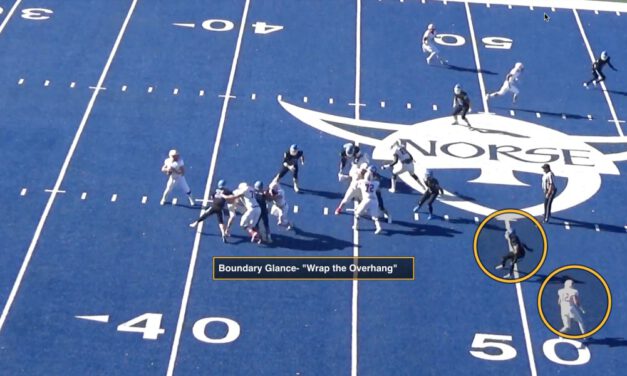
In 2021, Central College lived off the boundary Glance route in the RPO game. It helped produce 54 points a game and over 394 passing yards per game leaving one opposing defensive coordinator to say “we didn’t have an answer for it.” In most cases, the quarterback will signal the hitch, out, slant, go or stop route based on the leverage he is seeing. “We’re working off corner leverage,” said Coach Maiuri. “Our base rules is to read the triangle, which is corner, overhang safety to the high safety.  We will be able to see pre-snap how they are aligned  and how they will play coverage but they only get a quick second to look. We will see them play coverage a couple ways- trap coverage, bracket coverage, thirds coverage.”
 

In most cases, the Glance worked best because it best took advantage of the overhang defender and high safety fit in quarters coverage.


Run Action:

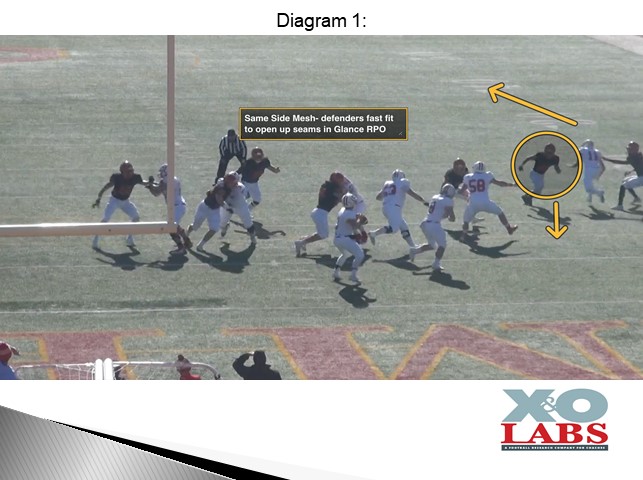
The complementary run action is a mid-zone concept and when the run action is produced directly to second level defenders it gets them to fit a little harder, opening up windows in the RPO game. Defenses are used to expecting same side mesh in the RPO game.


In most cases, the overhang needs to see the quarterback’s back to him to trigger in the run game. “We want linebackers to stay in middle ground and not commit if run is away from him,” said Coach Maiuri. “With the linebackers seeing run away from them, they can hold on the RPO element.”
Read More

Gallop Footwork in Pin and Pull Runs

By Mike Kuchar with Brian Gabriel
Run Game Coordinator/Offensive Line Coach
Monmouth University (NJ)
Twitter: @CoachGabeMU


“Field vs. Boundary Methodology”

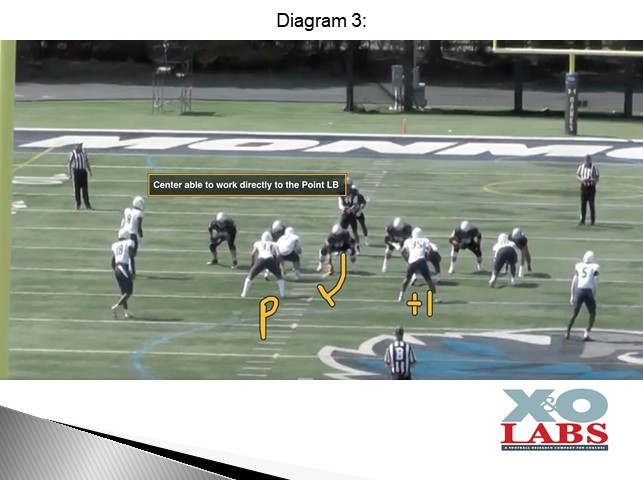
Much of Monmouth’s Pin/Pull runs are utilized to the nub side of the formation. Makes sense, considering most of the time the first puller gets matched up on a smaller corner in support. But in talking with Coach Gabriel, he asserts that field configurations are always better than boundary when it comes to using the Pin/Pull scheme. “We prefer it one way and that is to the field,” he told me. “It gets very expensive against Odd looks.” That comes at the expense of boundary linebacker run throughs that can ultimately affect the efficiency of the play. “Pulling the backside Guard is a problem to the boundary, so we will get out of the play and run something else.”
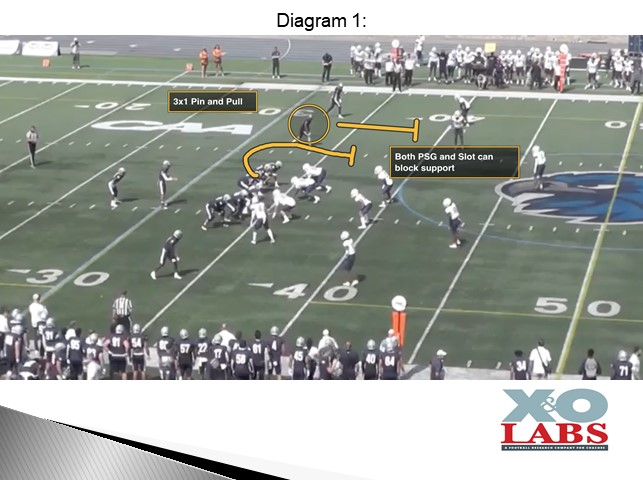
As far as Even fronts go, the preference is an Over look because it allows the Guard to be the first puller. If you get into some sort of 3×1 closed formation, the slot and Guard are both able to block support. “It becomes a combo game with the Guard and slot,” said Coach Gabriel.


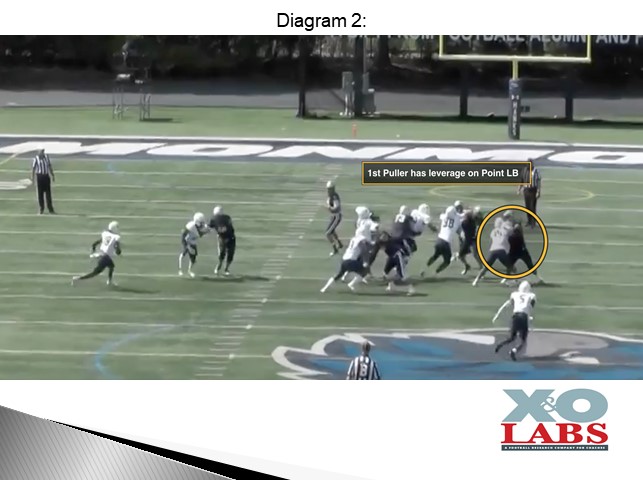
The first puller has immediate leverage on play side linebacker allowing the ball to get into the alley quickly.


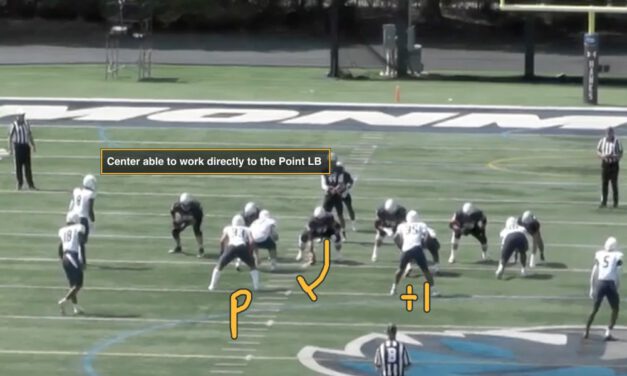
This 4-2 box also allows the Center to identify the backside linebacker as the point and because he has leverage is able to work directly to him on a slip block without pulling.


Read More

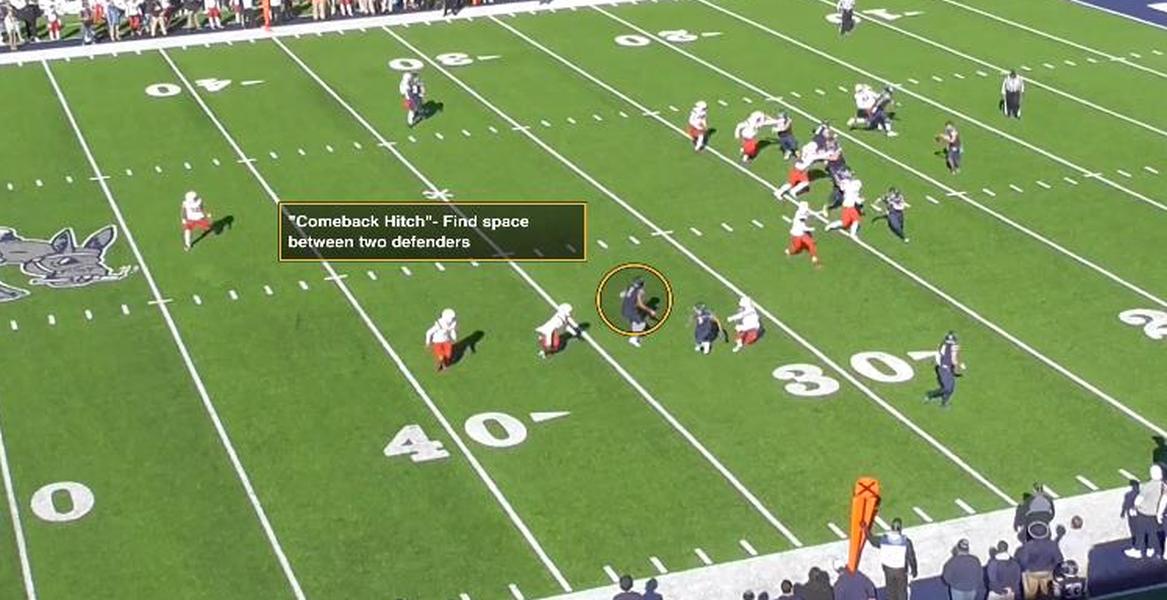
The “Comeback Hitch” and its Potency in Bunch Concepts

By Mike Kuchar with Pete Sterbick
Offensive Coordinator
Colorado School of Mines
Twitter: @coach_sterbick


Colorado School of Mines has been a 10 personnel outfit for quite some time. And they’ve spent the last couple of seasons at the top of Division 2 statistically in total offense and passing offense. Offensive coordinator Pete Sterbick has an extensive package of concepts from compressed formations and in order to break tendencies he’ll hit the reset button each week to build around them. “I like the diversity of where we are with bunch leverage wise,” he told me. “It takes teams out of having to play man. They have to move people around and matchup. And it  gives advantages to under speed teams.”


Formation Verbiage:

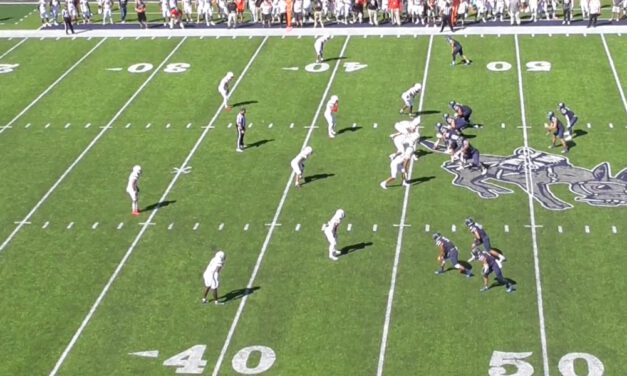
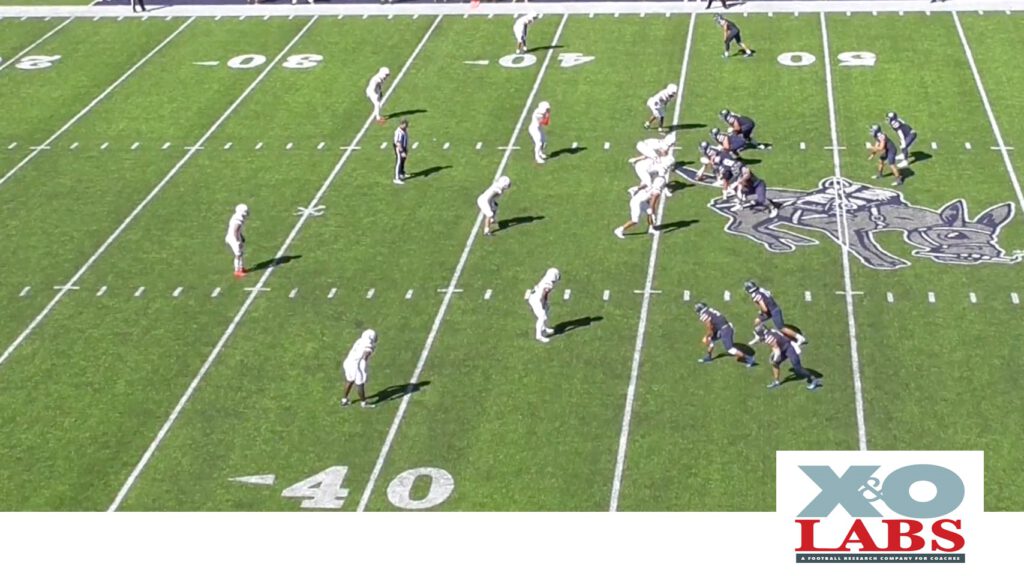
Essentially, CSM will operate out of the following formation structures in its bunch and compressed menu:


Bunch:


Bunch Empty:


2×2 Stack:


Any “track” added to the verbiage signifies an unbalanced, 4×0 formation.


Read More

Boundary First Reads in the Quick Game

By Mike Kuchar with Luke Schleusner
Offensive Coordinator/Quarterbacks Coach
University of Idaho
Twitter: @LukeSchleusner


Idaho builds it pass game off field and boundary concepts. While Coach Schleusner designs his pass game based on field and boundary routes, he’s built a simple boundary progression read for his quarterback. These progressions are combined with quicker reads and shorter throws which helps get the ball out more quickly. During the course of the season, these have become terrific two-minute throws and can be run with both tight ends and wide receivers.

Coach Schleusner calls these concepts his Baltimore series. They consist of the following designs:

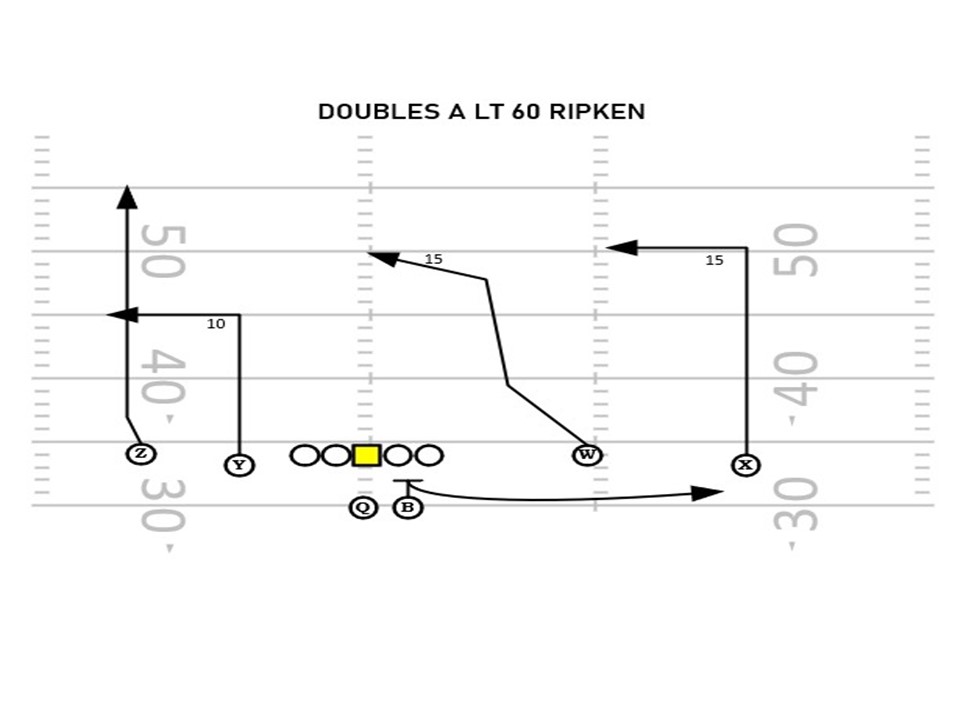
  • “Ripken”- Fade/Out concept
  • “Baltimore”- Smash concept
  • “Maryland”- Inverted smash concept
  • “Spoon”- Sail concept


Quarterback Progression:

These are all boundary first reads for the quarterback and it’s the first read in his progression. “We’ve gone away from picking a side,” said Coach Schleusner. “He knows where to go with his eyes as soon as we break the huddle.” So, regardless of the coverage, the quarterback starts his eyes to the boundary. And because Idaho will get a myriad amount of coverage variations to the boundary, Coach Schleusner talks less about coverage and more about whether or not the route is open. On these boundary concepts, the quarterback is told to speed up his drop, particularly if he knows he’s throwing the hitch. He calls it “gun plus three,” meaning it’s not a one step drop.

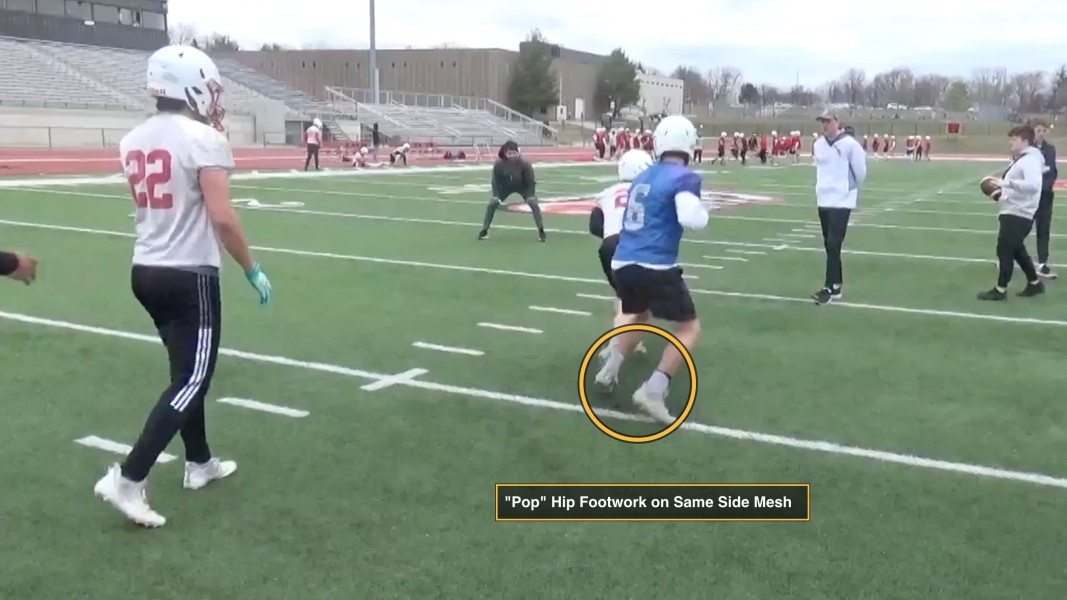
On any token or run action fake – which many of these are built off of – the launch point is not deeper than eight yards. So, the quarterback is taught “pop” footwork which means to not crossover after the fake. He just flips his hips.


Fade/Out Concept (Ripken):

At the core of this boundary package is the fade/out concept. Coach Schleusner prefers a 10-yard out from number two with a mandatory outside release by number one.


Read More

Building Perimeter Blocking Tags in Power Read and Bash Runs

By Nathan Brown
Offensive Line Coach
Southern Nazarene University (OK)
Twitter: @CoachNABrown


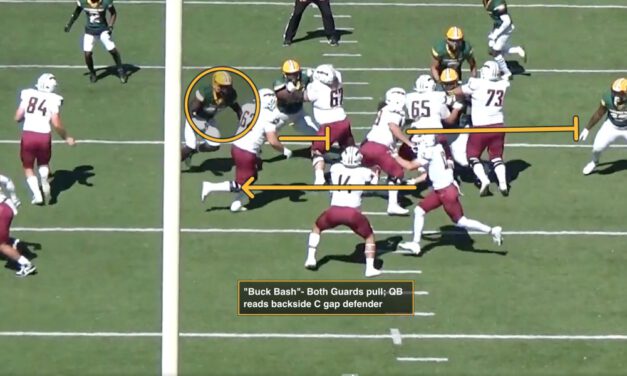
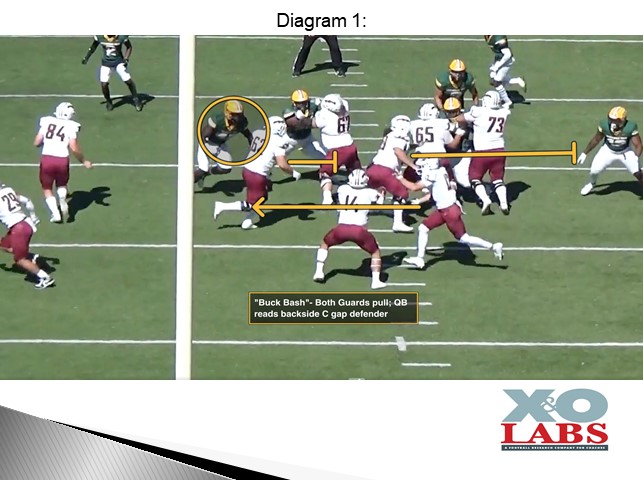
Southern Nazarene calls its pin and pull run game “Buck”, which is a double pull concept alerting both Guards to pull regardless of the front. Day one install tells the quarterback that he is responsible to read the backside C gap defender and pull the ball if necessary.


It’s been an extremely efficient concept for a program that lacks the size up front to base in tight zone runs and pure gap concepts. “We seem to get more agile linemen in the recruiting process,” Coach Brown said. “So it became better to build our offensive line around a running quarterback.”

The quarterback is the centerpiece of this system and many of their explosive runs come off pulls. But what makes the plays truly explosive is how the staff- under the direction of head coach Dustin Hada- builds in perimeter blocking tags to out leverage the defense.


Puller Rules:

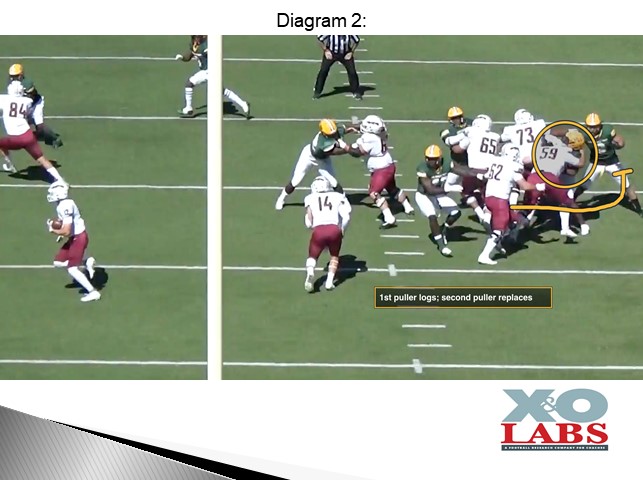
Before delving into the tag system it’s important to note that Coach Brown doesn’t teach the Pin/Pull run like others by emphasizing and blocking the point. Instead, he treats it more as a gap scheme, where the second puller reacts off the first pullers block. “He will fit inside or outside based on the first puller’s block,” he said. “We talk about reading the head of the defender. If the first puller logs, we replace. The backside puller reads where the offensive lineman head placement is on the defender.”


Power Read:

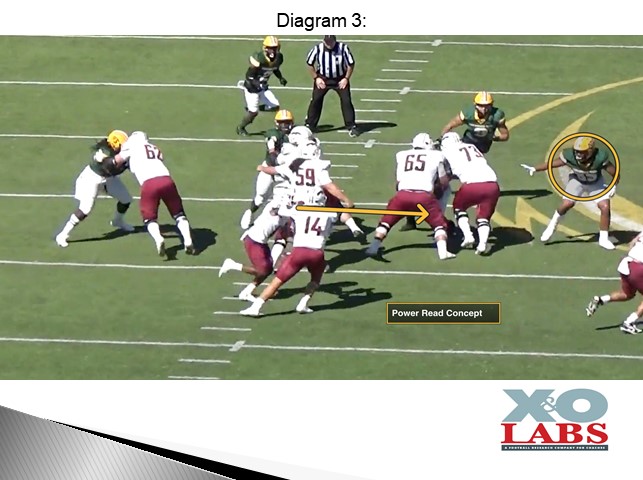
Southern Nazarene will build these same perimeter blocking tags on its power read concepts as well.


Terminology:

While everything is signaled in Southern Nazarene’s system, there are numbers to denote which player is the horizontal element in the bash game.

  • For example, any “50” terminology denotes the running back is the horizontal element.
  • Any “70” terminology denotes the slot is running the jet horizontal element.
  • Any number ending in “04/05” denotes the read concept is off power read.
  • Any number ending in “01/02” denote the read concept is off buck sweep.

Read More

Creating Backside Cut Points in “Extra” Personnel Tight Zone

By Mike Kuchar with Brian Callahan
Run Game Coordinator/Offensive Line Coach
University of Minnesota
Twitter: @Callybrian


The Origin of “The Elephant”

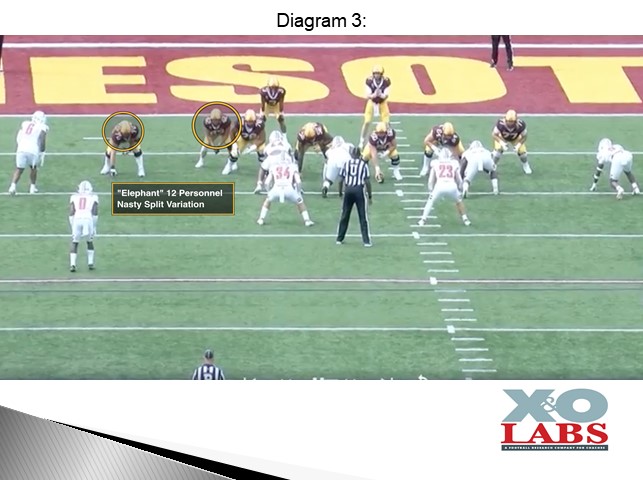
Those that follow college football have witnessed the Gophers line up in six and seven offensive line personnel groupings the last few seasons. What started as a tool in 2018 to combat the ability of Wisconsin’s defensive ends and has since developed into a common grouping for Minnesota. The genesis of it was in 2018 when start offensive tackle Daniel Faalele transitioned into a starter. It allowed for another lineman to be a true Y with an eligible number.

Then in 2019, the Gophers evolved into more 12 personnel and 11 personnel groupings by selecting an offensive lineman over a true tight end with eligible numbers. “We had one guy that can play every position but Center,” said offensive line coach Brian Callahan. “I moved other people around but locked in Daniel. It (The Elephant personnel) became more prevalent. Next, in 2020 Minnesota used an offensive lineman to play tight end which was better for run purposes than putting an additional tight end in. Essentially, it gave them two versions of 12 personnel and two versions of 11 personnel.

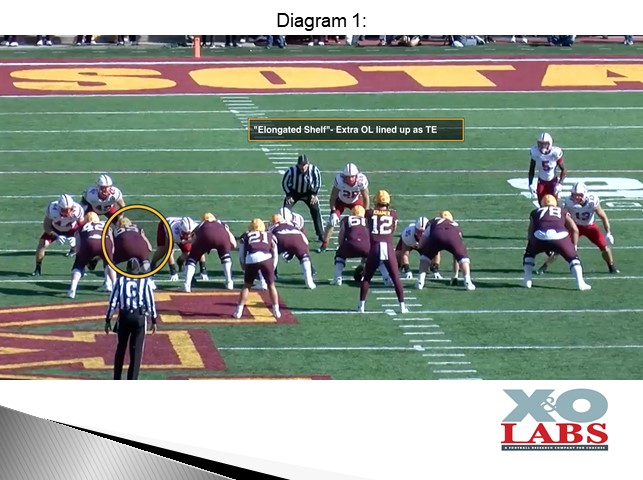
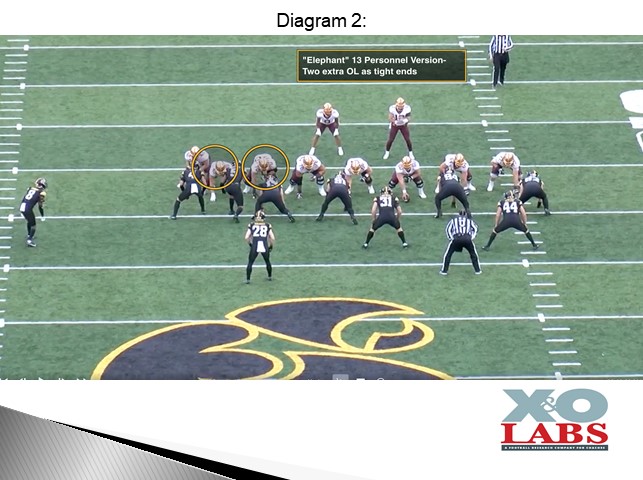
Finally, in 2021 the Gophers lined up with six or more offensive lineman in 291 snaps, which equated to 32.7 percent of snaps the most in college football. They got into more of a 13 personnel package with two offensive linemen playing tight ends and one true tight end. That’s created the super elongated shelf that you’ll see the Gophers utilize much of its run game from.

This is the 12 Personnel Version of it:


This is the 13 Personnel Version of it:


Advantages of “Elongating the Shelf”

The premise of extending the backside is to give the back a variety of possible cut points on the tight zone play. And Minnesota had the running back with the vision to be able to do that. “By condensing everything down we elongate the shelf,” said Coach Callahan. “This way you get more movement on the down lineman to cram it inside. We like the stress it puts on defenses. You don’t know how teams will align to it but you know they will cover every gap.”

“When we add people backside to our two man surface it elongates the space and adds gaps,” he said. “Defenses will have a body for every gap but the unblocked player will be further away from where the mesh happens. Hopefully you get enough dent to where either you get the ball up inside on an arm tackle or if you bend it back towards the unblocked player and you’re getting positive yardage.”

When the concept doesn’t hit front side, it produces a myriad of possibilities backside on the over pursue. And when defenses start to counter, that is where the explosives hit. “We get a lot of overplay to the backside because teams know that is where it goes so the ball starts to hit front side,” said Coach Callahan. “If you’re good enough to create a longer shelf it may not be a home run but you’re going to get positive yardage.”

Read More

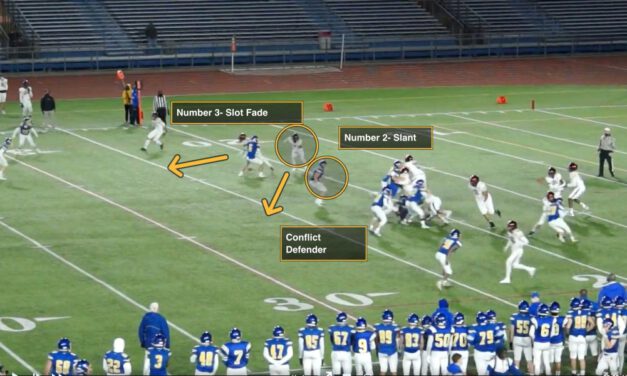
Front Side RPOs: Slot Fades Slant Switches from Pin/Pull Action

By Mike Kuchar with Joe Spagnolo
Head Coach
Iona Preparatory School (NY)
Twitter: @Joespags12


At this point in the RPO evolution, most defensive coordinators know how to defend mesh with run action away. But when the run action is presented right in the face of defenders and the quarterback opens to them, they have a hard time adjusting to routes thrown over the top of them. “That’s how you can get 16 year-old kids to stop following their keys and freelancing,” said Coach Spagnolo. And that’s when you get the big gashes in run and pass game. Especially when you’re running it with Tempo.”


Manipulations:

In Coach Spagnolo’s system, every scheme has first, level and third level attachments to it. These can get manipulated from week to week.

First level Reads: If linebackers are not flowing with pin and pull run action, the backside defensive end can be read. With two false pulls, the quarterback works out the backdoor. If they don’t flow, the Tackle can work to the play side LB on his block.

Second Level Reads: These are tagged with in-cuts from slot receivers.

Third Level Reads: These are pre-snap and dual reads. The inside linebacker is an alert. If he blitzes we can’t block him. If he doesn’t blitz we can read third level.


Protection:

While some coaches shy away from utilizing Pin and Pull RPO’s because of the nature of man scheme protection, Coach Spagnolo relies on them heavily to stress the defense. In his system, the backside of the scheme is working man protection when tags are implemented in the play call. Essentially it becomes a “lock” vs. “not lock” scheme.


Vs. Odd Fronts:

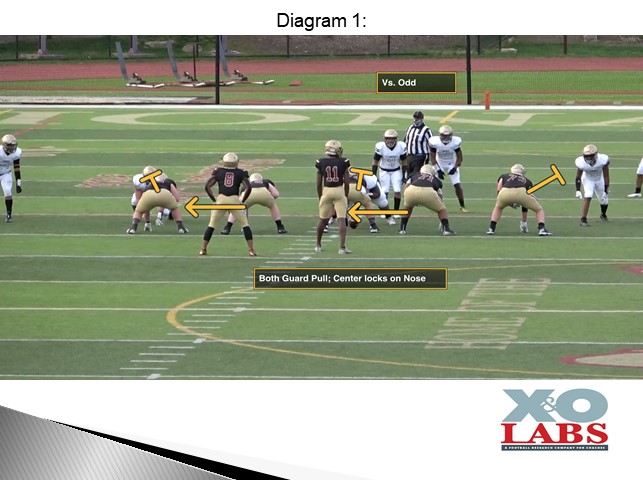
Both Guards will automatically pull against Odd fronts, matching the Center on the Nose. The Tackle locks on the 4i technique defender.


The quarterback is responsible for the Sam linebacker, who can’t be blocked against second or third level RPO’s. “Can’t block the third guy past the Center,” he said. According to Coach Spagnolo, it’s a great concept against a two-gap Nose, who doesn’t slant for risk of knocked off either of the Guard’s pull.


Vs. Even Fronts:

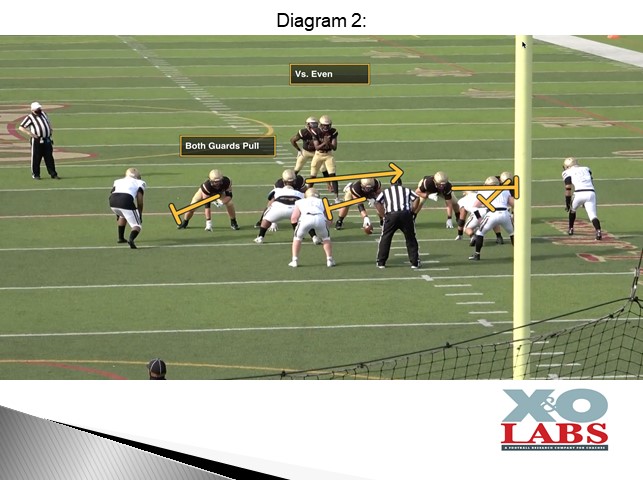
Against Even looks, both Guards are still able to pull to get second level movement. Against a 3-technique play side, the Tackle can block down while the Guard works to log the 5-technique. The Center blocks back on the 2i, allowing the Guard to pull. “We just talk about if we are play side blocking down if we have a defender in our gap,” said Coach Spagnolo. “It’s a good protection against a Shade play side so that your Center can pull.”


Vs. Bear Fronts:

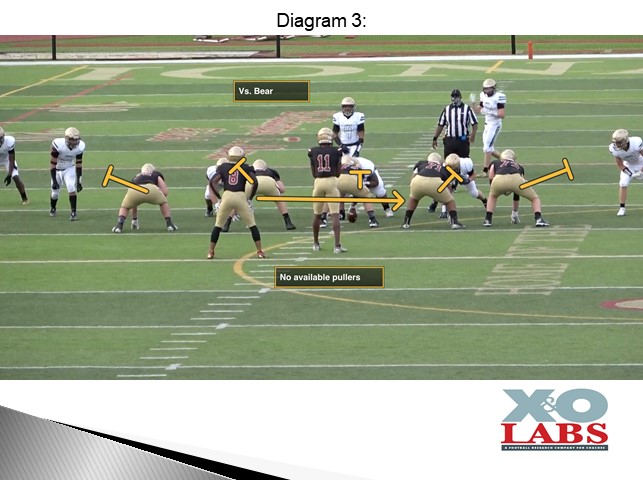
Any Bear fronts will eliminate potential pullers because of the individual blocks at the line of scrimmage. While Coach Spagnolo mentions the scheme isn’t recommended against Bear, the run action can still move second level defenders.

Read More

Knifer and Looper Rules to Attack Protections in Bear Fronts

By Jeff Long
Head Coach/Defensive Coordinator
Moravian University (PA)
Twitter: @CoachLongMUFB


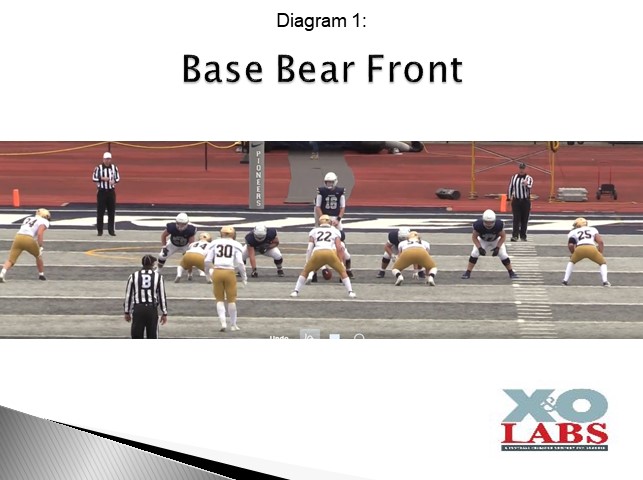
The bear front has become a staple for our defense over the last 6 years. It started out as our preferred defense for goal line and short yardage situations, but has morphed into a front / pressure that we have incorporated into gameplans on a weekly basis on 3rd down and base down and distances as well.  Today we are going to look at the bear front and show you three ways we manipulate it to attack opponent pass protections.


Bear front pressure is a tool that allows you to create one on one matchups with your defensive front and the opposing offensive line. In pass protection, it limits the variations of protections that an offense can use.  The 2 most common answers to dealing with a bear front pressure are:

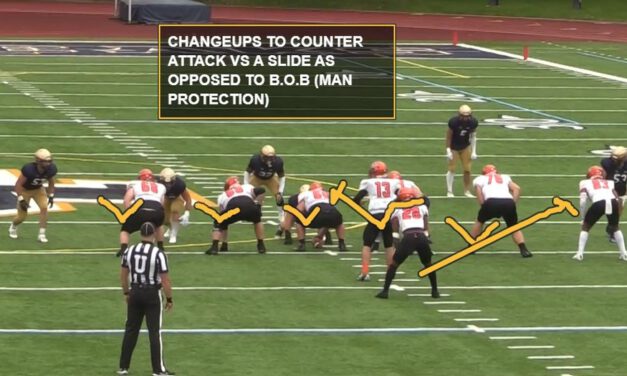
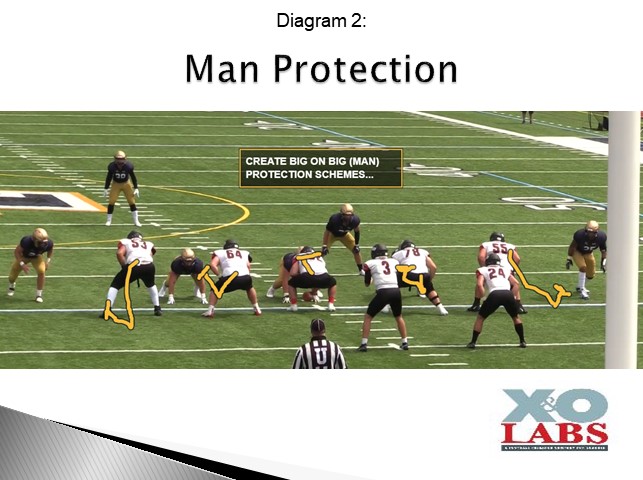
  1. Man Protection (Big on Big) – this protection will have the 5 offensive linemen identify and lock on to one of the 5 rushers in their assigned gaps. If the tailback is involved in the protection, then he will sort the 2nd level threats (rushers not on the LOS) before check releasing once no threat is identified.


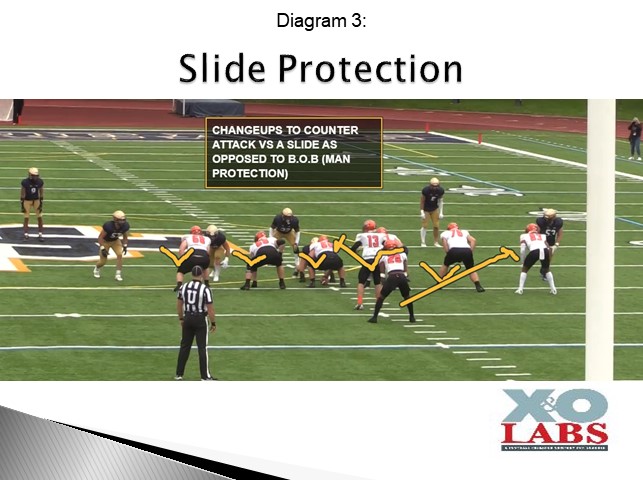
  1. Slide protection – this protection will be the changeup for an offense if they believe there is a high likelihood of twists from your bear front. Some teams will incorporate a full slide and have the tailback set the edge away from the slide. Some teams will split slide (4-man slide) then the TB will insert B gap away from the slide and keep the backside tackle locked on the edge.


Identifying how the opposing offense will deal with a bear front is imperative to building your pressure plan to attack the protection.  Below, we will show you 3 ways you can attack both of these protections schemes out of the base bear front pressure.

Read More

Backside Leverage Pulls in Pin/Pull Runs

By Mike Kuchar with Sean Devine
Run Game Coordinator/Offensive Line Coach
Villanova University (PA)
Twitter: @devine_sean


Villanova used to be a tight zone, duo team for several seasons, but a boom in recruiting nimble offensive lineman shifted the staff’s mindset to utilizing Pin and Pull runs to create an X in the defense. It became an instant answer to all the Odd front outfits in the CAA conference and the auxiliary run the Wildcats needed to keep defenses off balance.

“We run Duo, inside zone and counter,” said Coach Devine. “Defenses can usually fit up your three schemes, but if you have a fourth, they’ll struggle figuring it out.”


Puller Coaching Points:

Coach Devine has an interesting way of teaching the identification in this concept. By rule, the first puller blocks force and the second puller blocks the identification. Coach Devine teaches this in the form of a nursery rhyme format. “The Center counts outside in ‘one, two equals you know who’ is how we teach him to identify the front side linebacker or first linebacker in the box.”

Against four-down fronts, it’s the play side linebacker.


Against three-down front structures he teaches ‘one, two, three equals my ID,’ which tells the Center now the identification is the backside linebacker.


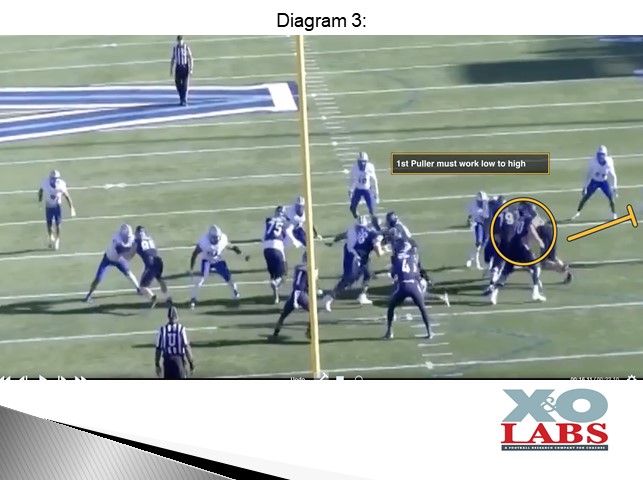
Coach Devine teaches the first puller to work low to high, outside in during his pull. He has to be able to identify any edge pressure or low support players as he works his open pull technique. Villanova loves the Pin/Pull run to nub surfaces, so the support defender will show up sooner than later.


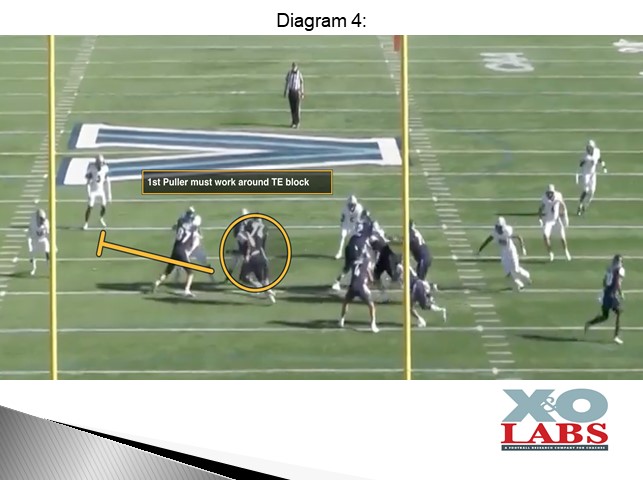
The challenge becomes teaching the first puller to insert inside the tight end on the play side. When blocking a 9-technique, the tight end is taught a play side pec aiming point with a backside hand run through the inside number to widen him. The first puller has to be able to recognize it and either inside or around the tight end’s block.

Read More

St. Thomas Man Pressure System: Hug Rushes and Wrap Rushes

By Mike Kuchar with Wallie Kuchinski
Defensive Coordinator
University of St. Thomas (MN)
Twitter: @kuchinski8


If you’re familiar with the University of St. Thomas (MN) defensive system then you understand how much defensive coordinator Wallie Kuchinski loves to pressure. And if you’re not familiar with Coach Kuchinski’s system you better start learning it. UST has consistently been among the nation’s best defensively – first at the Division 3 level and now at the FCS level. And because the Tommies are reclassifying, its stats aren’t registered at the FCS level. But if they were, they would rank in the following: fourth in total defense (290 ypg), fourth in scoring defense (17.2 ppg), third in 3rd down efficiency (.29%) and tied for 7th in team sacks (3.09).

But it’s how Coach Kuchinski and his staff devises pressure that makes it so unique. Previously, Coach Kuchinski has relied more on fire zone concepts the last two seasons, but once he got comfortable in his backend personnel he made the shift to using man pressures for two simple reasons: they attack protections better and are less expensive in coverage. As a consummate studier of football, Coach Kuchinski modeled these pressures after what the University of Wisconsin has used and what Baylor University has used under coaches Jim Leonard and Dave Aranda respectively.


Personnel:

The advent of 11 personnel offenses has caused Coach Kuchinski to play his Odd front, Nickel defense now in over 70% of all downs. But while he calls it “Nickel” personnel, essentially, it’s a two-down structure, field, and boundary defense that utilizes the following personnel:

  • 2 Interior Defensive Lineman– Nose and Tackle, who can be interchangeable
  • 2 Defensive Ends– These are more linebacker personnel types that will play to the field and boundary on the line of scrimmage in this package.
  • 2 Linebackers– Sam (strong-side inside linebacker) and Quick (weak side inside linebacker)
  • 2 Corners
  • 3 Safeties– The Nickel safety, Free Safety and Strong Safety


Communication:

In the Tommies system, all man pressures are classified by tools but defenders need to be aware of where the insert is coming from. For example, “Wrench” tells the safety he is coming down, while “Drill” is an indicator that they are blitzing the back. There are essentially three types of pressures that Coach Kuchinski uses in his man pressure concepts:

  • “Axe” 1 Rat
  • “Screw” 1 Rat
  • Flush Rush


Axe 1 Rat

Type of Pressure: “Axe” is an “A” gap interior pressure with Sam and Quick linebacker

Best Practice: Use against man protection teams. These are interior A gap pressures, which work very well against man blocking teams because the running back has can’t locate both interior linebackers in time in protection. Often times, it presents a two-on-one against the running back.

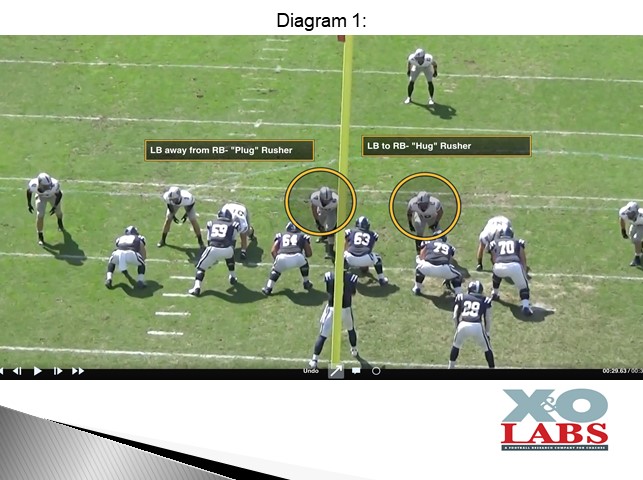
Both interior rushes work outside the Tackles for contain, while the Sam and Quick work their rush off the Center. Coach Kuchinski classifies his teaching of these two backers as a “hug” rusher and a “plug” rusher. The hug rusher is the blitzer to the running back who will fit inside him. The plug rusher fits outside the running back.


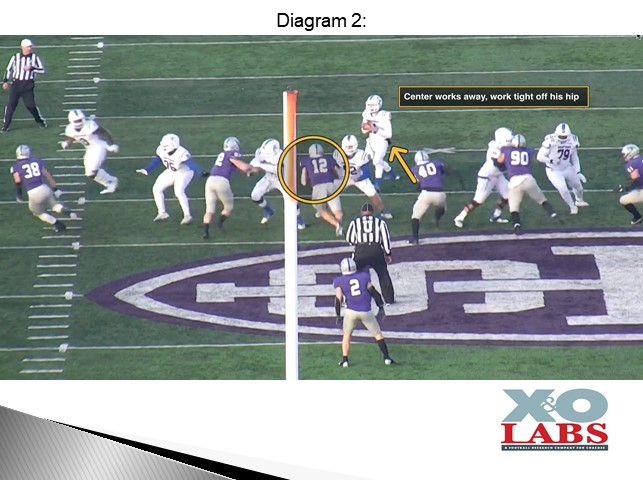
Both linebackers will be on a “Face of Center” read and cross face if Center comes at him. If the Center doesn’t come at him, he stays inside the running back.


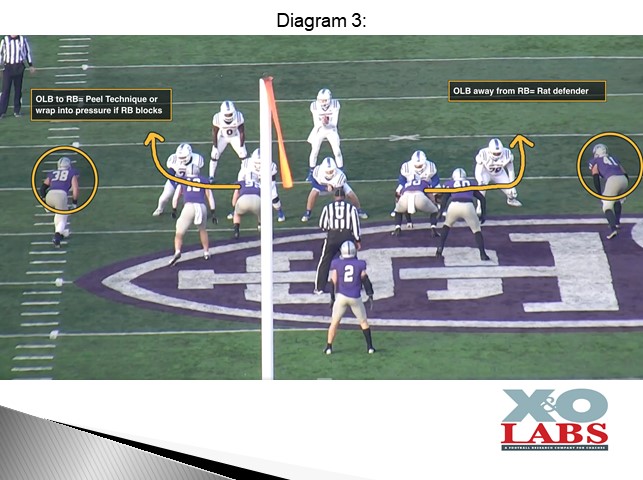
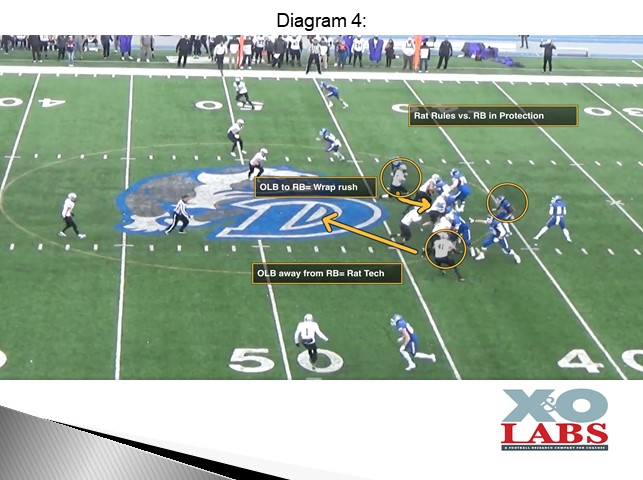
The outside linebacker to the side of the back will work the peel technique on the back, while the outside linebacker away becomes the rat. The coaching point for the Rat is to push one, two steps up-field to draw protection and get offensive tackle to set.


If the back doesn’t flare, it’s built in where the OLB to the side of the back becomes the wrap rusher while the other OLB becomes the rat (or spy) defender.


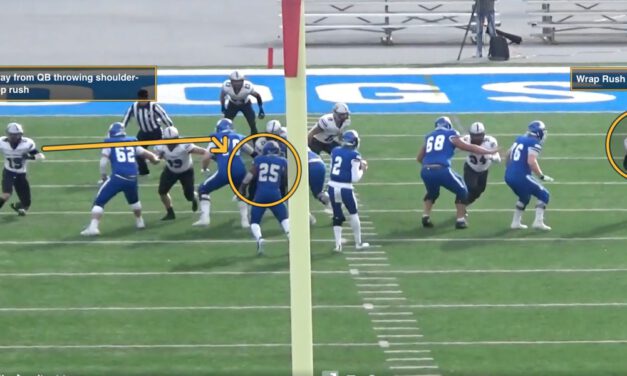
The intent  is to generate a three-man pass off, which happens when the first rusher works outside the back and the second rusher fits off him. In the image below, the wrap rusher adds into the pressure and gets a sack.

Read More

Creating Motion and Formation Tags off the Cross Concept

By Austin Embrey
Pass Game Coordinator/Wide Receivers Coach
Bixby High School (OK)
Twitter: @CoachEmbrey_


At Bixby High School, we have built our passing attack around tagging a limited number of concepts and remaining multiple through formations. We have found that teaching offense this way enables us to keep concepts as simple and consistent as possible for our players, while being complex enough to stress defenses. Simple tags that change only part of the play or formation can dramatically change the presentation of the play to the defense and give the illusion of multiplicity within the offense. Meanwhile, our players are able to get ample repetitions at base concepts and routes, allowing them to think less about their assignment and more so about execution. This article will specifically display how we tag one of our favorite drop back passing concepts, Cross.


The Base Play:

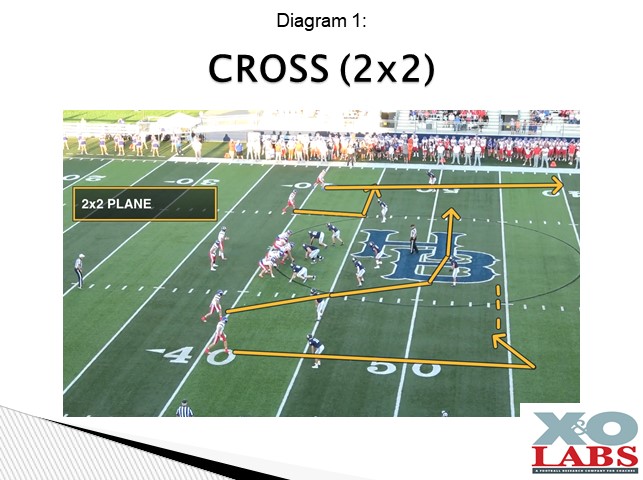
Our Base Cross Play design is similar to how many teams run it. In our 2×2 formations, we have an outside release vertical and an out on the call side (typically the boundary), and a drag and curl/dig coming from the field.


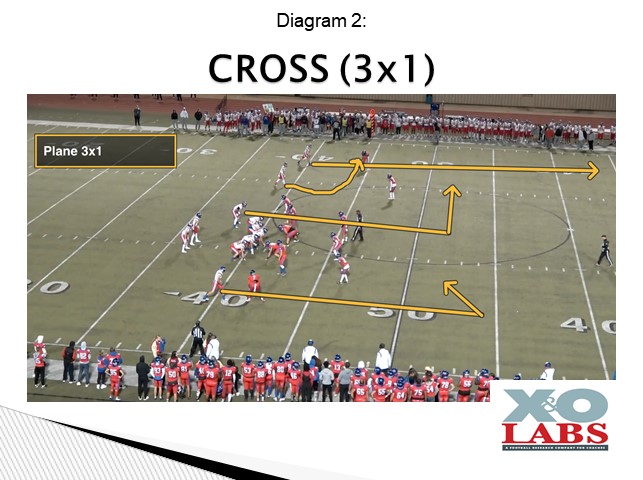
Our 3×1 variation ends up looking more like flood than Cross. We teach that the routes should end up where they would have if we began in a 2×2 formation.


Tagging Formations:

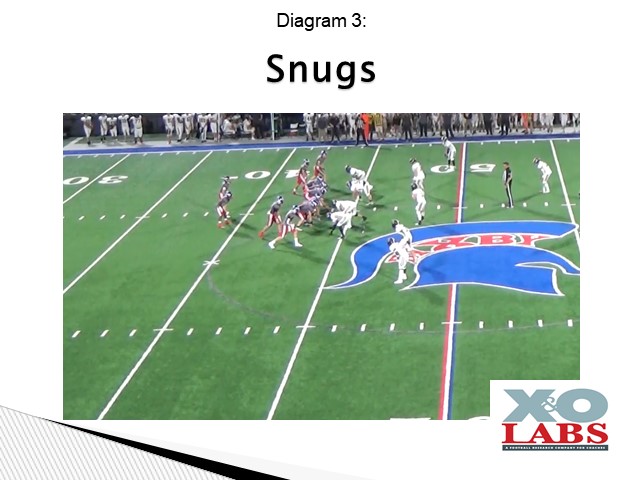
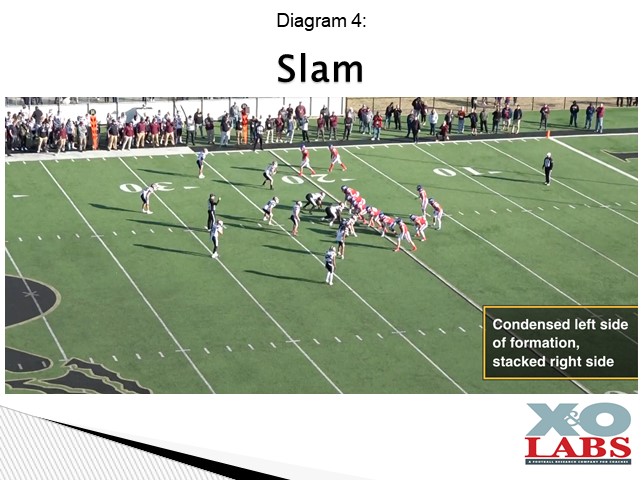
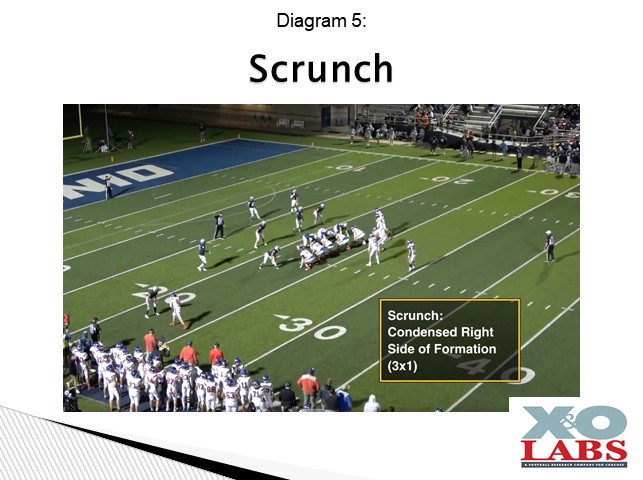
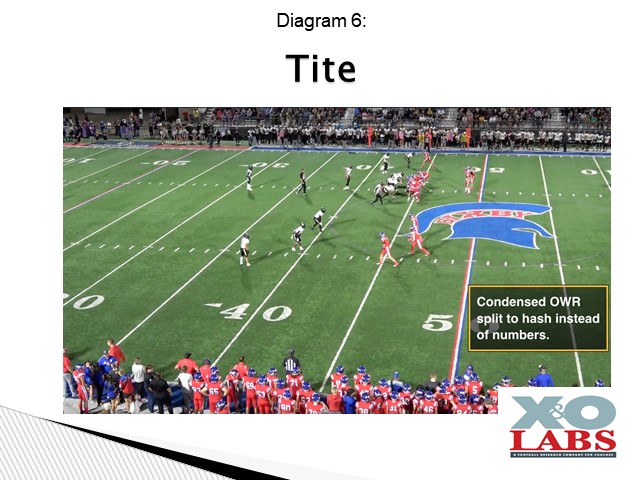
A way that our offense applies pressure to the defense is through formation tags. By making slight alterations to formations, we are able to disguise the base concept. The formation tag does not change our offensive players’ responsibility. They simply execute their assignment from a slightly different alignment. Here are some of our most commonly used formation tags:


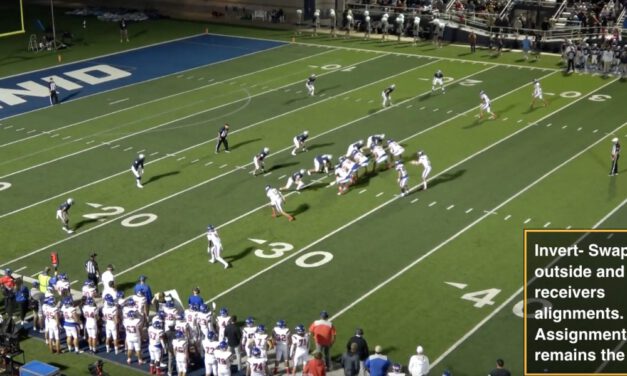
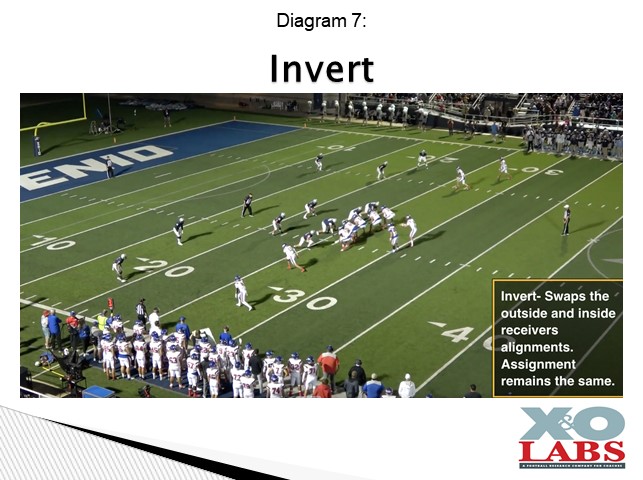
Snug: Here, the formation is condensed on both sides. Although players’ alignment has changed, the Assignment does not.


Slam: Formation is condensed on the left side only.


Scrunch: formation is condensed on the right side only.


Tite: The outside receiver to the field tightens alignment landmark to the near hash.


Invert: Outside and inside receivers switch places.


A simple formation tag requires little thought for offensive players, but allows us to easily change the presentation to the defense.

Read More

The Puncture Technique in OTB Routes

By Mike Kuchar with Rob Spence
Offensive Coordinator
Georgetown University (DC)
Twitter: @CoachRSpence


Georgetown University offensive coordinator Rob Spence realized that his run game was stalling, and he had to find more creative ways to move the football. He was still working with an inexperienced quarterback, so some of the layered pass concepts in his West Coast system still needed some time to matriculate. So, the 30+ year coaching veteran, went back into his files and pulled a concept that he relied on heavily when he was the offensive coordinator several miles away at Rutgers University (NJ). It was these OTB (over the ball routes) where several receivers were tagged- based on concept- to work short routes over the middle of the field directly in the quarterback’s line of sight. These were quick, easy distributions designed to get the ball to a skilled tight end with excellent ball skills.

“At Rutgers we would do it anywhere on the field, even coming off the goal line,” said Coach Spence. “We feel that comfortable about that it’s on the call sheet every week. It’s about getting the ball to a good player quick right now.” These routes are progression reads for the quarterback and are implemented in Georgetown’s Curl and Spacing concept. They are progression reads for the quarterback who works from 1-4 in his read. Coach Spence said he chunk plays it then controls the ball by getting it out of our hands really quickly. They were extremely effective in 2021 as Georgetown ranked second in the Patriot League in passing offense (253.7 ypg) and third-down conversions (41.2%) while finishing third in yards per completion (12.1) and total offense (333.7 ypg).


O.T.B. Route Technique:

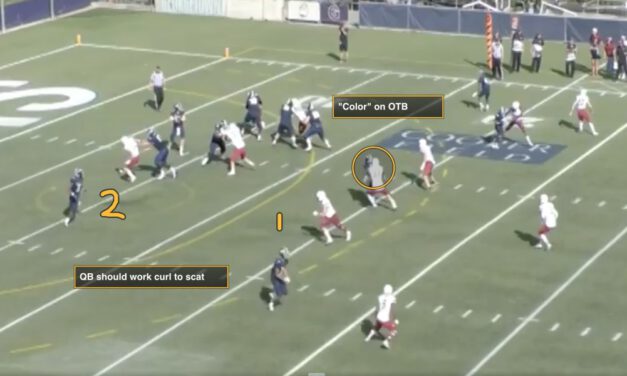
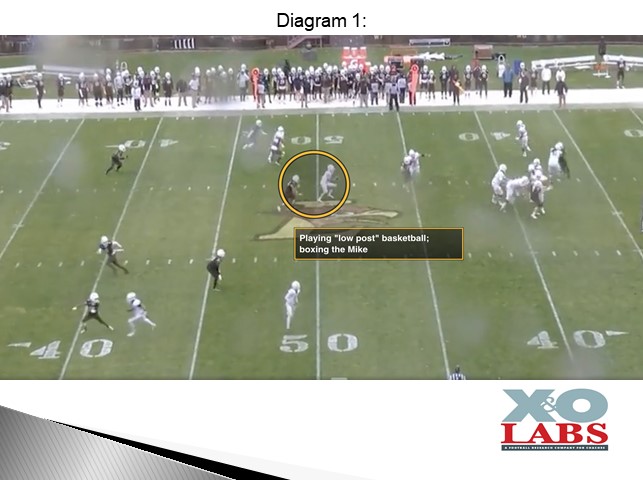
These OTB routes are set at a depth of five yards. While Coach Spence used to run the route over the Tackle or over the Guard but the receiver’s main job is to control the Mike linebacker and being over the ball forces the Mike to account for him. Coach Spence calls the route tech “playing low post basketball” by just working over the ball and boxing the Mike out of position.


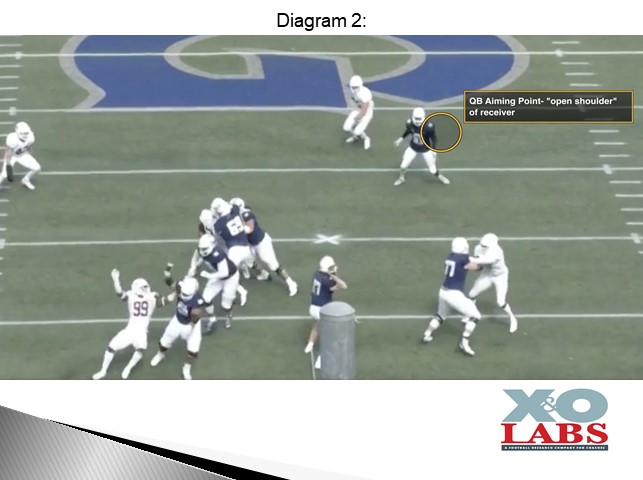
It’s the quarterback’s job to throw the ball to the open shoulder (or non-defended shoulder) of the receiver, something that he says in an art form in and of itself. The quarterback is taught to read the squeeze of the Mike linebacker. If he squeezes right, I throw to the opposite shoulder. But the quarterback must throw the ball below the chin of the receiver because of the expected contact.


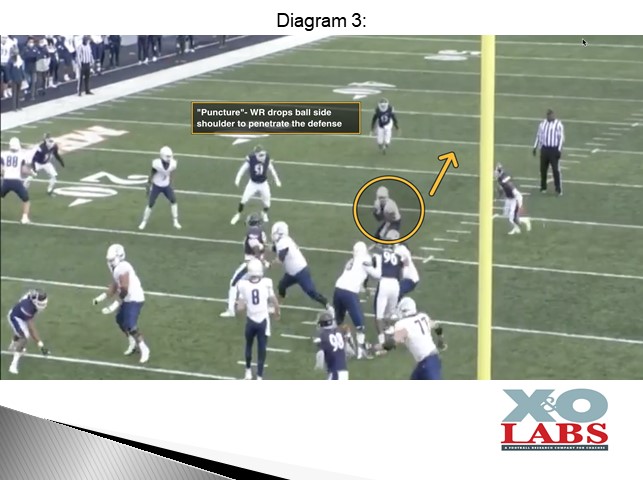
But once the ball is delivered it becomes the receivers job to turn and immediately knife (penetrate) the defense. Coach Spence calls this a “puncture technique” technique by learning how to cover the football, drop his ball side shoulder and puncture the defense.

Read More