
“Motor” and “Driver” Techniques for Zone Combinations

By Joseph Gaddy
Offensive Line Coach
Madison County High School (FL)
Twitter: @iamJGaddy


There is a common misconception that Zone Concepts, in general, are not physical schemes; that if you want to dominate the defense, gap schemes are the answer. At Madison County, who has a deep tradition rooted in the Wing-T, we can tell you that it is a false narrative. While we still heavily rely on our Wing-T principles, some form of Inside Zone accounted for 32% of our run game this past season which was roughly 182 times. While it may be presented differently in the way of Full Zone, Split Zone, Zone Read, or some sort of Zone Iso our offensive line is working zone principles. The major reasons for our utilization and success of this scheme is our ability to:

  1. Get as many Double Teams as possible at the point of attack
  2. Physically Dominate the line of scrimmage.
  3. Properly fit on the 2nd (and sometimes 3rd) level.


In this report, we will discuss how we break down these Double Teams or Combo blocks into specific parts that can allow us to fine-tune the varying phases of these blocks, and how we rep them so that we can dominate on Friday nights.
 

Who Do We Combo? -Our Inside Zone Scheme

In our inside Zone Scheme, our goal is to get as many combos as possible. If we need to attach a TE to get our second combo, we will most definitely do so.


Foundations of Combos

Our Combos in our Inside Zone Scheme are “Vertical” Combos. We are trying to get movement vertically to the 2nd level defender. It is important to rep this mentally, as it differs from your gap combos which typically have your playside combo working to a backside defender.

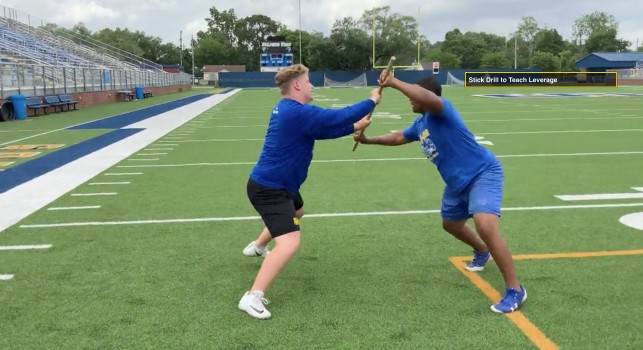
We split our Combo up one of two distinct roles or jobs: “The Motor” and “The Driver.”

Motor – Inside Man of the double team that is responsible for movement, power. Just like the motor in a vehicle.

Driver – Outside Man of the double team who is responsible for steering, or direction. Just like the steering wheel or driver in a vehicle.
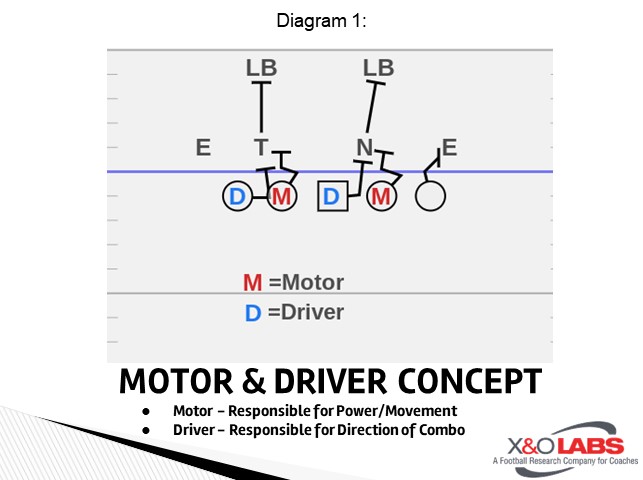
Diagram 1


Hand Placement: We teach a “2-on-2-off” technique in terms of hand placement. The OL should each have their hand nearest the defender on while keeping their opposite hand free for contact on the 2nd level. We teach the chest plate as the strike zone. The Motor and Driver have slightly different contacts which we will discuss later in the report.

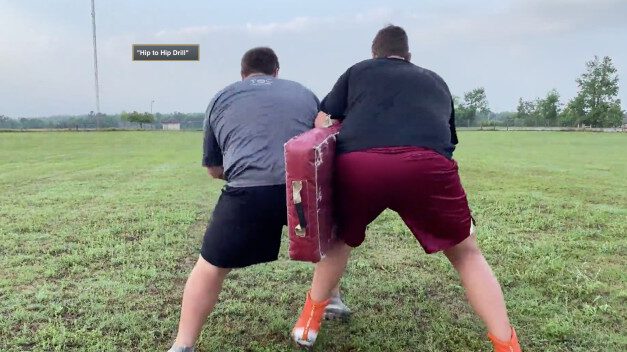
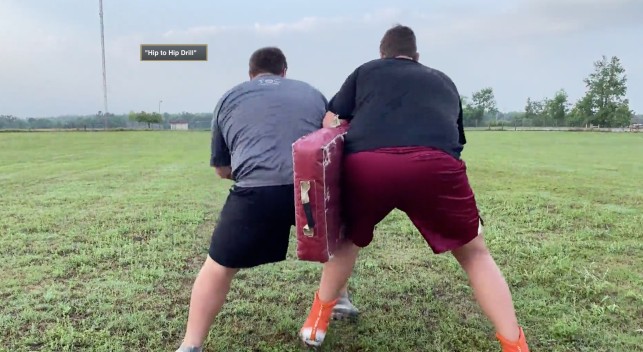
Hip-To-Hip: The quicker we become one being, the quicker we decrease a chance of the DL splitting the double. Most issues that arise in combos are the two offensive players not working tight, together, and in unison. When there is more than one vision, there is division.

2nd Level Defender: We do not specifically tell an offensive lineman who will come off. We teach if he fits here…he becomes yours, and the same for the other lineman. This helps us focus initially on the down defender, then as we work vertically wherever that defender shows, we will then disengage the down defender and let our teammate know “I’m’ Gone” and allow him to take over. Our goal is to come off late on the second level. In doing this we again ensure movement on the down defender and decreases the amount of separation between ourselves and the defender.


Two Jobs – One Goal

We work the separate, specific parts of the combo during individual just as much as we do the double team in its entirety. The OL gets a lot of reps together during team and group settings, so we feel it is important to help each player master his “Job” so we can be successful together. Also, be sure that you define for them who is what, and rep it as such. For example, our TE will ALWAYS be a driver, never a motor, so he does not need to rep as such.


The “Motor”

“JOB”: Again this is the inside man on the combo and is responsible for the initial movement and power of the combo. We work a quick rocker or power step with the playside foot (foot away from the defender) first. This step is no more than 6 inches, lateral. This is for 2 reasons:

  • It anticipates and protects against an inside spike from the defender. (We use this same concept when we have to man block a defender, we refer to it as a “White Block” or “White Step”). Your Power truly comes on your 2nd step, so we will now have max power when we contact the defender. Which is our “Job” in the combo.
  • Our 2nd step is vertical into the crotch of the defender with our near foot. This aiming point helps assure we account for half of the defender.


Hand Placement: Our Strike Zone is the Chest Plate of the defender. We are going to strike half of the defender or the half closest to us. As the “Motor” we are going to strike with an aggressive flipper technique. An aggressive flipper is an open palm punch, twist, and lift with the forearm. We feel this gives the best-case scenario for surface area contact and force. We will not make contact until our 2nd step is in the ground to ensure the most pop. Our goal is to get a drive and lift.  We will keep outside hand free, for the second-level defender. While we grind that elbow and forearm to our side to generate power and decrease the likelihood of grabbing the 2nd level.  
Read More

Special Teams Game Planning and Practice Preparation

By Bobby Ramsay
Head Football Coach
Mandarin High School (FL)
Twitter: @Mandarin_hs_fb


Planning, installation, teaching, efficiency. All of these are things that as coaches we must take into consideration on a daily, weekly, and monthly basis. It is especially important that when organizing your game planning template for the season, that you include special teams. We believe very much at Mandarin that to be as prepared as possible to win on game day, your special team’s planning must be done in a way detailed way, much like your offense of defense. We also believe that applying that plan in an efficient way that prepares your players, focuses on what wins’ games, and keeps your coaches and players fresh is the best approach to getting optimal results in practice and ultimately in the game as well. As a head coach who does not call the offense or defense, I believe that allows me to take ownership of the special teams’ game planning, easing some of the burdens on the rest of my staff. It is critical though that you are detailed, that you not only scout and critique the opponent but yourself as well, and ultimately apply this in practice in a way that allows you to maximize your reps, simplify it for your players, and communicate the plan clearly

Key rules/situations you must cover with your players:

  1. Onside Kick
  2. Onside Recover
  3. FG no timeouts left
  4. Taking a safety
  5. Punting backed up
  6. Pinning the opponent on punt
  7. Pooch Return
  8. Squib Return
  9. Pooch Kick
  10. Squib Kick
  11. Fair Catch
  12. Peter Calls – everyone gets away from the ball
  13. What is a live ball?
  14. What is a dead ball?
  15. PAT/FG Fake
  16. Defending PAT/FG Fake
  17. Fire Call
  18. Defense Safe
  19. Punt Fake
  20. Not fielding a punt inside your 10-yard line
  21. Not letting the ball hit the ground on a kickoff return
  22. Swinging Gate Defense


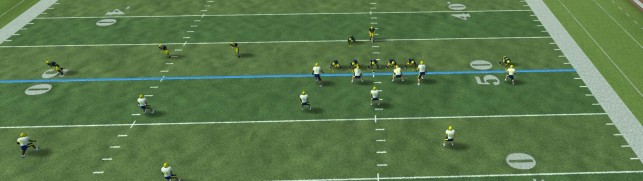
Now, not all these situations require special drills or special portions of practice. For example, reviewing what is a live ball and what is a dead ball is done simply by asking your special team that you are working on to tell you what is a live ball or what is a dead ball. This way if a ball is blocked or muffed they know if the ball can be advanced by the offensive team, or if they should get away from the ball as a possession has changed and the ball cannot be advanced unless someone on the defensive team touches it. This clip is a good example of players knowing this.

In this clip, we have our FG attempt blocked. However, as you see, the ball is picked up by our holder, who knows that the ball is live and immediately begins to advance the ball, which he runs in for a touchdown. Also, some of the situations do not come up every week, you may only see Swinging Gate once or twice if at all. So, don’t think that this is overwhelming, and as the season goes on simple reminders for a lot of these are all your needs. But it can be the difference between a win and a loss

Read More

4×1 Quads Bubble/Bubble Switch Concept

By Toriano J. Morgan
Assistant Head Coach/Offensive Coordinator/QB Coach
Virginia State University
Twitter: @Toriano81


Every offense should have a staple play that they can hang their hat on. The Virginia State offense has used the bubble screen as a key component of its offense, and we have been very successful utilizing it. We teach our quarterbacks that as they go through their pre-snap read and we have an advantage in numbers, they can automatically check to the bubble. We feel confident in allowing them to do this for two main reasons. The first reason is if we had a run play called, we feel checking to the bubble is no different from checking to a perimeter run which might be a better play in that situation creating a positive gain on the play. Secondly, if we have a pass play on and we get numbers checking to the bubble gets us into a higher percentage completed pass play. So, we get the best of both worlds. Our goal is to always make the defense defend the bubble, this helps to give us leverage in our run game and marries perfectly with our RPO concepts.

We are a formation offense that likes to create match-up opportunities to create explosive plays. Our goal is to get our best athletes on the field and get them the ball in space. We discovered that our quads package did exactly everything we wanted. It also added a dynamic dimension to our bubble screen. It put our best athletes on the field, in space, and gives us a favorable match-up and numbers at the point of attack. It also provided favorable blocking angles on the perimeter that put us directly on the third level if executed correctly. We also saw an increase in YPC out of our quads package.


Setting the Perimeter

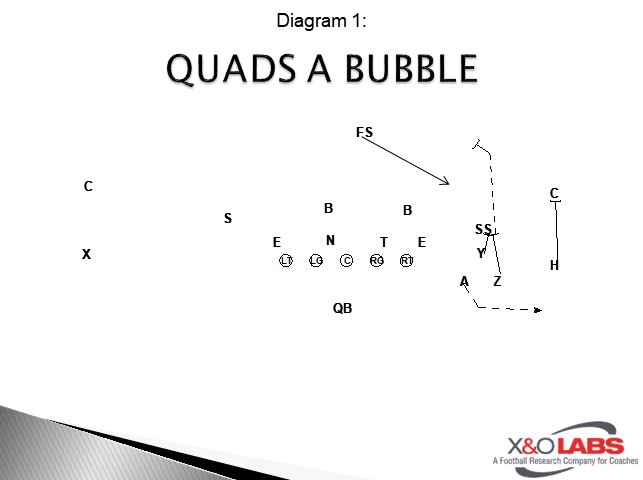
Diagram 1


It is no secret that to be successful running the bubble screen you must set the perimeter. We find the simplest way to accomplish this is by alignment. We prefer to use a bunch look in our quads package because it allows every element of our blocking scheme to be sound. We teach the player running the bubble that the first guy inside of you is your guy, your technique running the bubble must beat him. We do teach our player running the bubble to drop step and lose ground as it creates a longer run for that defender and gives our ball carrier an advantage. Our goal for our ball carrier is to beat everyone to the edge because we have created the leverage to do so.

It also creates immediate movement by the defenders and allows for better angles and the immediate closure of space with our guys stalk blocking in space. We want our blockers to “go to where the defender is going” not where he is currently. We must anticipate movement.

It is a must that we win the point of attack, so we will always double at the point of attack to secure leverage and then the #2 receiver will come off to secure the alley (much like zone blocking). The #1 receiver will use a stalk blocking technique. We insist that they make the defender go through them to get to the ball carrier.


Perimeter Double Teams Drill:

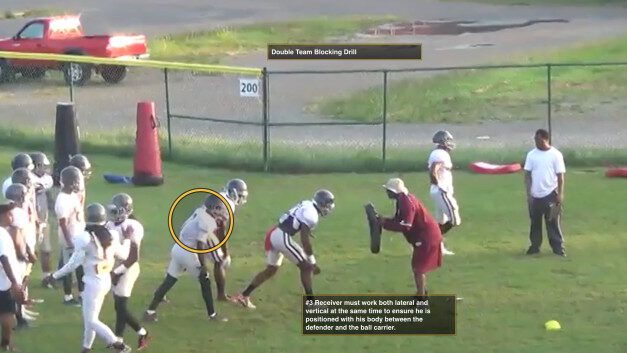
Before addressing the concept, it’s important for coaches to develop the mentality for receivers to block in space. The first drill that we find to be the most important is the double team at the point of attack. We will have a coach holding a simple handheld bag, and at the snap of the ball, we simulate the double team. We will work the double team from various looks. We will incorporate motions because they change blocking angles on the double team, so we want to remain consistent in our technique


Coaching Point

The #2 Receiver is concentrating on anticipating the defender working that will be working through him. His primary goal is to not to let the defender split the double team. We also coach him to progress his eyes upfield through the alley because he will need to be able to come off this block and climb to secure the ally defender using his stalk blocking technique.

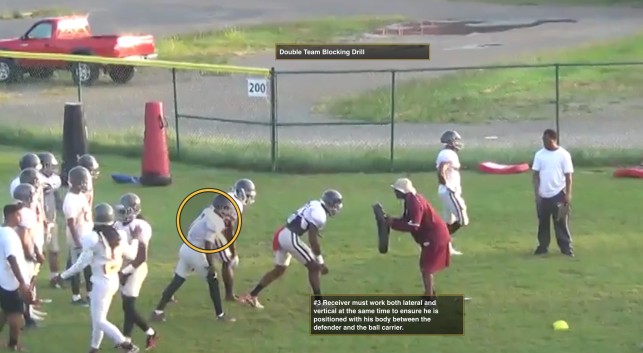
The #3 Receiver is coached to anticipate immediate lateral movement from the pressed defender. In this event we teach our receiver as he engages in this block, he must work both lateral and vertical at the same time to ensure he is positioned with his body between the defender and the ball carrier when the #2 receiver comes off. He is also taught that he cannot cross his feet over as that will cause him to lose control of the block should the ball carrier cutback because of pursuit.

We teach our receiver that he must treat his technique as if this is a one on one block. The ability to double is a bonus. We must be prepared if the alley player reads this quickly and runs the alley hard right now.

Read More

Non-Contact Drill Work to Teach Tackling, Block Destruction and Ball Security

By Gabe Fertitta
Head Coach
Catholic High School (LA)
Twitter: @fertitta_gabe


One of the most difficult things to teach football players at all levels, and probably receives the least instruction, is the fundamental of running with the football after the catch (or in open field on runs). Additionally, defenses are constantly looking for new ways to drill open field tackling without adding more contact to the game. Most states now have limits on the amount of contact time in practice, and coaches across the country are concerned about their ability to teach tackling without drills that use full contact techniques. In studying drills and film from places like the New England Patriots, Troy University, and West Virginia, we have come up with a few “Tackle/RAC” (run after catch) drills that we have incorporated into all seasons of our program development. These drills can be done any time, without pads, and without any contact. Additionally, if you were to review your own film, you would find these situations arise multiple times in a game and most practices do not have the time or structure in place to drill these situations.


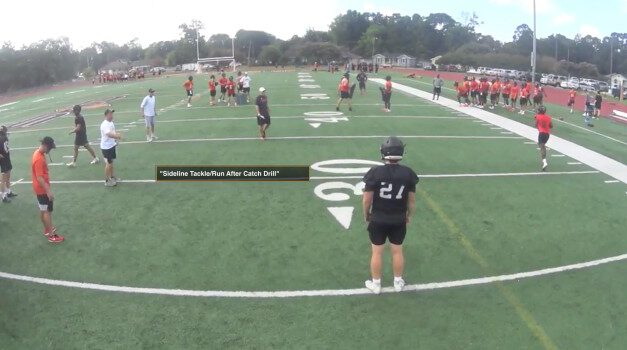
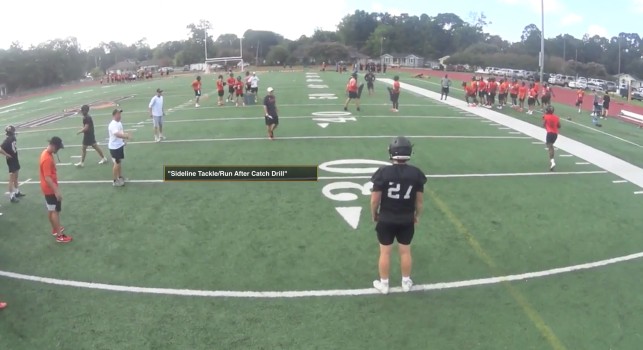
Sideline Tackle/Run After Catch Drill:


Drill Setup:

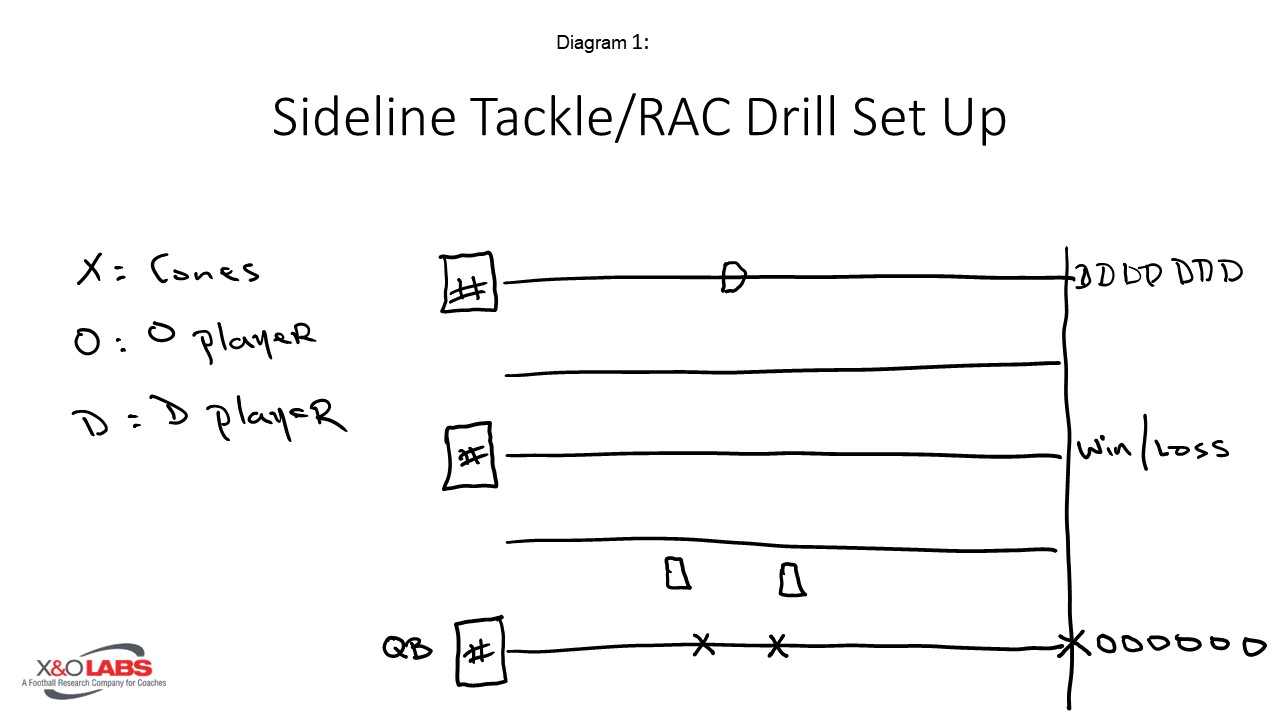
The first drill we use in our Tackle/RAC circuit is set up with two shield holders, an offensive player, quarterback, and a defensive player. The beauty of these circuits is that in a short amount of time, you can work a ton of players through the drill and get vast amounts of reps. Additionally, if you have two-way players, this is an easy way to drill simple things like catching the ball with hands, getting vertical after the catch, approach to tackle, shimmy, and striking with the correct shoulder on defense.

This drill could be done with full contact; however, we always use this drill with a tag off on the hip of the ball carrier. We can track wins and losses through the drill by determining if the defender was in a position to make the tackle before the 10-yard mark.

Diagram 1


Offensive Coaching Points for Sideline Tackle/RAC:

  • Quarterbacks will PAT the ball to signal the start of the drill.
  • Ball carriers will start on the sidelines and run to between the cones and receive the ball between the two shield holders.
  • As soon as the ball is caught, the ball carrier must get vertical to split the shield holders, simulating getting vertical after a catch in space like a dig or slant.
  • Only ONE cut or move is allowed from the ball carrier although if the defense has practiced this situation enough, the ball carrier will soon learn that he probably can’t win if he makes more than one move.
  • The offense can “WIN” the dill by making it to the 10-yard mark from the catch. Boundaries for the ball carrier in this drill are the top of the numbers and sidelines. 


Defensive Coaching Points for Sideline Tackle/RAC:

  • The instant the defensive player in front of you does his “up/down,” get aligned and still on your cone at the top of the numbers. We like to use this pursuit angle to train the defense for inside out pursuit and using the sideline as an extra tackler.
  • When the quarterback pats the ball to signal the start of the rep, the defensive player must execute an “up/down” and pop to his feet and begin to pursue the offensive player.
  • The most critical coaching point for the defense is to tackle with the correct shoulder based on leverage and CLOSE THE SPACE between him and the ball carrier as fast as possible.
  • Once the tackler has closed the space, he should then get into Mobile Athletic Position (MAC) and shimmy to lower his hips, get his cleats in the ground, and set up for a “near leg/near shoulder” strike.


Read More

Drill Progression for Wall Defenders in Punt Return Units

By Galen Holmes
Defensive Line/Special Teams Coordinator
Worcester Polytechnic Institute, (MA)
Twitter: @coachholmes3


At WPI, we place a large amount of emphasis on special teams each week. I am extremely fortunate to work for a Head Coach, Chris Robertson, who shares the same vision and philosophy with the importance of each phase of special teams. As our Defensive Line coach, being able to coordinate our special teams gives me a tremendous opportunity to not only work with our defensive players, but also work with our offensive players and build relationships with those players as well.  Each week we spend a great deal of time breaking down our opponent’s punt team and look for ways to attack it. Our objectives and scheme we employ have changed each year based on our personnel as well as the strengths and weakness of our opponents.  We focused on the return game largely due to the personnel we had.  Our offense had the best scoring offense in school history and our defense was nationally ranked in several categories and us being able to use our punt return to flip field position was a huge part of our success on both sides of the ball. 


Personnel

We believe it is important to not try to force a square peg into a round hole and be flexible as a coach to adjust to put your players in position be successful. Each year the strengths and weakness of our team vary which means we will adjust our scheme that best suits the strengths of the players we have on our punt return team.   In past years, we have been more of a pressure oriented team looking to block punts every weak. This past season we shifted to more of a return oriented team as we had less twitchy type athletes and athletes more suited toward blocking in space.   We always will have a block concept and a return concept for each game just in case. 


Opponent Breakdown

In college football you can see a wide variety of punt formations as you move through the season.  It can be a challenge each week to have to recreate a look against a new formation. It also calls for personnel adjustments as well.  If we have to play against a team who punts out of a 3 x 1 formation our personnel for that week will have more DB’s to get the right personnel on the field.

When we break down an opponent’s punt team we focus on these five questions:

  1. What is the formation?
    • Are they multiple in formations? We played against a team one year that had shown 8 different punt formations prior to our game. Do they use different formations when punting in a backed up situation?
  2. What is the operation time like?
    • Is the snapper consistent? If they can get it off in 2.1 seconds or less it is hard to get the block. This helps us determine if we want to focus on blocking the punt or focus on the return game. We also look for a “tell” in the snappers rhythm i.e. a head nod just before the snap or something similar to help maximize our take off.
  3. What is their personnel?
    • Are they bigger stronger players or smaller more athletic guys? Who are their best cover guys? This helps us get the right personnel and match ups.
  4. What is the punter like?
    • Right foot or left foot? Where is the block point? What is his hang time, average distance etc.? Is he a good directional kicker?  Where does he kick the ball relative to punt location (right hash, left post etc.)? This helps us coach our returner on what to expect and where to align himself.
  5. What is the protection like?
    • Is it man or zone? Where is the weak link? This will help us decide where to attack when planning our punt block.
  6. Who are the eligible players? You have to be sound against a fake and be sure you get your offense on the field on the next down.


Scheme

Our number one job for our punt return unit is to get the ball back for the offense. We tell the returner there is no shame in a fair catch as long as our offense snaps the ball on the next down. If we field the ball without a fair catch our next objective is 10 yards.  We simply want to get the equivalent of a first down. For example, taking our offense from the minus 25 to the minus 35 has a huge impact on scoring percentage. This year the return game was what we focused each weak. We did not have the right guys available to get to the block point and most teams we faced had solid operation times.    

Our primary punt return scheme is a wall return. What we like about the wall return is the ability to bring pressure from one side to force the kick but also have a chance to block a punt and also have a return on the other side. We will run the wall to the field or the boundary based on the punters tendency or if we feel our opponent is overplaying one side. It is critical for players on the unit to understand what leverage they need to take this scheme work.  To us it is man to man basketball defense, deny your man getting to the basket, which in a punt return scenario, would be the returner.

Generally speaking, we will have a pressure side and a pin side on our wall returns.  The pressure side players are attacking the block point and working to the wall and the pin side players are blocking their assigned men with return side leverage.  At times we will bring pressure and use some players to pin on that side as well.  We will do whatever we need to get an advantage for our returner to have a chance to get at least 10 yards.


Read More

SLICE Technique for Wall Players in Multiple Coverages

By Ashley Henley
Linebacker Coach
Shiloh Christian School (AR)
Twitter: @coach_Ahenley


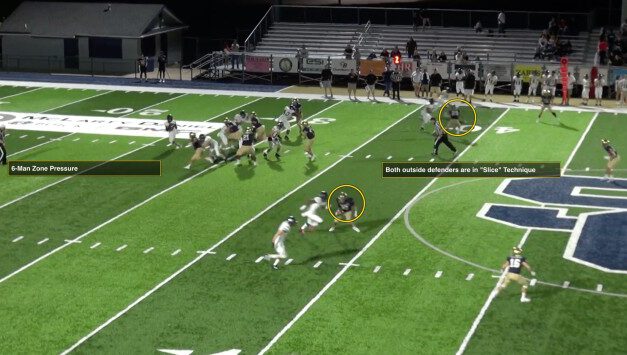
At Shiloh Christian, we base out of a 4-2-5 but are multiple in our fronts and coverages. As a result, we want to teach techniques with as much schematic carry over as possible for the sake of simplicity. One of these is our “slice” technique that has to carry over to all coverages. It is not a technique we invented but because of our multiplicity and belief in pattern matching it has been an effective tool in our toolbox when installing and game planning coverages.  Once a player understands the meaning of “slice” it allows us to coach fast and efficiently.

The term “slice” is a universal term we teach meaning Stay Low and Inside. It is used in any scenario where a player is a curl-flat dropper, hook-curl dropper, or even a cover 2 corner could use the technique with OUTSIDE leverage on a 1 receiver. We will teach this technique to all LB’s, safeties, and corners. It’s an easy concept to teach and has great carry over to all coverages with zone match and man match concepts. As a result, it can be drilled by any DB/LB coach as part of a circuit or other group work involving multiple positions.

Once we have mastered the technique, we have now taught a fundamental technique we use in cover 4, cover 3, 5-man pressure zone coverage, cover 2, and man match coverage for underneath defenders.

Coaching points include positioning yourself with aligned leverage between your 1st threat and the next closest receiver. Our positioning should be “low” as to not allow the receiver to beat us underneath. We want to “body or wall” our threat and “see” the next.


“Slice Technique” Drill Work:

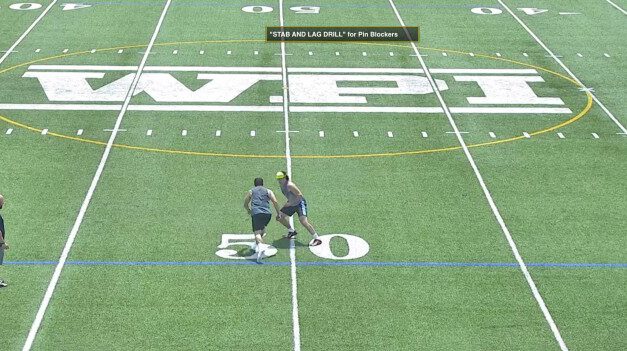
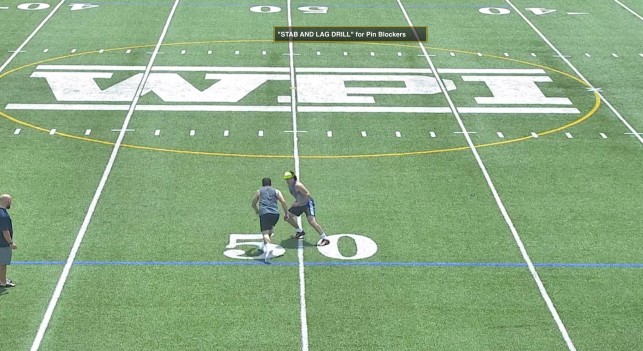
We will begin the teaching progression in phase with a receiver. This position is half a man with his head behind the receiver. We want hands-on so we can feel/wall/collision while seeing the next threat. The idea is to carry the receiver with my leverage until I have a new threat.

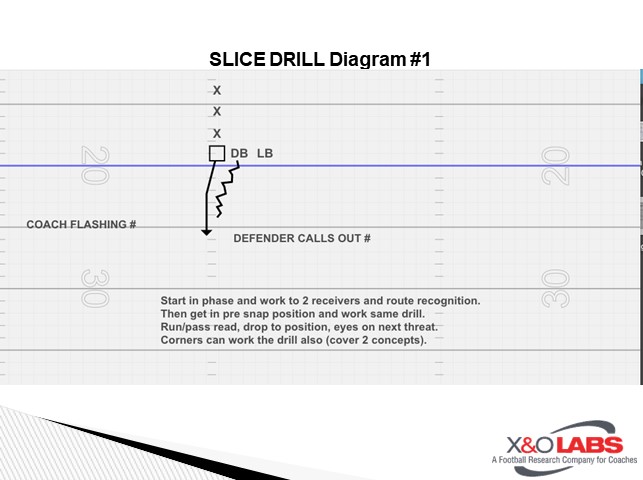
A coach will stand opposite the defender- as the receiver works vertically, the eyes of the defender should be on the coach, keeping proper position with his body. The coach can flash hand ‘s to train eyes and work feeling and seeing simultaneously.

Diagram 1


From here, we progress to actual routes while still in phase. The defender resumes position, but now he will get actual routes (signaled by a coach) and react accordingly. If he is a safety/LB he is working curl-flat drops, hook-curl drops, etc. A corner would be working Cover 2 slice with outside leverage, funneling 1 and seeing 2 inside.

Our next progression is to work from pre-snap alignment. Working from the snap, read, get in position and react to routes. If this technique is a run-first player (for me it usually is), coach it that way. Play run first, react to pass and work to get in phase on the 1st threat while seeing the next threat.

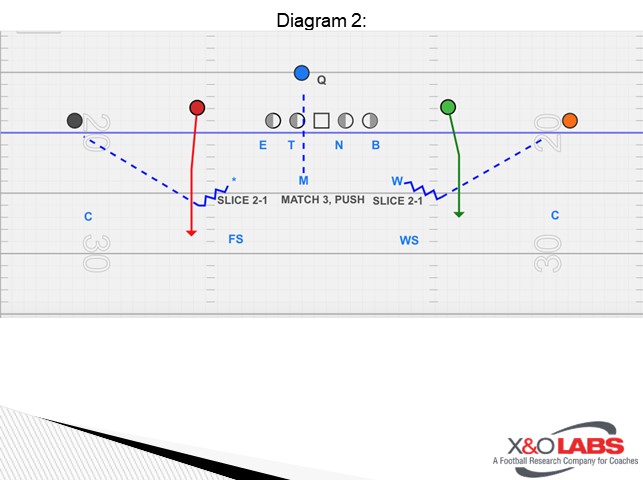
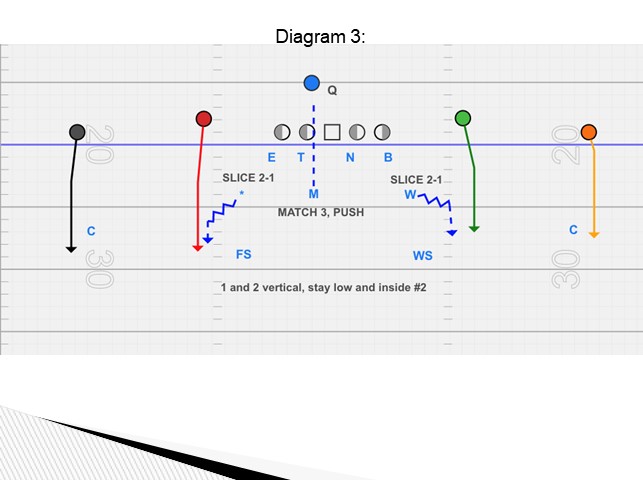
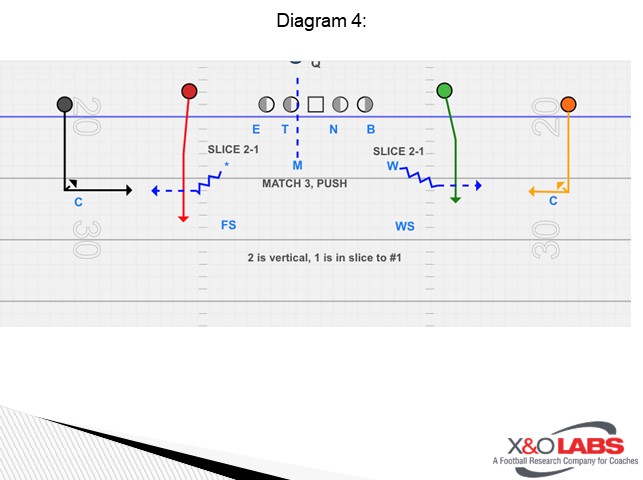
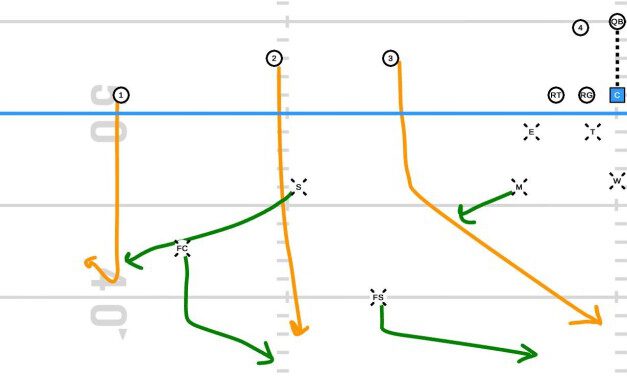
Below are diagrams of underneath defenders based out of 1/4’s concepts aligned to 2 by 2 formations. The STAR and WLB are using slice technique in this scenario.

Diagram 2

Diagram 3

Diagram 4


Read More

Sheet Templates to Create Offensive Scout Team Efficiency

By Joe Pearson
Defensive Coordinator/O-Line
Oxford Area High School (PA)
Twitter: @swarm_defense


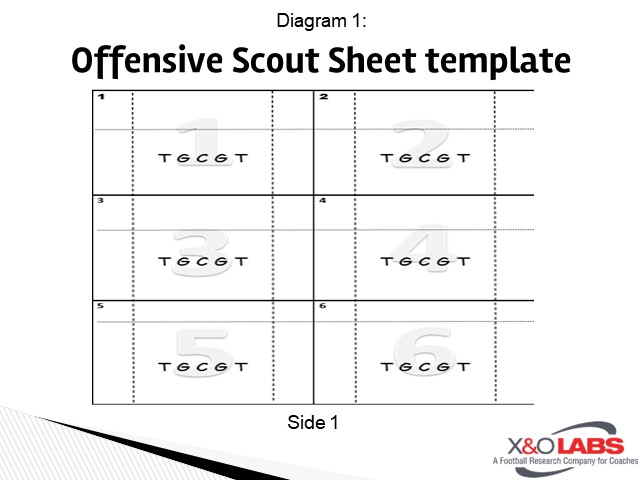
We, at Oxford, value reps and decision making while in practice. To do so, we needed to look at other ways to increase scout team effectiveness and efficiency. The traditional days of one coach holding the clipboard or drawing and trying to install the Wing-T in three minutes were wasting time and costing our guys valuable reps both physically and mentally. We needed to increase reps and reduce the number of guys standing around. This led to our Scout Offense sheets.


Scout Sheet:

Diagram 1

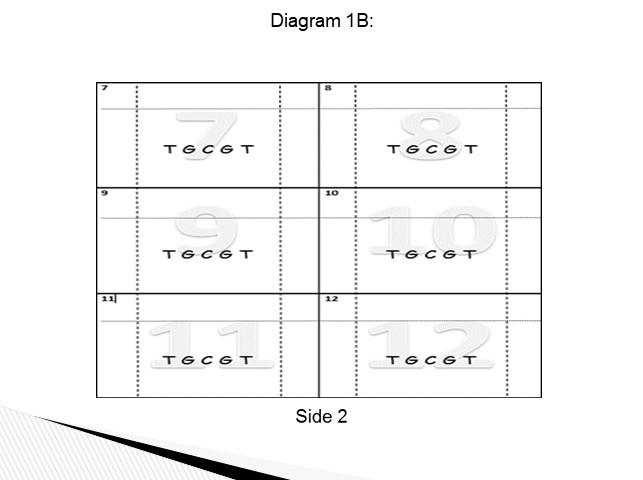
Diagram 1B


We developed and adapted a scout offense sheet that consists of 12 numbered plays, 6 on each side. We would have scout sheets draw for the different sessions of practice (Combo periods: pressure, pass concepts, inside run, 7 on 7 and Team Periods). As last season progressed, we made sure we included a few essential points to allow the sessions to run effectively.

  • Must include the defenders
    1. This allowed the scout to see where the defenders will be. This helps reduce the possible talent gap and any surprise of pressure.
  • Defensive call (highlighted for the scout team to see quickly)
    1. It allows the scout team to see our defensive call system and allows them to have an advantage in seeing movements and pressure.
  • The offensive plays are drawn.
    1. Used for blocking responsibilities and/or pass routes.
    2. It allows you to indicate any specific blocking responsibilities.
  • Use terms that describe your blocking and play-schemes (highlighted for the scout to see quickly)
    1. We will never be able to replicate schemes we do not run with the effectiveness to teach the details. We want our scout to play fast and develop in our offensive scheme, so we run our closest scheme (i.e.: Opponent A runs buck sweep; I will write our terms used for pin and pull on the sheet and highlight. Opponent B runs inside zone, I will write the term used for Duo on the sheet and highlight).
  • Put the letter for the hash mark in the location of the ball (M in the middle of the play box, etc.).
    1. Allows for our center to see the location and move there as quickly as possible.
  • Finally, the offensive skilled position must use your terminology and/or position letter indicators.
    1. Reduce all teaching and translation (i.e.: we call our TE the Y, use Y not TE on the scout sheet. i.e. FB is H).
    2. This allows for scout players to fill in their position quickly, feel more confident and play faster.


Read More

4 QB Drills to Teach QB’s to Extend Plays

By Mike Dovenberg
Offensive Coordinator/Quarterbacks Coach
College of San Mateo (CA)
Twitter: @CoachDovey


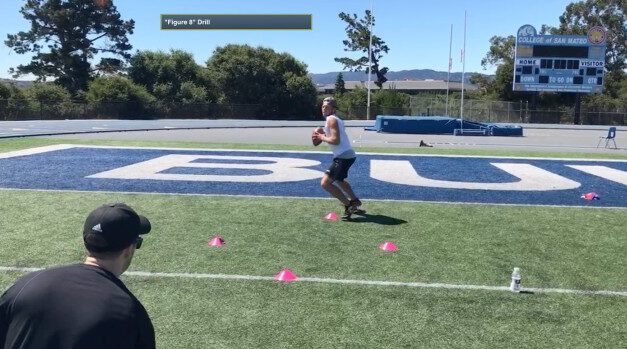
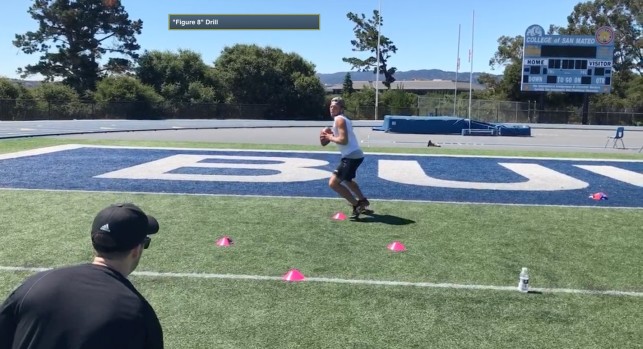
While every coach hopes to have a perfect, clean pocket for every play, the reality is that oftentimes quarterbacks are forced to adjust and throw from an imperfect base or on the run. There is certainly value in recruiting a great athlete for whom these things come somewhat naturally, but I believe as coaches, we can drill and improve these skills. These drills are designed to enhance a QB’s “toolkit” for making plays in real game situations.


Organization of a Drill Bank
At the College of San Mateo (CSM) and as a private QB coach, I organize my drills into five categories:

  1. General Footwork
  2. Throwing Mechanics and Body Control
  3. Perfect Drops
  4. Pocket Movement and Escapes
  5. Run, RPO, and Ball Security


For this report, we will primarily focus on the pocket movement and escapes portion. We drill at least one of these skills every day both and out of season. Let’s dive right into it.


Drill 1: Jog-Flip-Toss

Drill Mechanics

  • QBs pair up 10 yards apart with one ball per pair.
  • QB jogs slowly away from the target.
  • On command, flip hips & deliver the ball to the target. Switch turn direction & repeat.


Coaching Points

  • Emphasis is a fast turn with body control and smooth delivery of football.
  • Ball in secure carriage position (armpit to armpit).
  • Weight transfer from plant foot through the ball.


Clean follow through and throwing mechanics:

  1. Full arm extension.
  2. Elbow above the shoulder.
  3. Finish with a thumb to the opposite hip.


Read More

Formation Based Defensive Game Planning

By Vince Luvara
Defensive Coordinator/Secondary Coach
Washington & Jefferson College (PA)
Twitter: @Coach_Luvara


At Washington & Jefferson we are a 3-4 multiple front quarters team.  We are not a heavy pressure team; in 2019 we blitzed at 25% clip for the entire year.  We believe in having as many tools in our toolbox so we can adapt to whatever type of offense we are seeing week to week.  We have 20 different fronts we can use: both 4 and 3-man fronts.  We use 4 different versions of Quarters, five different versions of Cover 2, four different versions of Cover 3, two different versions of Cover 1, two different versions of 2-Man and 17 different 3×1 adjustment.  While we might not install everything in camp, we feel it is necessary to have these options when the situation presents itself.


Essential Questions

There are many things to think about when game-planning against an opponent.  Here are the questions we ask when making our defensive game plan.

  1. Who are their key players and what do we need to emphasize to be successful?
  2. What do we need to do vs trips and empty?
  3. Do they run unbalanced, is it end over unbalanced or true unbalanced?
  4. How are we getting off the field on 3rd down?
  5. What does the offense like in the Red Zone?
  6. How are we handling Wildcat?


Key Players / Emphasis

The first thing we look at is what did we do well last week and what didn’t we do well.  Most offensive coordinators will try to attack your weakness, so the first thing we do is come up with a way to improve what we did poorly the week before.  For example, if we felt our tackling was poor the previous week, we might hit our tackle circuit double.  Or if we felt we didn’t handle a route combination well we will go over it in an extra half-field coverage period

Then we look at who is their go-to skill guy and what do they do well and what don’t they do well.  For example, does a QB escape to one side better than the other, if so, we will try to flush him to that side.  Do they have a higher percentage of times they are throwing to a certain guy in critical situations?  What is their go-to run play?

To do this we might decide we are going to double team a certain guy or on passing, situations run a twist or pressure from one side of an opponent’s formation or only on a certain hash.  It might be we are running gap scheme movements this week as opposed to our zone scheme movements.


3×1 Thought Process

Back Strong / Pistol: What RPO’s are they running? Are they Sprinting out? Then try to match our 3×1 coverages to what they are trying to do out of 3×1 Back Strong / Pistol.

Back Weak: Are they releasing the back or is he staying in the protection? If their best WR on the backside of 3×1?

For the 3×1 Back Strong/Pistol we are going to play more drop-down coverages from the field safety so we have 3 over 3 pre-snap so the read is telling the QB to hand the ball.

With 3×1 Back Weak we are going to look at stuff that is going to give us 3 over 2 into the boundary to hand and route combinations from the single receiver and the running back to take the linebacker out of conflict.


3rd Down Thought Process

3rd down is its own entity and a ton of film preparation goes into how we will play it. Here are the questions we will ask ourselves as we prepare for 3rd down. 

  1. Who is the go-to guy? If there is a designated go-to guy, we can double that guy, roll coverage to him or put our best defender on him.
  2. Is the QB a Runner?
  3. What is the Protection? Slide or Man? 5- or 6-Man Protections? We will design our pressure based on the protection.
  4. Run / Pass vs. Down and Distance. There is usually a cut-off point for each play-caller when they will run the ball vs when they will pass the ball.
  5. Pass Type (3 Step, 5 Step, Sprint Out, Boot, Screen) & Concept vs. Down and Distance.


Read More

4 C’s of Continuous Movement in Press Technique

By Dan McKeown
Defensive Coordinator & Defensive Backs
Saginaw Valley State University (MI)
Twitter: @DB_McKeown


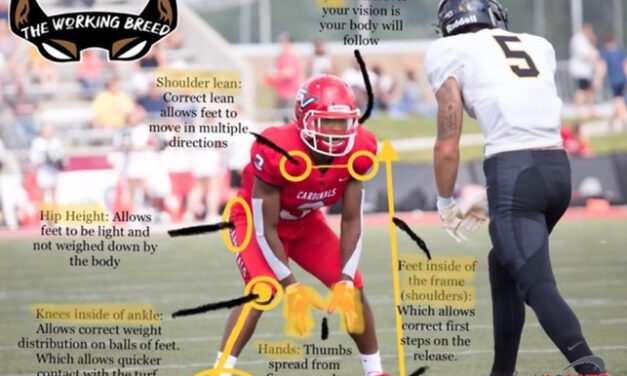
Press coverage with cornerbacks is an advantage! Pressing with the CB’s gives us route elimination based on releases, instant re-routes, interruption of timing, the ability to put more defenders around the ball, and the fulfillment of a competitive DB’s nature. I’d like to identify that press isn’t a form of a physical bump and run method but rather the concept of disrupting WR’s while staying on top of their route for as long as possible. QBs and WRs will run their routes on air every day and develop timing together. Now let’s say they do it again, but I place a barrel in front of the WR. Their timing will already be different. Now imagine if this barrel moved to stay on top of the WR and cut his angles off! The timing they worked on is now off schedule, and that’s why press is an advantage. Different coverages dictate different elements of press but in this case, we will focus on press coverage used in our quarters and cover 1 concept. I’ll spend more time talking about the release part of the press because it’s where common technique issues can be cleaned up.


A key component to press coverage: Continuous Movement

A couple of years ago I watched all the top CBs in the NFL and wanted to see what made them the best at their game. There were different styles of play but the one thing that showed up with all of them is they moved with efficiency. Moving with efficiency is to get from point A to point B as quickly as possible with the least amount of energy. A lot of words like fluid or smooth would describe what we call being efficient. All these top NFL CBs moved efficiently that allows them to obtain continuous movement. They took steps that continuously directed them to their intended direction without losing any speed. These elite DBs didn’t take “gather” steps which I would define as an unnecessary extra step in between transitions. This was the difference from the elite to the rest. It showed up, especially in press coverage. From this, we developed how to obtain continuous movement in our DB’s. If we can move with efficient steps in press coverage, we feel we have the advantage.

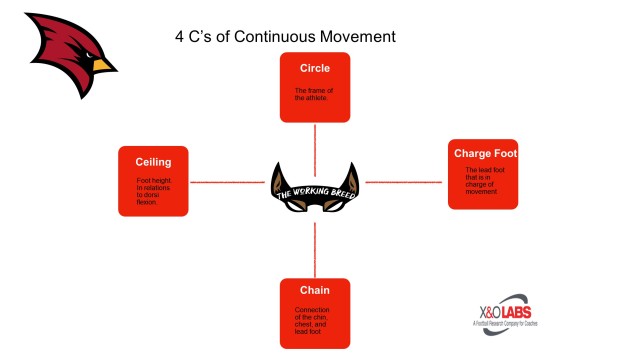
Continuous Movement: Four factors based on biomechanics that work together to create an efficient movement. We call them the 4 C’s of Continuous Movement

Diagram 1


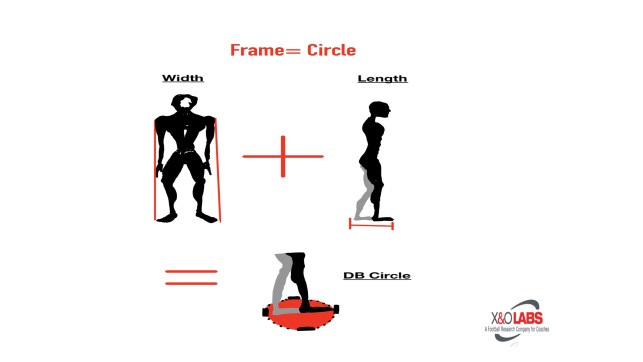
Circle: Staying within our frame. Our frame must be defined in a 360-degree manner. The width of our frame is our shoulders down to the floor. The front to back part of our frame is the length. To find the length you can stand on one leg and put your other foot behind the standing foot while keeping it flat (dorsi) on the ground. Take the width (side to side) and the length (front to back and drawing a circle around them. That is your frame. Our objective is to stay in our frame all the time.

Diagram 2


Ceiling: It’s our foot height We want to keep our feet dorsiflexed while pedaling, scooting, and shuffling. This allows us to keep our feet under us and in our circle. Our foot height should be like a heart monitor in transitions. For example, when backpedaling and then opening the height on the monitor should all be the same. What I mean is the rhythms should all look the same until you get into a run. We will gather step when our rhythms are inconsistent. An example would be sliding our feet on grass then picking them up to transition.

Read More

Using Target Grades for Defensive Evaluations

By Nick Davis
Defensive Coordinator/Defensive Backs
Rose-Hulman Institute of Technology (IN)
Twitter: @CoachNickDavis @SpreadDefense


Grading the defensive player targeted on each play started as a way for me to grade our defensive backs in Skelly and 1 on 1 periods during our Spring practice.  I would simply put the player’s number in a Hudl column to keep track if he were playing well or not.  I was able to go back and make a playlist for every player.  At the end of the Spring, I met with each player and had real information on what they did well and what they needed to improve on. The player then also could go back and easily watch every clip.  We took the idea into the season because I was tired of the traditional grade scale where a DB might grade out at a 90%, but the three times he got targeted, resulted in touchdowns. 

What I quickly found was that it provided me other great ideas I could use along with this concept. We started to grade every targeted player on both run and pass plays.  We ran reports to see who was the most efficient. We created an in and out of position aspect to the system.  We will use this data as a performance grade. We want you to be correctly aligned every snap. If you are in the right spots, but not making plays, the coach needs to change what he is asking that player to do or find a new player to get the job done.   


“Targeting” Criteria

Grading every targeted player is an easy process. I will start with how I grade pass plays.  If you are playing a man concept it is the man defender who was targeted.  If you are playing a zone concept, it is whatever players’ job it was to be in that zone.  Any sack we will give credit to that defensive player that got the sack.  If the ball is thrown out of bounds because someone was chasing the quarterback, we give credit to that defensive lineman. If it is a bad call as a coach, I take the blame for the call.  If I am listed on the target sheet too many times, then I need to look at the calls I am making. On run plays, it is the defender whose job it was to make the play based on your defensive scheme. If a guy misses an assignment that creates a big hole in the run game, we will give blame to the player who blew the assignment. If a player gets a tackle for a loss, we give that player credit. 

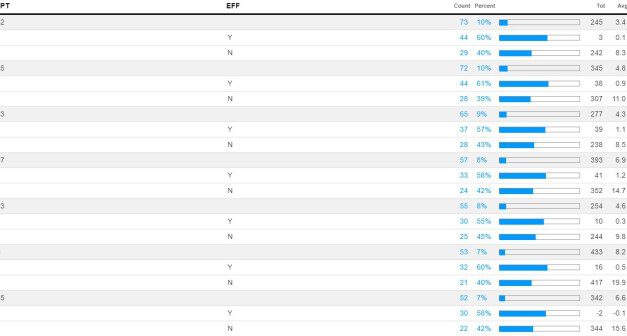
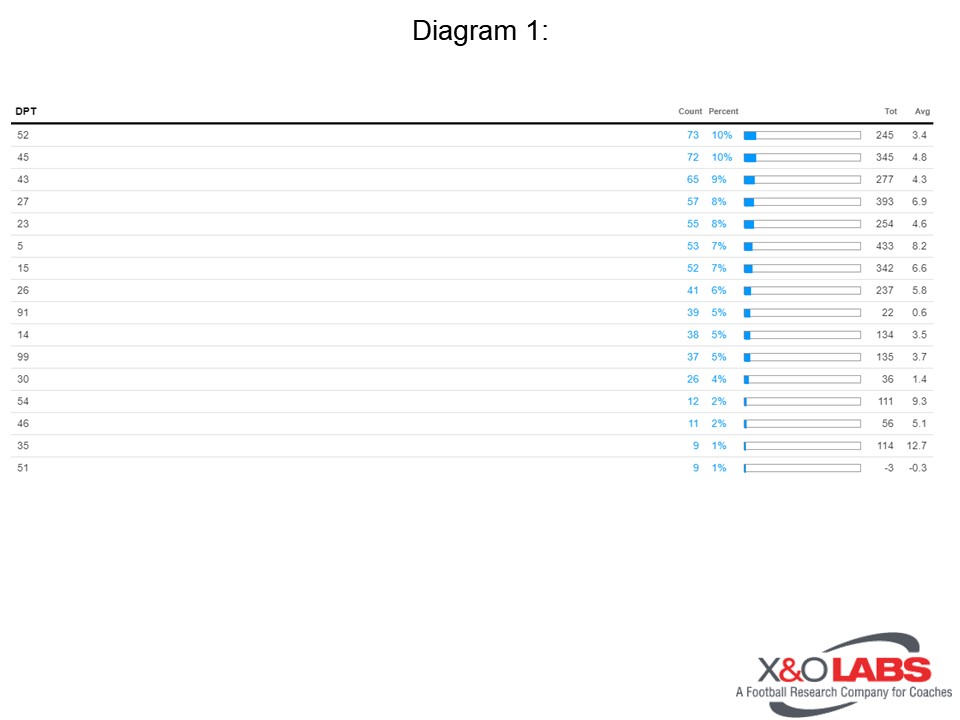
I would suggest a coach that knows the whole scheme to input this data.  I found in a ten-game season our top guys targeted only have a chance to make a play five to eight times a game. Our top targeted player in the last two years has been under eighty snaps. The good thing for us that player was a 1st team all-conference player and teams averaged under 4 yards a play when he was targeted. Once we have all the players down for a game or season, we run a report and see who got targeted the most and what the yardage was. In the diagram, you see #52 was targeted 73 times all season and gave up 3.4 yards per play.  What I have learned is you want your linebackers under 4 yards per play. You want your defensive lineman under 2 yards per play. You want your defensive backs under 5 yards a play.  

Diagram 1


Read More

Defending 3×1 Formations with Split Field Midpoints

By Kurt Twichell
Defensive Coordinator/Linebackers Coach
Portage Central High School (MI)
Twitter: @coachtwich


Trips sets are football’s simplest unbalanced concepts and require some sort of compensation from the defense to match the numbers advantage created by the offense to the trips side. While there are many types of 3×1 sets and therefore many different ways to play them, I am going to highlight today our base “Midpoints” check that we use to defend formations that involve a detached #3 receiver in a traditional 10 personnel spread set.

Midpoints is something we learned from Pat Narduzzi’s staff in his time at Michigan State, and it plays off of the mathematical trend that the least targeted receiver in 3×1 is the farthest #1 to the trips side (7% of all 3×1 targets against us in 2019). As the name implies, Midpoints is going to align our corner to the trips side 7 yards deep and halfway between the #1 and the #2 receiver, or on their “mid-point.” Midpoints dares the average high school QB to make the farthest throw, while leveraging our defenders to the much more accessible interior receivers, who are also matched by an underneath player.

It is also worth noting for us that in 2019, nearly 80% of our defensive snaps took place from a hash, further increasing the distance from the QB to the #1, and thus decreasing the chance that he will be targeted. When we look at the math, we can see why. On a high school hash with a straight QB drop of 7 yards, the distance of a throw to the opposite sideline of 10, 15, and 20 yards downfield is roughly 39, 41, and 45 yards, respectively, that the ball must travel through the air.

We feel that the biggest strengths of this check at our level of high school ball, compared to other ways to play against 3×1, are two-fold. The first is the ability to protect the deep shots, limiting the big play capability of an offense by leveraging the spacing of our 4 defensive backs with their 4 primary receivers, while also gaining re-routes on the interior receivers. Secondly, Midpoints keeps us truly split-field and allows us to keep our boundary safety to the short-side to assist our corner with the receiver – who oftentimes is the offense’s most explosive player. We have multiple ways of involving our boundary safety to combat the offense’s tendencies, which I will briefly touch on later, but using Midpoints to stay split field gives us maximum flexibility.


Alignments

The early version of how we taught this had the safety follow a similar horizontal alignment rule mid-pointing the #2 and #3, but we have since moved him on top of #3 after we had some difficulty with the #3 on bender routes in the middle of the field.

Our overhang/Nickel, who is fully out of any primary run fit versus a detached #3, will align on the inside eye of #2 at 5 yards and follow his standard C4 rule of walling #2 from entering the middle of the field. The Mike is the #3 wall player and will align in a 50 on the outside hip of the OT.

I should also note that we prefer to set the strength away from a detached #3 to reduce the conflict of the Mike (RPO) by giving him the B gap, and also protecting the boundary Will with the presence of a 3-technique weak. You can see our alignments below.


Assignments

CB

In his deep ¼ of the field, the corner’s responsibility is to lean on the vertical of #2 and be ready to fade back on #1 in the event of #2 pushing off his vertical stem. We had initially kept him on a square pedal technique, but have since resorted to more of a side-shuffle/kick technique to allow him to push off of his back foot and drive on any underneath throw, see the seam route and cap the vertical of #2, or fade back into the sideline on #1 without having to flip his hips. He is also allowed to show press on #1 initially but must bail pre-snap in order to ensure he can overlap #2.

If this sounds familiar to Cover 3 technique, it certainly is. One of the things we love about coaching Midpoints is the easy transition of teaching our corners their Cover 3 technique in some of our zone pressures. We do not coach him any differently, which allows us to use the much-coveted “same as” style of teaching that we strive to use as much as possible.

Here we see how the corner would overlap and top a vertical release from #2 after getting a re-route from our Nickel.
 

FS

The field safety’s primary responsibility in Midpoints is to play the vertical of #3. At 10 yards off the ball, we still want him to pedal out of the snap with eyes on #3. If #3 deviates off his vertical path before underneath the Mike, he will shift his eyes to #2 and get over the top (compress with the corner).

Here we see the distribution vs. a common sprint-out, flood concept.


The technique of the FS is the “same as” he would play 2-Read, one of our other common ways to play 2×2, except now it is to #3 and #2 (important to note that we are NOT playing 2-Read, the Nickel is doing something different, but the teaching of the safety is exactly the same). The FS must be the topper of the coverage and will add on late to any screen game (more below), needing to sit on top of the pump-n-go.


Nickel/Sam

Our Nickel has perhaps the most important role in Midpoints, as his eye control and technique are going to have a direct impact on almost anything the offense tries to attack us with. The initial key of our Nickel is the #3 receiver, as he will be responsible to push out with him on any out-breaking route or bubble.

Defending screen game is one of the main concepts that must be worked against in Midpoints and is a way that offenses will often look to attack with the deeper safety off the ball. We are looking for the Nickel in this case to “crack the crack” and work over the top to compress the ball back to the Mike and FS. The tighter the Nickel plays to the LOS, the more difficult this technique is, so we need to ensure that his heels are 5 yards off the slot to give him the vision and pursuit angles he needs to be successful.
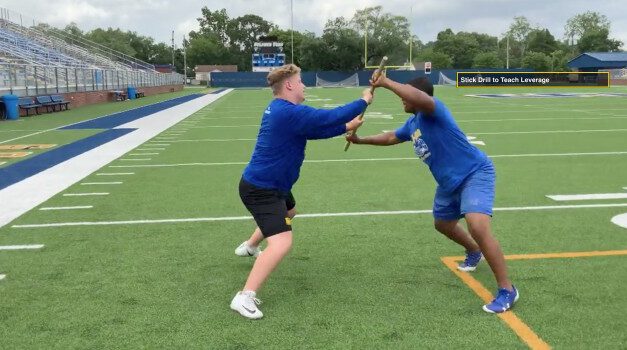
 

Read More

Game Week Efficiency and Organization of the Punt Block Unit

By Andy Merfield
Cornerbacks Coach & Special Teams Coordinator
Benedictine College (KS)
Twitter: @RavenFootballBC


With limited time to practice special teams during a game week, it is very important to be as efficient and organized as possible. This is especially important when it comes to the punt block unit. In my experience, among the main four special teams’ units (kickoff, kickoff return, punt, and punt return), this one is typically given the least amount of practice time and often does not get the first choice in special team’s personnel. To be successful on the punt block unit, it is important to be efficient and organized with your scouting, game-planning, meetings, and practice time.

I think it is important, on the punt block unit and in other areas of football, that one does not try to be too good at everything, every week. We have three main points of emphasis when game-planning on the punt block unit: pressuring the punt, returning the punt, and defending fake. Most weeks, we will choose to focus on only two of those three areas. With limited time to plan, meet with players and practice, I have found that focusing on only two areas can help provide clarity as we strategize for the game and structure our practice time. I will come back to this topic in more detail when I discuss game-planning.

In this report, I will first discuss the work that goes into setting up your scheme in the off-season. Then I will cover practice work and player selection on the punt block unit. Finally, I will review game-planning and what we do to prepare our punt block unit during game week, as well as some thoughts on how to handle game-day decisions. I will specifically focus on organization and efficiency on this unit, but I think that many of the procedures we use can also be applied to other special teams, as well as offense and defense. 


Offseason Work and Setting Up Scheme

During the offseason, I will conduct a review of the previous year’s unit. This review will include statistics on which of our calls and concepts were most successful, ideas on our scheme and better ways to coach and drill our techniques, notes on our opponents’ schemes and better ways to attack their protections and coverages, and thoughts on our personnel (especially underclassmen who will be with us again in the coming fall).

In the summer I will build a menu of pressure and return calls that we like against different punt team structures. We primarily see shield-style protections, along with a few teams that use pro-style protections. If an opponent is radically different from one of those types of structures, usually I will have to put together something a bit different for us as well.

On the pressure menu, we will usually have four or five different pressures that we use against shield teams, three that we use against pro-style teams, and one main concept against rugby teams. It is important to note that we will only carry one or two different pressure calls into a given game (more on this when we get to the game-planning section).

Building our pressure menu helps reduce the time one has to spend creating new concepts during a game week. It’s akin to offensive coaches who have a true ‘system’ (i.e. wing-T or flexbone option) with all their answers built into the scheme. They do not have to game plan all day Sunday, because they already know what they like against different coverages and structures. We try to be the same way with our punt pressures; we just categorize what we are going to be seeing and choose from the menu based on the specifics of what the opponent does.

For our returns, our basic structure rarely changes. We will always carry a man return (every man wins his one-on-one matchup) and sometimes a directional return as well. We will game plan our directional return based on the opponent’s kick placement and coverage tendencies. To increase efficiency and learning transfer, almost all players will have the same responsibility on our man return and our directional return. On the directional return, we are just telling them where the ball is going and what leverage we want them to have on their man.


Practice Work

As we get into practices during spring ball and fall camp, our attention turns back to our players and the techniques that we use on the punt block unit. During spring practice and fall camp, we only do drill work in a circuit format, small groups, or one-on-one competitive work. We rarely will do any full-team reps before the first game week. I think this ties in with the emphasis on efficiency and technique. We teach our players the proper techniques, then (once we are in-game week) let them apply their techniques to different pressure and return calls.

In our game week practices, we will sometimes use some of the punt block practice time to break up into smaller groups. This allows us to best utilize our time so that all members of the team are working on the skills and calls that are most relevant for them. We will also try to use the same scout-team players throughout the season to simulate the opponent’s punt team. That way the same players are always working similar techniques from week to week, which gives us a better look. If there is anything special that the punt team does (speed huddles or drastic shifts, etc.), we can try to build in some time during practice where the coach who works with the scout team can get them organized while the players on the punt block unit do drill work.


Player Selection

As we come out of fall camp, we work to put together our depth chart. I think it is very important to categorize players based on their abilities and stack up against players on the depth chart with similar skill sets (often players who play the same defensive or offensive position). In the same way that an offensive coach should be able to describe the characteristics of their ideal tight end, a coach running the punt block unit should know what he is looking for in different positions and roles. This helps with the efficiency of running the unit in that when you need to make changes to the depth chart, you already know what you are looking for in that position. Using circuit training on this unit allows our coaches to instruct all players in the same basic skills and evaluate a wide variety of players and put them in positions where they can be successful. Here are the general roles that we use on the punt block unit:

Corners: our players at the corner position are almost always cornerbacks by trade as defensive players. We need guys we can trust playing man coverage in space.

Secure: we will have two players whose primary job is to secure off the edge and make sure the ball comes inside on any potential fake. These players are rarely the most athletic ones on the field, but they are guys we can trust to get the ball turned inside and make a tackle if necessary (usually backup linebackers or safeties). These players are often ones you would not want in a one-on-one hold-up situation, but once the ball is kicked, they can hustle back and get in someone’s way to have a chance to spring a big return. 

Block emphasis: the best punt block specialists I have been around all having great athleticism and desire to get to the block point. They must also have the intelligence and toughness to navigate protections and survive collisions with the shield, and the courage to go after the block when they can do so. We also coach our guys on their decision-making around the block point. This is a clinic talk for another time, but we give specific coaching points on where and how to finish, when to leave their feet, etc.  In three seasons I have run the punt block unit, we have blocked 16 punts and only had three roughing/running into the kicker penalties.

Return emphasis: other players on the unit focus more on returns and are rarely in on the rush. These players need to do a great job being tenacious and persistent to win their one-on-one matchups.

At the college level, we also always have a player on the field (usually an experienced and trustworthy linebacker or safety) that can make checks within the game plan or if the opponent presents an unfamiliar formation.

Returner: the returner needs to be trustworthy and sure-handed above all else. No matter how athletic he is, if he has issues with ball security, he will not be on the field for us in that role. Usually, with punt returners, agility and quickness in a small space are more important than blazing speed.


Read More

Using The “Dent” Technique to Eliminate Vertical Seams in Gap Runs

By Alex Smith
Defensive Coordinator
Spring Lake High School (MI)
Twitter: @ASmith032


It is my firm belief that you will always get what you emphasize. At Spring Lake HS, our goal on defense is to keep things simple for our kids, present multiple looks to the offense, eliminate vertical seams in our defense, and force running plays to bounce to our perimeter players. For us to effectively execute this style of defense, we spend a lot of time working on what we call the “Dent” technique.

Before we begin talking about what a dent is and how we teach it, I’d like to define what a “Vertical Seam” is, and why they must be eliminated.

Diagram 1


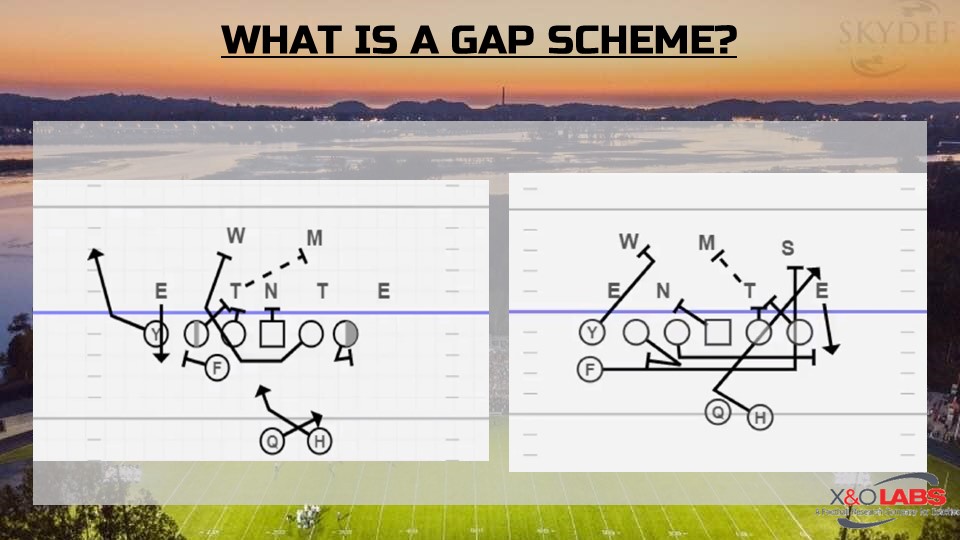
VERTICAL SEAM = A gap that is created when an edge player runs upfield and is kicked out by a puller/lead blocker.

The clip below is an example of what we define as a “vertical seam”. As you can see, the right defensive end runs upfield and is kicked out by the pulling guard. This is where the vertical seam in our defense is created. It is also important to note our play side ILB and rolled-up safety in this clip. Notice how they are working towards the sideline on their pursuit path, expecting the ball to be sent to the perimeter by the edge player. If the edge player would’ve executed a dent technique, there would be no vertical seam and a minimal gain.

Read More

Teaching OL Physicality in an Up-Tempo Offense

By Adam Kirby
Offensive Coordinator/Offensive Line Coach
Sulphur High School (LA)
Twitter: @CoachKirby25


The up-tempo, RPO offense has taken the football world by storm in the last decade. Around the time Chip Kelly popularized this style of play as the Head Coach at Oregon, everyone in football from high school to the NFL has been looking to go faster and, in this thinking, offensive line fundamentals get lost. My goal for this article is to help bring some clarity to the following questions:

  • Explain the advantages of playing fast
  • Help you understand the OL’s role in an up-tempo offense and the challenges facing offensive linemen
  • Demonstrate and explain drills used to maintain physicality and technique in the up-tempo system
  • Give you some ideas and how to implement them into your up-tempo package


My first offensive coordinator job came in 2016 at Southwestern College. When I became an OC, I knew that I wanted to jump on board with the up-tempo, RPO offense that everyone around the country was operating, but I had no idea how to implement the system itself into my offensive line. I was worried that going fast meant too many 3 and outs, that the offensive line would become tired and play lazy and that we’d hurt our team in the long run by forcing the defense to play 2/3 of the game. And although these concerns were legitimate for our offensive staff, gravitating to the up-tempo offense paid dividends for our program both at Sulphur and at Southwestern College. Some advantages that we’ve found from going fast on offense are:

  1. Keeps it simple for the players/coaches
  2. You don’t have the time to dwell on mistakes or missed calls
  3. Makes the defense play left-handed
  4. Forces defense to stay in their base defense which makes calls easier
  5. More speed on Offense leads to less movement by the Defense
  6. Simplifies reads and adjustments for your QB and OL
  7. It allows your players to have fun and GO!


In operating out of an up-tempo system, the toughest aspect that I’ve found to monitor daily is being fundamentally and technically sound. I think the common knock on up-tempo teams is that their offensive line isn’t physical – it’s more, “get in someone’s way and let the running back get 4 yards.”

The one thing that we demand from our offensive line is physicality and I believe that as a unit, you can overcome a lot and cover up some mistakes if your offensive line is physical and plays nasty at the point of attack. From my experience, physicality is a learned trait that needs to be pushed every day in practice. Kids are kids and regardless of the level (1A-5A, NAIA, D3, D2, etc.), they will take the easy way if allowed. In practice, this is our blueprint for success:

  1. An individual period should be the most difficult part of practice for your guys!
  2. As a coach, you want to work your offensive line the hardest the first 20-25 mins of practice.
  3. Set the expectation in pre-practice so you don’t have to ‘turn it on’ during team periods.
  4. If they are going out there and “walking through” the drills, then you need to change a) drills or b) your expectation


Read More