Adding Empty as a Mid Season Wrinkle


Editor’s Note:  At this point in the season, everyone is looking for a new edge.  Some are looking to keep their struggling teams engaged and competitive while others are focused on adding wrinkles that can push their team over the edge into post season play.  In either case, adding the empty formation, along with a few complimentary plays is a simple way to create such wrinkles without having to completely change your teams offensive philosophy.  The following article gives a great overview of the simplicities and possibilities that can come with the empty formation and will provide you will multiple ways to use as part of your offense starting this week. – Sam Nichols, X&O Labs Managing Editor


Adding Empty to Create Mid Season Wrinkles

By Chris Parker

Head Coach

Pickens High School (GA)


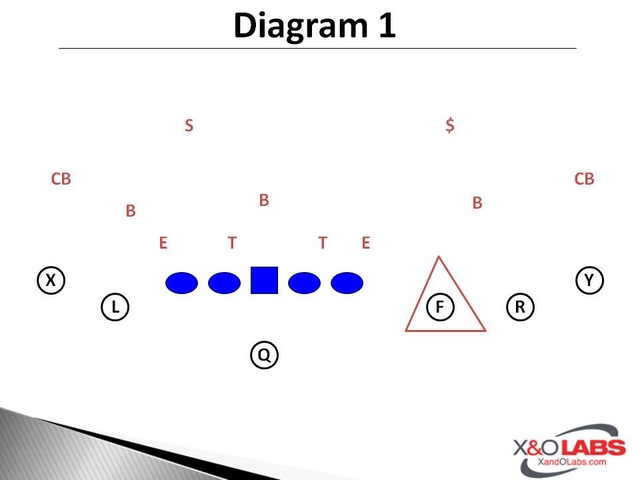
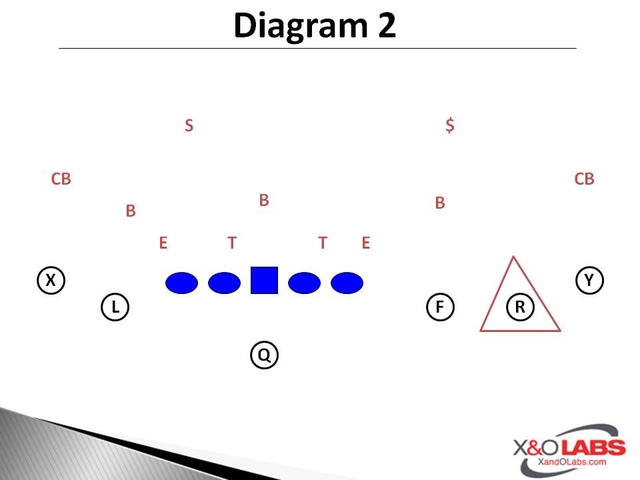
Empty creates matchup problems for the defense.  They must remove defenders from the box in order to cover all receivers or they must keep the box sound and leave a defender uncovered.  If the defense keeps 2 high Safeties, a receiver is always uncovered.  If there is only one linebacker on our 2 inside receivers on the Trips side, one of them is uncovered.  Diagram 1 shows a 2 high look where the #3 receiver is uncovered.  Diagram 2 shows a look where #2 is uncovered.


Slide1Slide2


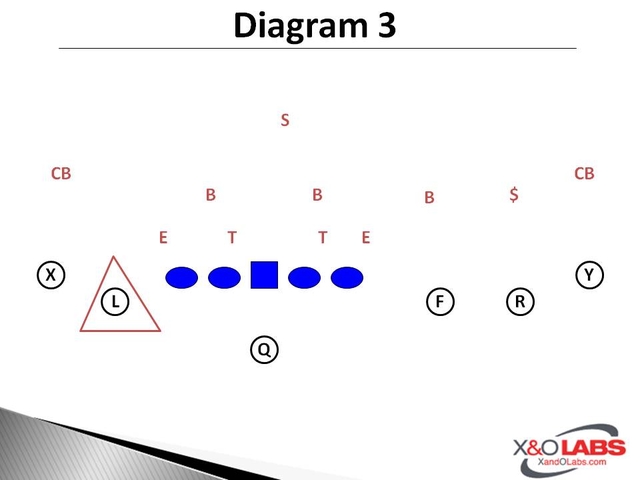
Diagram 3 shows the weak side inside receiver uncovered.  We get this a lot on the hash.  In order for them to leave only the weak #2 receiver uncovered, they have to roll to 1 high which can create some passing matchups and an uncovered receiver underneath. 

Slide3

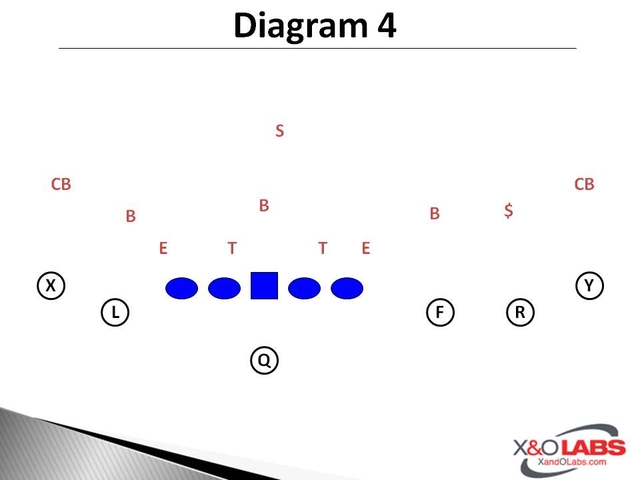
The only way that all receivers can be covered is if the defense rolls to 1 high and leave 5 in the box (could be 4-1 or 3-2).  With 5 offensive linemen you should be able to get four yards or more on a running play to this box with your inside run game (Diagram 4).

Slide4


Empty Package

The empty formation is full of possibilities, but most of all, it clarifies the defensive responsibilities to allow for a simpler and smaller offensive playbook.  We break our playcalling down into 4 play groupings which include inside run, screens, quicks, and drop passes.  Within those groups we run the blocking scheme, passing combinations that are the cornerstone of our offense.  Here is a look at each of those groups and what we are looking for. 

Read More

Game Planning: Scripting to Play Fast

By Alan Stanfield
Offensive Coordinator
Whitworth University (WA)
Twitter: @coachstanfield5

Introduction:

whitworthI began coaching 16 years ago at a small high school, and have been calling plays from a No Huddle offense ever since. The largest evolution for me has been streamlining plays in two specific ways: First, the terminology used in a play, from many words to as few as one; and two, taking single stand-alone plays and combining them into a singular play concept. As a staff, we now try to live by a 25-play script rule in our game planning process.

Consequently, our players maximize the practice reps they get with specific play concepts and we think a greater mastery of our offense is accomplished through how we practice the game script. This process, more than anything else, has sped up our play calling on game day and allowed our players to play at a high tempo pace.

Playbook Organization:

Every staff will go about deciding their offensive plan of attack in different ways, but clearly organizing the playbook is a key starting place for any style of offense. Our playbook is broken down into six categories:

1) Base Run: 2-3 Concepts (These don’t change week to week)
2) Miscellaneous Run: Tool box of 2-4 concepts or add-on’s
3) Screen/Draw: 3-4 Plays
4) Base Pass: 3 Concepts (These don’t change week to week)
5) Miscellaneous Pass: Tool box of 3-7 concepts or add-on’s
6) Quick Game: 4 Concepts

Editor’s Note: Click here to download Coach Stanfield’s sample game plan on Excel.

Weekly Install:

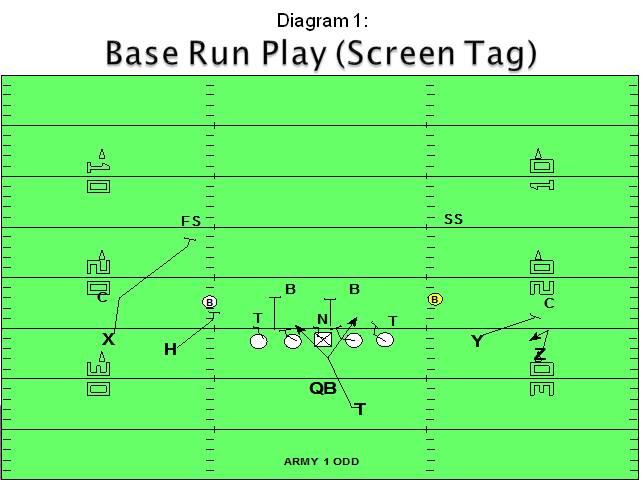
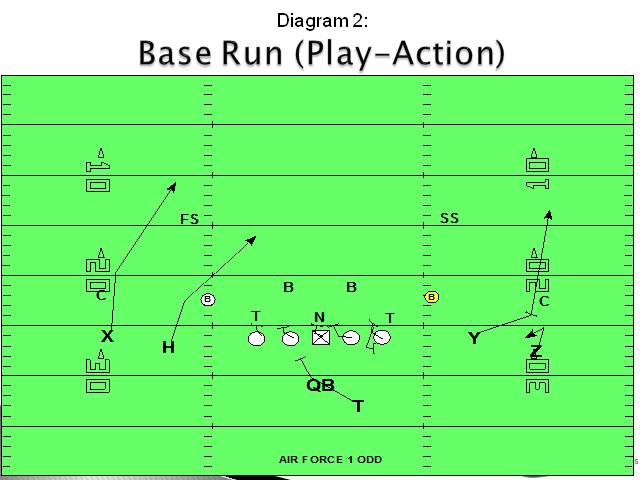
Sunday: The staff sets the script. Rarely are there actual new plays installed week to week, but how we mix and match our base concepts can change by opponent. For example, with our base run play (Inside Zone) we can feature a variety of formations and receiver screen options based off our specific opponent scout profile. In addition, we like to run different play-action WR screen look-alike plays that attack the field vertically when the secondary starts over committing to our Inside Zone or perimeter screen game. In every game script, we try to package our base offense to be great at three specific attack zones: 1. Interior run game (the box); 2. Perimeter (horizontally stretch); and, 3. Verticals. (See Diagrams #1 and #2)

Slide1

Slide2Next, we carry our scripts through three specific play-calling situations:

#1: Openers (1st & 2nd down)
#2: Red Zone
#3: 3rd Down by distance

Read More

15 In-Season Block Destruction Drills by Position

By Mike Kuchar
Senior Research Manager
X&O Labs
Twitter: @MikekKuchar


Introduction

westfieldIt would be impractical to teach how to get off blocks without first teaching the proper hand placement in order to do so. Many of the following drills emphasize the actual placement of hands as well as how to defend against types of blocks.

Defensive Line Block Destruction

We categorized the defensive line component of block destruction by presenting both run and pass. The focus of these drills is to teach defensive linemen how to defend against one-on-one run blocks (base, down and reach blocks) as well as pass blocks.

Drill 1: 5 Dot Drill, Thurmond Moore, former NFL Defensive Line Coach

Reinforcement: Teaches proper vertical and lateral hand placement of defensive linemen as well as the quickness of punch.

Diagram1

To see video of the 5 Dot Drill, click on the video below:

Editor’s Note: The following videos by Thurmond Moore are contributed thanks in part by FootballUniversity.org.

Read More

5-Point System for Post-Game Evaluations

By Casey Miller
Offensive Coordinator
Cottonwood High School (UT)
Twitter: @cqmiller4


Coaches spend hours and hours of time each offseason doing installs, drills, footwork, conditioning, and many other countless activities with their players to prepare them for the season. These many activities are critical to the success of each and every player regardless of their position on the football field. When evaluating player performance in practices, scrimmages, or games, often players are only given grades based on a +/- system which more often than not, is mostly based on the result of the play, not based on more of the skills that coaches spend so much time working on with their players. Being able to give each player much more specific feedback on which things they are doing well, and more importantly the things they need to improve upon can give them the buy-in to focus on those skills during practice sessions the following week, which will lead to more focused players in practice. The number one thing that tends to be the driving force behind not having a more specific and detailed grading system is TIME.


The System:

Our grading system gives each player a score of 0 or 1 in 5 categories for each play. These scores are then turned into an overall grade for the play, an average score for each category for the entire game, as well as an overall grade for that player’s performance that week. Using an Excel spreadsheet, the coach grading that player just has to copy-paste the playlist from HUDL and start grading… the worksheet does the rest of the work for you. Since each position has slightly different things they focus on, each position has their own set of categories that get scored. For instance, a QB has both a pre-snap decision-making process and a post snap decision- making process for each play. He could do one well and not do the other one, so they need to be tracked separately. A running back may only have his read post snap, so giving him a grade for “pre-snap read” would be a waste of time. We feel as if we have created an objective way to grade all positions with great detail, give specific feedback to each player about their performance, and have tried to eliminate the often times result-based grading system that many coaches use. The 5 categories for each position in our grading system are:


Quarterbacks

  1. Pre-snap
  2. Post snap
  3. Footwork
  4. Mechanics
  5. Finish


Runningbacks

  1. Presnap
  2. Assignment
  3. Footwork
  4. Mechanics
  5. Finish


Wide Receivers

  1. Pre-snap
  2. Assignment
  3. Footwork
  4. Mechanics
  5. Finish


Offensive Line

  1. Pre-snap
  2. Footwork
  3. Head Placement
  4. Hand Usage
  5. Finish


Tight Ends

This is always the fun position… they are graded as OL on run plays, but WR on pass plays


Defensive Players

  1. Alignment
  2. Assignment
  3. Technique
  4. Reaction
  5. Finish


Read More

In-Season Strength & Conditioning Model

By Robert Hubbard, Jr.
Safety Coach
Douglass High School (OK)

Introduction:

Since football is a ballistic sport, the in season emphasis or our S&C program is on anaerobic conditioning. To introduce the body to the dynamic interchange of distances during a football game, “interval sprints” are performed for post-practice maintenance. Different distances are sprinted with a rest period of 15 seconds between sprints:

Sprint:                                Rest:                                                                          

  • 30 yards                               15 seconds
  • 60 yards                               15 seconds
  • 5 yards                                 15 seconds
  • 40 yards                               15 seconds
  • 20 yards                               15 seconds
  • 70 yards                               15 seconds
  • 5 yards                                 15 seconds
  • 90 yards                               15 seconds
  • 30 yards                               15 seconds
  • 5 yards                                  15 seconds
  • 100 yards                             15 seconds
  • 30 yards                               15 seconds

Over a four year period, each year representing a cycle, the intensity level will increase. Therefore, our players will continue to grow in stamina throughout their careers.

Read More

RPO: 9 Drills to Train the QB’s Eyes

By Mike Kuchar
Senior Research Manager
X&O Labs
Twitter: @MikekKuchar

Introduction

sscWhen conducting our research on RPO concepts, we found that the majority of coaches package their RPO concepts together, meaning they will teach both the run element and pass element at the same time. Then, they will work on developing the QB’s pre-snap read key and post-snap movement key. This comes in the form of constant drill work, which is done on a daily basis. These are the drills below that these coaches are using to train their QB’s eyes to make the correct reads in RPO concepts.

Drill 1: QB Pitch, Plant and Throw Drill

Slide1

Contributor: Bill Conides, St. Stanislaus College (MS)

Purpose: Teaches QBs to receive snap, threaten line of scrimmage and get ball out to pitch key.

To see video of this drill, click on the video below:

Read More

Virginia Tech’s Defensive In-Game Operations

By Mike Kuchar
Senior Research Manager
X&O Labs
Twitter: @MikekKuchar


Introduction

budfosterLast spring, X&O Labs Senior Research Manager Mike Kuchar spent three days with Bud Foster and his defensive staff studying the Hokies Bear Package, which the Hokies used on 54 snaps to hand Ohio State University its only loss last season. While the entire Bear study can be found here. Coach Foster also spend some time talking to Kuchar about what many feel is one of his biggest strengths as a defensive coordinator, his in-game adjustment ability.

Mike Kuchar (MK): What do you work off of in the game to relay your calls?

Bud Foster (BF): I have my call sheet which as the following components:

  • First and ten to start a drive
  • First and ten within a drive
  • Second down and 11 or more
  • Second and 7-10
  • Second and 6 or less (which is just like first and ten)
  • Third down variables by separating run vs. pass tendencies
  • Third down and two or less
  • Third and medium which is 3-6 yards
  • Third and long
  • What do they do after a first down run of three yards or less
  • What do they do after a first down incompletion
  • What do they do after an explosive play

I got that down on my sheet. But let’s say you got an offensive coordinator who likes to run nakeds on first and ten to start. After each series, I write down the plays they ran to see if they are starting with what I studied. Is he staying on track or is he changing? I’ve been doing it long enough where if he has a little wrinkle in somewhere, he is probably doing something to counter off of it, like a naked. If he is going to run naked on one of his big naked downs and he hasn’t run it on the first two first and tens, I’m probably going to bring pressure the third time. You’re playing the odds.

MK: What is something about first down that has recently changed in tendencies?

BF: Nowadays you’re getting coordinators who are 50/50 (run/pass) in early downs like first and ten. Sometimes you get guys that are 70/30 and then I get excited because it’s a tendency. But if you get 60/40 or 65/35, I consider that to be 50/50.

Read More

Four Day Defensive Game Plan Model

By Rob Everett
Former Defensive Coordinator
Bridgewater College (VA)
Twitter: @NineintheBox


The process of creating a weekly game plan is a fluid experience. The game plan and corresponding practice plan, should contain elements of familiarity, while incorporating opponent specific components that will get your team ready to perform at its best.  This article will focus on the daily workflow of a game planning method we use at Bridgewater College. Each day contains a different phase of the game plan, which will be outlined below. If you are playing on Friday, aim for the game plan to be locked by Wednesday after practice so your team can settle in. It is ok to let them know the staff may be “testing” things to see how they look in practice. It is important to note, no way is the “right” way; coaches should be true to themselves and their teams in order to maximize results.

No matter what the time distribution is, the best approach is an inclusive and diverse teaching style that addresses all the players needs. There are many (free) products out there that supplement a good practice and allow the players and coaches to interact in an additional environment. At Bridgewater College, we use the free simulation program Go Army Edge, which allows us to get on the field in the players eyes (goarmyedge.com). Also, we use google forms to assess and survey our players to understand what they are (or are not) learning. This information helps build the practice plan.


THE DATA

Before a game plan can even be begun, the cataloging of opponent film and data must be done. With the accessibility and ease of the video software that most teams have at their disposal, there is no excuse not to have data points attached to film. Even if your staff is small, there are easy (and cheap) ways to get this data entered. In previous years, we have had student assistants enter data during the school day. They were not football players, but rather students who were interested in being involved with the program or the field of athletic support. The more data entered at the start the better, as this will be the foundation of your teams defensive strategy.

Once the data is entered, your staff should be able to grab a big picture overview of the opponent, which will provide the first step in finding important differences in situations that arise that can be exploited. The following are certain situations to investigate for differences from your opponent’s norm:

  • Down and Distance
  • Personnel
  • Formation
  • Backfield Set
  • Score Differential
  • Field Zone (Horizontally & Vertically)
  • Previous Play Result
  • Motion


Have a base set of situations to investigate and cross reference, but use your instincts on things that may be unique to each opponent.


DAY 1 – ALL DOWN DAY

The first day of the week should be a replica of your pre-season install. The 2 to 4 base coverages and 1 or 2 fronts that you put in as your foundation of the defense. As the season goes on, you may consider pairing down the All Down calls to 1 or 2 that you are most efficient with. These are the calls that you can call on 1st down or non-descript 2nd and 3rd downs. All downs calls should contain a zone and man free concept and have set formation adjustment rules (empty, motion, 2 back, etc.)

Read More

Packaging the Trey Read to Attack Benders

By Joe Osovet

Offensive Coordinator

Nassau Community College (NY)


nassauccEditor’s Note:  Known too many as an “Offensive Innovator” Joe Osovet serves as the offensive Coordinator at Nassau Community College in New York.  During his time there, his teams have had tremendous offensive success and finishing at the top of the division rankings.  Joe pioneered an innovative spread offense in 2012 to lead the NJCAA in most offensive categories. His highly effective offense produced two thousand yard rushers and garnered a top ranked scoring offense which averaged over 41 points per game.  Joe Osovet is a much sought after keynote speaker on his spread offense. He is a regularly featured speaker at Glazier and Nike Football clinics across the country.  Joe brings charisma, energy and devotion along with his 18 years’ experience to the coaching profession.


Our rushing offensive philosophy here is to incorporate as many triple options as we can in unconventional ways thus keeping the defense out of their comfort zone and forcing them to play assignment football. For two consecutive years now Nassau has been one of the top rushing teams in the country.  Our successful rushing attack led to two thousand yard rushers in 2012 averaging over 272 yards a game and over 236 yards a game this past season. The success our running game has had the past couple of years is directly related to what we call our package or plays.

Nassau Packages

When we create our packages, we are combining either a run / pass option or a run / run option all based on what the defense is doing.  Again, we want to ensure that the defensive can never be right and gaining a numbers advantage at the point of attack. We also believe that these packages help our quarterbacks by providing them with anoutlet to go with the football.

The process starts with us combining a quick pass or sprint pass with our base power run game.  We look at the concepts and who they effect to allowing the QB to throw on the run off of a crashing defensive end (which we call the “Bender”) while attacking the alley.  We wanted to incorporate more than just the “stick/draw” concept that is rather prevalent.  We found that the possibilities are endless and is all predicated on the defender you are trying to read or manipulate.

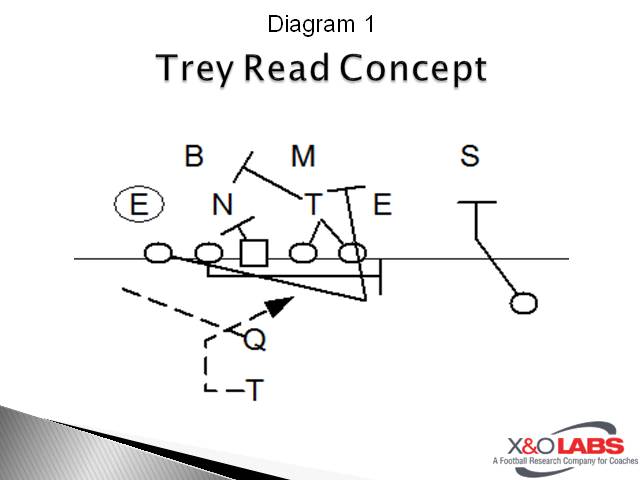
Trey Read as a Play Package

One of the most successful play packages we incorporate is our Trey Read concept.  This package combines our Trey Read counter scheme with secondary manipulation and the ability to run speed option out the back door.  All plays/variations within this package are based on reading the backside defensive end which we call the “bender.”  The Trey Read can be run out of any personal grouping.  It creates the illusion of complexity but in reality to execute this package is quite simplistic.

Slide1

Base Trey Read Rules:

Y:  Arc & close to anything that crosses your face (Cruise Technique) 

F:  Attack “C” gap defender  (cannot be the DE Cruiser)

TB:  6 inch stretch step, follow Playside Guard and Playside Tackle.  Don’t rush “slow to-fast through.”  We teach our backs that they are responsible for the mesh point not the QB.  We want our QB to see the entire picture on the edge such as gap exchange, zone pressure. etc.

If in (Red/Blue or East/West) drop step, get into 3x 5 pitch relationship, you have Speed Opt out back door vs a “Bender” or chasing defensive end.  

Read More

UL-Monroe’s Complete Kickoff Circuit

By Sam Nichols

Managing Editor

X&O Labs


Editor’s Note:  This article is a portion of the larger Special Teams Drills reseach report that we released last fall.  Click here for more Kickoff Drills from Villanova, Ball State, and more.


The University of Louisiana Monroe was one of the top kickoff coverage teams in the Sun Belt Conference last season and they use a concise, 3 station circuit to perfect the skills they use on their coverage unit.  They run all potential kickoff players through this 10 minute rotation with each drill lasting only 3 minutes.  Each of these drills are shown below.  They also run a faster, “Kickoff Vital Technique drill” that puts all three of these concepts together into one drill.  ULM’s special teams coordinator, Travis Niekamp, provides his narration of the drills below.

Drill #1:  Avoid

This drill is very basic, but the skill is essential to being able to negate the front line of the return team’s scheme.  The speed rip is not a natural motion, so this drill is used to introduce the concept and can be expanded on as players develop mastery.

Read More

Purposeful LB Tackling Progressions


By David Young – @HawkFB_CoYo

Head Coach

Skyview High School (ID)


skyviewtackleEditor’s Note:  Coach Young has been the head coach at Skyview HS for 11years and has 19 years experience overall.  He has coached LBs for 17 of those 19 years. His players have been named All-Conference Defensive MVP, five 1st Team All-Conference LBs, and two 1st Team All-State LBs. The Skyview defense has ranked in the top 5 in the 4A level for each of the past four years. This year, Skyview played in the State Championship game for the first time in its history.

Three years ago, our leading tackler was our free safety. The kid was really good so his success is understandable, but that also meant our LB group was not and in turn our defense was just average. The more we discussed this issue as a staff, the more we felt this was a problem that we needed to address if our team was going to be really successful and fulfill our understanding of what we want our defense to be.

For us, it came down to this statement “the linebacker position is the heart of the defense.” We want the expectation for our defense is that the linebackers make all the tackles. For this to be possible, it is essential to teach fundamental tackling skills while engaging them at the linebacker position. 

Moving forward, we worked specifically toward that goal.  Two years ago our top two tacklers were linebackers and last year our top five tacklers were linebackers. In turn, our defense has been at the top in our league and in the state each of the last two years.  Last year’s statistics are really impressive considering we only played with four linebackers on the field. Our starting four linebackers recorded 75, 63, 60, and 56 combined tackles each. Our next leading tackler was a linebacker who was first off the bench and only started three games due to injuries sustained by the starters. He still finished the season with 60 combined tackles. Our FS was next on the list with 45 combined tackles.

Our linebackers have to be great tacklers for this to happen.  Over the course of this article I will explain the method I use to teach fundamental tackling skills while evaluating the talent of our kids. The drill sequence that you will see below is essential in creating purposeful learning and repetitions for our kids.  Much of what we are using here is thanks to Thurmond Moore and his Tackling Academy concepts.  We adapted it to fit our situation with our kids.

Fundamental Tackling Drills / Evaluation

Every spring I begin at square one with all of my linebackers regardless of experience. I also start here when fall camp opens. This is where I get to teach my athletes how to tackle like linebackers. This is where they learn how to stand, run, hit, and tackle like a linebacker should. I also begin evaluating their ability not just for starting positions and playing time but for the progression of drills that we will cover throughout the season. In high school we are not able to recruit our athletes. We have what we have. It is my job to make them the best version of themselves that they can be.

Some of the older more experienced linebackers may view this as tedious and boring. This is where they get to become the leaders and role models to the younger guys by demonstrating what the technique looks like when perfected and even help teach a bit.

I start with a handful of drills that are fundamental to the position regardless of ability. They must be mastered and become routine before we advance to more specialized drills.

Tackling

The goal is to teach them to tackle with their entire body. I focus on the hips and feet to teach them to engulf the ball carrier and run through him.

I start at the top of this list with the first two drills on day one. Depending on the athleticism of my players, I will add 1-2 drills per day.

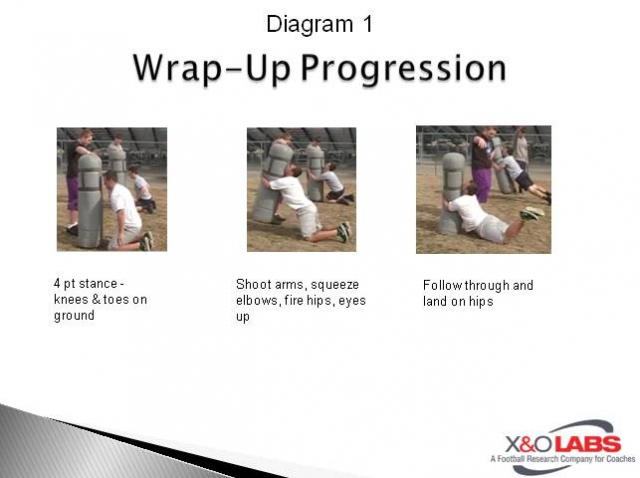
  1. Wrap-Up – Starting on two knees, I have them squeeze their elbows while trying to grab the back of the jersey. We use hand shields and old shoulder pads with jerseys to simulate the ball carrier.
    1. Coaching Points: Shoot hands through arm pits push hips forward. Hands should end up slightly above head. Elbows get to chest level. Squeeze elbows as much as possible. Eyes on hands.

Slide1 

Read More

Training the 4i Technique Defender

By David Pitman
Defensive Coordinator
Sachem North High School (NY)
Twitter: @coachdip


I recently wrote a sort of manifesto, putting the defensive system that I have adapted and evolved over the course of my almost 20-year coaching career into words.  I want to share part of the introduction to that report:

“I have read many articles promoting the value of playing multiple fronts and although I understand this value, I believe that it also promotes the ‘Jack of all trades, master of none’ mentality. In our system, we talk about playing a singular front with multiple coverage checks and adjustments. Our players are given visual keys and taught that action leads to reaction. If they can master this action and reaction, I believe that we can compete. In high school, we have to coach the players that show up and at times those players will not be the most talented players on the field, but by concentrating on a singular front we create mastery, it is this mastery that defines ‘What We Do.'”

It may help to understand that I began putting my system into a series of formal articles as I accepted a new position as the defensive coordinator at Sachem North High School, the district where I live and where my two boys will play football. I was asked to bring and install the defensive system that had led my previous school to a Long Island Championship.

In my original report, I spoke, in a general way, about a 3-4 defense built around a box that rarely changes. We play a 0 and two 4is with two ILBs aligned at 5 yards over the guards almost 100% of the time. By consistently, “Closing the Box” we can through automatic coverage be prepared to play against a multitude of different offenses. We believe that this consistency allows us to be a sound high school defense year in and year out.

The purpose of this report is to detail how we teach the 4i. It is ultimately this technique that is perhaps the most important and yet most overlooked part of any sound 3-4. I recently listened to a podcast on the 3-4. In this podcast the host spent over an hour discussing how the 3-4 is successful because it allows he said it requires you, to move your defensive line on almost every play. He spoke of his slants and stunts and how it created confusion for the offense by changing gap responsibilities. Although I understand and accept this philosophy, I found myself wanting to engage in a debate. I believe the value of the 3-4 is you can simplify gap responsibilities. By mastering the 4i technique you do not have to move or slant. This allows your LBs and DBs to fit into consistent run fits. I am not saying we never move, but over the course of the game, we are in a base call that majority of snaps. I believe that we must be able to defend soundly any offensive challenge that we face in our base defensive call. The key to doing that is the 4i.


4i Personnel Type

The reality of coaching at public schools is you have to have a system that adapts to the strengths and weaknesses of your team on any given year. To be a dominant 4i you do not have to be any size and shape. I have found success with all types of players. I have never had the 6’2″ 250lb DE that many of us envision when we think 3-4 DE. The key to this technique is a selfless, disciplined kid. A player who is willing to trust his visual key and smart enough to react with the proper action. More important than his physical attributes are his ability to recognize and react. Just to prove this point, I am coming off the most dominant defense I have ever coached. Statistically, we were the best defense in Suffolk County and a top-three defense on Long Island. My two kids that played the majority of the 4i snaps were average players at best. However, they played this technique very well. One was a weight room kind of kid, 5’10” 215 and strong but slow and not very athletic. This player worked very hard to master this technique and through his dedication became an All-Division player as a B gap dominator. The other player was a little bigger 6’1″ 230 but not nearly as strong or dedicated in the weight room. He was a bit faster and more athletic but not nearly as strong. He was a returning starter who seemed to get better with experience. He was also an All-Division player. These two did not have dominant statistics but by controlling the B gaps through the 4i technique they allowed us to be a championship-caliber defense and were recognized.
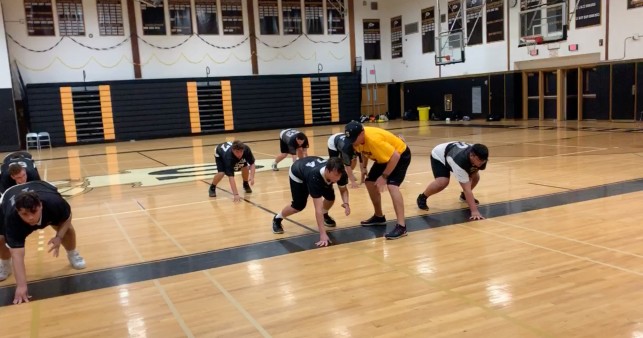
 

4i Stance, Alignment, and Start

We begin in the winter by teaching all linemen and OLBs the 4i technique. This technique is so important to what we do that it must become a habit for our kids and the more kids that have mastered this technique the more competition we will have during training camp.

We start with feet a touch wider than our shoulders and a slight stager with our right or left foot depending on whether we are in a right- or left-hand stance. We teach both right- and left-hand stances and require that players can play out of both. Once players have their feet set, I ask them to sit on an imaginary stool with their chest out and elbows on their knees. This sets the angle of their ankles and knees and creates the overall position of the stance. I then tell the players to, keeping their ankles and knees locked roll/ fall forward onto both hands. Their hands should be slightly in front of their heads. If they kept their ankles and knees locked, they should have rolled into a powerful, balanced stance with their hips slightly above their shoulders. The last thing is to lift their off-hand off the ground if players are not strong enough to fire out of a three-point stance I have them stay in a four-point stance. My commands for teaching this stance are. “Set your feet, sit on a stool, Roll/Fall forward, Offhand up.”

The 4i will align with his down hand on or near the inside foot of the offensive tackle. We tell the 4i that he must be aligned on the frame of the tackle, he cannot be in the gap. Depending on the player his alignment will be slightly different. He must be in a position that the tackle can never scoop him or cross his face but also be in a position that he can touch the tackle on any sort of reach scheme. Ultimately the 4i is a B gap dominator. He will consume the B gap and dominate any blocking scheme in the B gap, including inside and outside zone, power, trap, and option.

Read More

Scouting Opposing Punt Schemes for Potential Blocks


By Coach Tom Yashinsky – @tyash42

Head Football Coach

Onalaska High School (WI) 


Punt BlockEditor’s Note: Tom Yashinsky is the head coach at Onalaska High School in Onalaska WI.  He has just completed his 2nd year as head coach.  He was an offensive assistant on staff for four years prior to being named head coach.  He coached at University of Wisconsin La Crosse as a student assistant and at Ben Eielson Jr.-Sr. High in Alaska before moving to Onalaska. 
 

As coaches we are always looking to find an advantage in some facet of the game.  We try to find a spot that our opponent doesn’t spend as much time and take advantage of that.  For us, that advantage has come on special teams.  We haven’t consistently had as much talent as other teams in our conference so we need to find a way to steal points and possessions whenever we can.  One way we do that is pressuring and blocking kicks. 

I am fortunate enough to have a coach on my staff that is as passionate about Special Teams as I am.  Lewie Parish is my defensive backs coach and between the two of us we are always finding ways to take advantage of special teams mismatches.  We probably scout special teams more than most teams do.  I haven’t been coaching for as long as most, but in my six years at Onalaska we have never lost a game in which we have blocked a kick.  Usually a blocked kick is a huge turning point in a game for us.  I don’t have the statistics of what percentage of teams blocking a kick win games but I will tell you that if you look at some major upsets in college football history you will see that the winning team blocked a kick. 

The first thing that we do is teach our kids the rules of the kicking game.

  1. There is no roughing the kicker on a deflected ball.
  2. Any deflected ball that goes past the line of scrimmage is the same as a normal punt- STAY AWAY!
  3. You cannot hit the snapper on any kicking play.
  4. NEVER fall on a blocked kick behind the line of scrimmage.  This is a free opportunity to score.  They have at least 7 guys running away from the ball and it is 10 yards in their backfield, scoop and score.  Only time you will fall on a blocked kick is in the end zone. 

Philosophy of Blocking Kicks

  • Get a block or alter a kick.  If they know you are bringing pressure they will rush their snap and kick.  Force errors by applying pressure, or the image of pressure.
  • There is not enough time in the week to work on both blocking kicks and returning kicks, and be good at both of them.  We choose to go after kicks because in our conference we don’t consistently see punts that we can set up returns on. 
  • The most we can bring is 8 guys.  1 Return man, 2 guys covering gunners.  We will line up all 8 guys with hands down and show pressure.  Even if we don’t bring all 8 give the illusion that we are.  Don’t tip hand. 
  • Our fastest, most aggressive fearless guys will be the front 8. We do not use any Offensive or Defensive lineman on special teams (outside of PAT teams).  We want our most athletic kids on the field.
  • We rep our “Thump thump drill” once a week.  If a kid won’t block a punt in that drill they won’t in a game and won’t be on this team. .  Find out who your fearless kids are.  


Read More

Nine Drills Akron Univ. uses for WR Vertical Stems

By Mike Kuchar

Lead Research Manager

X&O Labs


akronThe Akron Zips are averaging 304 passing yards per game through its first two contests this season and much of that yardage has come from vertical concepts.  Receiver coach John Pont details the eight drills he uses daily to teach his inside receivers how to gain separation at the line of scrimmage and stack defenders. 
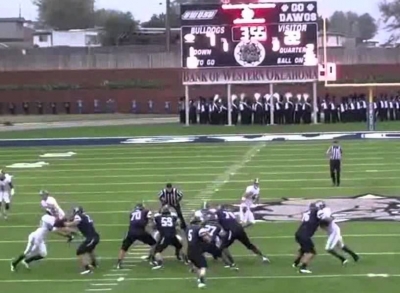
 

Drill #1 – Stance and Start Drill

  • Teaches the first step out of blocks.
  • Chest down and knees over toes.
  • Foot position must be heel to toe.
  • Front toe dug in ground and loaded.
  • Heel on back foot off the ground.
  • On snap, back leg should drive up to chest.
  • Chest should be down for the first five yards (sell vertical).

To see video of the stance and start drill, click on the link below:

Read More

Troubleshooting Common Pass Protection Errors

By Justin Iske
Offensive Line Coach
Southwestern Oklahoma State University
Twitter: @justiniske

Introduction


swokfbOne of the favorite things for coaches to do in the off-season is to draw up new plays, especially pass routes. Whether it is through self-scouts, stealing from opponents, clinics, staff visits, and simply having more time on their hands than usual, this is the time of year that coaches have the urge to add to their playbooks. Our philosophy here at SWOSU is to keep things as simple as possible so that our players can “play fast” and not worry about memorizing too many techniques and assignments. By limiting the number of schemes we have, we are able to really work on perfecting our techniques and get really good at a few things instead of being average at a lot of things.

For that reason, we like to go back to the basics and look at what we can do to correct problem areas in our blocks. In my previous article, I discussed how we problem solve concepts in the Inside Zone. This time, we are going to dive into how we address pass protection technique errors. He sections below will cover how we address issues with stance, alignment, kick sets, post step footwork, and punches.

Common Errors in Pass Pro Stance and Alignment:

I have found over the years that over half of the technique issues that you run into can be solved, at least partially, by getting into a better stance. It is easy for a coach to get so caught up in scheme and assignments that we forget to continue to teach proper stances. While size has an effect on stance, there are a few things we teach that are non-negotiable. They are as follows:

  • Stagger should be no more than toe to instep (except for tackles in obvious passing situations)
  • Toes should be pointed slightly out to keep weight on the insteps
  • Knees should be inside of the ankles to create power angles
  • Whether in a two or three-point stance, your shoulders must be higher than your glutes with the back in an arched position (not flat). We call this loading the hips.
  • Your down hand (if you have one) should barely be touching the ground, keeping almost all of your weight in your feet. Down hand should be straight down from the shoulder, not in front of the face. This will keep your shoulders square.

Here are some common stance errors and solutions:

Error #1: Using a false step or not gaining width on the first step.

Solution #1: It is important that the player put the majority of their weight opposite the foot that they are stepping with. For example, if a right tackle was going to kick set to his outside, he needs to put most of his weight on the left foot so that his right foot can gain width and depth with the first step.

Error #2: Poor pad level.

Solution #2: Many times, issues with pad level begin with the stance. If the player’s glutes are too high in the stance, the player becomes a waist bender instead of a knee bender after the snap. Simply getting the player to drop his butt down in the stance loads the leg muscles and lowers the player’s center of gravity to help them get their pads down.

Error #3: Poor alignment or spacing based on the concept.

Solution #3: As for pass protection, it is important to remember that the narrower your splits are, the closer edge rushers are to your quarterback. However, the wider your splits are, the more exposed you are to A gap pressures. We will adjust to our personnel every year. The more athletic are technique sound our guys are, the wider we make our “normal” splits.

Here at SWOSU, we want our players as far off the ball as legally possible. I tell my players if we don’t get warned about being too deep in our alignment at least once per game, then we are not doing our job! This is common for teams that run a lot of zone schemes and/or throw the ball a lot. Teams that run more gap schemes or the wing-t are more apt to crowd the ball. Other coaches will change their alignment based on the play call. Our guards set the depth and we tell our tackles to line up their inside foot on the inside foot of the guard so we don’t get a “flying V” look. It is important to note that if you are a team that uses two-point stances, you must lean forward in your stance so that your helmet breaks the center’s belt line.

Common Aiming Point Errors

Read More