
Varying Concepts to Get Playmakers the Ball

Jay Wilkinson – @jaywilkinson

Head Football Coach

Coweta High School (OK)


Editor’s Note:  Jay Wilkinson is currently the Head Football Coach at Coweta High School.  He took over the Coweta Football Program in February. He operates a no huddle wide open attack.  Prior to his arrival at Coweta, Wilkinson served as offensive coordinator at Broken Arrow High School. During his three years as offensive coordinator, his offenses broke ten Individual/Team School Records and had one of the most successful three year runs in school history.  In 2011 the offense set a school record for points in a season with 586 in fourteen games. Prior to arriving at Broken Arrow, Wilkinson was the offensive coordinator/quarterback coach at the University of Central Oklahoma. While at UCO, the offense set 18 Individual / Team school records from 2008-2010. Wilkinson was the head coach at Metro Christian Academy for the 2006 and 2007 seasons.  His record was 16-6 during that time. Jay started his coaching at Shawnee, following by stops at Jenks and Union.

The Dilemma

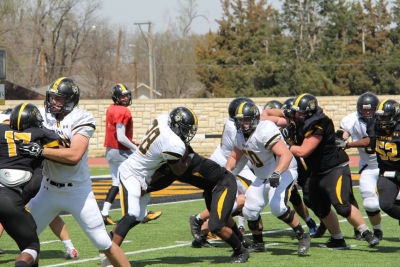
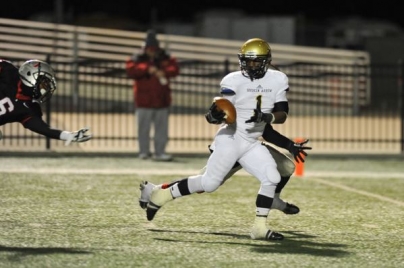
pictureThis past season our offensive staff faced a difficult challenge.  We had a young man that played wide receiver that was our best playmaker on offense.  Growing up he had played running back, but as a sophomore we moved him to WR because we had a group of talented running backs.  So we were faced with the challenge each week of finding multiple ways to get him the football, knowing that defenses would look to take him away by different tactics each week.  In 13 games he had 71 receptions for 1155 yards and 14 touchdowns as well as 3 carries for 19 yards and 1 touchdown.

Potential Problems and Solutions each week

Problem: Did our QB’s arm strength eliminate ways to get him the ball?

Solution: Luckily our QB had a strong arm and could make the verticals throws that we need him to make.  However, if your QB doesn’t have a strong arm you will have to take that into consideration when game planning ways to get your WR the ball.  If we were playing a QB with a weaker arm, we would eliminate most vertical throws and concentrate on finding ways to get our WR the ball with quick game concepts, screens and reverses.  

Problem:  The defense chooses to double cover him.

Solution: This was probably the toughest challenge each week.  When using this strategy, most defenses would play an underneath defender in a press technique with safety help over the top.  The obvious thing to do is to use your other receivers and your running game to take advantage of this strategy.  For example, if the defense chose to double cover him, then they either had to leave one of our other receivers uncovered, single cover them, or play five guys in the box.  We carried answers to each one of these situations on a weekly basis.  If they were leaving someone uncovered, then we attacked with bubbles or fast screens.  If they single covered them with no safety help, then we attacked them with quick game (All Slants), or some form of rub routes.  If they covered the other receivers and played safety help over the top, then we had equal numbers in the box and ran any run in the game plan that week.   However, we didn’t want the defense to completely take him out of the game, so we devised ways to move him around within the formation (even in the backfield at times) so that the defense wouldn’t be able to double cover him 100 percent of the time.  When aligning our playmaker in the backfield, we tried to focus on wide runs like outside zone and pin and pull so he could use his athletic ability to get outside.  Also concepts in the throwing game that allowed him to free release into the pattern were utilized.

Problem:  Potential Matchup Issues

Solution: Most weeks, our guy was going to be better than the player that lined up across from him.  They were a couple of games that the matchup was about even.  Even though we felt like our guy could win most of these matchups, there were times that we designed schemes to get him lined up against one of the defense’s lesser players.  One of the ways that we accomplished this was by the use of shifts and motions.  Also, during the course of game planning, we always tried to determine if the defense aligned players based on the hash, formation, or just played them on a side.  Once we figured out where defenders were going to align, it made it easy to position our guy versus the defender we wanted him against.

Problem: Issues withWeather

Solution: Any time you are a passing team, you have to be conscious of the weather.  Just like we didn’t want to let the defense take our WR away, we didn’t want weather to either.  We always carry ways to get him the ball when the conditions are bad.  This includes situations where having the ability for him to align up in the backfield is important.  On a rainy night, you don’t want him lined up outside with no ability to get him the ball.

Game Planning

When game planning ways to get your playmaker the ball, I believe that you have to defend ghosts. For us, ghosts are schemes that you haven’t seen the defense use on film, but could be utilized to stop your playmaker.  Take all the ways that you plan on getting him the ball and try to anticipate how the defense will try to stop it.  It is from these thoughts that you start to develop answers for the problems that you will potentially have.  You have to remember to not only game plan for sure ways to get him the ball, but also ways to get him the ball in certain situations.  For us, we always wanted to have ways to get him the ball on 3rd down and in the red zone.  You have to always carry multiple ways to get him the ball in these situations every week.  We tried to carry over as many of these calls as we could from week to week.

Ways to Get Him the Ball

Speed Sweep (Seattle)

This is one of the easier ways to get him the ball in space.  We have done this three different ways.  If we have a running QB, we have blocked a run scheme in the opposite direction of the speed sweep and let the QB read the backside defensive end (The RB becomes a lead blocker for the speed sweep).  Another way is to put the back on the side the speed sweep is headed (or pistol) and call a run scheme in the opposite direction of the speed sweep and let the QB read the DE to the perimeter and either pitch the ball to the speed sweep or hand the ball off to the running back.  This method is great if you do not have a running QB, but want to give the defense conflicting reads.  The last way that we run this way is without a read and use the running back as a lead blocker and full zone in the direction of the speed sweep.  This is the way we run it wh
Read More

Using Analytics to Guide Offensive Play-Calling

By Steve Steele
Former Offensive Coordinator
Dakota State University
Twitter: @Steele_House

Introduction:

To many coaches, statistics are something you check after the game to see how you did. You can compare them to previous games, previous years, and opponents to get a grasp on how your unit is performing relative to other units across the country. That said, manipulating these statistics to be proactive and gain an advantage in performance objectives is something that most small schools don’t have time, effort, or desire to do. Here at Dakota State, we find this exercise to be essential.

Our offensive staff uses past statistics with some formulas that are well known to many fantasy football experts to predict our success rates in different situations that can help decision making on game day. This is especially powerful with our offense being no huddle and up tempo as having this data available to study ahead of a game can really help us keep our pace in moments where a lot of teams would have tough decisions to make.

Observations:

When we took a look back after year one of running our no huddle offense, we noticed a few things. First off, we wanted to be faster in all situations, but especially in our critical situations where we need to have a successful play. Our process was too slow having to check our charts and then our call section to get the correct play in. Second, our play success model that we based play-calling on was very conducive to being successful in going for fourth downs. This led our off-season research to find a model that would allow us to mold our play-calling model to be quicker, especially in critical success situations, as well as looking to get in favorable fourth down situations rather than taking a lower percentage third down play to try and get all of it, more times than not resulting in a punt. Here are the analytical concepts we used…

Play Success:             

  • 1st Down = 40% yards needed
  • 2nd Down = 50% yards needed
  • 3rd/4th Down = First Down

Power Success: 3rd/4th Down Runs < 3 Successes/Failures (Our Off % vs. Opposing Def %)

Read More

Stephen F. Austin Wide Receiver Blocking Drills

By Demo Odems
Assistant Head Coach/Wide Receiver Coach
Stephen F. Austin University
Twitter: @DemoOdems

Introduction:

One of the facets that makes coaching wide receivers complicated is dividing the time to teach them how to run routes, how to catch balls and how to block. In most cases, one of those areas gets neglected. But if your offense is based heavily upon perimeter runs and screen concepts, you’ll have to teach receivers how to correctly block in space and implementing at least one of these three drills daily can go a long way in doing so.

Drill 1: Med Ball Drill

Purpose: To teach the correct approach, hand placement, and blocking base for the run and screen game.

Tempo: 50% to 75%

Organization / Set-Up:

  • Set the drill up on the sideline
  • Use the yard lines as guides (5 yards apart)
  • In the first phase, place a defender in front of the wide receiver face to face with a Med Ball
  • In the second phase, place a defender at 5-8 yards from the WR to simulate closing the distance.

Coaching Points:

  • Emphasize a wide base, head back, and hot feet.
  • Shoot the hand at the ball with the palms up, thumbs out, and striking from low to high.
  • Run feet on contact and keep hands inside the frame.
  • Use strong arm/lockout technique when losing the DB.

To study practice film of this drill, click on the video below:

Read More

Methods in Maximizing Practice Reps For Game Week Efficiency

By Don Bartel
Head Football Coach, Defensive Coordinator, Linebackers/Running Backs Coach
Eastlake High School (WA)
Twitter: @CoachDBartel


At Eastlake, we spend a lot of time considering how we can make practices more efficient and effective.  Being teachers first, we always start with a good look at our staff (who we are, what we know, coaching style, coaching voice, etc.) and how we present material to our players (before practice, Hudl, meetings, practice, walk-throughs, etc.).  After laboring at this at multiple levels of football for years, I started to believe that there has got to be a better way of doing this.  Next, we needed to define exactly what “this” is. 

As a staunch believer in the idea that we do not coach football, we coach young men; we took that one step further in saying we do not coach young men the game of football, we use the game of football to coach young men on how to be competitors.  In fact, much of what we do now has to do with the following elements at the forefront: practice time, development of players/coaches, speed of practice, competition, and adversity.  With those key elements being considered, we have created a situation where we not only maximize the time we have to practice, we actually have players from all levels of the depth chart saying that they not only enjoy practice, but it is their favorite part of being an Eastlake Football player. 


Work Week Schedule

The first step in becoming more effective and efficient is to take a good honest look at what time you have to prepare your players.  Based on our review of our time, experience of our coaches, and the schedule we have in the fall, our basic week has taken this form:


Saturday: Coaches meet at 9:00 a.m., Players in to lift/run and meet with trainer 10:00a.m., Team and Position Meetings 11-12:00.


Sunday:  Teach tapes (O/D game plans) and individual position notes due on Hudl


Monday:  Lunch meetings, players lift, 2-Deep practice 3:30-4:30, JV Game 4:00


Tuesday:  Lunch meetings, practice 3:15-5:30 (Offensive emphasis)*


Wednesday:  Lunch meetings, practice 7:00-9:15 (Defensive emphasis)*


Thursday:  Lunch meetings, practice 3:00-4:30 (Helmets only O-D-SPT review/walk-through)


Friday:  Pre-game lift after school, Varsity Game 7:00


*Emphasis practice means we have a 60-40-20-minute split between three phases of game


This is included to give you a basic overview as I will highlight a few of the things we do in the paragraphs that follow:

  • Saturday Meetings
  • Teach Tapes
  • Scout Books
  • Lunch Meetings
  • Coaching in our System
  • Practice Procedures


SATURDAY MEETINGS

As a head coach, I have been meeting on Saturdays for quite some time.  We have decided to involve the players on this day as well; although, our meetings generally last until 3:00 or later that afternoon.  We bring the guys in to get their bodies back on track, find out who is dealing with injury, and put the game from the night before behind us.  We meet for 10-15 minutes as a group to highlight some great play, some issues, and some progress made.  Before we break off into position groups, I give them the focus of the upcoming week which typically is tied to the process, the growth, and the challenges of getting ourselves ready for the next challenge.  Position meetings last no longer than 20 minutes, and sometimes we will meet as an entire offense or defense as well.

As a staff, it is our job to get our game plan completely finished, plan what sessions we will need for practice each individual day, and get all materials ready to implement.  If we do this, Sunday can be a day for focus on our position groups, and it can serve as a day to do any additional work at home.  We also have Monday before and after practice to complete scout books and opponent plays based on tendencies and areas of concern for our defense.


SUNDAY WORKLOAD


TEACH TAPES

As a coordinator, it is my responsibility to create a video game plan/teach tape for our entire team.  I do this with two groups in mind:  our players who will watch this to prepare for the opponent’s offense, and those who will watch to be the opponent’s offense.  Both my offensive coordinator and I have Microsoft Surface Pro 2s that we use along with video screen capture software called “liteCam” (liteCam.net), OneNote from Microsoft, and Hudl to relay all information to our players each week.  We post those on Hudl each Sunday, so the players can review, message us with questions, and prepare themselves for Monday’s meeting.  Typically, the tapes are no longer than 10-15 minutes, contain only the essential information about the opponent and our game plan, and are designed to not only give them a resource that they can return to; but it also takes the place of the traditional Monday meeting we used to have that our entire JV team would miss each week.

Read More

Inside Madden 19: Q&A with Game Designer Anthony White

By Mike Kuchar
Senior Research Manager
X&O Labs
Twitter: @MikekKuchar


Madden 19 dropped earlier this month and it’s almost become a rite of passage this time of year for football fanatics to scramble to their trusted retailer to buy the latest version of perhaps the most intelligent sports design ever created. Though my gaming hours have been shaved by a family of four, I continue to be impressed with the game play simulation. Not sure that there has never been a football game that more authentically represents the NFL than this in terms of presentation and depth.

So, you can imagine my excitement when I found that Anthony White, the primary game designer for Madden Football is an X&O Labs Insiders member. He’s a former Pop Warner coach who has attended football clinics for years in order to make sure that if it’s in the game, it’s “in the game.” He’s responsible for implementing teams’ playbooks, how they call plays and how tendencies are established. I’ve been playing Madden football since its inception in 1990 (on a Sega Genesis console), so I was pumped to talk to Anthony about how the best video game on earth is created. Turns out he’s a researcher, just like us, who happens to have one of the coolest jobs on the planet. And he was gracious enough to talk to us about how he creates the game.


Editor’s Note: We recommend you follow Anthony White on Twitter (@AWhite_73). He shares a lot of what he’s working on and what he’s learning—including sharing game film.


Mike Kuchar (MK): Tell me about the process you use when designing team specific play concepts in the game.


Anthony White (AW): “All of us are looking at film. The NFL sends us film every week. Tuesday mornings I get all the film from the past Sunday’s games. We get All 22 film. We have a tool through the NFL that allows us to go through and do all kinds of searches to look at down and distance, field position, searches by quarter and by player. It’s a video tool that they developed in-house and it allows us to pull up video clips on any statistical category that is tracked by the league. We can also do player searches as well. At our facility, we have NFL film that goes back to the 2004 season, every regular season and playoff games. So, it definitely helps a lot in terms of making cut-ups, film study, and analyzing team play-calling tendencies. Then I separate these by run and pass. I have my actual spread sheet which is a lot like football editing programs software that includes formation, play type, hash location and then I make my notes. I’m usually noting if the play is currently in our system or is it something that we need to create?”

Read More

Stony Brook’s Drill Toolbox for Edge Rushers

By Rob Noel
Defensive Line Coach
Stony Brook University

Introduction

With passing continuing to take over offensive strategy in the game of football, developing ways to pressure and impact the QB takes on a growing importance every day. While strategy and scheme can help in this endeavor, at the end of the day equipping your edge rushers with the tools to be successful is paramount to affecting the QB. This report will help to show some of the ways we develop our edge pass rush at Stony Brook.

Step 1: Identify Who Your Edge Pass Rushers Are

The first step in developing your edge pass rush is identifying which players are best equipped to win on the edge. A common misconception is that these players must come exclusively come from your DL pool. While we emphasize working with and developing our DL to be good edge rushers, we also look for players from other positions who have the length, twitch and agility to be effective attacking the QB. In our offseason training, we put all of our defensive players through agility drills used to simulate the skills required to be an effective pass rusher. Through evaluation of these drills, we create a pool of candidates to get after the QB. Once we have identified these players, we will use scheme, alignment, and sub packages to get them in position for success. This is especially true in obvious passing situations, but we will do some things on mixed downs to get our better rushers in positions to rush also.

Step 2: The Get Off

The first three steps are critical in the success of an edge rush and we work tirelessly at trying to make these as fast and explosive as possible. This comes from working on eliminating wasted movement and making our steps as fast as possible. Here are some drills we use to help us in developing this skill:

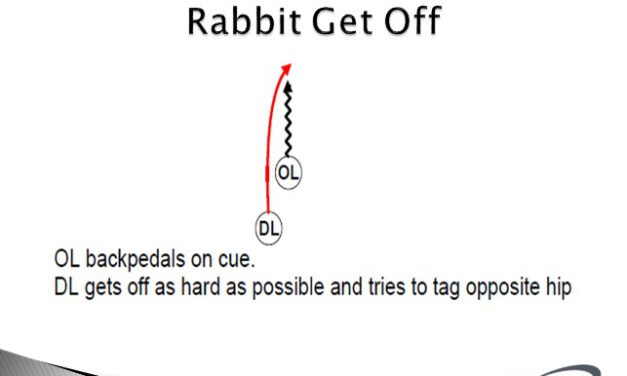
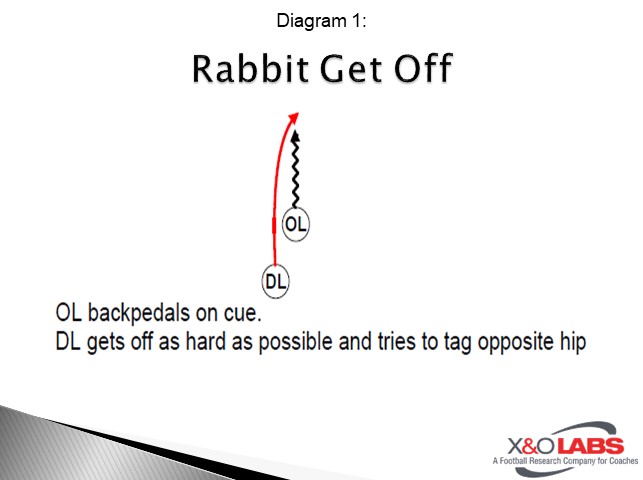
Rabbit Get Off: This drill teaches the DL to react to OL movement and explode off the ball as hard and fast as possible. The DL partner up with another player who simulates being an OL and is aligned 1 ½ yards away. The coach points at the OL to get him to start backpedaling at 75% speed. On OL movement the defender explodes out and runs as hard as he can to reach behind the OL and tag off on his opposite hip. This helps to train the defender to eat up the OL cushion and works to instill great get off.

Slide1

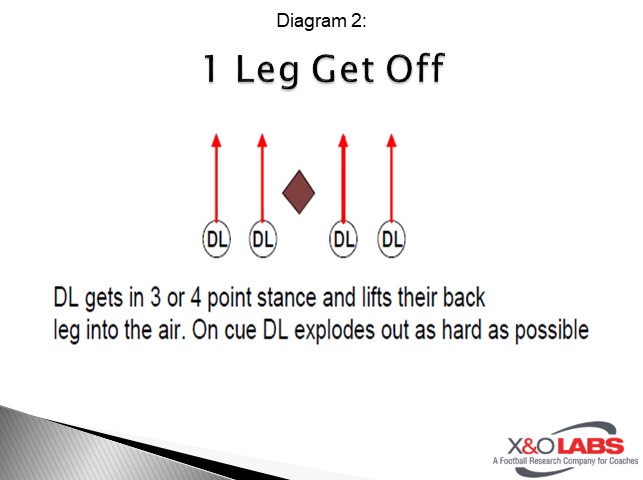
1 Legged Get Off: This is something that we will occasionally incorporate into our regular daily get off drill. The DL aligns like normal but get into a 4-point stance and take their back leg off the ground. A partner stands behind them and places the palm of their hand against the DL heel to help them balance. On movement, the DL uses all their weight on their front foot to drive out as fast as possible. We emphasize that they still gain ground on their first step even though their other leg is in the air. This helps to teach the DL to load weight on front foot and gets them used to driving off of the front leg.

Slide1

To study film of this drill, click on the video below:

Read More

6 In-Season Pursuit Drill Progressions

By Matt Sutjak
Defensive Coordinator
Millersville University (PA)
Twitter: @Coach_Sutjak


At the conclusion of the 2016 football season, our coaches took an in-depth look at what we needed to improve upon as a defense preparing for the 2017 season. We quickly found that many of our missed tackles and “explosive” plays came from bad pursuit angles taken by our defenders. The film showed that our defense did not have enough of an understanding of pursuit angles and holding leverage. We created a list of angles that our athletes found themselves in often and made this our focus in fall training camp. We made sure to cut out time every practice to teach and rep pursuit angles.

Where is your help? This is the question we always ask our defenders when they are approaching the football. To understand a pursuit angle, the defender needs to know where he should be forcing the ball to if he misses the tackle or picks up a block. A great defense always knows where their help is.


Body

To increase repetition for our athletes, we did away with team pursuit drills. Since we were not taking time for team pursuit in practice drills, we had to be sure we were coaching it in team sessions. We coached the rules on the field and in the film room. We used meeting time to teach position pursuit responsibilities. All of our practice pursuit drills are either in a 1-on-1 scenario or a 2-on-1 scenario. This allows us to get a lot of reps in during a short time frame.


Perimeter Pursuit Progression (Inside-Out Leverage)

Diagram 1


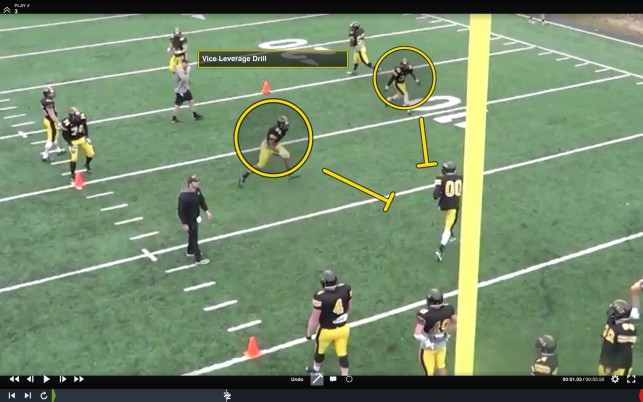
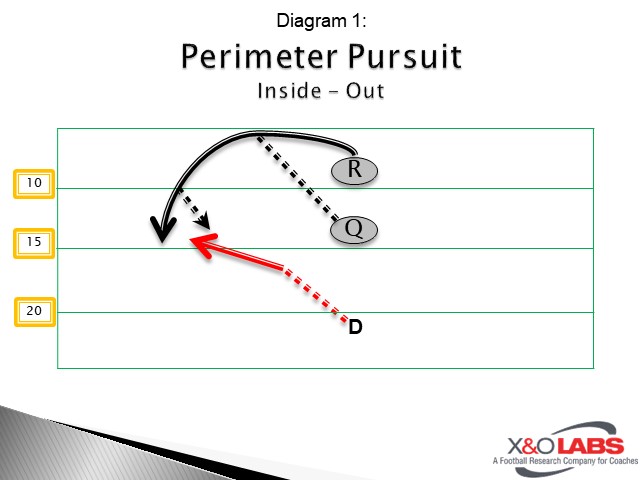
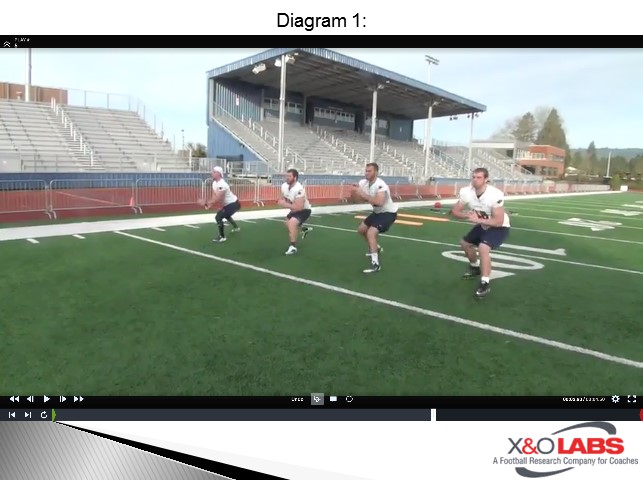
With perimeter pursuit we are creating a scenario in which the offense is executing a perimeter run (i.e. outside zone, toss, speed sweep). Our defenders must hold inside-out leverage to the ball carrier. In this drill we ask the ball carriers to press the sideline and try to cut back inside of the defender. The defense needs to touch the near hip of the ball carrier without allowing the ball to cut back inside of them. Our coaching points to the defense are:

  • Close ground to the ball carrier as fast as possible
  • Within five yards of the ball, square your shoulders parallel to the line of scrimmage.
  • Shuffle on a 45 degree angle to the ball carrier
  • Keep leverage on the inside hip


To study film of this drill, click on the video below:

Read More

Cornell’s Chaotic Pre-Practice: 10 Drills in 6 Minutes

By Roy Istvan,
Offensive Coordinator/Offensive Line Coach,
Cornell University (NY)
Twitter: @coachistvan

Introduction:

istvanThe first 6 minutes of practice each day is dedicated to “Position Warm-Up”. It is a combination of ballistic stretch and technique work. This time is used to continuously develop skill sets that will be used in our everyday play selections as well as ready players for practice.

Warm-Up Details: This a simple, yet intricate progression. Here are the movements that are included:

Drill 1: Iso Drill

Purpose: Work flexibility in ankles, knees and hips.

Coaching Points: Keep ankles, knees and hips all in straight line.

Drill 2: Airplane Drill

Purpose: Teach players how to run off the ball.

Coaching Points: Head and shoulders over toes at the finish.

Drill 3: Duck Walk On Air

Purpose: Teach Duck Demeanor (insteps, posture, profile).

Read More

Proven Protocols In Defensive Game Planning

By Mike Kuchar

Lead Research Manager

X&O Labs


Introduction

In August, right before the season began, XandOLabs.com conducted research on what high school staffs are doing to prepare their players on a weekly basis.  This particular report focuses on defensive staffs and what they look for when breaking down offenses.  Sure, many of our reports are centered around scheme, but we wanted to provide readily available research to coaches in-season on some ideas they can implement today to gain more efficiency in game planning.   We broke down our research into the following categories:

  • Sequencing in Breaking Down Film
  • Delegating film work to coaches
  • What to include in scouting reports
  • What information needs to be presented to players
  • Gaining an advantage on your opponent
  • Opponent’s Top Formations- 69 percent of coaches choose to include this in their scouting report.
  • Opponent’s Key Players-  60 percent of coaches choose to include this in their scouting reports.  This information includes the player’s height and weight, their years as a starter and their individual strengths and weaknesses.  The majority of coaches will include only 3-4 of the top offensive players on their opponent each week.   There are even some coaches like Ron Anzevino, the defensive coordinator at Hampton High School who will include a two-deep depth chart as well for his weekly opponents.
  • Opponents Top Plays- Without question, this was included in nearly all of coaches’ responses.  But how many plays are addressed becomes the question.  We found that the majority of coaches will select between 3-5 of the opponent’s top run/pass concepts and include them in the scouting report.  Anything more than that is too much information. 
  • Goal Line/Short Yardage Offense- 19 percent of coaches are including these short yardage concepts on their scouting reports.
  • Red Zone Offense- 16 percent of coaches is including what an offense does in the red zone as part of its scouting report.
  • Weekly Theme- 16 percent of coaches are using a “theme of the week” as part of their scouting report.  This could be manifested in the form of quote, anecdote or story that players will read and reflect on.
  • Screens and Draws- 15 percent of coaches are including opponents screen and draw package as part of their scouting report.
  • Pressure Checks and Automatics- 15 percent of coaches include the various “checked” pressures they will be using against certain formations as part of their scouting report.
  • 3rd Down Offense- 14 percent of coaches include what an opponent does on 3rd down as part of their scouting report.
  • Pass Protection Schemes- 14 percent of coaches present a protection analysis in their scouting report for at least one type of protection.
  • Gadgets and Trick Plays- 14 percent of coaches will include their opponent’s most popular trick plays as part of their scouting report.
  • Two-Point Plays- 12 percent of coaches include opponents two-point plays as part of their scouting report. 


Editor’s Note:  It’s important to note that based on our research, 88.7 percent of coaches are using HUDL for scouting breakdowns.  All of the information below is based off using that program or something similar.

Read More

3 Tactics to Defend the Screen Game

By John Kelling
Defensive Coordinator/Linebacker Coach
Frostburg State University (MD)
Twitter: @JohnKelling37


RPO, RPO, RPO. That is all us defensive coaches hear today. Oh, how I miss the days when you either had to defend the run or the pass, but not both on the same play. While that is a nice dream for us defensive coaches, the reality is that these plays are here to stay and it will only get worse. One of the major pass concepts offenses’ use off these RPOs is the screen game. This report is about the different tactics we utilize to defend the screen part of all these RPOs. Obviously, teams have the capabilities to run screens without RPOs and these schemes can be used to stop them as well, but RPOs are predominately what we see. 

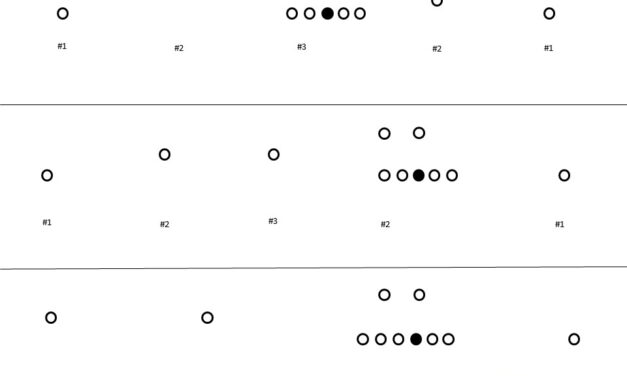
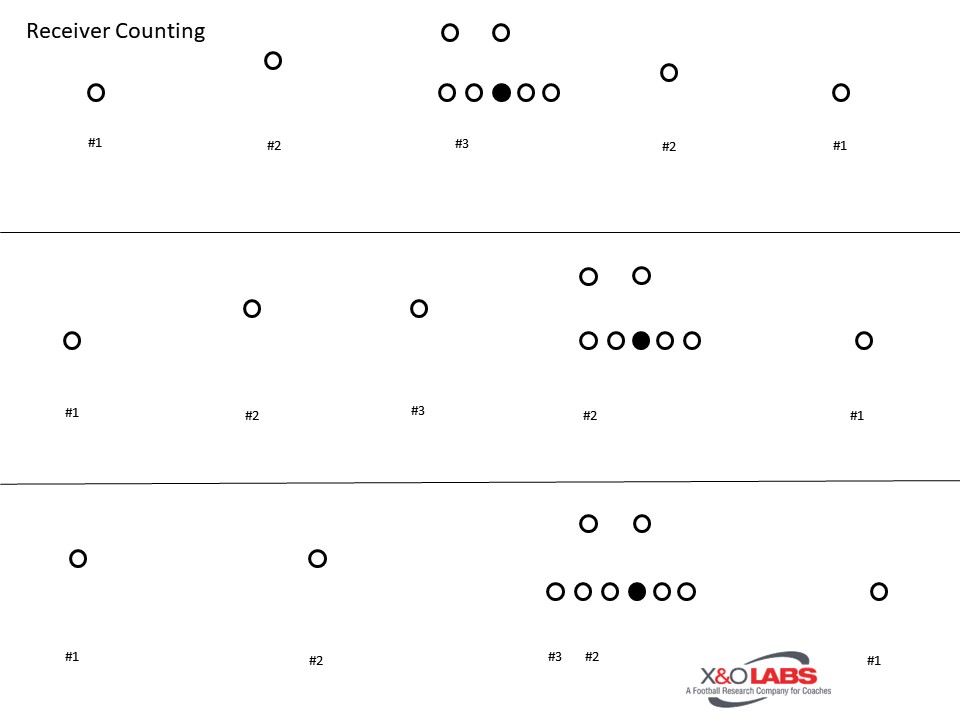
One important step we need to do is define the different types of screens we will be talking about and create a common language in which to discuss these screens. The very first thing is how we label eligible receivers on the offense. We start counting from the outside to the inside on both sides. Therefore we have a #1 receiver on both sides, a #2 receiver on both sides, and then the #3 receiver. (Technically it is the number with either a strong or weak tag based off how we call our defenses strength. Example we make the strength call to trips then we count #1 strong, #2 strong, #3, #2 weak is the RB, and then finally #1 weak is the single receiver.) It is this counting system that allows our players to know what rules, key reads, or players that affect their techniques.

Diagram 1


The next step to insure proper communication is describing the types of screens we see, and more importantly, the one’s we will be talking about in this report. The first screen is a bubble screen. This is a screen where the eligible receiver works his way to the sidelines while everyone outside of him blocks. This typically occurs in a balanced set (equal number of eligible receivers on each side) to the #2 receiver or to the #3 receiver in Trips sets. This can even occur to #2 weak in a trips set if the RB flairs to the sideline on the side of trips. However, regardless of who catches the screen it is going towards the sideline.

The next screen is the tunnel screen. This is a screen where the receiver is coming back towards the ball and his teammates are blocking the defenders out. This is also a screen where the offense may release offensive linemen downfield to block defenders. This can typically be done to any receiver except for a running back in the backfield.

The next type of screens is a combination of the bubble and the tunnel screen call a dual screen. This means that one side is running a tunnel screen and the other side is running a bubble screen. In the same realm is the Now screen. The Now screen is where the receiver catching the ball stops where he is or works straight back a bit and catches the ball. This now screen can either be a tunnel or a bubble screen, it just depends on how they choose to block it. The other popular way to run the Now screen is from a stack formation. The stack formation is where one receiver lines up right behind the other receiver. This can occur from #1 and #2 or #2 and #3.

Most teams we face use many different combinations of these screens from multiple formations. It is imperative that as we defend these screens that we have answers that are simple for our players and multiple for any offense. Here is how we start defending the screen game from our opponents.

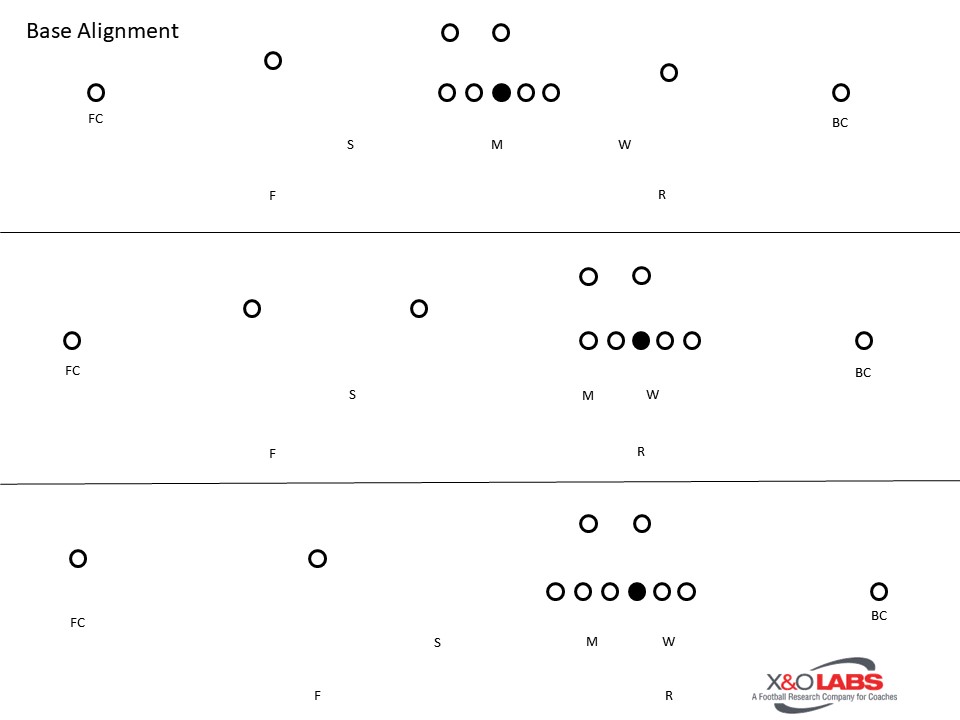
The first thing we do to try and limit the number of screens is pressing the corners. Our base starting point for the corners is head up on the #1 receiver. This alignment will be adjusted based off the coverage called and / or the formation the offense aligns in. We do this so our players can be aggressive and change angles of the blockers. Putting them in a position to be aggressive and play with confidence is a cornerstone of the entire defense. First reason why this effects the screen game is the release of #1. If he is the person receiving the screen, he must get a good release to create some distance between himself and the corner. If the receiver fails to create that separation, it allows the corner to stay right with him and be very aggressive on any ball thrown to him since there is no pass interference behind the line of scrimmage. Another reason for allowing him to be aggressive is if #1 is blocking the corner, contact happens right away and that receiver must hold onto that block for a while. It gives us a better chance to defeat the block when we get our hands on him quickly and it eliminates the possibility of cut blocks. The last reason we like the press alignment in defeating the screen game is because it makes it the trap technique must easier to execute. (Will be explained more in the trap section.)

Diagram 2


Quarter, Quarter, Half Coverage

The first tactical scheme we use to combat the screen game is our quarter, quarter, half coverage. In this scheme, we can roll the ½’s side to whatever one we want to. Most of the time we roll it to the side we have scouted the screens to come from so we can have an aggressive corner to that side. The safeties are in charge of communicating to the corners which side we are rolling to and which side is away by using a “Roll Right” or “Roll Left” call. Here is each positions alignments, assignments, and techniques.

Read More

Explosive PAP’s to Manipulate Two-High Safety Coverages

By Joel Przygodski
Offensive Coordinator/Wide Receiver Coach
Ann Arbor Pioneer High School (MI)
Twitter: @joel12p


At Pioneer, we are a Pro-style offense that relies heavily on gap run schemes to control the clock and possess the ball. The foundation of our run game is power/counter and we became efficient with pin-and-pull concepts towards the end of the season. We use multiple personnel packages, formations, shifts, motions, and different tempos to attack the defense with our base run plays. We also protect our run schemes with play action concepts to punish a defense that is over-playing the run.


Pass Protection

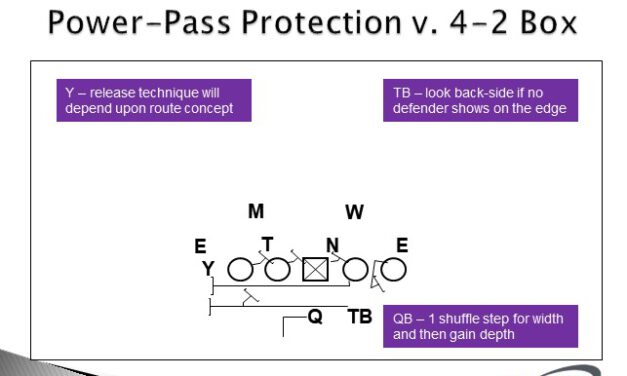
The majority of the time, we will execute our Power-Pass or Stretch-Pass protections when calling for a play to attack downfield. They are the protections that our players are the most comfortable and confident with. We want our linemen to fire-out low and aggressive to sell the run action before progressing to their protection rules.


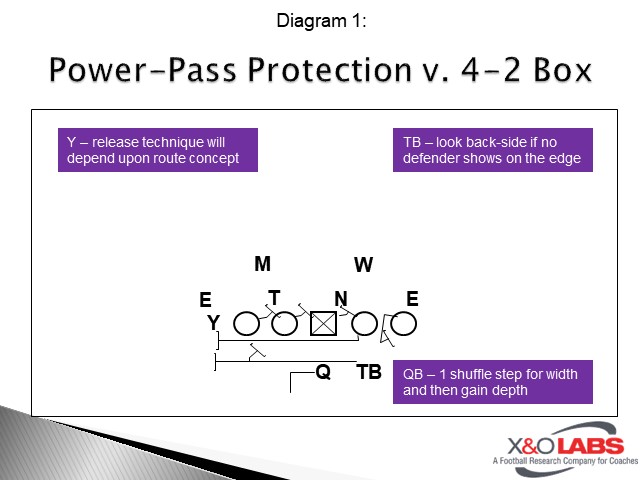
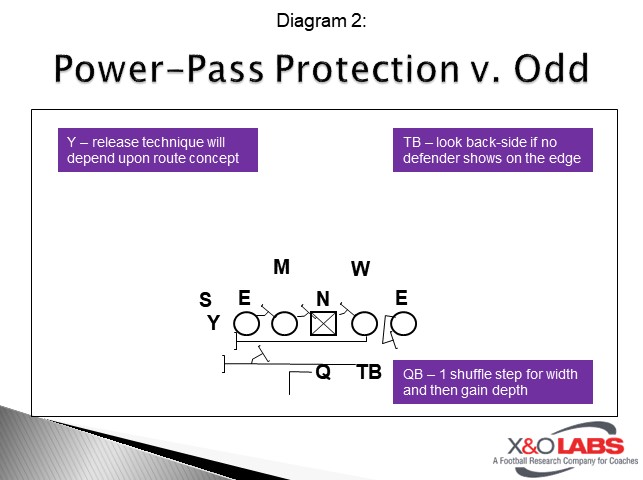
Power-Pass Assignments

PST – fire out and block the play-side B Gap

PSG – fire out and block the play-side A Gap

C – fire out and block the back-side A Gap

BSG – flat pull for the play-side C Gap and look to kick the defender out

BST – seal-hinge the back-side B Gap (just like Power)

TB – look to seal the edge after the play-fake. If no-one shows, look back-side


Diagram 1

Diagram 2


We call our Stretch-Pass Protection a little different than most coaches I have spoken with. It is a full-slide protection where our linemen are responsible for protecting their back-side gap and the Back is responsible for the C Gap defender. We run enough opposite reads (back-field running stretch right while the OL blocks stretch left and the QB will read the end to give on the sweep or keep and run QB stretch), so this protection is a great answer for safeties who are getting anxious to get involved in the run game.


Stretch-Pass Assignments

PST – hard zone block the play-side B Gap

PSG – hard zone block the play-side A Gap

C – hard zone block the back-side A Gap

BSG – hard zone block the back-side B Gap

BST – hard zone block the back-side C Gap

TB – mesh with the QB and block the C Gap Defender

Read More

3 Ways to Grade Offensive Linemen

By Justin Iske – @justiniske

Offensive Line Coach

Fort Hays State University


Editor’s Notes: Justin Iske begins his fourth season on the coaching staff at Fort Hays State in 2014. Iske coaches the FHSU offensive line and serves as the team’s strength coach. In Iske’s first three seasons at FHSU, he has coached seven All-MIAA selections on the offensive line, led by two-time second team selection Hawk Rouse in 2011 and 2012 and second-team selection Mario Abundez in 2013. The Tiger offensive line helped produce an average of over 2,000 rushing and 2,000 passing yards per year in Iske’s three seasons. Iske came to FHSU after two seasons at Northwestern Oklahoma State University where he was the offensive coordinator, special teams coordinator and offensive line coach. His 2010 team won the conference championship and led the conference in rushing offense, sacks allowed and kickoff returns.


Introduction


In working on a number of different staffs and under several different head coaches, we have been exposed to numerous ways to grade game and/or practice film. The purpose of this article is to explain three different ways that we have used, and to focus on the one that we feel is the most effective at improving your players’ performance.

PLUS / MINUS

A lot of what we can accomplish as coaches is determined by our schedule. If you are a team that watches film the day after a game, there is not a whole lot of time to dissect your game film before you meet with your players the next day. When in a time crunch, the plus/minus system of grading is effective. The coach simply watches each play and assigns a plus (you did your job) or a minus (you didn’t do your job). At the end of the game, you take the number of plusses divided by the number of plays and that is the player’s grade.

Example: 55 Plusses / 70 Plays = 78.5%

This advantage of this system is that the coach can get their film graded very quickly. The drawback is that it is hard for the player to know what to do in order to improve based on his grade.

Read More

In-Season Weekly Practice Planning

By Chad Stadem
Head Coach & Offensive Coordinator
Washington High School (SD)
Twitter: @Mr_Stadem & @SFW_Football


This year will be my 6th year at Sioux Falls Washington, 16th year as a head coach, and 18th year total of coaching football.  Every year I am looking to make our practices more efficient and effective.  We as a staff work together to develop our practice plans, and I encourage our staff to come up with creative ways to teach the game of football in practices.  Our vision is to play fast and practice fast.  We do not believe in staying onto something too long.  We keep moving.  We believe that our practices should not take more than 2 hours and generally as we get late into the season our practices last under an hour and a half.  We try and film each practice especially when we are in group or team periods.  Filming those periods allows us to keep moving.  We do not want to stop practice to walk over what just went wrong.  We will coach on the fly and use the film the next day before practice to instruct or correct the issue.


A little about Washington

Sioux Falls Washington is a large school of around 2000 students.  We have a freshman, junior varsity, and varsity teams.  Our junior varsity practices with the varsity team and has their games on Monday’s.  We are a two-platoon system and generally have no one playing both ways in our base offensive and defensive packages.  We do have some personal packages on both the offense and defense.  We do need to have periods when those players might need to work a group on the other side of the ball.  We have a clock running on a board with periods listed and a horn will blow at the end of each period.  Each period is 5 minutes in length and we try to stay at or below 24 periods for each practice.  We believe that over two hours of practice is asking a lot from everyone on the team.  If we do things right, we will even cut a period short and move forward.  Almost every day we do not use the full 24 periods of practice time.  The players see that as a reward for doing things right and encourages them to run with a sense of urgency the whole practice.


Period Simulation – Teach the game

Since we are a two-platoon team, we have the luxury of more time to teach the game.  Most of my assistants formerly coached at the collegiate level and have experience with working with a two-platoon system.  We always try to find ways to create a game simulation in our practice plans.  We want to teach the game.  We like to come up with different scenarios to help the team understand the importance of being successful in the game of football.  We believe that game simulation periods break up the regular practice routine, and it helps generate game like intensity.  At the beginning of the period, I will gather the teams together, discuss the scenario we are about to enter and ask the units what their focus should be in this scenario to be successful.  Once the period is over, we meet as a team or our units and quickly discuss what we did right and what we need to do better at in that scenario.  Then we move onto the next period on the practice plan.

We love the situational period for not only teaching the game, but it creates competitive intensity in our practices.  Our offensive and defensive units take pride in winning these periods.  These periods break up practice and allow the kids to play the game they love in a controlled environment.


Practice A and Practice B – Game Organization during a sudden change

We picked up this wrinkle to help generate accountability for our players.  Practice A is a normal practice and we will follow the plan to the minute.  Practice B alerts the team that I am about to create a game like a sudden change in practice.  We got this idea from Jed Stugart while he was the head coach at the University of Sioux Falls.  The focus is generally on special teams for us, but we will also use this on package groupings that require members from both the offensive and defensive units.  As we practice I will blow a whistle and yell out a call for a unit to perform their task.  That unit will sprint to the location I am at to complete the task.  Everyone else will continue with the regular practice. 

An example would be if I called for the PAT/FG team.  I will blow a whistle, yell “Field Goal Team HOT!” and have a ball placed on the ground for the field goal attempt.  “Hot” means the clock is running and they have 20 seconds with no mistakes to complete the field goal.  Our special team’s coaches will run over with them counting down the seconds.  This can be tough on our guys as we practice on 3 game sized practice fields and a large open area for our bigs.  They need to know the unit they are on, their responsibility, and no mistakes allowed.  Once this task is completed they will sprint back to what they were doing before the call for their unit.

I do this on my own and no one knows what group I will call for or when I will call for them during practice.  It is like throwing a pop quiz onto the guys.  It holds them accountable.  I always tell the team that we should never have to call a timeout because someone doesn’t know what unit he or she are on.  If we do, then you will lose out on an opportunity to remain on that unit.  You will be replaced.  We require the players to know the depth chart as well.  There are many times I will call for a unit and add that a certain member is out with a cramp or injury. The backup needs to know whom they are backing up and fill in if that person is out.  Our expectations remain the same and we expect the task to be completed with no mistakes.

Read More

6 Tips to Effective Scout Team Organization

By Jim Dawson
Senior Consultant, Secondary
Trinity University (TX)

Introduction:

We all know that we need a “good look” on our practice fields from players running the opponent’s scheme. The task of asking lower level players on a depth chart to perform and execute at a high level is a daunting task. For me, managing good scout teams has always been one of my passions. I am speaking primarily from the defensive side of the ball. That said, I’m sure these principles will apply to all scout teams. Perhaps these tips may help the situation and provide the best “show” in our weekly preparation against opponent schemes.

Tip #1 – Use Your Best Available Players

Over the years, I have found that nothing can beat reps against talent. For this reason, we go “good on good” in 7v7 and inside run. The team portion of the practices is then manned by our scouts. Everywhere I’ve been, we have subscribed to the adage that if you are not in the 2 deep you are servicing on scout team. These guys are our resource so try to make the best of the talent available. This means that position coaches need to know that they cannot be hoarding talent. They must be bought into the understanding that all players that are not in the 2 deep should be available.

Putting the best huddle on the field can be a challenge. Finding offensive linemen and getting them to give a good look is the first challenge. Many times injuries and banged up guys deplete this group. There are times we’ve used a TE as a tackle, a large back as a TE or even one of our own defensive line or LB to create an OL to service. Skill spots seem to run a little deeper but there are times we use a DB to simulate a receiver, a running back or an option QB.

Tip #2 – Use the Classroom

Preparing the unit begins in the classroom by showing video of the opponent scheme and teaching them the look. This provides a foundation that we can build off of in our pre-practice walk through. It is important to note that we sometimes will not teach our scout groups the more difficult concepts like an option attack or a timed wing T, (fly motion), that requires reading skills and timing. Instead, we will teach it in our group drills or walk through the play and check the fits. We try to match talent in the spots that best imitate the opponent.

Tip #3 – Full Time Assistants Draw Cards

The “playbook” or scout cards are drawn by full time assistants with attention to the detail the staff wants to see. If a play can be called in our terminology we will label it as such. Our part-time, GA, or student coaches assemble the book the day before the intended practice. This avoids the last minute scurry to get things done and increases accuracy. The book is then organized according to the script. We always double check to be sure pages are in order to ensure that there are no issues during the period.

Here are some of the items we ensure are on every card:

Read More

In-Season EDD’s in Man Protections

By Ken Ingram
Offensive Line Coach
George Fox University (OR)


Pass protection is all about the development of hands and feet, but it’s the eye discipline to play with the right leverage that often gets overlooked. Regardless of the time of rush an offensive lineman is combating, it becomes essential to be in the right position to get between the quarterback and the defender to ensure the ball gets released on time. These are the 12 drills we will work during the season to develop the skill sets of our offensive linemen in pass protection.


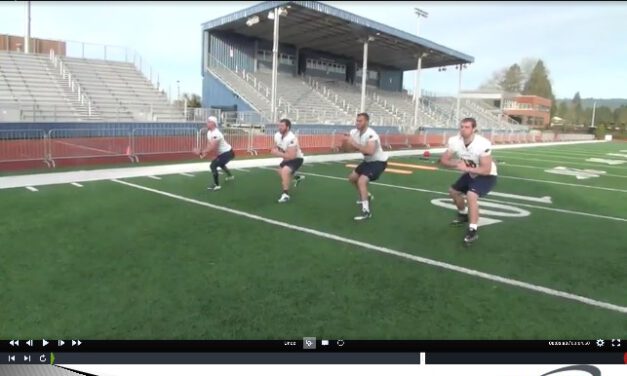
Drill 1: Kick Slide Drill

This is one of the first drills we do for pass protection. We want to concentrate on these skills.

  • Balanced stance
  • Push off the front foot, kick with the back foot
  • Always coaching: hips down, head up, chest back, hands six inches in front of chest
  • Looking for a base with the feet, both side to side and forward backwards.
  • Once they have kicked four times, hold the position to see if they are in the proper position.


Diagram 1


To study film of this drill, click on the video below:

Read More