Designing Pre-Snap Movement Verbiage in Tempo Offenses

By Mike Kuchar
Senior Research Manager
X&O Labs
Twitter: @MikekKuchar


Introduction

It’s clear why more offensive coordinators are implementing pre-snap shifts and motions this season. Pre-snap movement not only puts a defensive unit on its heels, but also distorts its eye discipline, producing the anxiety needed to slow them down by the time the ball is snapped. But, offensively, the challenge lies in keeping verbiage concise to not confuse players and correlating with what player is moving. We were curious to see how coaches were packaging their movements and concepts into one-word calls. So, to explore how coaches were designing their pre-snap movement verbiage for this coming fall, we reached out to seven offensive coaches- many of them no-huddle advocates- to ask them the following questions:

  1. What is the signal or verbiage you use for perimeter (receivers and tight ends) motions in your system? Give an example of how is it tied into a play call.
  2. What is the signal or verbiage your use for perimeter (receiver and tight ends) shifts in your system? Give an example of how is it tied into a play call.
  3. What is the signal or verbiage your use for backfield motions in your system? Give an example of how is it tied into a play call.

Although their responses are posted anonymously, the contributor list is below:


Contributors (In Alphabetical Order):

  • Andrew Coverdale, offensive coordinator, Trinity High School (KY)
  • Eric Davis, head football coach, Mankato East High School (MN)
  • Dan Ellis, head football coach, Great Valley High School (PA)
  • Gabe Fertitta, offensive coordinator, Catholic High School (LA)
  • Matt Kerstetter, offensive coordinator, Westfield High School (TX)
  • Jeff Russell, offensive coordinator, Wethersfield High School (CT)
  • Steve Steele, head football coach, T.F. Riggs High School (SD)

What is the signal or verbiage you use for perimeter (receivers and tight ends) motions in your system? Give an example of how is it tied into a play call.

Source 1:

“We are a no-Huddle Team and most of our motions are verbal. I do not care if the defense knows that motion is coming. We use what we call ‘In’, ‘Across’, and ‘Orbit’ motion. The positions that can in motion are our Slot Receiver (H), our Tight End (Y), or our Tailback (T).

H:  Hip, Hack, Hop

Y:  Yin, Yankee, Yo

B:  Bing, Bang, Bomb

T:  Tick, Tack, Toe

For example, if we wanted to motion our Y across into a 2 x 2 set (Race) and run Power Right into the Boundary, we would call / signal ‘Yankee Race Power Right’.  We can motion into or out of formations.”

Source 2:

“For speed sweep motions, we tag a 5 or 6 and the receiver that is coming in speed sweep already knows who he is based on the call. For example, 26 is our power play to the right. 526 is power to the right with a speed sweep underneath as a diversion. 5 means the motion comes from the left to the right. 6 means the motion come from the right to the left. 7 and 8 are used for speed sweeps when we will actually mesh or hand off to the speed sweeper. For instance, 28 is our buck sweep play. If we want to hand it off to a WR on speed sweep, we will call 728. Other motions are just tagged as ‘y move’ ‘x move’ and the WR knows the kind of motion that is required.”

Source 3:

“We use the following pre-snap movements on the perimeter:

Read More

Implementing Clemson’s QB Designed Runs and RPO Package: Case 1 – Clemson’s Designed QB Gap Runs

By Jeff Smith
Special Assignment Researcher (X&O Labs)
Offensive Coordinator
Warrenton Central High School (MO) 


Introduction 

Utilizing the quarterback as a runner can be a detriment to any defense and it purely comes down to a simple numbers advantage. In the run game of conventional offenses, the quarterback is used to turn and hand the ball off taking him out of the numbers equation. It’s 10 (offensive players) vs. 11 (defensive players) football, meaning at least one defender will be unblocked to make the tackle. And that’s not including the potential of one getting off a block to make the stop. The quarterback run game forces defenses to account for him, often resorting to 8-9 man boxes with man coverage behind it (you will see plenty of those defensive structures in this report). And nobody does it better than Clemson as it pertains to designing formation and alerting their blocking schemes to make sure their top athlete (the quarterback) gets plenty of touches.  

Once the defense starts to do load boxes and play man coverages, that’s when the big plays come in the pass game. We will detail those in case three. In case one we are going to focus specifically on the gap run menu for the quarterback.  

What is a Gap Run? 

Most offensive coordinators classify their run schemes into three genres: zone runs, gap runs, and man runs. This all depends on the blocking scheme up front. The crux of a gap-blocking scheme is double teams at the point of attack. These are two on one blocks where two offensive linemen are working against a down defender (such as a defensive lineman) and a second level defender such as linebacker. The benefit of doubles teams, aside from the numbers advantage, is that it creates instant movement on the line of scrimmage. This, in turn, creates opening up entry points for the ball carrier to run the ball. Modeled after the old Woody Hays power play at Ohio State, Clemson uses its gap runs out of open formations, with no attached tight end.  

Why gap runs are effective in this system? 

Clemson isn’t known for having the most stout offensive linemen up front, but they know how to move. The gap system cultivates this type of offensive lineman who are technically sound. As one of our researchers told us, “The offensive line doesn’t maul people, but they are sound. They stay on combo blocks until they absolutely have to come off.” This is evidenced in our research below.  

The second reason why Clemson is effective in its gap schemes is their use of open formations. Their use of four and five wide receivers sets spreads the defenses out. That formation advantage, coupled with double teams at the point of attack, usually equates to big gains in the quarterback gap run game. They also use open sets, shifts and motions more than most teams to spread the defense out and to make them think and adjust on the fly.  

Gap Runs Used by Clemson: 

  • QB Counter Concept 
  • Counter Read Concept 
  • Power Read Concept 
  • Power Toss Concept 

QB Counter Concept

One of the more prominent gap runs in Clemson’s offensive menu is the QB counter concept. This is a scheme that they use with a variety of pre-snap shifts and motions. They also use a number of different read keys and the mix a sixth hat into their blocking scheme. Due to this scheme’s versatility, it allows Clemson to run it from multiple formations and personnel groupings. This keeps things simple and consistent for the offensive linemen, yet creates a lot of window dressing for defenses to worry about. 

We start by looking at the Counter scheme for the offensive linemen.  This scheme is exactly like a power blocking scheme, except instead of the puller climbing up to the 2nd level, they are looking to kick out the (EMLOS) end man on the line of scrimmage.  To execute this type of scheme with success, there must have gap rules.  Every team has specific terminology to accomplish this, which can be very complex. But in order to keep it simple these are the rules for front five.  

Line Scheme and Front Rules 

Play side Tackle and Guard 

  1. Protect your backside gap.  
  2. If it isn’t threatened, work a double team to the backside inside linebacker.

Center vs. Four Man Fronts 

  1. Work down the line of scrimmage.
  2. If you can’t execute the down block because the defensive lineman is too wide, then make a “switch” alerting the pulling Guard that the Center will pull. 

Backside Guard 

  1. Flat pull and kick out EMOL
  2. If Center calls for a “switch”, protect A Gap and wheel back.

Backside Tackle 

  1. Protect B Gap and wheel back.

By working through these techniques, an offensive line is “building the wall” on the play side, which makes it hard for backside defenders to get through or over it. This combined with kicking out and logging the play side defenders. The diagrams below illustrate how to block the counter scheme against the two more common defensive fronts.  

Counter vs 42 Over 
Slide1

Counter vs 34 

Slide1

Blocking Variations 

Those are the counter basics, but adjustments need to be made in order to run the play effectively against disciplined defenses and there are plenty of those in the ACC. So, in order to protect the base concept of the play, Clemson has to make alterations in its blocking scheme to take advantage of potential personnel mismatches.  

Log Block  

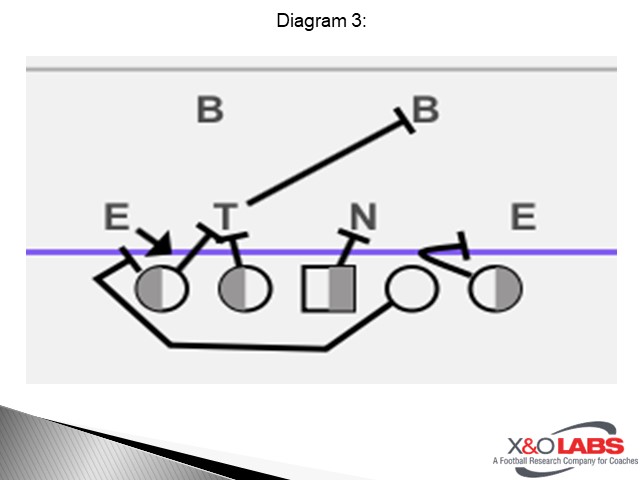
Again, the goal of this scheme is to kick out the EMOL and work inside of this block through B Gap. The quickest way to gash a defense is straight ahead. That being said, many defenses are taught to “spill” the ball, by making sure the defensive lineman that is getting kicked out, forces the ball outside on the perimeter where there are better athletes available to make a tackle on the quarterback. When this situation happens, the puller at Clemson is taught to read it and instead of trying to kick them out (which would be basically impossible) they will “log” them inside.  This basically means they will work their head and hips to the outside of the EMOL and will look to seal them inside.  This forces the play to bounce outside to C or D Gap.  This means that the ball carrier needs to look to bounce instead of cutting back. See the illustration below:  

Counter vs 42 Over- Log Block 
Slide3

Center Pull 

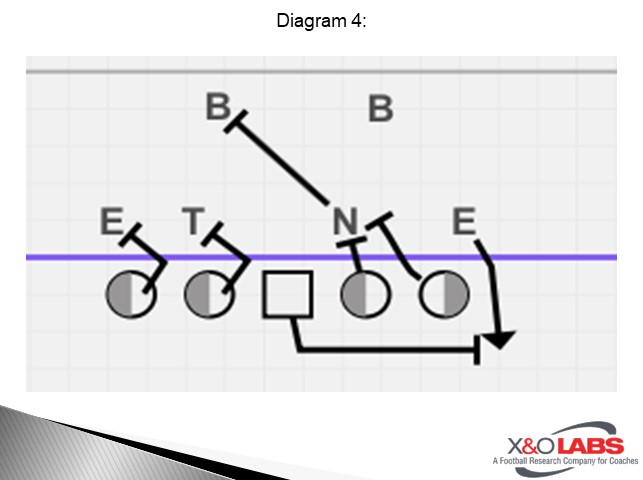
Four defensive linemen defenses, like the ones being used at the University of Miami at Virginia Tech in the ACC, usually possess a dynamic player at the 3-technique position. This block can be extremely difficult for a Center to execute a back block on. He may be too fast and get too much penetration into the backfield. In these circumstances, Clemson will pull its Center and keep its backside Guard on that dominant defender. The illustration below details this changeup.   

Counter vs 42 Under- Wide 3 Tech, Center “Switch” Call 
Slide3

Insert Blocking 
Read More

Implementing Clemson’s QB Designed Runs and RPO Package: Case 2 – Clemson’s Designed QB Zone Runs

By Pete DeWeese
Special Assignment Researcher (X&O Labs)
Offensive Coordinator
Sprayberry High School (GA) 


Introduction 

The zone read has been a cornerstone in spread offenses for over twenty years, and Clemson’s system uses it as well. The difference lies in how Clemson runs its zone run game. Every zone run in Clemson’s offensive menu has built in components- whether it’s a blocking adjustment or an RPO. The zone read is option football at it’s core which means an offensive coordinator will design the concept with whom he wants to carry the ball in mind. For Clemson’s athletes, both the quarterback and running back can pose significant threats to the defense. While carriers by both these ball carriers can alter from season to season, one thing is clear: the threat of a dual quarterback in this system makes a defense have to account for him.  

What is a Zone Run? 

The difference in a zone run as compared to a gap run relies on the intended horizontal displacement of defenders. The zone scheme can be a wider scheme than a gap scheme and has the potential to stretch defenders, opening up entry points for the back in the run box. When it’s coupled with the quarterback read element (where he is reading a particular defender to either give or keep the ball) the zone run game forces defenses to tie at least one defender in playing the quarterback pull element. It’s the perfect complement to gap schemes because it presents a completely different feel for the defense and can cause them to misfit the scheme.  

Why zone runs are effective in this system? 

Clemson is effective in these schemes for various reasons. The inside zone variations are a major part of their tempo game because it’s easy to execute when moving fast. Since there are no pull involved along the line of scrimmage, blocking assignments are easier to communicate along the front. There are less moving parts to these run concepts than there are in gap schemes. Another way in which Clemson is effective in these schemes it the wide path that the quarterback takes on almost all of his pull reads. Many coaches tell the quarterack to pull and replace (the read key), but Clemson’s quarterbacks work wider. Another reason for the success of these concepts is the discipline of Clemson’s running backs who do a great job of “bouncing” their fake when the QB pulls the ball, often blocking (or gettign tackled by) an extra defender. 

Types of Zone Runs Clemson Utilizes 

  • Zone Read 
  • QB Draw 

Zone Read Concept  

Formation Variations 

In most scenarios, the zone read concept can be thwarted by a gap exchange with a linebacker, allowing the defensive end to chase the dive back while the second level linebacker can come over the top to play the quarterback. While this is a standard way of playing the zone read option, Clemson relies on building different formation structures to force defenses to be out leveraged when defending the zone read game. Most of these formation structures fit into two main categories: 

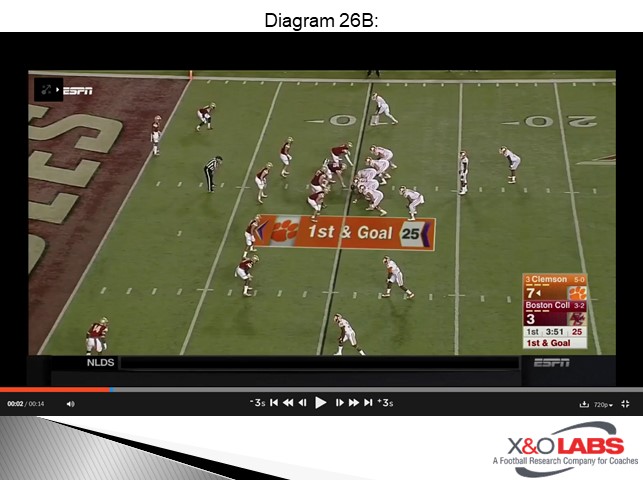
  • Trips Formation Structures- three receivers are placed to one side of the formation (Diagram 26B). 
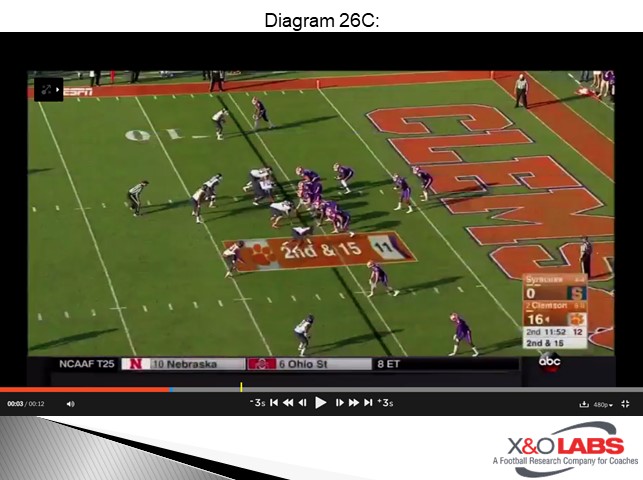
  • Doubles Formation Structures- two receivers are placed to both sides of the formation (Diagram 26C). 

Slide27Slide27

How Clemson produces these formations relies on the use of an off the line tight end or H-back. Because he is off the line of scrimmage, he can insert anywhere along the LOS or on the perimeter. The ability of the tight end to be also an effective slot receiver reduces the need to substitute and allows the Tigers to go up tempo. It was a formation initially made popular in the coaching profession by Gus Malzahn and his staff at Auburn. Now it’s nearly impossible to watch a college football game without seeing at least one team utilizing this formation.  How Clemson uses that H in its zone read game is at the crux of the success of its run game.  

3×1 Formation Structures 

King Weak Formation 

Placing the back away from the trips formation, allows Clemson to attack the weak-side of the defense. If a team wants to play a 2-high safety coverage, this alignment can really help attack the space voided by a deep safety to the single wide receiver side.  The same is true for a defense that rotates the strong safety down over the two receivers but does not walk a defender outside of the weak B-gap to fil the “apex” of the formation.  

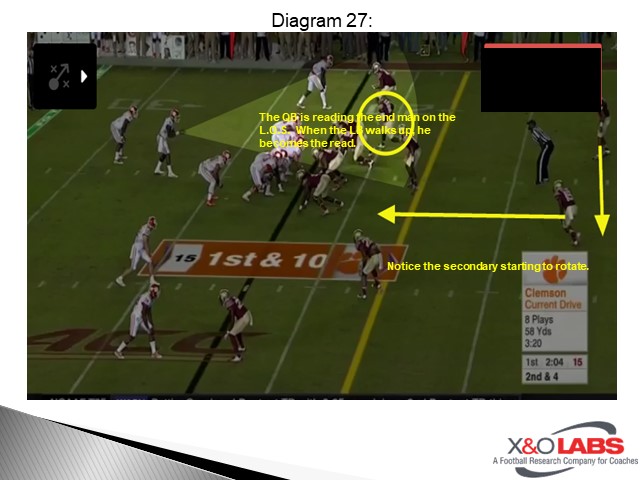
In the illustration below, Clemson uses this formation for their zone run game.  With the ball on the left hash, Clemson puts two wide receivers to the field and aligns the H-back off the ball and on the outer half of the offensive tackle to the same side. Florida State tries to add a seventh player to the box by locking up on the outside and spinning the field safety down into the box to take the H-back one-on-one or become an extra fitter in the box.  They marry this coverage with a boundary pressure with the Will LB coming off of the edge (Diagram 27). 

Slide29

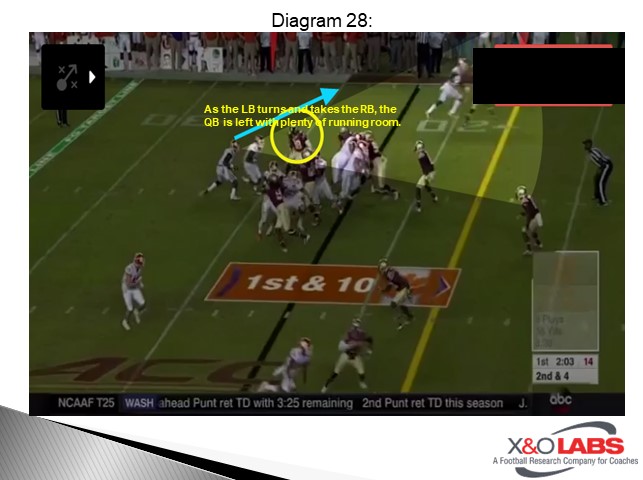
But as the left tackle works his zone track, the boundary defensive end (who is likely supposed to be slanting inside to B Gap) gets stuck outside. As a result, Florida State ends up with two defenders in C gap.  As the blitz happens, the quarterback reads the outside linebacker that has become the new end man on the line of scrimmage. Since the boundary safety has rotated towards the middle of the field to execute his Cover 1 assignment, and the corner is matched up in man-to-man, the quarterback  is able to attain a numbers advantage turn this into a big gain (Diagram 28).  

Slide29

King Strong Formation 

Clemson will also put its A back to the side of the trips, which can be more ideal for attacking single high safety structures. Placing the running back to the passing strength (along with the H) puts four players to a side.  If the defense rotates a safety down over the slot, Clemson can still account for the outside linebacker when running zone read that direction.  This makes it easier to match hats. 

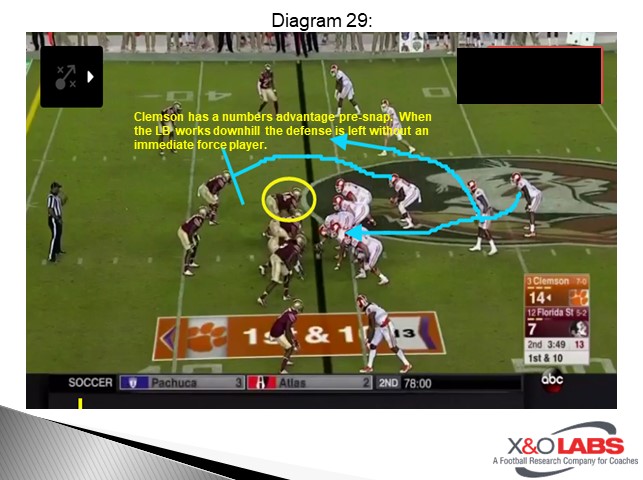
In the clip below, Clemson goes back to this familiar formation. In this game Florida State seems to bounce back and forth from some Even fronts to some Odd front defenses.  On this play FSU is essentially playing a Bear front, with five defenders at the line of scrimmage. To the strength of the formation they have a head up 4-technique that spikes inside to take B gap on the snap of the ball.  The head up nose appears to be two-gapping the center while the backside end is aligned in a loose 3-Technique and attacks the guard on the snap of the ball.  To the weak side, FSU has a stand-up backer playing C gap. Clemson has an immediate numbers advantage (Diagram 29).  

Slide31

Read More

Implementing Clemson’s QB Designed Runs and RPO Package: Case 3 – Clemson’s RPO (Run/Pass Option) Package

By Devin Gates 
Special Assignment Researcher (X&O Labs) 
Former Offensive Coordinator 
Fitchburg State University (MA) 

Introduction 

We would be remiss presenting a report on Clemson’s offensive system, without appropriately detailing the various RPO’s that it uses in its offensive menu. Without getting too engrossed in the intricacies of the RPO system (X&O Labs has already published three special reports on this topic alone) the simplest definition of an RPO is a pre-snap or post-snap read by the quarterback where he makes a decision on whether to give the ball to running back, keep the ball himself or throw it to a potential receiver. It’s the new option football, and few teams run them as effectively as Clemson.  

Before getting into the types of RPO’s that Clemson uses, it’s important to note that they will use two different types of RPO’s. Pre-Snap RPO’s and post-snap RPO’s. The definitions of each are below: 

Pre-Snap RPO’s– These are run/pass options that are determined pre-snap by the quarterback. The decision is based on pre-snap leverage of defenders. Some of these routes include screens such as now screens, flair screens and bubble screens. Quite simply, if the quarterback in this system feels he has a numbers advantage or if his receivers have a leverage advantage, he will throw the ball out on the perimeter. 

Post-Snap RPO’s- These are run/pass options that are determined post-snap by the quarterback. In these situations, the quarterback is reading a particular defender (dependent on the coverage) to assess if he will play the run or pass component of the scheme. Whatever component of the scheme that defender plays, the quarterback executes the other option. In other words, whatever he does is wrong.  

Second vs. Third Level RPO’s 

There is a substantial difference between RPO’s that manipulate second level or third level defenders. Second level defenders are classified as cornerbacks and linebackers while third level defenders are classified as safeties. Clemson has RPO’s to manipulate both of these levels, which is why we segmented our research based off these two distinctions.   

The Simplicity of Clemson RPO’s 

The RPO offense can be overwhelming for younger quarterbacks who are asked to make real time decisions based on an action of a defender. Because of this, sometimes less is more when designing these concepts. Clemson has had success with multiple quarterbacks running their system because they are simple in their approach with RPO’s. They are not flashy. They aren’t using RPOs to attack the middle of the field or push vertical, but really just to put horizontal stress on the second level conflict defender. They mostly used wide receiver bubble screens to achieve this, as well as a couple of quick game concepts. The success of Clemson’s RPO game isn’t the scheme or structure; it’s when and where they utilize the RPOs to increase the chances of a positive play at crucial times.  First, in establishing rhythm when starting a drive in their own territory, and by gaining positive yardage in point scoring territory to increase their chances of scoring. 

Second Level RPO’s 

Bubble Screen RPO 

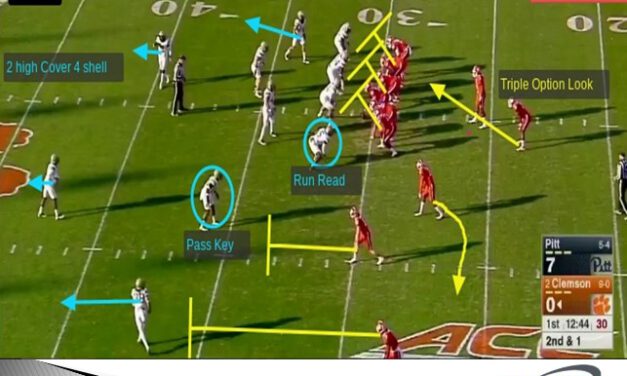
The majority of the Clemson’s zone/bubble RPO’s are utilzed out of 11 personnel (one back and one tight end) formations either with an attached wing or the tight end on the line.  Because they will run out of both 3×1 and 2×2 formations it makes the linebacker to the two wide receiver side the conflict defender. This gives the quarterback the clear give/throw read.  If the defense plays a zone coverage and that conflict defender leans towards the box with the mesh, it gives the offense a two on one with the wide receivers vs either the cornerback or safety, depending on who the deep player is.  Because of its dual threat quarterback, Clemson has the ability to combat man coverage or seven in the box by making this play a triple option look and having the quarterback be a dynamic run threat.      

Clemson’s Variations of the Bubble RPO 

In this illustration, the RPO concept here is a six-man zone read blocking concept with a bubble to protect it.  This is a triple option read for quarterback. The first look is to the single receiver. In the illustration below, the safety to that side is aligned almost on the hash. There is an over hang level two player to the single receiver so that cancels the throw and moves the QB to the next phase of the triple option, which is the run action. Here, the defensive end for Pitt gives the quarterback a pull read by crashing down the line of scrimmage. The quarterback then attacks and reads alley defender for his second read.  The alley defender leans into the alley, giving blocking leverage to wide receiver.  The quarterback sees this, throws bubble.  The wide receiver is now one on one with safety (Diagram 54). 

Read More

Transitioning Between Even and Odd Fronts to Defend RPO’s

By Mike Kuchar 
Co-Founder/Senior Research Manager 
X&O Labs 
Twitter: @MikekKuchar 


Introduction 

Rose-Hulman Institute defensive coordinator Nick Davis believes in playing man coverage. It’s his philosophy. Even with some of the more intelligent student-athletes in the country (Rose-Hulman is an engineering school) Coach Davis believes in the simplicity of lining up man for man and playing ball, particularly against RPO offenses. Although Coach Davis’ players have the ingenuity to paly both man and zone coverages, he just chooses not to. 

“Our kids have trouble playing zone because they play with man eyes because they are so used to it,” he told us. “We’ll see our overhangs that will run with crossers. It’s really been a detriment for us to do something else. Our kids are smart but are lesser athletes that whom we play. So we tell them to stay on the hip of their receiver. And if we tell them to do one thing our kids are going to focus on doing it.” 

Clearly, they have done what’s asked of them. The Fighting Engineers defense produced the following numbers this past season (all national ranks): 

  • #1 Player in the Nation with Sacks (17 sacks) 
  • #2 Team Sacks  
  • #9 TFL 
  • #11 Yards per Carry 
  • #16 Rush Defense 
  • #19 Pass Completion Percentage 
  • #24 3rd?Down Defense 
  • #30 Red Zone Defense 

From a base standpoint, each player in the Fighting Engineers defense has a gap or a man. Some defenders will have a man and a gap if there is a tight end involved. According to Coach Davis, he’s seen less and less RPO’s than two-high quarters teams because of there is no leverage placed on overhang players. “ We create match-ups and it doesn’t matter where they are,” he told us. “We get lined up quickly and we just play with the proper leverage- inside or outside. Since we are a box team (and not a spill team) we can change our leverage to cheat inside if we are getting hurt in the slant game. We teach all our defensive backs press man coverage and off man coverage from both the outside and slot positions so we can get the best match-ups.”         

Personnel 

The novelty of the Rose-Hulman defense is that Coach Davis plays a 3-3-5 structure based off four down personnel. He is able to cross train defenders so that he can adjust the front structure depending on the offensive personnel or formation. “We like to be more even fronts against heavy personnel and more odd fronts vs. spread personnel,” said Coach Davis. “We will do both even and odd fronts vs. both personnel types to keep people honest.” For the most part, Coach Davis plays a field/boundary defense. He’ll play with two true defensive ends (one of which that can be a hybrid interior technique), one Nose, one hybrid linebacker (that can play on the line of scrimmage in four down fronts) and two traditional linebackers who will be in the box. “We like this personnel because we do not need to sub personnel to match the offense and we can present multiple looks,” he told us.     

This is the following personnel descriptions that Rose-Hulman uses in its backend: 

Dime: Best cover slot player. Most athlete safety or third best corner  

Rover: Needs to be able to cover second best slot player and match physical Tight Ends. 

Mike: Most physical defender. Does not need to play much.  

Bob:?Best athlete of the linebackers. Needs to be able to play on the line of scrimmage. A player that may be able to both rush and cover.  

Will: Mixture of the Mike and Bob linebacker. Needs to be able to cover but also be a physical guy. He plays man on the tailback quite a bit.   

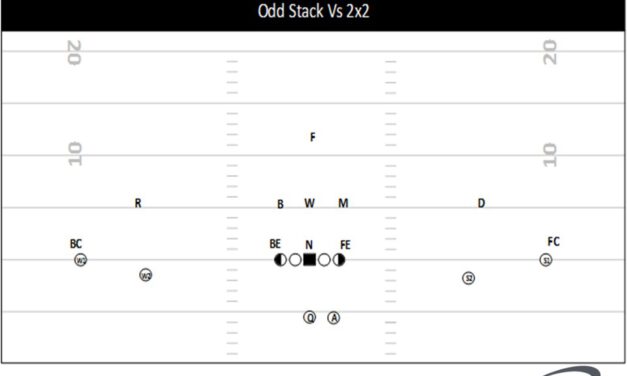
As referenced above, Rose-Hulman will vary its three-down vs. four-down looks depending on the formation structure presented. In one-back looks, the Fighting Engineers will align in odd stack looks. Against two-back structures, they will choose to be in more four-down fronts adjusting with the B linebacker up on the line of scrimmage. “We treat 10 personnel and 00 personnel the same and would like to be in an odd front of some sort,” he said. “We treat 11, 12, 20, 21 personnel the same and would like to be in an even front of some sort. ?Our base coverage adjusts to any personnel or formation.?We can add cover safeties or corners if we want against 10 personnel and physical safeties or stack linebackers against heavy personnel. Our system allows us to interchange position and not lose a beat.” 

Read More

Empty Buck Sweep Package

Chris Parker
Head Football Coach
Pickens High School (GA)
Twitter: @PickensFootball 


Introduction 

As a team, we run a lot of empty formations. We have made a commitment to do this for the following reasons: 

  • Simplifies the defense 
  • Forces adjustments 
  • Get 5 receivers out quickly. This forces the defense to be aware of 5 vertical threats and 5 horizontal threats on each play.  
  • The defense likely has limited experience against empty. 
  • We can run all the same running plays as we can in 10 pp if the QB can run. 
  • It is easier to recognize coverage. 
  • It creates spacing and easier recognized matchups for lineman and receivers. 

Every plan has some weaknesses. The biggest detriment to any Empty schemes is the inability to run the ball physically and conventionally. Jet Sweeps and QB runs have been good plays for us, but we needed more. We decided to lean on our Wing T roots and to marry some of our old Wing-T concepts into our empty package. We started by taking our base empty formation and moving the inside receiver positions to a “wing” alignment on some formations. At that point, the empty Buck Sweep became a staple of our offense. 

Our Base Empty Wing Formations 

These formations allow us to still have 5 receivers in the formation but also use the Wings as blockers or runners in a more physical, “Wing-T” look.  

Slide1

Diagram 1 is our basic formation. This is just like our traditional empty formation but the inside receivers are aligned as wings. This gives us the ability to use them as blockers, runners, or receivers.   

Slide1

Diagram 2 is our basic formation with a TE. This allows us to have tight side and split side plays and forces the defense to defend and cover the TE.  

Empty Buck Sweep 

While we have many plays and concepts we use in this formation, one of our best plays is the Buck Sweep. This play has been very successful for us in the past few years. We are able to run the buck to either side since there are wings on both sides. We are able to read the backside and throw the pop concept.  

Slide3Slide3

In diagram 3, we are running toward the strength of the formation and the isolated X receiver has the pop. In diagram 4, we are running Buck weak with the double pop read away.  

Quarterback 

  • The QB will handoff on Buck or throw the pop. 
  • The Buck handoff happens by catching the snap and placing the ball directly in front of himself. The RB will receive the ball running parallel to the line of scrimmage.   
  • The read is the backside ILB and/or the grass for the pop. If the backside ILB is chasing the play, pull the ball and find the voided area for the pop. If there are multiple receivers on the pop side, they will all be running the slant and QB can read inside/out. 
  • If the QB is unsure, he needs to handoff on Buck run.   

Wingbacks 

The wingbacks will block down if they are on the called side and be the ball carrier if they are on the backside on the play call.  

The blocking wing will block down on the DE. This can be a tough block. The key is to have a great get-off. The back should put his weight on his outside leg and push off that leg and throw himself into the defender. Once engaged the defender, he must run his feet the entire play. If the DE disappears, he should elevate to the 2nd level and find a linebacker to wall off.   

The ball carrier can get the ball with or without motion. It depends on how quick the ball carrier can get the ball after the snap. He should run flat in front of the quarterback receiving the ball like a jet sweep runner. After he gets the ball, he should read the play side guard’s block. The play side guard is attempting to kick the flank defender. If he kicks, the back should stick his foot in the ground and push vertical to catch the backside guard that will be wrapping in the hole. If the play side guard has to log the flank defender, then the back should bounce the play wid

Read More

Variations of the Double Screen Concept

By Zach Schneider
Offensive Coordinator
Battle Ground Academy (TN)
Twitter: @MrSchneiderBGA


Introduction

Screen passes have been an integral part of our offense at Battle Ground Academy. We view our screen game as an extension of our run game, as well as way to protect our pass game. I feel we are unique in that we try to scheme our screen game. Not only do we look to throw screens versus defensive pressure, we will also game plan screens versus defensive alignment to formations. We also see screens as a great answer in the red zone.

BGA Double Screen

Offensively, we are based in 10 personnel and run various 2×2, 3×1, 3×2, 4×1, and 2 back formations. Our ultimate goal in our screen package is to be able to get the ball to any skill position on the field in various spots. The first year running this screen we had two separate screens in our offense. A tunnel screen to our front side and a quick (now or swing) screen to our backside. In the past couple years, we have meshed those screens together.

We spend a considerable amount of time during our spring practice and pre-season camp drilling our base screens. Most of this time is geared towards teaching our linemen the proper timing, technique, and assignment. We view our linemen to be the most important aspect of our screen game and once they have their timing, technique and assignments mastered, our options are limitless!

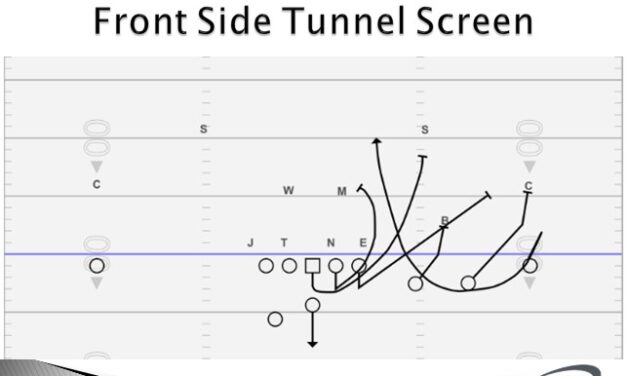
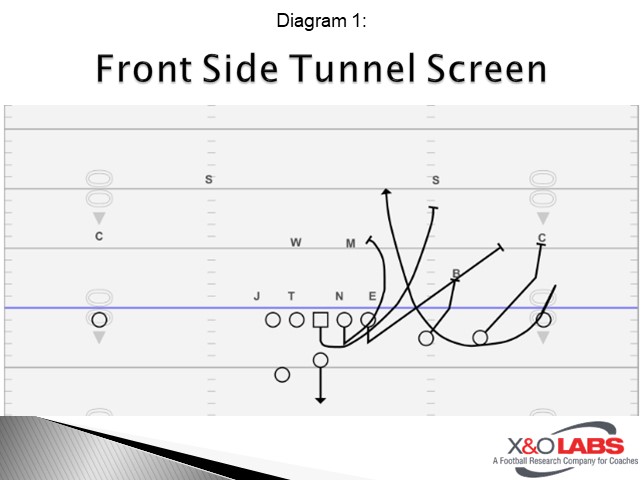
Tunnel Screen Blocking Scheme – Front Side
Slide1

Our play side timing for our linemen is pass set for roughly 2.5 seconds and release to your assignment. One of the “teaching techniques” we use with our linemen in the spring and preseason camp is we have them sing “Mary had a little lamb” then release. This has done wonders for us and our timing, plus the kids get a kick out of it!

From a blocking assignment perspective, we use the acronym FCA for our blocking scheme on the play side. This stands for force, contain, alley.

Play Side Offensive Tackle – Our play side tackle is our “force” player. In a perfect world, his responsibility is the force defender. To simplify this assignment, we instruct him to aim for the “chains” or an imaginary point 10 yards down the field on the sideline.

Play Side Offensive Guard – Our play side guard is our “contain” player. In a perfect world his responsibility is to meet the play side ILB or MIKE. We give him an aiming point of 6 yards downfield 2 yards outside the PST.

Offensive Center – Our center is our “alley” player. His responsibility is to run the “alley” created by the “force” player and the “contain” player. The center will act as the “lead” block for the player catching the tunnel screen.

Read More

Training the Feet and Eyes in Press Coverage

By Grant Caserta
Defensive Coordinator
Husson University
Twitter: @GCaserta1


Introduction

Press coverage is a tool that has many great benefits for the defense. From taking away easy throws, to challenging receivers, to altering route releases, press coverage can make things hard on the offense. With a few basic coaching points, corners can be equipped with the techniques and confidence to be successful at the line of scrimmage.

Stance and Key

There are two main items we focus on to help us achieve a proper stance: feet and eyes.

Feet

When teaching corners a stance for press coverage we always start with the feet. The first thing we look for is balanced weight distribution in the feet. We want equal weight on each foot, and equal weight on the ball and heel of the foot. This posture allows us to move quickly in reaction to the receiver in any direction.

We want the corner’s feet to be around shoulder width apart, or slightly wider than shoulder width. Each individual body type may be comfortable in a slightly different stance. Longer legged corners may feel more comfortable with a wider stance, while shorter corners may feel better with a narrower stance. I am a strong believer in the idea that an uncomfortable player will likely be a non-efficient player, movement-wise. The only requirement we have for a corner’s stance is that he must be balanced and stable after taking his first step. We want the corner’s first step to put him in an athletic position that allows him to respond to the receiver quickly. We do not want the first step to overextend the corner’s base so he cannot react to a counter move by the receiver. We also do not want the first step to be too short, where the receiver cannot be cut off on his initial release.

Eyes

Just like defending a ball handler in basketball, we want to focus our eyes on the midsection of the receiver. It is very easy to be fooled by head/shoulder fakes and arm movement. By keying the midsection, we give the corner the best chance of responding correctly to the true release of the receiver. It is the onus of the receiver to get around the corner; therefore, the more patience the corner can show initially, the better shot he has of forcing the receiver to declare where he is going. This can be best accomplished by keeping the eyes keyed on the midsection of the receiver – ignoring head fakes and other superficial attempts to get the corner’s hips opened up too early.

Two keys to winning at the Line of Scrimmage

We teach two key elements to the start of press coverage technique.

  1. Working on 45-degree angles to cut off the receiver and
  2. Protecting the “cylinder” by striking the receiver. These help us to disrupt timing of routes, prevent free releases and stay in the proper position to defend.

45 Degree Angles

Read More

Adjusting the Bear Front to Defend RPOs

By Kevin Gaul
Defensive Coordinator & Linebacker Coach
Colts Neck High School (NJ)
Twitter: @kevgaul              

Introduction:

In today’s game, we see so many opponents who place a premium on having a dual-threat quarterback with run/pass options. Our staff utilizes a multiple scheme that shows both 3 and 4 down fronts with the mindset of trying to dictate the tempo of the game from a defensive standpoint. In an attempt to combat difficulty forcing the perimeter versus a mobile quarterback, we installed our 5 man “Bear” front while using Nickel personnel. We found that the concept gives us the best advantage to effectively apply edge pressure and contain the pocket while remaining strong against power run schemes. Scheme aside, we believe that the most important aspect of any well run defense is the overall ability to align properly, get off blocks and most importantly tackle. The scheme is primarily run out of a man to man coverage alignment, which we call MEG (man everywhere he goes). In our base Bear look, we play Cover 1 almost 65% of the time and use a Cover 3 “Robber” scheme as a zone based changeup. Our 3 Robber coverage is derived from our Cover 8 variation of quarters in which the SS/OLB on #2 will take outside leverage to funnel all flow towards the middle of the field, where we have a safety or MLB jumping the route with inside leverage.

Personnel & Structure:

This scheme derives from a traditional 46 bear defense used commonly against 21/22 personnel power running teams. We keep our Nose in a 0 technique and have modified by shifting the End/Tackle into 4i’s. This allows the E/T to have better leverage versus a down block from the OT and combo blocks that include a TE or H-Back wing.

Our hybrid DE/OLB “Rover” is our weak side edge rusher and we ask our Mike LB to walk up in this package to become the strong side edge rusher. Both of these players are “box force” players versus the run (discussed below). Walking the Mike LB up to the line of scrimmage (LOS) allows for us to keep an extra safety on the field, as opposed to a traditional Sam LB in a 34. 

The Will LB is the most critical position in the unit. He is stacked 5 yards off the ball behind the Nose Guard and acts as our runner. He plays inside-out as he reads through the “big triangle.” In cover 1, our CB’s are in MEG on #1, while our Strong Safeties play #2. Against a 3×1 set, the weak side SS, which we label the “Cougar,” will bump over to cover #3 to the strength. This leaves the Will LB to be responsible for the RB. It is vital that our edge rushers do a great job in rerouting any RB quick release to help the Will in this situation. The FS, our “Bandit,” is aligned at 10-12 yards and acting as a centerfielder to assist the CB/SS on any Vertical or Post routes. At the same time, he must be able to attack downhill to become an extra secondary support run defender.

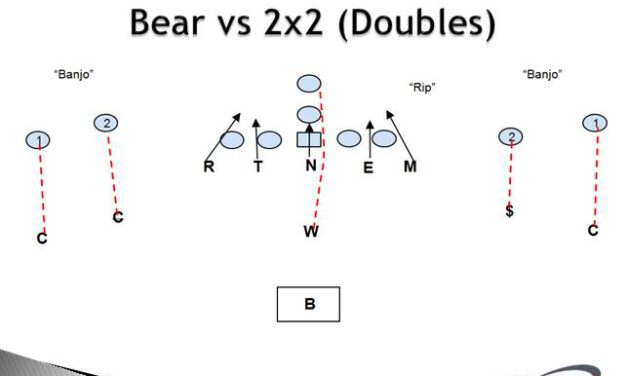
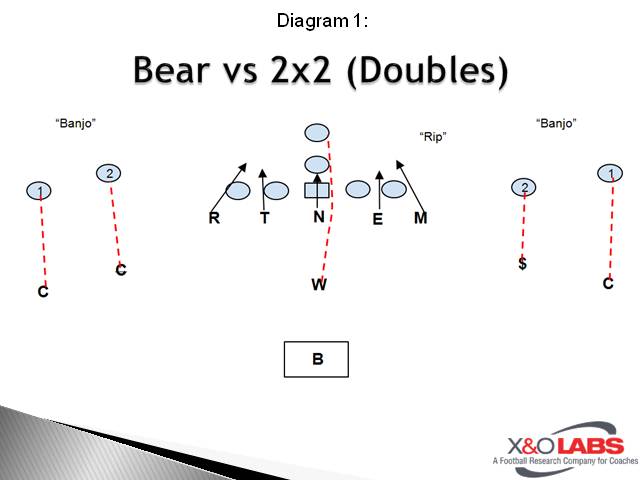
Coaching Points vs 2×2 Doubles:

Slide1

Run Defense:

DL: Against a spread 2×2 set, we play a 6-man box. The Nose is a 2-Gap run defender reading the “V” of the neck of the center. We train this player extensively to use his hands as a way to shock and shed the center while maintaining a strong base to set the middle of the formation.  Our End/Tackle players are in 4i alignments and will attack the outside hip of the guard. We ask these players to be aggressive and cling onto the hip of pulling guards. If run properly, this helps to eliminate cutback alleys against pin/pull and power schemes. 

LB: The Rover and Mike serve as our box force defenders off the edge attacking the outside hip of any lead blockers or the back itself. Their general technique is to stay square and squeeze the LOS to deter any cutup lanes while always maintaining contain. Our general rule is as follows:

  • If the QB opens to the QB, that backer will stay home for the QB pull.
  • If the QB opens away from me, attack his back hip. This allows us to play any boot flow from the QB while being able to fall in on the RB. 

The Will plays over the top of the 5 down and is a free runner. We read a “Big Triangle” of the guards through the RB. The weakness of this scheme is the secondary run support over the C gap. As a result, we train the Will to track the inside hip of the deep back by working a “Track & Close” drill to prevent cut ups against zone offensive runs. In our MEG structure, the Will is responsible for the RB in pass, therefore he must be a guy that can run exceptionally to the perimeter and your best tackler.

Read More

Blocking Techniques To Acquire Numbers in the 2/3 Back Zone Option Game: Case 1 – Blocking Techniques to Acquire Front Side Numbers
By Mike Kuchar 
Senior Research Manager 
X&O Labs 
Twitter: @MikekKuchar 


We Want Your Input: Throughout this case, I’ve posted discussion topics and questions that I’d like to get your input and feedback. You can join the discussion down in the comments section at the bottom of page. We’ll be continuing the discussion all week. This is just not for today. You’re going to see what others are talking about and you’re invited to join the discussion. Be sure to post your email address so you can network with other coaches. Like always, if you have questions, just add them in the comments section and my research team and I will get them answered. Again, we’re starting with case one this week. We’ll go on to cases two and three next week. So, get started below and I’ll meet you down in the comments section below. Thanks, coaches!


Introduction 

The option offense is all about numbers. We all know that. So much time is spent with coaches devising formation structures to find ways to get an advantage at the point of attack. Much of this comes in formation placement, but we found that’s not the only way to outnumber defenses. Some of this manipulation comes in the form of how coaches are teaching their players, mainly offensive linemen, to block the option game. In order to defend the zone read and zone read option game, a defense needs to out-number it. It’s as simple as that. But the problem is the defense doesn’t know where the play side is going to be and where the read side is going to be. Sure, there are tells like the placement of the offset or the placement of the cruiser, but that all can be manipulated.  

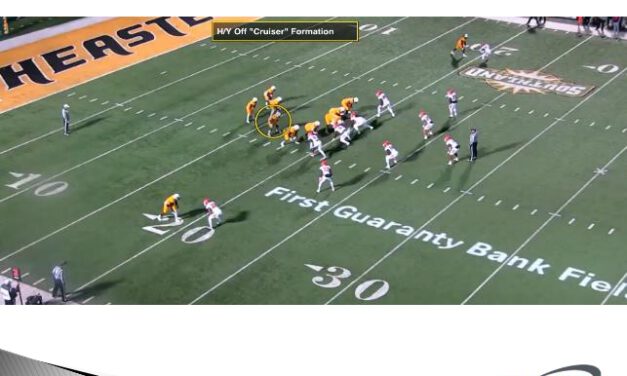
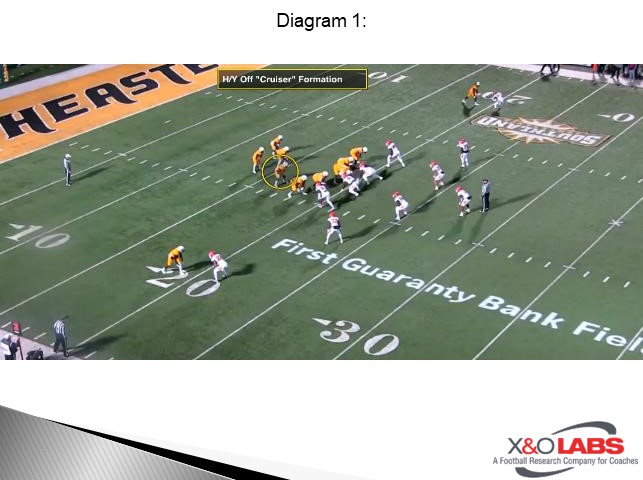
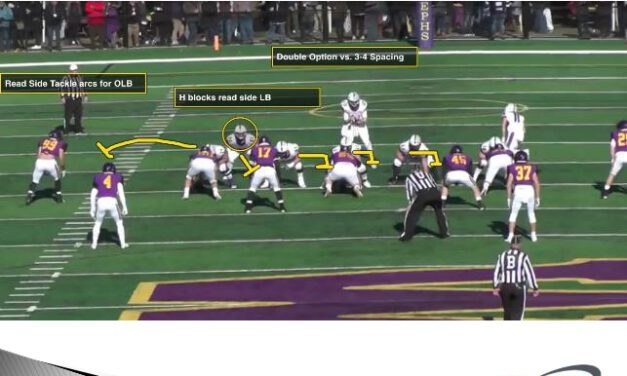
We studied two zone read option offenses from two successful programs. It’s important to note that these teams are not what you would call pure option offenses. They are zone offenses that have found ways to integrate the two and three back option game into their play menu with a great deal of success. They were spread option coaches that simply adjusted their zone run game to add a double option element to the read side of the play. That adjustment came in the form of adding another offensive player in the hip position (whether it be a tight end or another back) into their formation structures, who has the potential to be a front side or backside blocker (Diagram 1). This formation is nothing new. These days it’s a challenge to watch any game at the high school or collegiate level and not see this formation. So, rather than focus on the formation, we wanted to tailor our research on how run game coordinators were designing their zone option run game around this formation and specifically how they were attacking defenses with it.  

Slide1

The benefit of having this player tied into the option game lies in the predictability of how defenses will defend it. In many cases, that comes in the form of “back gapping” the movement of the H/Y, or the cruiser in this system. The potential presence of that H/Y to the read side of the option scheme, will enlist the presence of another defender to account for him. And what that happens it 

The video below began the process of this project. After watching the University of New Mexico under former offensive coordinator Bob DeBessee gash opponents with its three-back option attack, I was astonished at how they were getting play side numbers in the zone scheme. Consider the following clip from the 2016 season against the University of Wyoming. As Wyoming back gaps the movement of the H/Y, the back is able to push the ball out the front side for a huge gain.  

Read More

Blocking Techniques To Acquire Numbers in the 2/3 Back Zone Option Game: Case 2 – Blocking Techniques to Acquire Backside Numbers
By Mike Kuchar 
Senior Research Manager 
X&O Labs 
Twitter: @MikekKuchar 


Introduction 

In zone option football the backside of the scheme (or read side) is just as important, if not more important, than the play side. In order to keep defenses honest, an offense needs to show its capacity to make reads backside and get the ball pitched. But it order to do that the offense needs to have a favorable numbers advantage. In this case, we will present our findings on how coaches are not only attaining numbers on the read side by not only by formation, but also by blocking scheme.  
QB and Dive Back Mesh  

Although this is mainly a study on how coaches are blocking the two and three-back read option, we felt it necessary to detail the mesh game of the zone read, both from Pistol and offset alignments. The mesh is a vital component of any option offense and if not timed up with the blocking angles up front, the concept doesn’t have a chance of being successful. SELU and Amherst will use both pistol and offset alignments in its option game. While the offset can present tells to the defense based on which side is the play side and which side is the read side, flopping the back pre-snap could easily alleviate that issue.  
As far as teaching the read of the quarterback, SELU makes it as clear as “can you beat the read defender or not” (which is the C gap player) while Amherst gets a little more specific. “We read hips and read eyes of read key, which is the first guy outside the hip of the read side tackle,” said Coach Ballard. “We are looking for hip bend. If his hips bend, we got him. We are starting to see more sits and say their defensive line is better than the offensive line and dare us to run inside zone. In these situations, we need to find a way to option the football outside.” 

Mesh Game Mechanics from Offset Alignments 

From the offset alignment, the quarterback is taught to not move the near foot, pivot with opposite foot and square up to the read key. The dive back steps at the play side hip of the Center but the key coaching point is to not move until the ball hits the quarterbacks hands. This is done to give the offensive line, which lines up deeper in SELU’s system, to get into their blocks.  

The clip below provides an illustration of this technique: 

Read More

Blocking Techniques To Acquire Numbers in the 2/3 Back Zone Option Game: Case 3 – Building Formations and Play Tags to Manipulate Defenses

By Mike Kuchar 
Senior Research Manager 
X&O Labs 
Twitter: @MikekKuchar 


Introduction 

As in any pure option offense, coordinators spend countless hours studying the structure of defenses to find ways to manipulate numbers based on formation. The three-back zone read option coaches are no different. And when these offensive coordinators are game planning, a decision needs to be made on whether they want to acquire numbers to the read side of the zone scheme or acquire numbers to the read side of the scheme. While this, of course, depends on personnel matchups (who these coaches want carrying the ball) we wanted to present our research on how these coaches are building formation packages to attain extra numbers either to the zone side or read side. These can be done in both a pre-snap or post-snap manner.  

Zone Read vs. Zone Read Option Methodologies 

While Ohio State and Auburn started to popularize the two-back zone read systems from 11 personnel groupings, other programs like New Mexico under former offensive coordinator Bob DeBesse has started to implement the three-back zone read system from 20 and 30 personnel groupings with a great deal of success, the Lobos lead the country in rushing in 2016 using these formations. SELU will use both of two-back and three-back groupings, but will vary between both based on two components: 

  • What kind of personnel they are working with from year to year 
  • How defenses are defending both two-back and three-back option schemes 

Of course, the benefit of the three-back option schemes is that it provides for a dive back, a pitch man and a cruiser. Coaches can, and often do, designate who the cruiser is and who the dive back is from play to play provided you have the personnel to do so. Whereas in the two back option game, a coach may be limited to one dive back and one cruiser. All of this can be manipulated by numbers and SELU is no different when it game plans using both these personnel groupings.  

“Three back is easier to scheme,” said Coach Mikel. “But when deciphering between both of these, the first question asked is does speed benefit us (by having two backs) in this certain situation? The second question asked is can the speed guy perform the blocking function as well as the tight end? The third question is does the defense change depending on personnel.” One of the issues in running two back zone read is that an offense has to decide if it wants to run it to the two receiver side or can you run it both directions. The issue with running it to the one receiver side is blocking the bubble inside linebacker (as detailed in case two). It’s a difficult block for that read side tackle to man block up the bubble backer, which is why SELU committed itself to utilizing the two-back zone read to the two-receiver side. “We didn’t want to give the tackle more things to learn,” said Coach Mikel. We didn’t want the tackle doing anything else but going lateral, lateral and blocking what is on his track.”  The H/Y can account for the first play side linebacker, but when defenses back gap, they can easily gain another defender to the read side. The two-back zone read from 20 personnel is more advantageous being run to the two receiver side, where the slot is able to block number four to the read side and the ball can be pitched off the next threat.   

For Coach Ballard, deciphering between two back zone read and three back zone read option is a personnel factor. He initially tried to make it universal for the back and tight end to be cruisers, but found that running backs couldn’t execute cutoffs or arc blocks. “These backs didn’t have the power to get that done,” he told us. “We would switch responsibilities for key breaking tendencies. You will see us run inside zone and have the tight ends arc release as a key breaker. It got secondary running and chasing tight ends on an inside zone play (this concept is called “bang tease” will be detailed in case three). So we would tell him to arc release as a default if they didn’t get anything from us.” 

This coming season, Coach Ballard (who is also the tight ends coach) plans on cross training the backs and the tight ends. “The tight ends will spend time with the backs. I will teach the tight end in the run game. Tight ends are really doing different things. They used to work zone combinations but now everything is from off line formations. We don’t have enough backs on the team that we want on the field. If we did, we could’ve taken our tight end off the field, and ran all of these same plays with three backs. “ 

No RPO Zone 

Both Amherst and SELU don’t major in run/pass options. In fact, they don’t even tinker with them. As Coach Ballard told us, “We used to be an RPO team, but teams have started to get to man free coverages to stop it. Now after three years, I said all we’re trying to run the option is lets run the option. You have to decide what you are going to spend your time on.” So, instead of manipulating the conflict defender, they attack him by forcing him to make tackles in the option game. But in order to get the numbers advantage this offense needs, they have to be creative with their formation design. In this case, we are going to study how these coaches are using double and triple option schemes to manipulate defenders based on formation. We realize that some coordinators may play a “defense of the week,” when defending option teams, we segmented our research on the most common defensive structures these coaches see: 

Read More

Incorporating Air Raid Concepts into a High School Offense

By Jon McCune 
Head Coach/Offensive Coordinator 
Moniteau HS (PA)
Twitter: @coachJQmccune 


Introduction 

Teams at all levels of football incorporate some sort of option or read route. Based on the depth, leverage and coverage of the defensive back, the receiver can choose a specific landmark to hit on the field. The QB and his receivers know through practicing routes-on-air and building chemistry, how to attack the field efficiently and react to different types of defensive leverage. This idea has evolved over time and blends right in with the air raid philosophy of taking what the defense gives you. This makes it even harder on the defense to make adjustments while moving at a high tempo.  

Option routes make it harder for a defense to decipher the play you are running. One play can look like four different plays out of the same formation. It has been easy to incorporate it into the high school level based on the amount of time you have to rep it. To do this, I suggest you study one route and not one whole play in the beginning. You can work that route in 7on7 practice or at competitions.  

You shouldn’t have to read a term paper for kids to understand one concept. Wide receivers play with a different intensity knowing that they could get the ball on any given play, and it’s all on them and how well they run their routes. It puts stress on the QB and WR’s to know the pre-snap reads. Good communication and reps in practice will develop discipline and teach these young men how to chase green and find grass with precision and ease.  

It is important to note that option/reads are not double move routes. I did not include routes like DINO or HI-GO or pivot, nods, in and ups, out and ups, because I believe those are double move routes that do not have a true option/read. Hitch-Go, for example, is tough to do with a true post snap read. If it is a read, it’s pre-snap only, not mid-route. Those are great concepts, but they don’t fit this topic. The remainder of the article will be focused on the read concepts we currently use. 

Implementation 

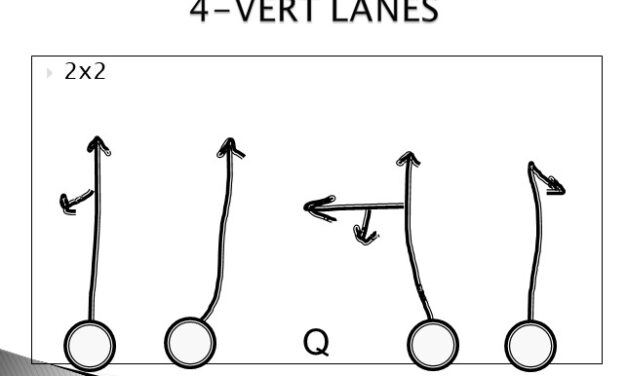
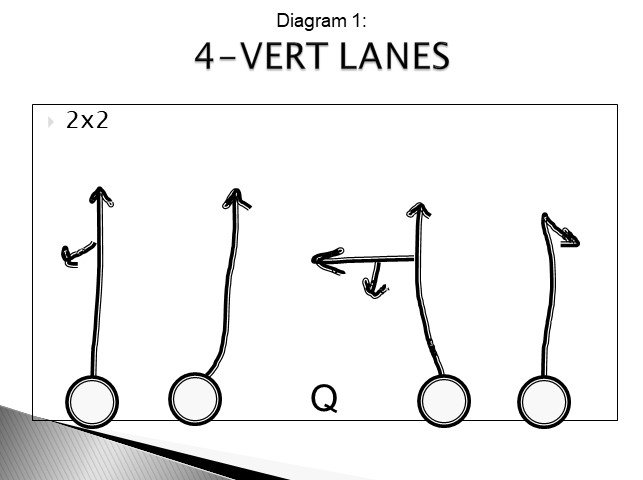
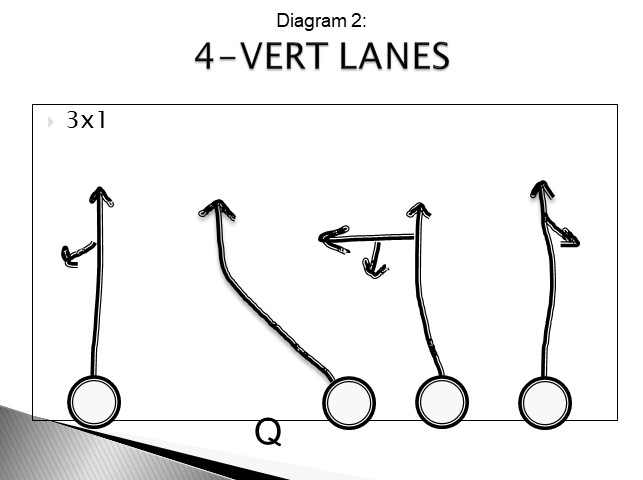
The evolution of option routes can be seen in classic Air Raid concepts like “Y Cross” and “Mesh.” Even if you are not an air raid enthusiast, chances are that your offense has some sort of 4 vertical concept. For example, 4 verticals can contain two different option routes within the play. They contain the SOCO (streak-comeback) read for the outside and the “POGO” (post or go) read for a tagged inside receiver. The inside receiver identifies if the middle of the field (MOF) is open or closed based on coverage off the snap. 

Slide1Slide1

The coaching point I stress to my receivers is to create lanes of operation. Being too close to another receiver leaves one man to cover two and it’s a tough read for the QB. With that in mind, we have our four lanes. An issue coaches may have at any level is dealing with the possibility of the defense dropping 7-8 men into coverage. That is why we have the “POGO” tag.  SOCO and POGO will be detailed below in the deeper routes section. 

Quick Read Routes 

There is always space open on the field. Regardless of the strength of your QB’s arm, there is a way to create space for the offense. The quick read routes are high percentage passes. Easy throws = easy catches = easy yards. 

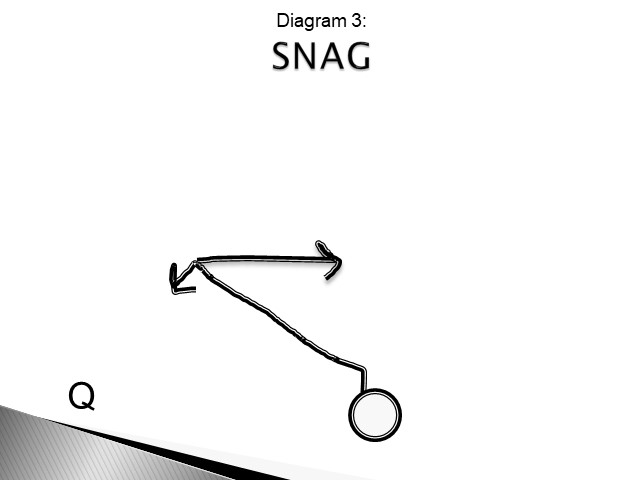
Snag  

Slide3Slide3Slide3Slide3

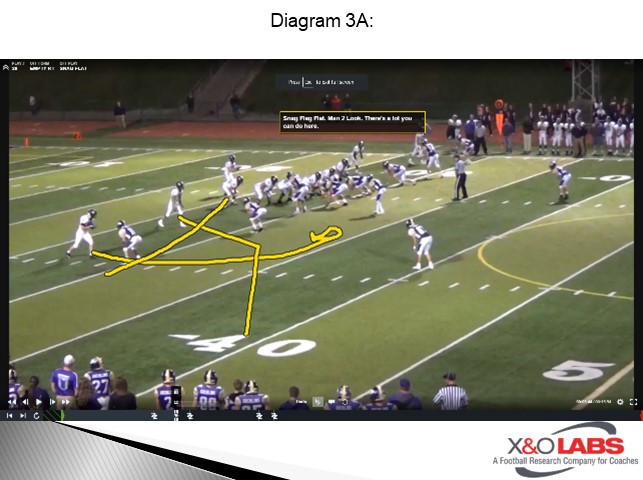
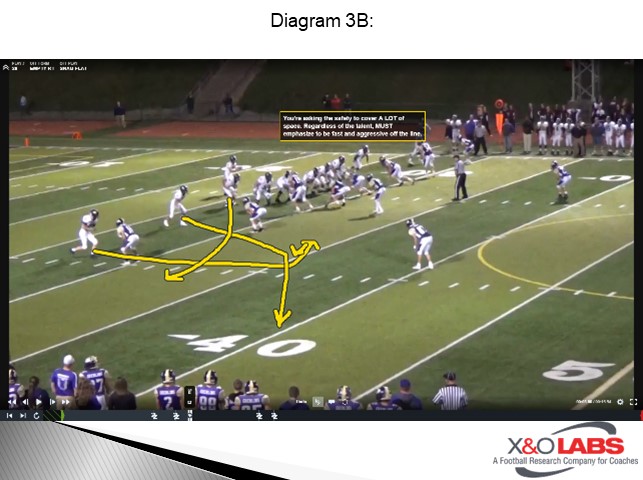
The snag is a combination of the spot and the pivot. Off the snap, the receiver immediately runs the spot. If green is open between the linebackers off the bat, hit the spot immediately. The snag can be run from any of the WR positions. The key that they must not cross the center of the line of scrimmage and go no further than 4-5 yards upfield. 

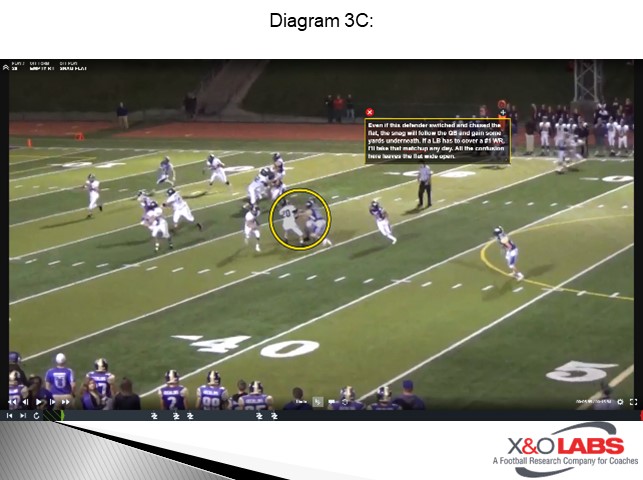
If the receiver notices immediately off the snap that linebackers are coming to cover the area, he attacks hard off the snap, then vacates and heads to the outside. In this highlight, even with the #2 WR slow off the line, there’s enough clutter on the defense that opens up some green.  

Read More

Creating a System of Pressure Disguise Protocols

By Bobby Peters 
Contributing Writer 
X&O Labs 
Twitter: @b_peters12 

Introduction 

In the modern era of no-huddle offenses, coupled with look tempo, it has become necessary for defensive coordinators to disguise their pressure patterns pre-snap as to not tip off the quarterback or coaches in the other press box. It almost becomes necessary to have a system in place where defenders on the back end do not give away any pressure indicators. But how they disguise their pressures must fit within their system. There are techniques behind these movements and the slightest hint of poor eye discipline or false movement can trigger the offense and result in surrendering potential big plays.  We reached out to several defensive coordinators, both at the high school and college level, to ask them how they disguise their pressure concepts as to not tip off the offense and asked the following four questions: 

  1. What coaching points do you use to instruct your cornerbacks to vary their disguise in corner pressure, trap coverage and cloud coverage as it pertains to the following: QB cadence, offensive formation structure and field location (boundary/hash)? 
  2. What coaching points do you use to instruct your safeties to vary their disguise in transitioning from MFO (middle field open) to MFC (middle field closed) pressure concepts as it pertains to the following: QB cadence, offensive formation structure and field location (boundary/hash)?  
  3. What coaching points do you use to instruct your second level defenders to vary their disguise between showing (mugging) pressure and bailing out as it pertains to the following: QB cadence and pass protection indicators?  Provide a specific example of how you will check your pressure against look tempo teams? How do you double call your pressure? Will you have an auto check opposite? Do you pair your pressure packages each week based on game plan? 

Their anonymous responses are below:  

Question: 

What coaching points do you use to instruct your cornerbacks to vary their disguise in corner pressure, trap coverage and cloud coverage as it pertains to the following: QB cadence, offensive formation structure and field location (boundary/hash)? 

Responses:  

“As a pressure defense that does a lot of pre-snap rotation, at the snap we have a general rule of trying to show a s much two-high as possible and trigger as late as we can to affect not just the look we give the QB but also to hide our force and alley players in the run game. We also like rotation on the back end because it gets our guys playing faster and not having to react from a static position.” 

“We use two triggers in all of our pre-snap movements dependent upon if the quarterback is in gun or under center. In terms of corner pressure, most QBs either under center or in gun will check both sides of the formation to identify the alignment of the corners and if the outside receiver is on the line or not. We show a pressed quarters look every play pre-snap so our trigger for our corner pressure (boundary only) is either when the QB looks away or when his head gets even. In the Gun we tend to show coverage and pressure when the QBs hands come together, obviously to accept the snap. If the quarterback bluffs and looks to the sideline we reset.” 

“Against trips to the field we may have a situation where the Corner wants to bail a little sooner if the offense likes number two on the out or wheel and we are in our cloud/read two scheme. We want to try to stay pressed as long as we can though, to maybe invite a check to a fade, especially on the backside of trips where we usually are playing some sort of invert coverage or a bail to 3 deep.” 

Read More

Running the Veer Option With A Gap Mindset

By Shea Monroe 
Former Offensive Coordinator  
Lincoln High School (AL) 
Twitter: @Coach_Monroe3 


Introduction 

In the years leading up to my last season at Lincoln, we were primarily a 20 personnel Pistol team that ran power, counter, split-zone, and buck sweep variations. Going into the 2017 season, we knew that we would be greatly undersized but still very athletic on offense. For that reason, we adopted more veer option concept going into the year. The thing that makes this offense unique is the ability to read any defender that we feel is a match-up problem for us on the line. It sounds difficult but all I am trying to do is fool that 15-17 year old on the other side of the ball and we found it to be rather simple. 

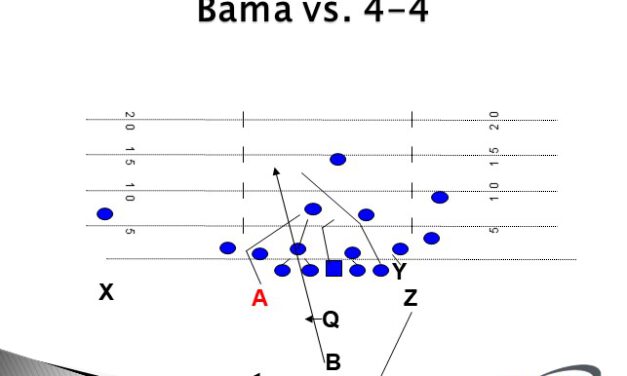
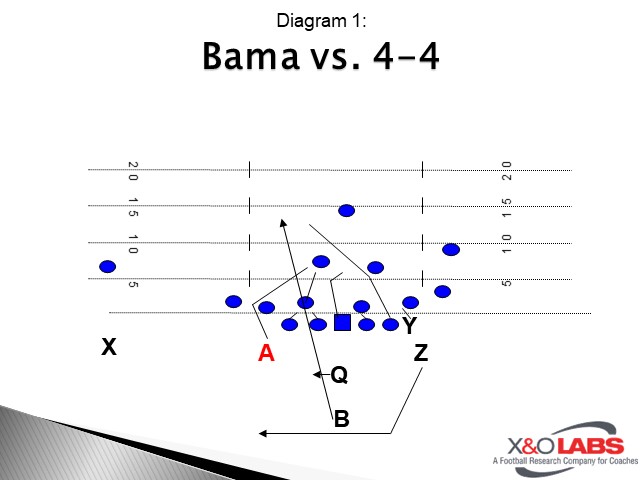
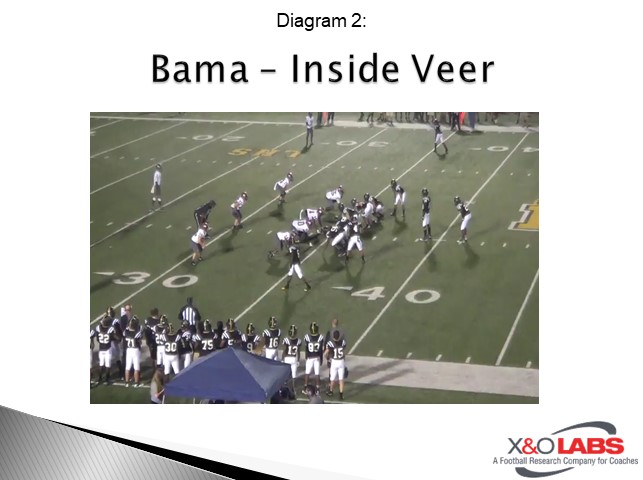
We really want to run Bama to an even front whether it’s a 4-3 or 4-4. Odd fronts can be a little dangerous because of the threat of a Hot #1, and #2. In a perfect world we would really like to attack the A-Gap defender, but it’s not the end of the world if we run it to a 3 technique.  

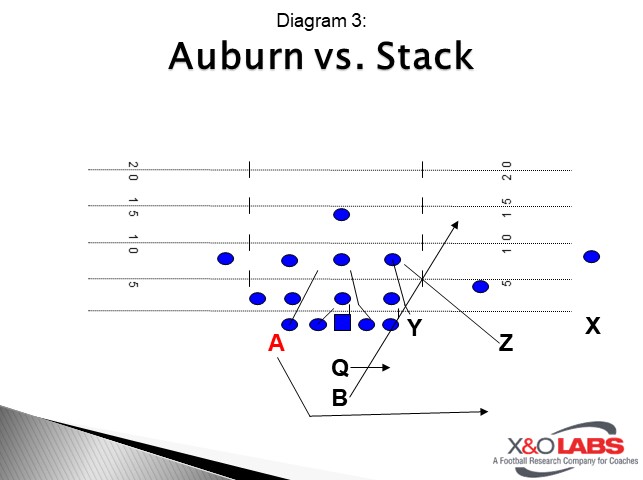
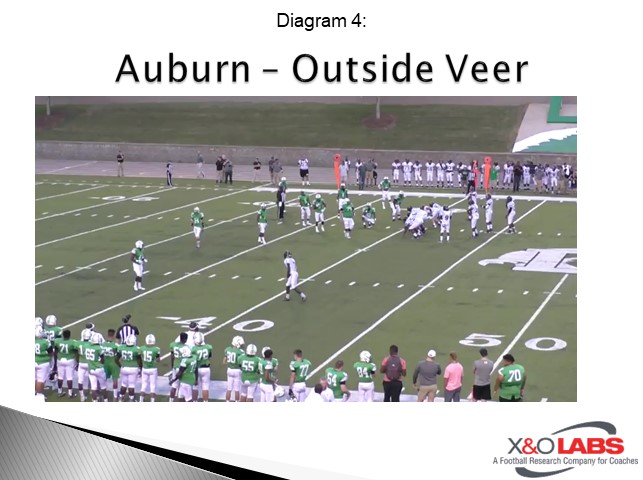
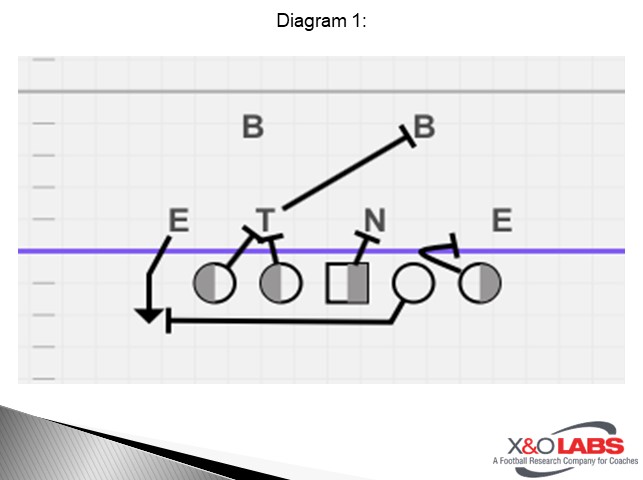
Inside Veer (Bama) / Outside Veer (Auburn) 

Slide1Slide1Slide1Slide1

Back Side Tackle, Guard, and Center: Scoop 

Play Side Guard: Double to the backer. 

Play Side Tackle: BD (B-Gap Double Team to Backer). Against a 4i he will make a “loop” call. 

Tight End (If applicable and play side): Veer release to the backer. 

QB: Bama footwork is simply flipping hips to the side called. The dive key is the first man head-up to outside the play side tackle. The pitch key against a 2-high safety look is the stacked LB. Against 1-high looks, it is the Force Player. His Auburn footwork is 1 big step to the side called. On Auburn, the only change we make is our dive key. The dive key in outside veer is now the last man on the line of scrimmage. Note that we want to “give, unless” meaning give it unless you are 100% sure you can pull it. 

B-Back: Slide stepAiming point in Bama is the outside leg of the play side guard. Once you have cleared the defensive line, your aiming point becomes hash, numbers, and sideline. Aiming point for Auburn is the outside leg of the play side tackle. Once you have cleared the defensive line, your aiming point becomes hash, numbers, and sideline 

A-Back: Pitch relationship is 4×2, meaning 4 yards deep and 2 yards from the QB 

Z-Back: Against a 2-high safety look, he will block Alley defender. Against a 1-high safety, he will crack the box.  

Read More