



Adjusting C3 to “Match” Spread Sets
By Brandon Staley – @CoachStaley_JMU
Defensive Coordinator
James Madison University
 Editor’s Note: Brandon Staley is in his first year as the defensive coordinator and linebackers coach for the James Madison football program. Staley spent the last season as the defensive coordinator at John Carroll University, where he helped lead the Blue Streaks to a 9-2 overall record, 8-1 in Ohio Athletic Conference (OAC) play and a berth in the Division III national playoffs for the first time since 2002. His defense averaged giving up just 9.1 points and 228.4 yards per game, while forcing 27 turnovers, earning him OAC Co-Assistant Coach of the Year. Senior cornerback Randy Greenwood was named a Second Team All-America selection, while five defensive players earned All-OAC honors. His defense ranked third nationally in third-down defense, second in red-zone defense, third in pass efficiency defense and 16th in defensive yards per rush.
Introduction
Quick clinic question: What is the tragic flaw of Cover Three defense? You guessed it, four verticals. But what if we told you that you could still play your cover three coverage concepts but negate those verts by matching up to those horizontal-stretching routes? The answer may lie in what Brandon Staley, the defensive coordinator at James Madison University, calls “Match” coverage. It’s a coverage that Staley used nearly 70 percent of the time on first downs last year while at John Carroll College, and the results were outstanding. The Blue Streaks finished second in the country in total defense, posting four shutouts.
Editor’s Note: Since all of these coverages are three deep, four under by nature we will describe each coverage based on the responsibilities of those coverage defenders. The symbols in the diagrams are the following:
S= Star (Nickel Corner)
$= Money (Linebacker to the Trips or Strong side)
M= Mack (Linebacker to the weak side)
DS= Drop Safety (Staley plays with left and right Safeties)
FS= Deep Safety
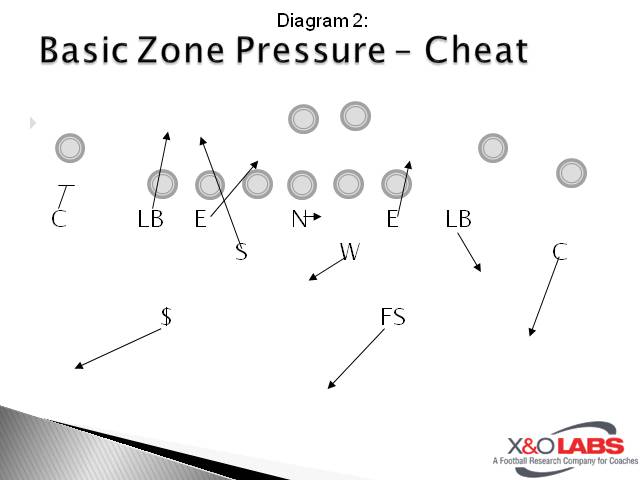
Out of a nickel 4-3 look (Diagram 1), Staley’s flat players will be a drop Safety and the Star, which is a Nickel Corner. In Staley’s system, both Safeties are interchangeable- he plays with a right and left Safety. Either one could be a box dropper. “That is why we teach three-deep conceptually because your flat players can be different people depending on the personnel grouping and the rotation of the safeties,” he told us. Staley teaches three base coverages on first down, all of which are predicated off offensive structure:
- “Match” to slot and 2×2 formations
- “Skate” to Pro, 3×1 and bunch formations
- “Flood” to empty formations.
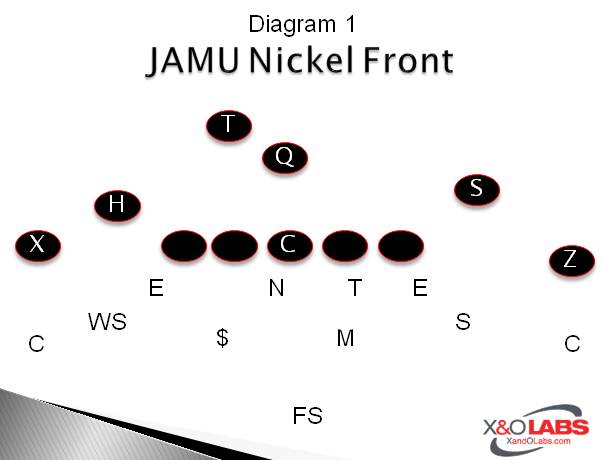
Staley details each coverage below, but the efficiency in teaching lies in the player’s ability to recognize formation structure and make the right check. “All they have to do is identify the formation and that’s how you know what you will play,” Staley told us. “We tell the players that this coverage plays like man when it has to and it plays like zone when it has to. We are going to take away the “intent” of the formation and the routes. When routes go vertical, then we are going to carry them and it will look like Cover 1. When routes are shallow or when formations are tight, then we are going to play zone off of the QB and see the ball thrown.”
Illusion of Cover Three
According to Staley, the primary benefit of playing these coverages, as opposed to pure cover three, are bountiful. “It gives the illusion of Cover one but we have zone eyes on the QB. Our Corners do a lot of press bail technique so you get a lot of fades and you’re on top of the route. You’re able to play a lot of things top down. Receivers don’t get a lot of yards after the catch and you have more overlap players. Cover defenders don’t get drained out from playing man to man. Man to man is dicey with stacks and bunches. You still get the illusion of bump and run- to the boundary because it is bump and run.”
Match Coverage Structure
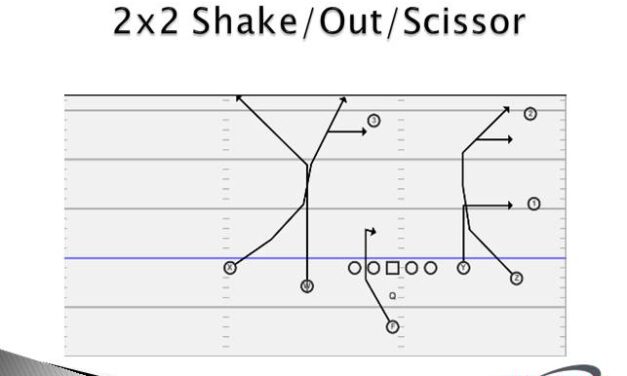
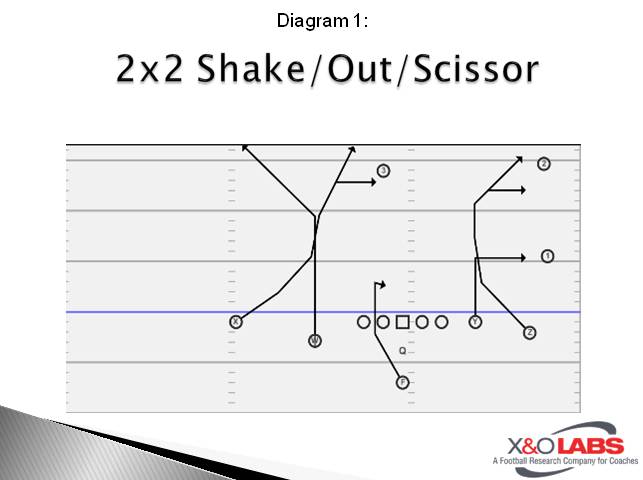
Most offenses want to utilize the four vertical concept out of 2×2 sets, which is why Match is the adjustment against all 2×2 balanced offensive sets. “We know that most offenses want to go with four verticals out of 2 x 2 formations so “match” takes away that intent,” Staley told us. “It allows the middle of the field safety to stay in the middle because the seams don’t get stretched like when you spot drop as you would in Cover Three. Seam verticals have to be funneled to the middle of the field Safety. We don’t want those seams working away from the middle of the field safety. We want to condense those seams. We want those seams coming to our safety. We want to funnel those seams with the flat players.”



 At Waverly High School, we are big believers in getting our best athletes the football in space. Our other belief is we do not want to run the football into bad looks. These are concepts most teams adhere to, but our issue going into this past season was that we had a different kind of QB.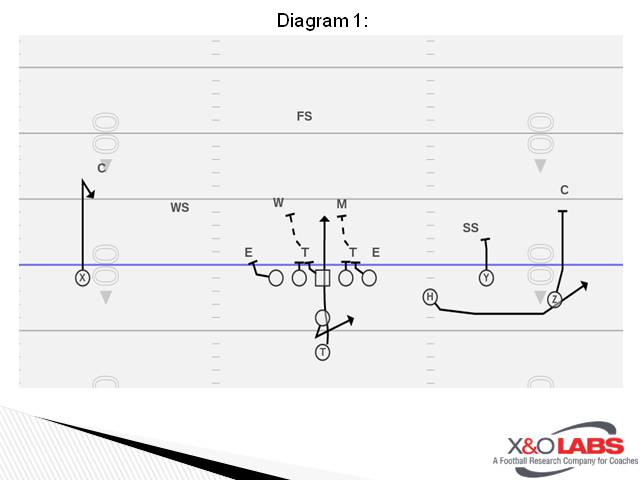
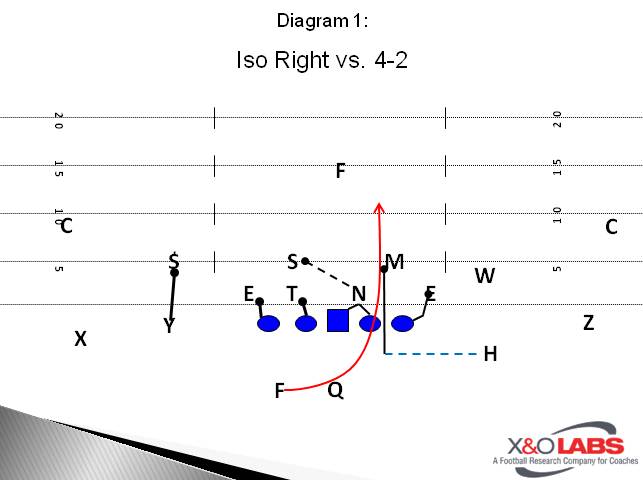
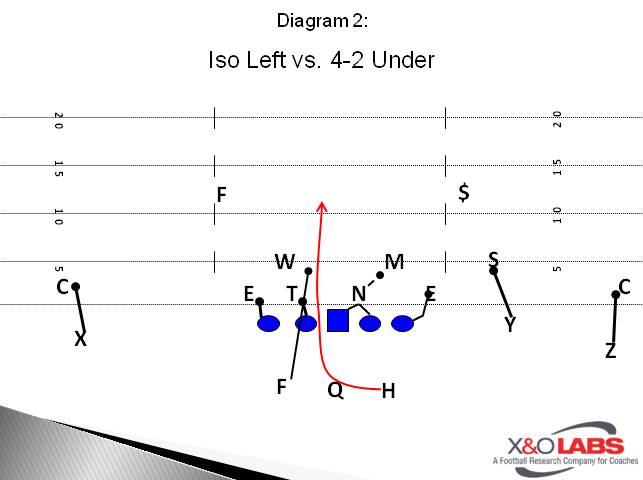
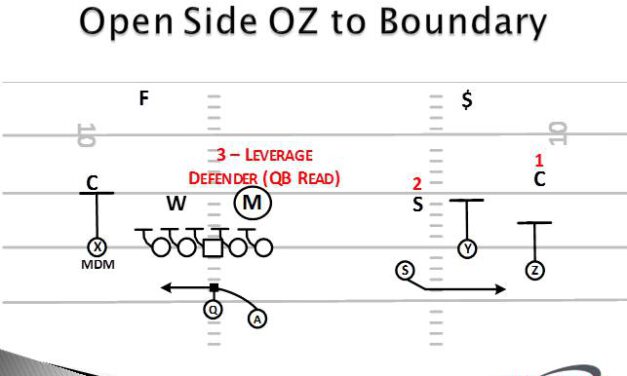
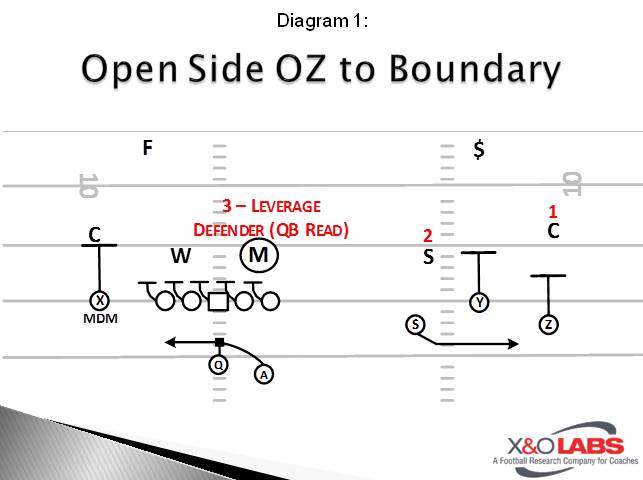
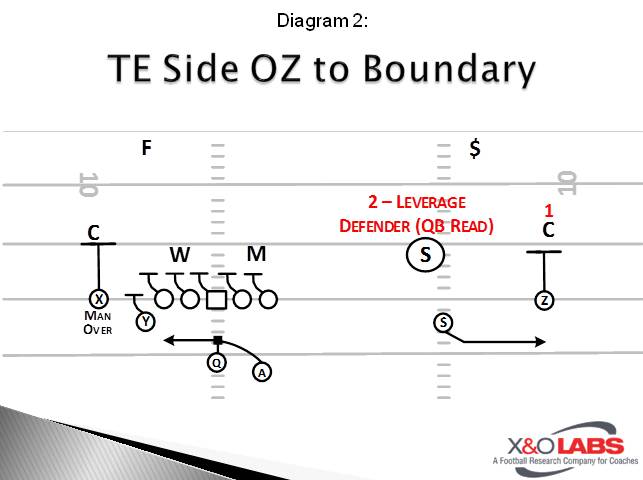
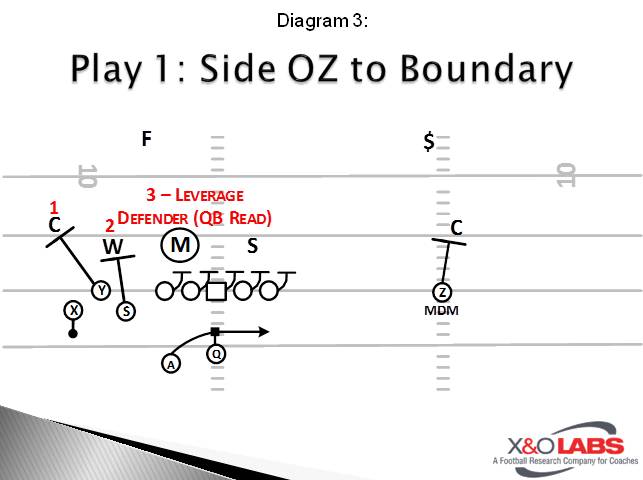
 The popularity of RPOs have exploded in the past couple of years and there are very few offenses that don’t use some aspect of them. With that being said, defensive coordinators have been scheming at a consistent rate to stop the advantage the offense gains. In doing research, I have found that the only sound answer they have, without guessing, is to play Man Coverage. This kills most RPOs that are out there because it triggers an automatic give to the running back or forces you to win the 1-on-1 between the wide receiver and defensive back. Another huge problem that this creates is that defenses then can have a +1 advantage in the box. My goal was to find simple answers to flip the advantage back to the offense and take advantage of the matchups that man coverage creates.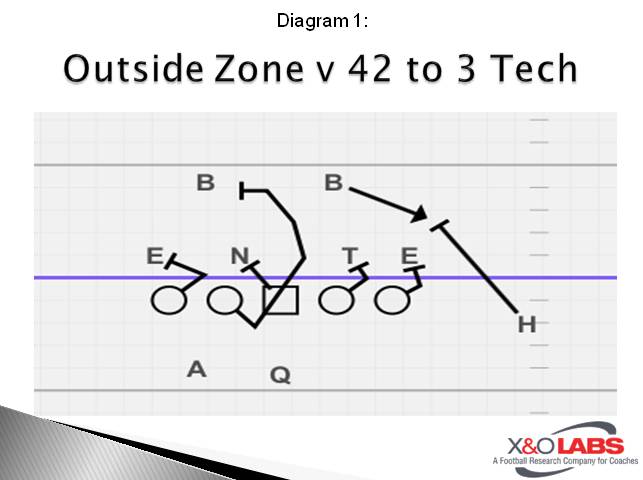
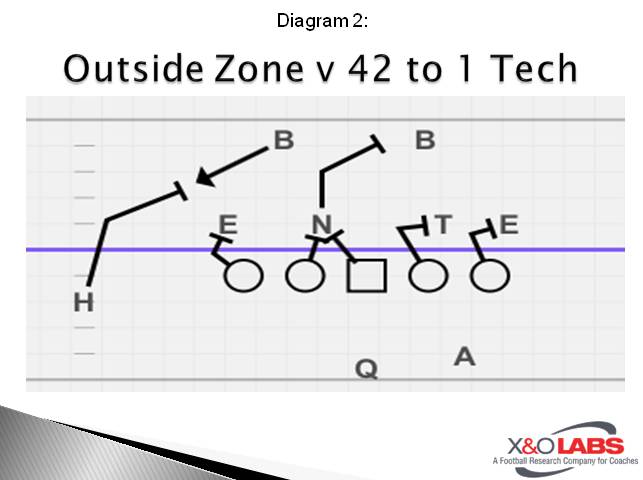
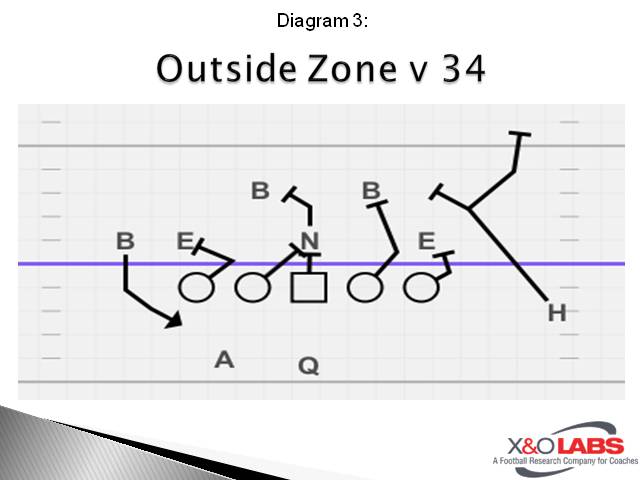
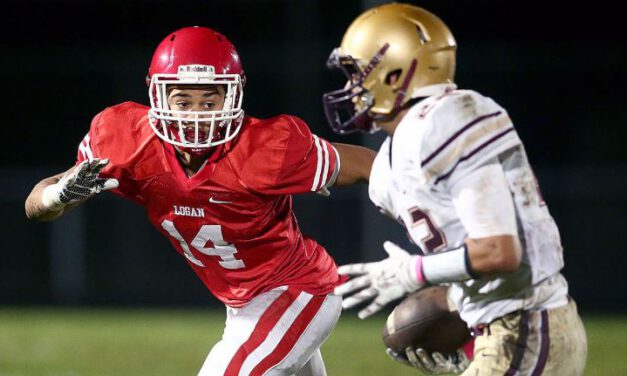
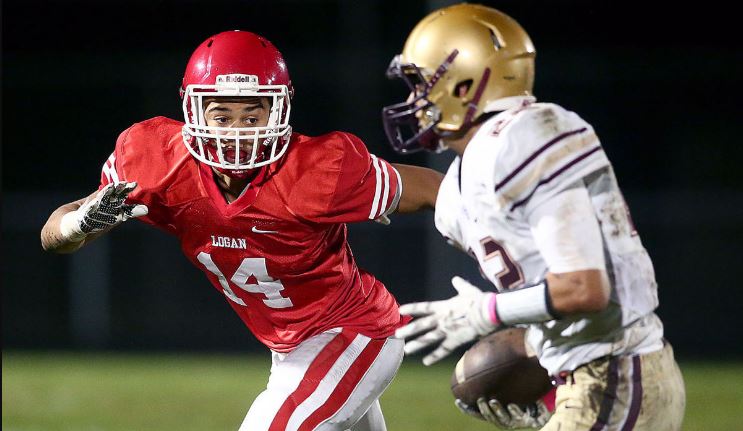 Defending the Flexbone Option offense is a frequent topic of discussion among high school coaches. Well coached Flexbone offenses can be very difficult to stop on a regular basis. Having success against this offense requires some adjustments in game planning, play calling and defensive practice organization. At La Crosse Logan High School, we encounter very high-quality Flexbone offenses in conference play and in our region during the playoffs. I would like to share a few of our adjustments to scouting, building our scheme and our practice that have helped us win some games against this type of offense.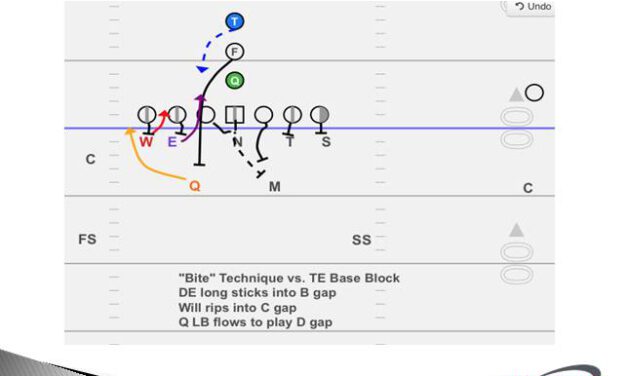
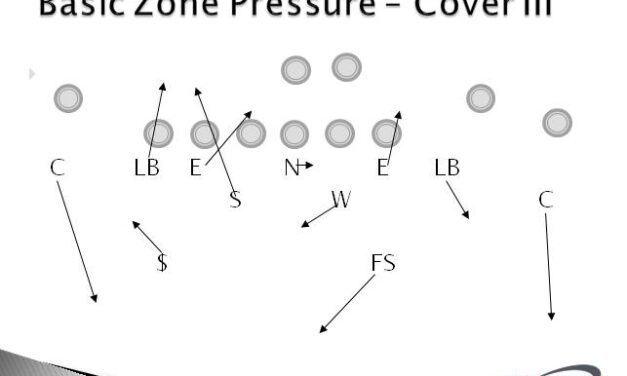
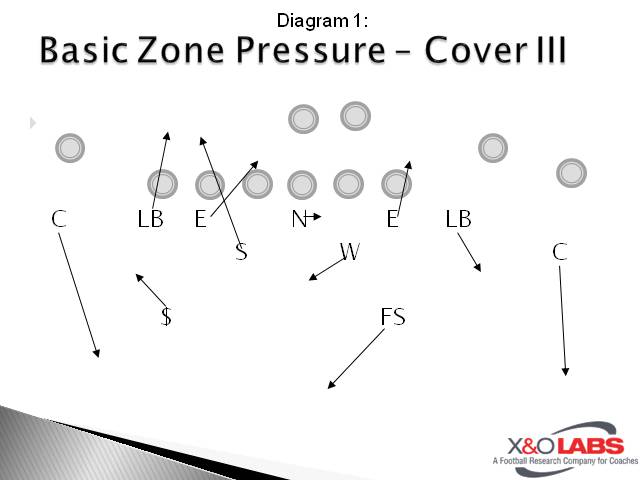
 The Dig-Pivot Concept is a simple read for the quarterback and allows an offense to attack the defense in multiple coverages. The dig-pivot concept is an efficient concept that requires great timing from our quarterback and wide receivers. The quarterback reads the wall 2 defender, usually an outside linebacker, and makes him wrong based on the drop he takes in coverage. The dig route is also very difficult for a cornerback to cover and run with if the receiver makes a great break. Another great aspect with this concept is that the dig route stays on the move and the quarterback can throw the ball into the first window right out of the receiver’s break or the second window after he clears a dropping linebacker or safety. The pivot route forces a wall 2 defender, usually an outside linebacker, to hold his ground or work to the receiver because the route is attacking the defender before breaking out toward the sideline which creates great timing to throw the ball into a great window. The concept is simplified based on the quarterback’s pre and post snap reads.
 When I first got into coaching nearly two decades ago, I heard the current Don Bosco Prep (NJ) head coach Greg Toal say, “