Chattanooga’s 4-2-5 Fits vs. Y-Off Run Game

By Mike Kuchar
Senior Research Manager
X&O Labs
Twitter: @MikekKuchar

Introduction

The following research was conducted as part of XandOLabs.com special report on “4-2-5 Linebacker Play.” Continue reading for more information on this special report.

Y-Off Formation:

When defending the Y-off formation, the Mocs will set the 3-technique to the Y. Coach Wright tells his linebackers to eye the near back once the get that Y motion. “He will tell us everything we need to know,” Coach Wright says. Anytime we get any motion across if he widens (like stretch), we will be wider. If he’s downhill (like Power Read), our guys fit it tight. The Mocs get a steady dose of Power Read from this set so once that play side defensive end knows he’s getting a lot of arc release from that Y, he will key the knee to inside hip of the tackle. “Our defensive end is taught to hard joint it and knock the heck out of that trapper, whether it is the Y or he will get inside the pulling guard. He won’t make tackles on the perimeter anyway. The defensive end fits outside the guard, the Sam fits inside the guard and the Mike is over the top (Diagram 51). The Sam is clued in on the scheme because the back is wide and not tight. He knows that the guard is trying to come off and pin him. We tell him to try and win up and under instead of over the top because of the space. The double teams shoulders are tight so we tell him to stick his foot in the ground that way and come up underneath it. If he starts running over the top, then you have a cavity. That defensive end doesn’t always get it tightened down and it causes a crease. Our DE will run to him with his inside shoulder and try to knock him down to go meet it quick knowing the Mike is over it. Those two must see that its Power. We tell our players, ‘if it looks like Power and it smells like Power, it’s Power to us. That is all that matters to use, because that’s what they will go back to.”

Read More

Spread Passing Study: Snag Concept

By Mike Kuchar
Senior Research Manager
X&O Labs
Twitter: @MikeKKuchar

Introduction

When we collected our data on the Snag concept, the feedback was strong. The snag concept was the second most utilized pass concept among spread coaches (the first being 4 verticals), with 29 percent saying it is their most used pass concept.

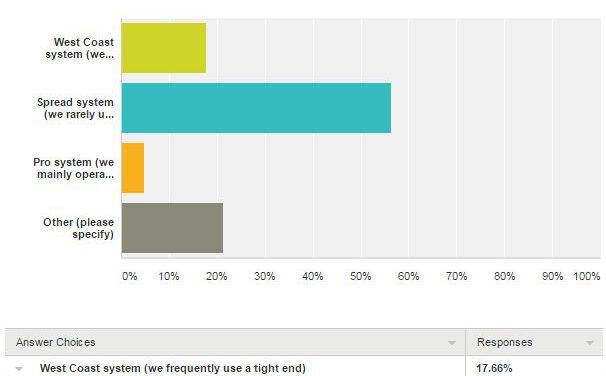
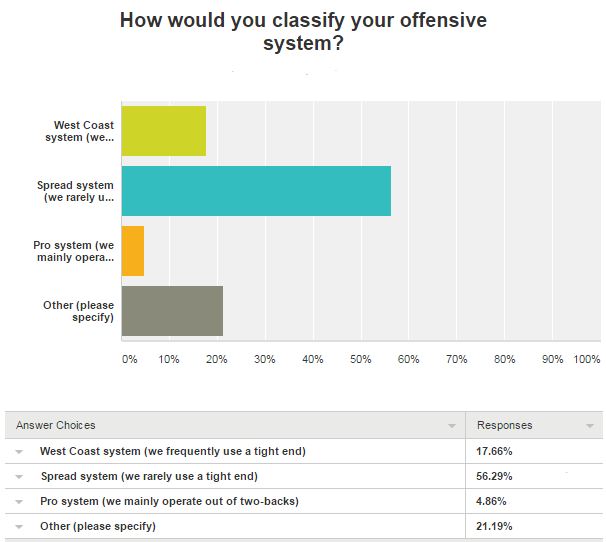
Of the coaches that utilize the snag concept, 55 percent operate out of a spread, no tight end structure.

graph1

We did find some two-back variety of the Snag, which we will present in the red zone section, but for the most part the favorites of the snag were spread disciples.

We didn’t want to focus our research on protections, but we did ask which kind of protection coaches are using the snag with. We wanted to see whether it was used more as an intermediate concept in the five-step game or as a quick game concept. Our research shows that 56 percent of coaches are using it as a three-step drop, compared to the 36 percent who use it with five-step footwork.

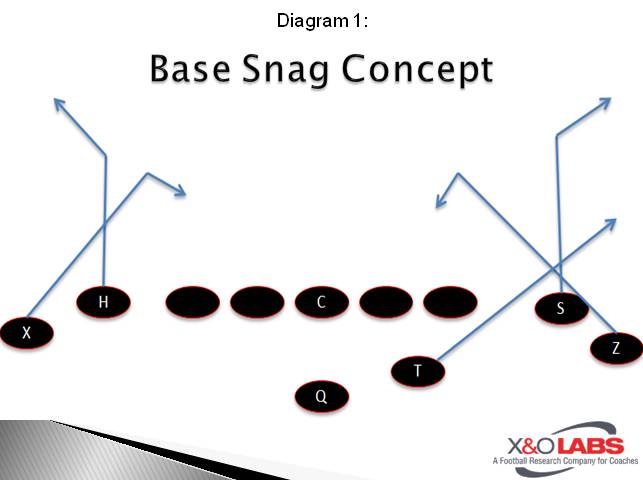
Base Snag Concept 

Slide1

The snag concept is meant to produce a high/low stretch on either second or third level defenders, depending on the coverage. The majority of coaches, 63 percent, choose to run the snag out of 3×1 opens sets. We should mention that there are two-man snag variants, which we will present, but for the most part the route structure to the play side consists of the following:

  • Vertical component – such as a corner or post route.
  • Flat component – such as an arrow or wheel route.
  • Snag component – such as an over the ball or spot route.

We asked coaches which particular route has been the most efficient using the snag and here is what they told us:

  • 52 percent said the over the ball component was their most efficient route.
  • 24 percent say the flat component was their most effective route.
  • 13 percent say the vertical component was their most effective route.

Now, this is purely the base route structure of the concept. In case one, we are going to present our data on the various route adjustments and tags coaches are using to attain productivity on the concept. The way this case is broken down is to first present on the quarterback’s pre-snap and post-snap progression including the drill work coaches are using to teach it. We will then follow that with why the snag can be both a zone and man beater, and more importantly how coaches are averaging nearly a first down every time they throw the ball on it.

Base Quarterback Pre-Snap Read

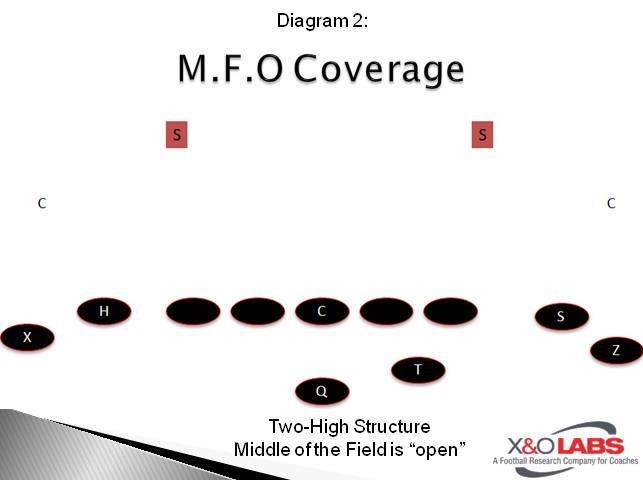
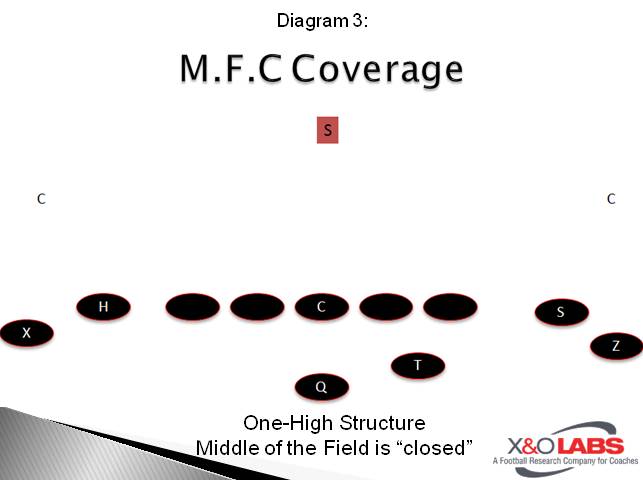
Like many other spread pass concepts, an initial progression must be made on the snag based on the pre-snap alignment of the defense. It’s not uncommon for most coaches to teach their quarterback in the pre-snap vernacular of M.F.O. (Middle of the Field Open) vs. M.F.C. (Middle of the Field Closed):

  • Middle of the Field Open: Denotes some sort of spilt safety coverage such as halves coverage, quarters coverage or a combination of both (Diagram 2).

Slide2

  • Middle of the Field Closed: Denotes some sort of single safety coverage such as thirds coverage or man free coverage (Diagram 3).

Slide3

Generally speaking, we found the following general pre-snap reads:

  • If the middle of the field is open, coaches are looking to high-low the flat player on a snag vs. flat combination.
  • If the middle of the field is closed, coaches are trying to throw high-low the corner on the vertical vs. flat combination.
  • In man coverages, coaches are picking their best match-up pre-snap.

There were some variants of these reads below:

Read More

Spread Passing Study: Shallow Concept

By Mike Kuchar
Senior Research Manager
X&O Labs
Twitter: @MikeKKuchar

Introduction

The Shallow/Drive concept was our second most heavily utilized Spread pass concept, with over 75 percent of coaches using in in their offense. Twenty percent of those coaches said it is their most used pass concept. It was significantly efficient for these coaches this season as 45 percent of coaches said it netted between 7 to 10 yards per snap.

Base Shallow/Drive Concept (Diagram 87)
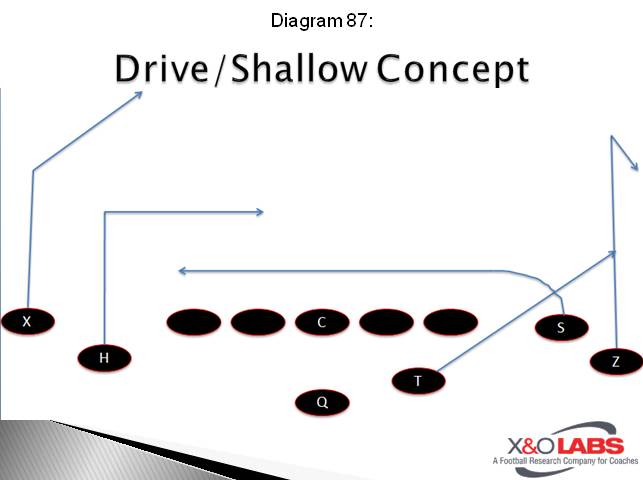
diagram 87 2

The Shallow Drive concept, which is firmly entrenched in the Bill Walsh West Coast offense vernacular, is meant to produce a high-low stretch on the play side inside linebacker by presenting him with an under route (shallow) and an over route (dig). It’s what most coaches refer to as the “triangle read”, which will be detailed below.

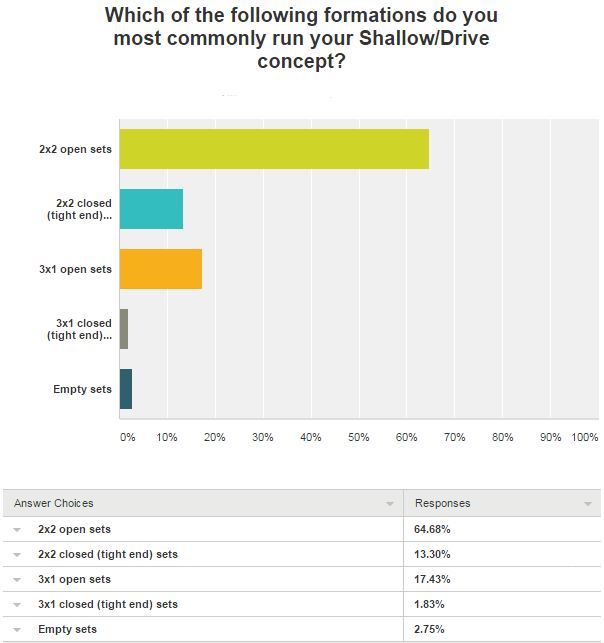
We found that many coaches were adamant about utilizing the Shallow/Dig out of balanced sets, rather than the trips sets as the Snag is most frequented out of. The majority of coaches, 64 percent, choose to run the Shallow/Drive out of 2×2 opens sets. 
graph18

In its base, the route structure to the play side of the Shallow/Drive consists of the following:

  • Vertical component – such as a post or curl route.
  • First under route – such as a drag at the heels of defensive lineman, although that depth can change depending on the coach.
  • Second under route – usually coming from the other side of the formations, such as dig route

Editor’s Note: We do understand that some coaches refer to a Shallow concept when the Shallow and Dig come from different sides of the formation where a Drive concept refers to when the Shallow and Dig come from the same side of the formation. We are providing both concepts for the purpose of this study.

We asked coaches which particular route has been the most efficient using the snag and here is what they told us:

• 51 percent said the drag was their most efficient route.
• 34 percent say the dig was their most effective route.
• 13 percent say the vertical component was their most effective route.

Now, this is purely the base route structure of the concept. In case two, we are going to present our data on the various route progressions and adjustments:

• Technique of drag runner
• Technique of dig runner
• QB pre-snap and post-snap read progressions
• Route adjustments to certain coverages

QB Pre-Snap Read

The beauty of the Shallow concept is that it has a built-in man beater (drag), zone beater (dig) and an over-rotated coverage beater (post). So the pre-snap read is usually just identifying which of the aforementioned structures you’re getting, which triggers the quarterback where to throw the ball. We did find that many coaches were still teaching the “M.F.O. vs. M.F.C. principle” to take a deep shot of the post against structures that allowed it. We included some samplings of coaches responses on what they tell their quarterback pre-snap:

Nate Knight, Faith Lutheran High School (NV): “Our quarterback identifies the number of safeties then the depth of the corners. If it’s cover two, he knows the Dig will be his primary. If it’s single-high he will look to the leverage of the safety against the Post.”

Matt Puffenberger, Berkeley Springs High School (WV): “We identify middle of field open or closed. Closed will likely eliminate the post, so we expect to throw the drive. If we see middle of the field open, we’re looking for the post first. Then we identify the MLB, which is our movement key.”

Jason Farias, Cottbus Crayfirsh (MA): “We look for availability of the post route in 3×1 sets.”

Preston Troyer, Tonganoxie High School (KS): “All we care about pre-snap is the post route. We are looking for the corners alignment and if there is a safety capping (over the top of it).”

Bruce Miller, Gainesville High School (GA): “We look for the depth of linebackers and if there is one safety or two safeties.”

Kevin Ross, Van Buren High School (AR): “We will pre-snap glance at the Post route. One thing the defense does is to jump the Dig with the safety. If we see this and or we see the safeties aligned at 8 to 10 yards we will throw post.”

Shawn Liotta, Clairton High School (PA): “The quarterback will look pre-snap at vertical (peek post). Against edge pressure he knows he has the running back out of the backfield and the shallow which is hot.”

QB Post-Snap Progression

Read More

Frostburg State’s Gap Schemes from Multiple Personnel Groupings

By Tye Hiatt
Offensive Coordinator/Quarterbacks Coach
Frostburg State University (MD)
Twitter: @HiattFSU

Introduction:

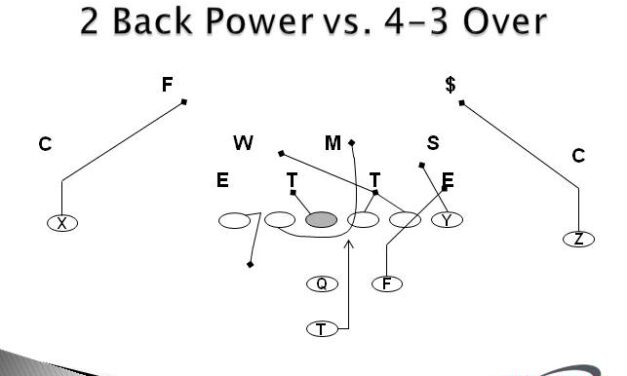
One of the 1st things we do as a coaching staff every week in our game planning sessions is find ways to effectively run the ball with a downhill attitude. We believe that we must establish the LOS every snap in order for us to have a chance at being successful. One of the scheme’s that has been very good for us has been the “Power” concept. We will find ways to run “Power” from multiple sets and personnel groupings, as well as getting our QB involved and by using our RB in the scheme to get the numbers we want in the box. Throughout the article we will show a few different ways in which we run the “Power” concept.

Base Power Concept

Here are our base rules when laying the foundation for our power scheme. Every other adjustment is made from this base foundation.

Center: Back block on the back side defensive lineman.

Play Side Guard (PSG): Double team the play side defensive lineman to the back side linebacker.

Play Side Tackle (PST): Double team the play side defensive lineman to the back side linebacker.

Back Side Guard (BSG): Pull for MLB – Must demeanor thru 2nd level

Back Side Tackle (BST): Stab & Hinge – Must control B Gap run thru!

Y: If we see a 7 technique, he will drive thru C Gap up to the 2nd level. When we get a 6 technique we will either base out the DE and use the F to double up to the play side linebacker or we will arc release the Y to the play side linebacker and the F will kick out the DE.

Q: Drive step straight back to the T and put it on his belly button. Set up at 7 YD’s depth for PA.

F: Will receive a call from the Y. Either he will kick out the DE or will double the DE to the play side linebacker.

T: 6 inch lateral step. His aiming point (AMP) is play side leg of center. We want him getting downhill as soon as possible. He gets one cut and then must get vertical!

X and Z: Read for middle of the field open (MOFO) or middle of the field closed (MOFC). Push-crack working the most dangerous man.

Blocking Coaching Points

  1. Communication on double team
  2. When we come off the double team, the man that stays on the DL drives his man back, focusing on vertical push. The man that comes off one the LB stays on his track. He will begin his demeanor when he is 1 yard away from his man.
  3. If the LB never comes, we will stay on the double team and drive him 5 yards deep.
  4. On all double teams we want to keep our off-hand free. We want to ensure that we can drive the DL off the ball but be able to get off the double team to pick up our assignment.

In these diagrams we show how we would run it against a 40 and 30 front.

Read More

Varying QB/RB Alignments in One-Back Gap Schemes

By Mike Kuchar
Senior Research Manager
X&O Labs
Twitter: @MikekKuchar


Introduction

This research was conducted as part of XandOLabs.com special report on “Spread Gap Schemes,” which can be accessed in full by clicking below.

Preferable A Back Alignments:

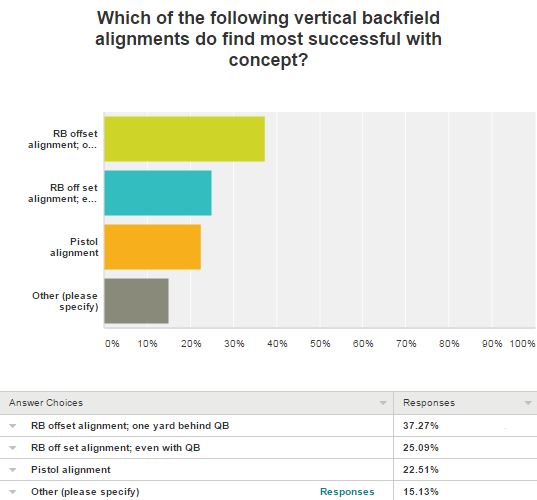
We found these responses were similar to the alignments that coaches use in the Power concept. The majority of coaches that use the Counter concept choose to use a vertical alignment of one yard behind the quarterback (See Graph Below).

graph17

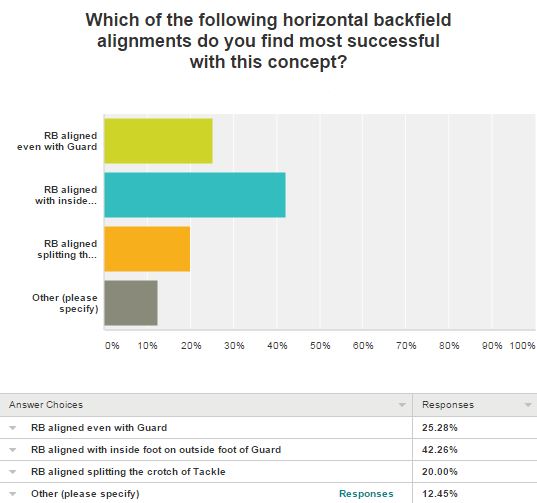
The horizontal alignment of choice has the ball carrier aligned with his inside foot on the outside foot of the back side guard (See Graph Below). We did find evidence of some coaches who will run the same side Counter concept, Mark Holcomb is one of them, but the majority of coaches will set that back (if he is offset) away from the play side.

graph18

QB/RB Mesh Points; Offset Alignments; Three-Step Footwork:

Jeff Conaway, Shiloh Christian High School (AR): “We use alignment options 1, 2, 3, or 1.5 (this was explained in case one). He slides, meshes, and press front side A gap, downhill, with attitude. This is done with a three-step footwork, pushing off the third step. His key is the play side defensive end and reads the H-Back pull on play side linebacker.”

Inside Zone Footwork:

LJ Spinnato, Choate Rosemary Hall (CT): “To us, it’s the same as Power if the A back is aligned play side. If he is aligned backside, it’s Inside Zone footwork if aligned QB Jumps to 45-degree angle and presents the ball. Tailback tempos his zone step from 2×1 alignment, can Counter step, but we usually don’t. We have done it both ways in the past. QB, 6-inch lateral steps play side, then clear backside leg to 45-degree angle.”

Read More

Scaffolding a Pre-Snap RPO System – Case 1: Design and Installation

By Mike Kuchar
Senior Research Manager
X&O Labs
Twitter: @MikekKuchar

Introduction

It’s important to note that much of the design component of these pre-snap RPO tags lies in understanding offensive formation structure and defensive coverage structure. We all know that the beauty of the RPO system is taking all the top route concepts in your offense and marrying them with the most productive run concepts you have. While it may be difficult not to get carried away with all the possibilities, we’ve found that at the crux of this design is getting the quarterback to understand what a pre-snap read is and what a post-snap read is. So, we’ve gone ahead and defined it for you:

Pre-Snap Read: These are decisions made by the quarterback pre-snap to either run or pass the ball depending on the pre-snap leverage of a particular defender.

Post-Snap Read: These are decisions made by the quarterback post-snap to either run or pass the ball depending on the pre-snap movement of a particular defender.

While we’ve found that many offensive coordinators will use both of these models to get into the most advantageous situation, this particular study is devoted to how coaches are teaching their quarterbacks to make the right adjustments pre-snap to take advantage of either numbers, leverage or grass of the defense.

Numbers

The concept of numbers is specifically tied to a numerical advantage by the offense at the point of attack. It’s a universal concept; defenses will try to do the same thing by the time the ball is snapped to get a plus one defender around the ball. While this is not a novel idea, we felt that it’s important to educate coaches on how our sources were treating box count on the interior and numbers count on the perimeter to effectively get in the best play scenario.

Important: Keep in mind the pre-snap RPO system is commonly used to supplant a non-mobile quarterback, who is not included as a potential runner. For example, a 10 personnel offensive structure will only have five blockers. So six in the box will trigger a throw.

Box Count:

Quarterbacks, even at the lower levels, are now asked to count the box. Most coaches refer to the box as the areas two feet outside the offensive tackle. Quite simply, if a defense has even numbers or less numbers, run the ball.

Slide1

If a defense has more numbers, throw the ball.

Slide1

Since the majority of pre-snap RPO concepts are used to manipulate two-high safety structures that will try to find a way to sneak an extra player into a fit, in most cases odd fronts and even front will have a possibility of seven defenders in the box.

Now, where it gets tricky, is when defenses start to “mess” with those overhang defenders, particularly on odd structures to either be run or pass players. Conflict defenders are those tweeners, who may be in a position to play run or pass. But how effective they can be in playing run or pass is in direct relation to how far they are from the tackle box.

Slide3

And that is where creative coaching comes in. At this point, offensive coordinators have three options:

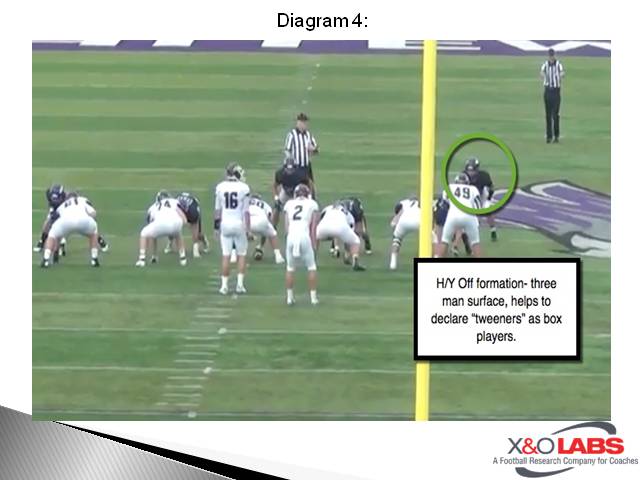
  1. Change the formation to make it clear whether or not that defender is a run first or pass first player. Structures such as three-man surfaces suffice for this solution (Diagram 4).
  2. Continue to monitor the reaction of that player when run develops to determine if he’s accounted for a gap.
  3. Tag a post-snap RPO concept to affect that player when all else fails.

 Slide3

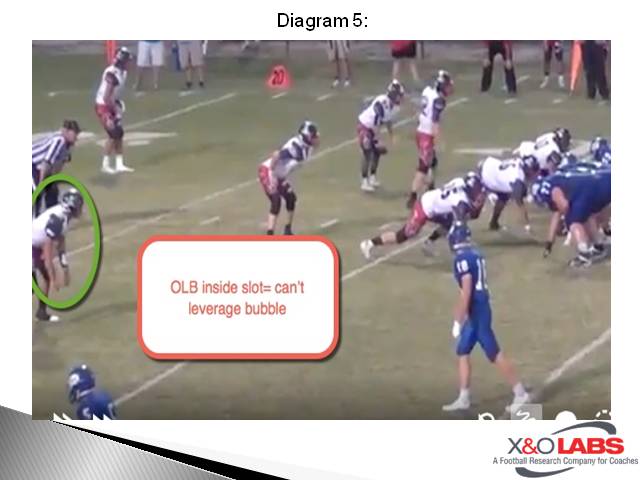
Scott Chisholm, the offensive coordinator at Berryhill High School (OK) will teach his quarterback to run the ball to a 5 man or less box, so he teaches his signal caller to ask them to declare whether or not that apex player is inside the wide receiver (usually the slot) or is he outside? “If he’s inside that wide receiver, we will usually throw the bubble, because we’ll outrun that outside linebacker and gain five yards before that safety comes up (Diagram 5),” coach Chisholm told us. “This also puts that OLB in a bind, he’s starts thinking, ‘are they reading me? Are they counting numbers?’ For us it’s just easier to teach a 17 year-old kid this concept, rather than reading him.

Slide5 

Read More

Scaffolding a Pre-Snap RPO System – Case 2: Pre-Snap RPO Concepts That Attack Numbers, Leverage and Grass

By Mike Kuchar
Senior Research Manager
X&O Labs
Twitter: @MikekKuchar

Introduction

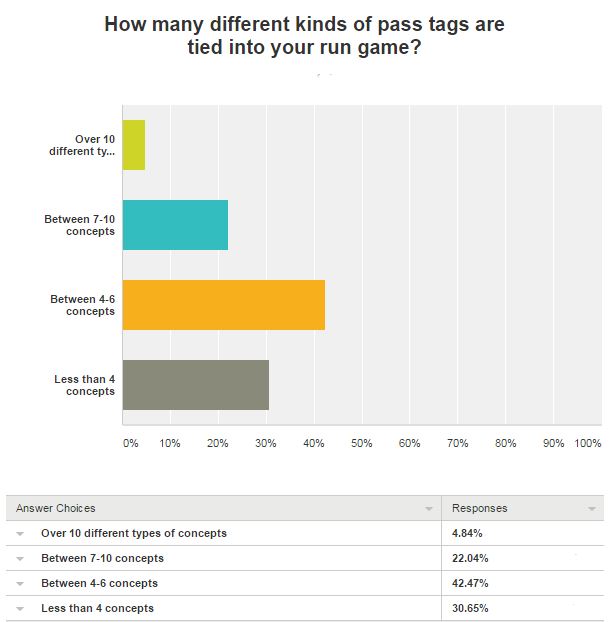
When a run is not necessarily the best play call for a certain situation, the pre-snap RPO pass tag provides options. Scenarios such as the leverage of a force defender and the depth of corners and safeties all attribute to the quarterback making a decision at the line of scrimmage. According to our research, we’ve found the majority of coaches, 42 percent, use between 4-6 pass tags in their run game (See Graph Below). In this case, we study the most productive RPO concepts used by our sources based on all those situations that unravel pre-snap. We segmented our research into detailing which concepts coaches are using to exploit a perimeter numbers advantage as well as an interior numbers advantage.

chart7

Exploiting Perimeter Numbers

Backside Gifts

Backside “gift” concepts are most associated with the single, or X receiver in trips formations. Much has been written on this already, but we would be remiss if we didn’t include this in our research because so many offensive coordinators have gained a great deal of traction using them. 

At Tufts University, slot receiver coach Pat Murphy used the same “open side matrix” he used while a head coach at St. Anselm College. It’s the only decision he had the quarterback make pre-snap based on the alignment of the corner on the backside X in trips. An example of the menu is below.

Versus Press Coverage:

  • Fade
  • Slant
  • Hitch

Versus Off Coverage:

  • Pivot
  • Speed Out
  • Skinny

To study game film of some of these access throws, click on the video below:

Read More

Scaffolding a Pre-Snap RPO System – Case 3: QB Pre-Snap Protocols and Post-Snap Mesh Game

By Mike Kuchar
Senior Research Manager
X&O Labs
Twitter: @MikekKuchar

Introduction

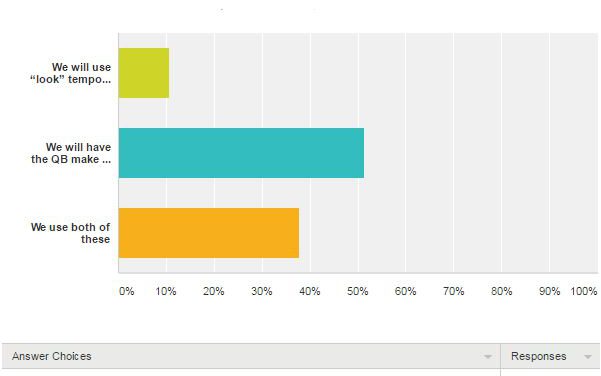
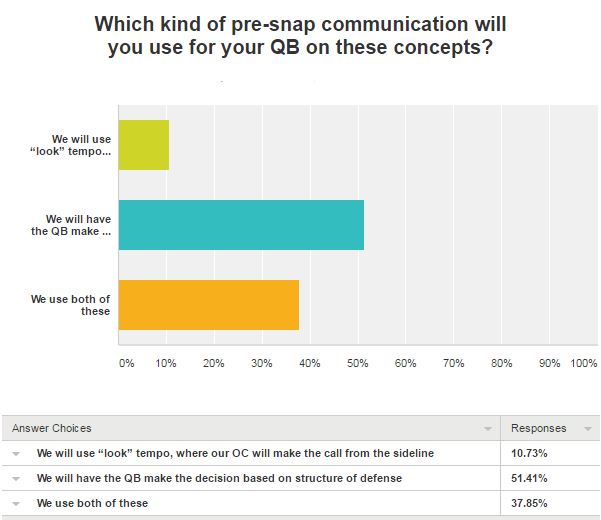
Training the quarterback pre-snap eyes seems to be the crux of using this system and since 51 percent of coaches will have their quarterbacks make the decision, rather than themselves from the sideline, (See Graph Below) it’s imperative to study how he is making the right read. We wanted to target our research specifically to sources who have a continual transition at the quarterback level, particularly those at the high school and small college ranks where time can be a factor in educating these players about the nuances of this system.

chart12

At the high school level, factors such as academics and extra-curriculars can put a stretch on the time these players need to understand this type of system. Per our research, leverage can be determined by the following factors:

  1. Numbers Advantage in the Box
  2. Numbers Advantage on the Perimeter
  3. Leverage Advantage in the Box
  4. Leverage Advantage on the Perimeter

Once the quarterback identifies his advantage, he must be taught the means in which to attack them. In this study, we are going to examine how each of the following factors tie into the quarterback’s decision to make the best play call at the line of scrimmage, and not after the ball is snapped. After all, the premise of this system is to be in the “best play scenario” every snap. This can only be done through repletion and a constant education of your quarterback. But whatever decision he makes, it’s essential to live with it. As many of the coaches that worked with us told us if you’re going to commit to this type of system, you must live by your quarterback’s decision. In the words of the great Bill Parcells, you can’t allow him to cook the meal if he’s not allowed to buy the groceries.

H.A.L.O. Methodology

Jason Eckert at New Richmond High School (WI) subscribes to the R4 methodology devised by the National Football Academies when training the quarterback’s pre-snap eyes. It’s commonly referred to as the acronym H.A.L.O., which is described below.

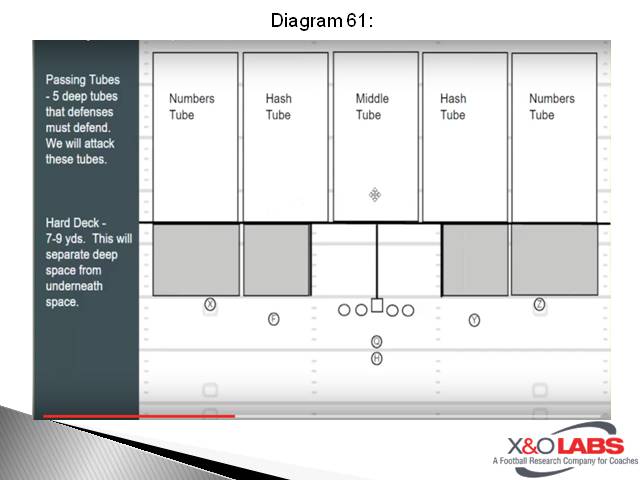
Hard Deck: Identifies deep space from underneath space, which is 7-8 yards of space above line of scrimmage. The quarterback is asked to find him and then draw a line out from him. There are five passing tubes. Tubes on the numbers, tubes on the hash and a middle tube. They are separated by underneath coverage (Diagram 61).

Slide61

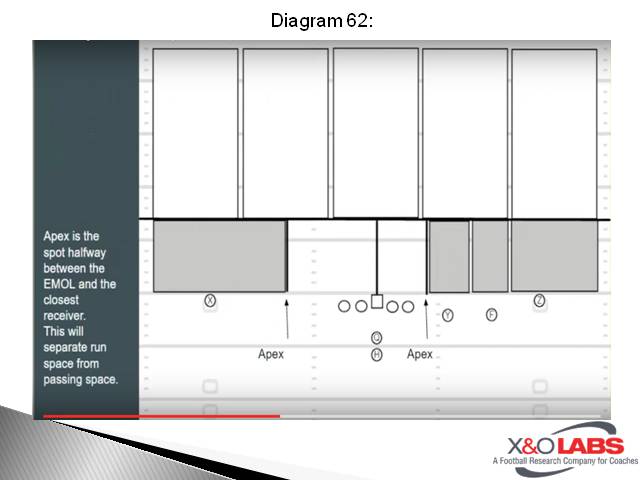
Apex: Apex is the spot halfway between the EMOL and the closest receiver. This will separate run space from passing space (Diagram 62).

Slide61

Center Line: Middle of the field concept

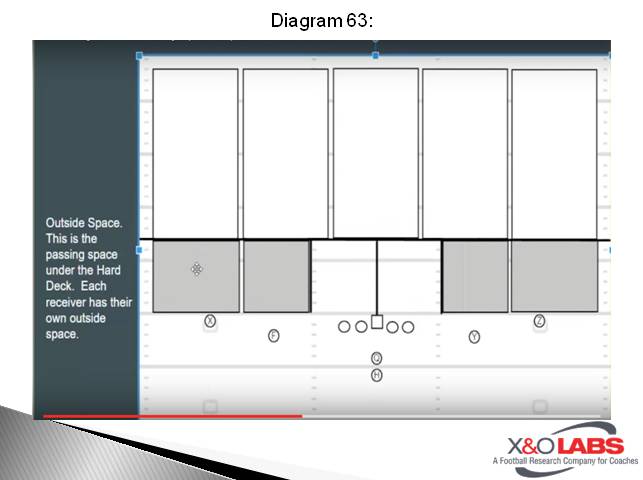
Outside Space: This is the passing space under the hard deck. Each receiver has their own outside space (Diagram 63).

Slide63

“I don’t talk in terms of coverage very often,” Coach Eckert told us. “One reason is I sometimes have a difficult time figuring out what coverage some of our opponents are supposed to be in.  Part of that is some teams are just bad and sometimes high school kids don’t do what their supposed to do. If I’m confused, our quarterback will be more confused. We talk more in terms of space. He needs to know how many defenders are taking away or capping space above our hard deck. This will tell him routes that are being taken away pre-snap or deep space we will be able to attack.  He needs to understand what space the defense is giving up underneath the hard deck. Our quarterback will look concept side first and then work backside. If I want his progression to change, I’ll add a tag for that. So, I control his progression. This limits confusion.”
In Coach Eckert’s system, each route is designed to attack the open space as it pertains to these categories. The quarterback and wide receivers will only choose the specific screen they want tied to the run game. “They are taught what works best, but they make the call on the field,” said Coach Eckert. “Our keys screens were decided by our players, unless I wanted a particular screen. So, I would just call a run play with ‘key’ added to it. They decided, based on how the defense aligned, whether the screen would be to the inside or outside receiver. Other than that, we don’t change routes at the line of scrimmage.”

Read More

Creating Defensive Alignment Issues With an Overload Line

By Steve Steele
Head Coach
T.F. Riggs High School (SD)
Twitter: @Steele_House

Introduction:

Game planning at the high school level is very different than it is for most colleges. In college, coaches have almost too much time during the week to game-plan every detail of a game. Conversely, high school coaches spend their days teaching classes and have a very limited supply of game-plan time. We see that as a difference that needs to be exploited.

Here at Riggs, we decided to make our standard offensive line set an overload, meaning 1 lineman on one side of the center, and 3 on the other. This was our way of forcing Defensive staffs to figure out an alignment and make certain choices that we would look at and select our plays off of. In our first year using this, we were not perfect, but we have decided to keep it for the long haul. Note, some of the defenses discussed may not seem entirely sound to you, but that is the point of the chaos we try to create with our formations. Here is a break down…

The Offensive Line

Having our offensive line always being in an overload meant that we needed to call them something different. Otherwise, it would be tough to figure out who was who with Guards and Tackles, so we came up with this as our set Offensive Line positions.

Slide1

We had our Offensive Line keep between 2-3 foot splits for the most part. We adjusted for some special situations where we wanted tighter splits, but tried to keep them pretty wide to make defenders really have to choose their gap and technique. We did not huddle once this season, so we never had to actually setup a huddle. Our QB called the overload to help them flip when they needed to and was the one who set our tempo. A lot of times when we got in the groove we would try and move faster and push the pace. We weren’t a true tempo team, but really thrived on our ability to push the pace while adjusting to our different formations and limiting our substitutions. The names of our Offensive Linemen will be used throughout the rest of this article.

Creative Formations

Knowing these positions, we align the rest of our guys in ways that has the ability to stress both edges. Most defenses would try to simply gap over their Defensive Line and Linebackers. Knowing this, we were able to move the defense one gap away from our short edge and therefore give us a quick edge to get off if we had numbers. On the other hand, if the defense really saw the short edge as a threat, we have a solid run strength to the other side for gap and man games. We started every game with our Overload always adjusting to the sideline to give the short edge to the middle of the field, but if we saw something in game, it was very easy to have the flip or tell them to always be to the field, that part was in-game adjustments for us. Here were our main formations that we used this year.

Slide1

The cool part about our formations is that the Offensive Line and the skills were separate, so we could have every formation with our skills with the Offensive Line Overload going either way, so in a sense we could double to looks we gave the defense without actually putting in twice the formations for the kids to remember. This made it very easy for us to continue mixing up the look we were giving the defense without mixing up our guys and causing any confusion on our end. We are a no-huddle team that mixed tempo throughout the game. By being able to get in and out of these easily, we were able to have a lot of people moving around and making the defense communicate at a high level just to align properly. Additionally, we had one kid who was able to play F and Y, so with him in we were actually able to run every one of these formations without subbing or slowing down if we chose. This made us even harder to predict and was fun to use.

The details for our alignment we tried to keep pretty basic. They are as follows:

  • QB is in the shotgun with his heels at 4 yards.
  • The T position which was our faster RB we kept on the short edge side at all times in our 1, 2, 4, & 5 formations. This allowed to get him off the edge in routes quickly and also get him the ball off the edge quick if the opportunity arose.
  • The F is our FB position, who was always on our overload side. We had both T & F align their Inside foot with the Outside leg of the Guards. This ensured our QB would have time to make any reads in our mesh timing.
  • The outside WR’s would align on the top of the numbers no matter where the ball was, and only adjusted in our Quad sets where they would widen to the bottom of the numbers.
  • The #2 WR would then split the difference between our end man on the line of scrimmage and our outside WR. If we were in our Quads look we tried to keep everyone at least 5 yards apart (which was a constant struggle to stress to the kids to keep them apart).

We had hand signals for the skills to lineup, and had the QB switch the overload as needed. Being able to keep everyone on the same page and moving fast was critical to our offense’s ability to mix the tempo and either slow down to control clock or push the pace to snowball momentum or prevent the defense from subbing. Now that we have covered our alignment let’s discuss how we got the kids in the best situation to succeed.

Read More

Beating the Blitz With the Shallow Cross

By Kevin Wallace
Offensive Coordinator
Robert B. Glenn High School (NC)
Twitter: @KRWallaceFB


Introduction:

Beating the blitz doesn’t have to be difficult. We have found that the shallow cross concept is a simple and flexible concept that is great versus the blitz and on any normal down and distance. In our six years running this concept, it has been the most efficient play for us and this article will help you understand why.  Additionally, it has proven to be very productive. 1 out of every 7 times we ran this concept this past year it resulted in an explosive catch over 16 yards.

The shallow cross is the first drop back pass we install each year. We can tag the concept to be into the boundary or to the field. We also will tag different concepts on the backside to help defeat the blitz.

Protection

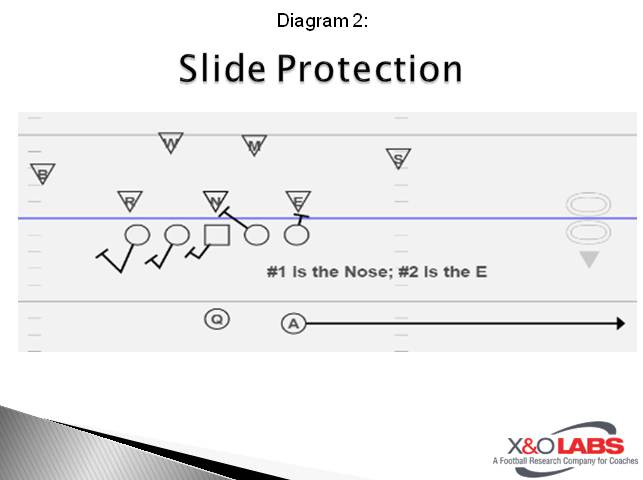
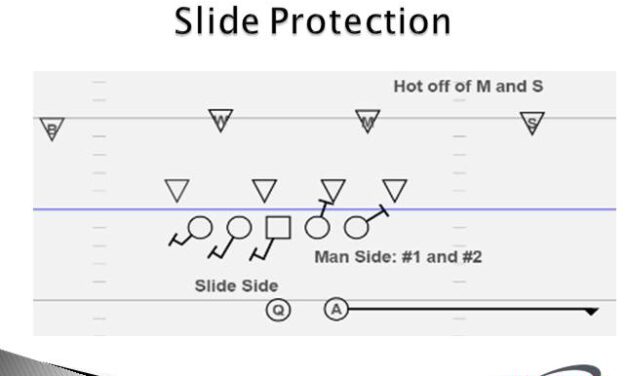
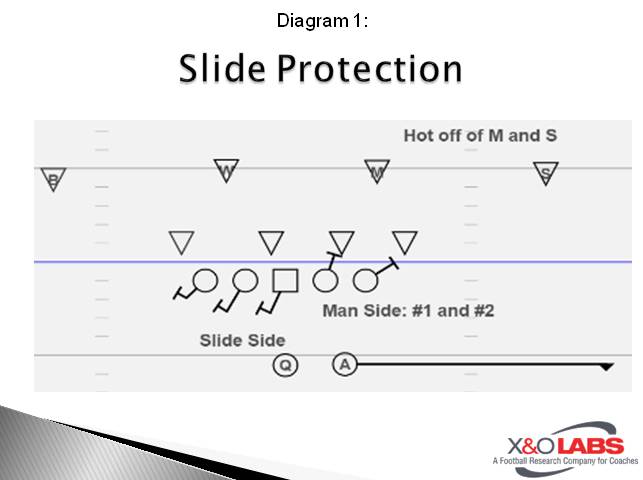
This concept starts with a 5-man protection with a free release from the running back. We have used this concept with 6-man pass protection and just felt we gained more by putting the running back out in the pass concept. We mainly utilize half-man, half-slide protection here at Glenn High School. It is easier for our players to execute and understand and gives us the ability to slide to dominant defensive lineman or to cover up a young and inexperienced offensive lineman that may need help. We determine the slide side with the call.

Our rules for Scat Protection are:

Slide Side:

Tackle: C gap Defender

Guard: B Gap Defender

Center: A Gap Defender, unless defender slants to the backside. The center is the fulcrum point and can teeter to the slide side or the man side.

Man Side:

Guard: #1 down linemen from head up on the center out

Tackle: #2 down linemen from head up on the center out

Slide1Slide1

In figure 2, the protection is drawn up versus a 3-4 defense. The man side’s #1 is the Nose and the #2 is the Defensive End. If the nose goes into the slide side’s A-gap, then the guard sinks and looks to help with a possible linebacker blitz or some type of twist game. We tell him to sink so he does not pick off any other offensive lineman and to be able to see any type of delayed blitz.

We will free release the back to the man side of the pass protection. You can get creative here and use motion to release the back early or slide to the same side the back is releasing. These can change up depending on tendencies and “window washing” for the offense.

Routes

We are a concept based offense. This means we tag names to the concepts and a single name can tell everyone on the field what to do. This makes signaling easy and efficient for our players and coaches. A single word can tell the pass protection, the frontside routes, backside routes, and the progression for the quarterback.  We play an up-tempo style of offense and look to simplify the offense every year. Our off-season evaluations of the offense are currently being done by the offensive staff and we are looking for simple adjustments to make plays more efficient and successful and concepts we need to subtract or add to the offense to help benefit the team.
The routes on the call side are from the most outside receiver to the innermost receiver:

  • Shallow Cross at 2 yards burning the heels of the defensive linemen
  • Get Open- vertical stem for 12 yards, turn inside and retrace back to 10 yards
  • Wide- Go now flare route staying flat to the sideline and turn up at the bottom of the numbers like a wheel route.

The routes on the backside are:

  • 10 yard Rhythm out
  • Inside seam releasing through the outside should of the 1st inside linebacker

Slide1

The shallow route aims at the heels of the defensive lineman and continues to fun full speed over the ball. We do not tell the shallow to find a void and sit in this concept. We want the receiver to be full speed running to the sideline if we deliver the ball to him. The yardage on this route is outside, up the sideline. If the receiver turns up in the middle of the field, there is not much room for yardage after the catch. He must outrun everyone to the sideline and get his large yards after the catch near the sideline.

Read More

Pro Style RPO Packages From Under Center

By Josh Franke
Head Coach, Offensive Coordinator
Newton Falls High School (OH)
Twitter: @Coach_Franke

Introduction:

Every team I had ever coached was a spread based team. We ran several RPOs, several different Quarterback read plays, and crazy spread formations to catch teams off guard. With every year that our staff ran these plays, we noticed that the defenses were getting faster. Running backs and Wide Receivers were lining up on the defensive line, safeties were playing linebackers, and defensive units were loading up with speed.

When I arrived at Newton Falls, I realized we couldn’t combat this trend and match the athleticism we we’re seeing on Friday nights. Our team speed wouldn’t allow for it. We needed a new way to package what we have done for years including the north south run game. In the end, we took some aspects from old school power football offenses and applied some new methodology spread / RPO methodologies. This has given us the needed firepower to fight back against the faster, modern defenses.

RPOs in Pro Style Packages

One of the things we’ve had great success with has been taking the idea of a RPO plays and packaged plays from the spread and adding it to our I-Formation and Pro-Style packages. When you run a lot from under center you tend to play defenses that do one of two things; play press man on you and blitz the house or run a zone on you such as Cover 2/Cover 3/ Press Quarters to help safeties be more active in stopping the run. One way we combated this was with our I-Stack ISO or Power Shark play.

We have run this play as both an RPO and a packaged play depending on the ability of the QB to make the read. This past season we used it as a packaged play where the Quarterback would decide based off defensive alignment what we would run. The formation we like it out of the most 21 personnel I formation with stacked WRs.  Opposite of the tight end, we spread our X out wide and have our Z stack right behind him.  This formation creates difficulties for defenses and forces them to make some adjustments.

Slide1

Read More

Pull Scheme RPOs with Universal Tags

By Joe Spagnolo
Head Coach
Iona Prep (NY)
Twitter: @JoeSpags12


Introduction:

In the last few years we have evolved into a Zone RPO and Power Read football team that plays up- tempo, with various formations and motions. We have found that the best way to protect our two base run plays has been through Pull Scheme RPOs with Universal Tags. The key to these plays are that they work verse all fronts and coverages, which allows us to always call plays that work, while pushing the tempo at the same time. For the purpose of this article we will focus on our three primary Pull Scheme RPOs and our main universal tag.  

G-Lead (Read)

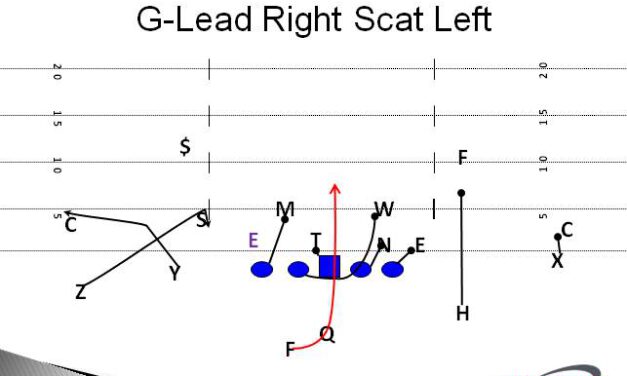
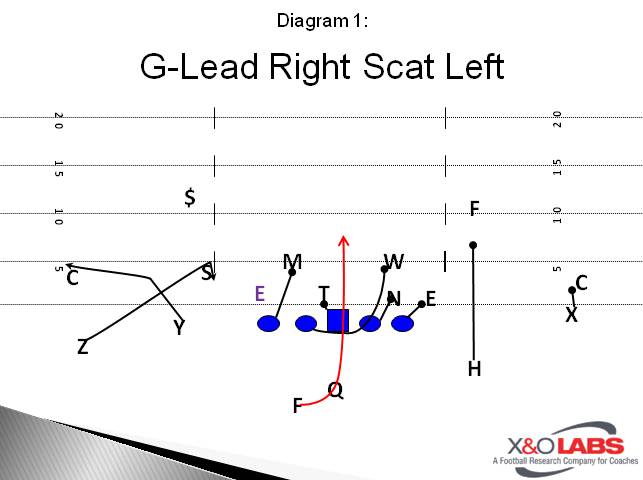
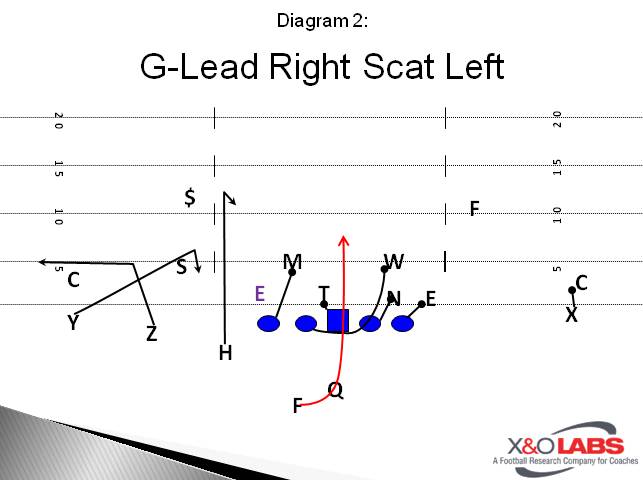
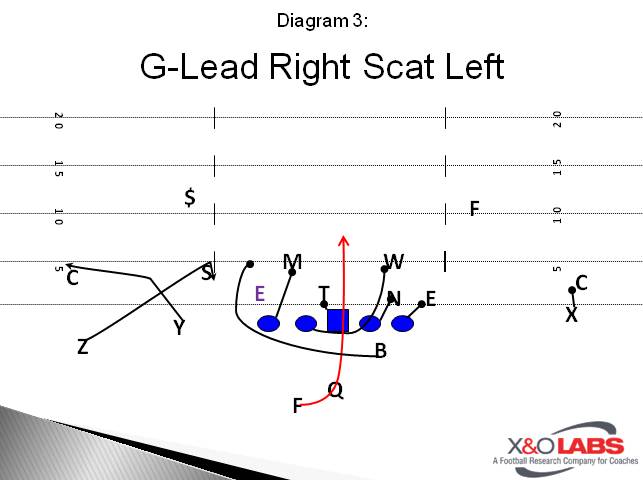
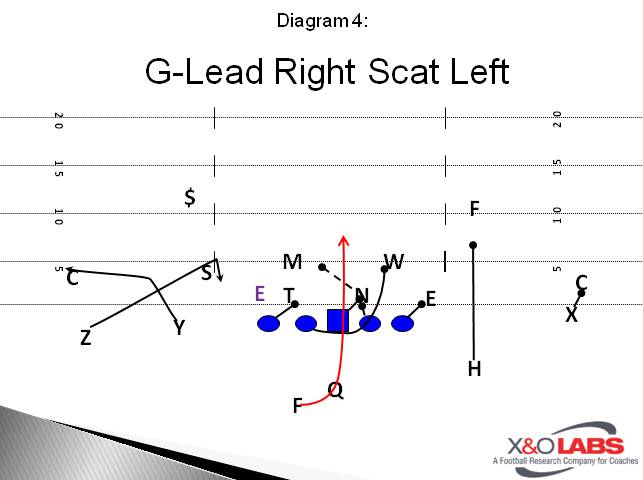
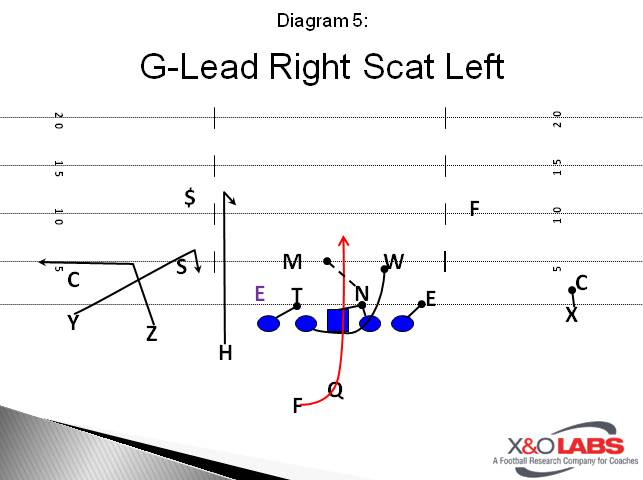
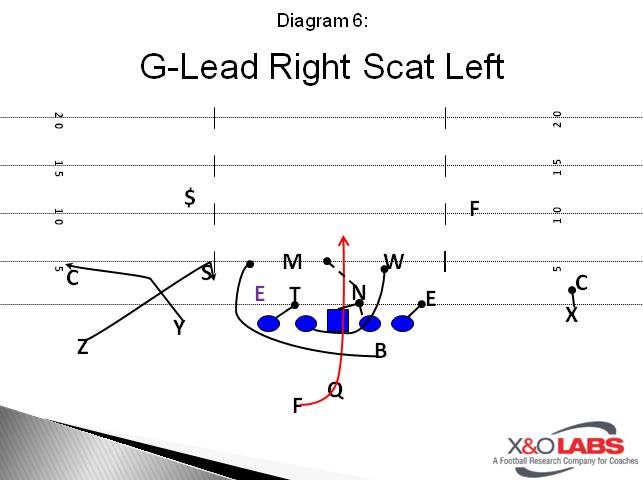
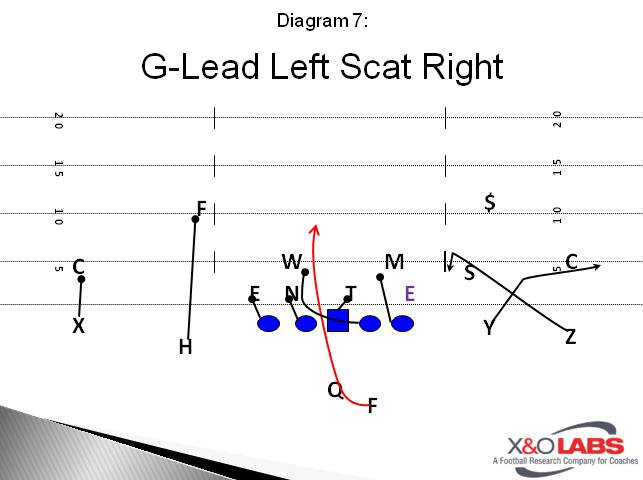
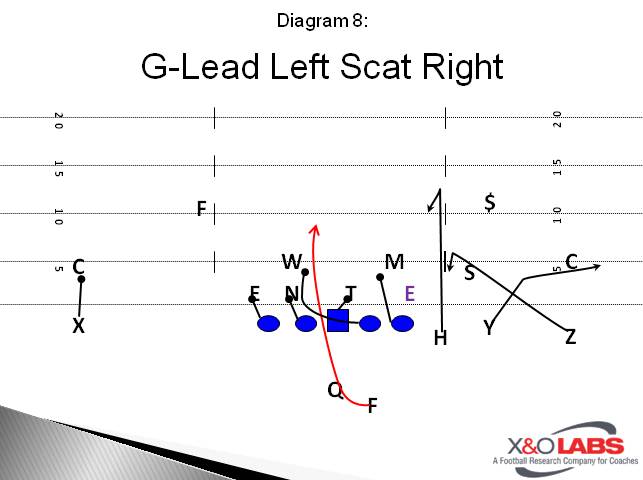
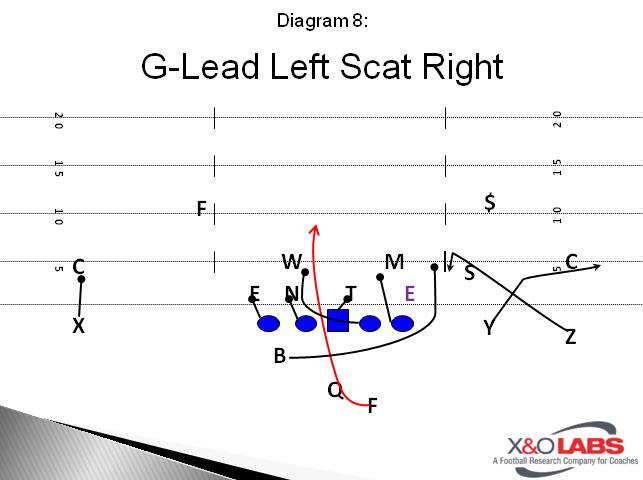
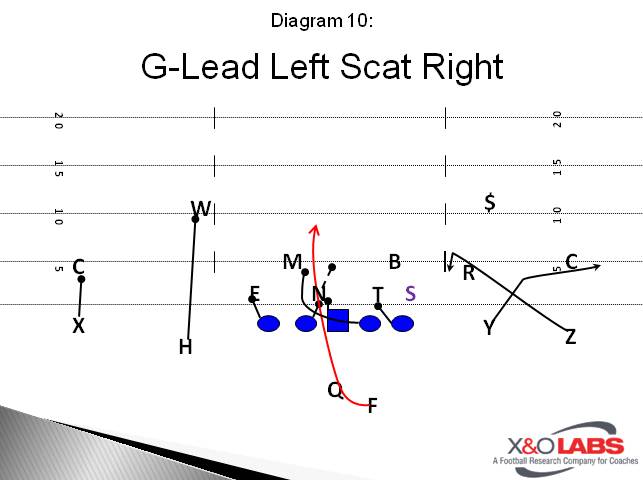
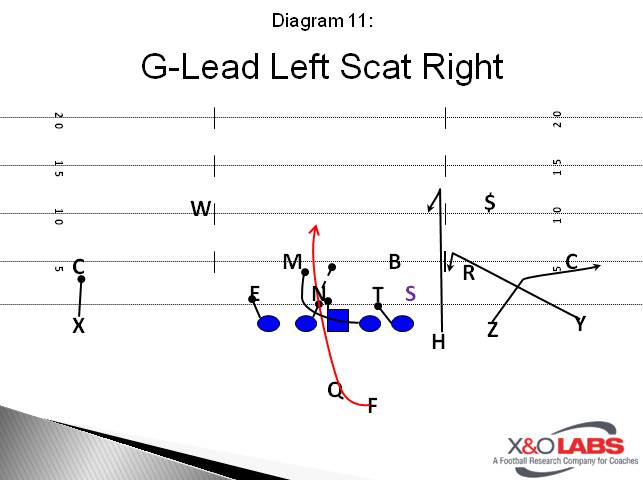
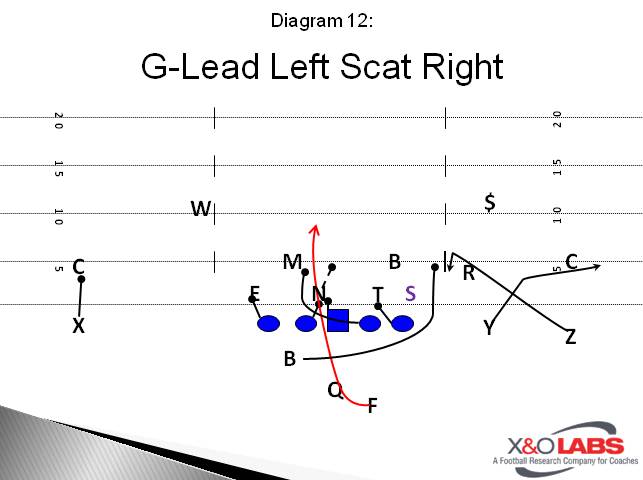
The G-Lead scheme was very easy for us to adopt for our oline and skill players as it is a combination of zone and power principals for our offensive line and the same run game mesh as our zone read play for the QBs and RBs. The G-Lead scheme is a great answer when we are having match-up problems with a NG because it provides us with better leverage or an aggressive double team at the point of attack. The skip pull for the bsg is identical to the skip pull in our power scheme and the RBs aiming point (front leg of the center) and movement keys (Tightest technique) are consistent with our zone read scheme. In addition, it creates a false pull that slows down backside LBs and pursuit if we get a pull read triggered by the backside de.

Slide1Slide1Slide1Slide1Slide1Slide1Slide1Slide1Slide1Slide1Slide1Slide1

Dart (Read)

Read More

Case Study: Getting Your Athletes to “Buy-In” Year Round


By Research Staff, X&O Labs


In this day and age, time is also at a premium. We understand that with all of the people, tasks, and responsibilities that compete for your limited bandwidth, a smart approach to managing all the details of your program is critical. Click here to learn about a new tool that can help you with all of these things.


All we have to do is be in the locker room and coach.”

-Keith Badger, Head Coach, New Richmond High School (WI)


By Research Staff
X&O Labs
Twitter: @XandOLabs

keithTime is a coach’s greatest resource.

In this day and age, time is also at a premium. We understand that with all of the people, tasks, and responsibilities that compete for your limited bandwidth, a smart approach to managing all the details of your program is critical.

We’ve identified three areas where innovative coaches multiply their impact by becoming more effective in the offseason:

  • Building consistency with coaching staff
  • Increasing athlete engagement
  • Maximizing performance

If any of these aspects aren’t getting the attention they deserve in your program, we’ve got a recommendation for you: Programax.

As many of our readers already know, Programax is a multi-faceted coaching app that puts powerful, customizable, efficiency-enhancing tools at the fingertips of coaches. The app’s features include integrated messaging, a custom workout builder, program-wide scheduling, file sharing, and much more.

To be clear, Programax is a sponsor of X&O Labs. This was only after we did a complete review and test of their app. As you’re about to see, this innovation is needed more today than ever.

In 2016, we featured articles on how Programax can improve communication within your program and the app’s ability to help make the most of your off season. A number of our readers took the opportunity to try Programax, and we followed up with one of them to learn about their experience. 

We spoke with Keith Badger, XandOLabs Insiders member, Programax customer, and head football coach at New Richmond High School (WI). Coach Badger recently wrapped up his fourth season with an impressive 9-3 record. He also teaches PE and is the head of strength and conditioning for the school. We spoke with Coach Badger in depth about his experience with Programax and have outlined the highlights of how Programax has helped him be a better coach.

NRscstaffBuilding Consistency with Coaching Staff:

Read More

Mickey Matthews on his 4-2-5 Scheme

By Mike Kuchar
Senior Research Manager
X&O Labs
Twitter: @MikekKuchar


Interview with Mickey Matthews: During his 13 seasons, Mickey Matthews has firmly established James Madison University football among the nation’s leading Football Championship Subdivision programs. While becoming the winningest coach in JMU football history, he has led the Dukes to an NCAA championship (2004) and to five other playoff appearances (1999, 2006, 2007, 2008, 2011).  Matthews three times has been National Coach of the Year (1999 Eddie Robinson Award by The Sports Network; American Football Coaches’ 2004 award; 2008 Robinson Award and an award by Liberty Mutual) and was Atlantic 10 Coach of the Year in 1999 and CAA Coach of the Year in 2008.
 

Mike Kuchar (MK):  What has changed most in the 4-2-5 defense today from when it was a 4-4 defense?  How has it progressed?

Mickey Matthews (MM):  We went from a 4-3 to a 4-2-5 because of all the one-back sets we’re encountering now.  It’s easier to adjust with a 4-2-5 than a 4-3.  If you’re in a 4-3, one of your outside backers must become an adjuster, so it ends up being a 4-2-5 anyway against spread sets. 

MK:  Describe the personnel types of your three safeties.

MM:  What we call our Strong Safety is our hybrid.  He’s half-safety and half-linebacker.  He has to take on blocks and be at the point of attack.  The Strong Safety doesn’t have to be in space as much as our Free Safety.  We keep our Free Safety out of the box.  He’s not as big and not as physical as the Strong Safety.  There is no protypical size.  We’ve had tall ones and short ones.  These Strong Safeties are like tweeners for us.  The Weak Safety doesn’t have to be as physical.  For us, he’s usually 75 percent out of the tackle box and 25 percent in the tackle box.  The Strong Safety is usually 75 percent in the tackle box and 25 percent out of the box.  Our Weak Safety is more of a pass defender for us.  He’ll be a hash player for us at times.

Read More

DE Bend and Chase Technique to Defend Zone Read

By Mike Kuchar
Senior Research Manager
X&O Labs
Twitter: @MikekKuchar


Introduction:

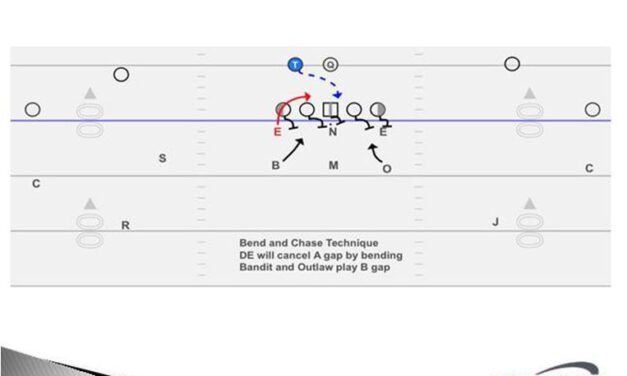
At Villanova University, defensive coordinator Billy Crocker will always make his defensive ends bend and chase players on the quarterback in his 3-3 scheme out of a two-high alignment. “We don’t read with those players,” said Coach Crocker. “We dictate who we want the football to be carried. Plus, when you have less athletic defensive ends defend quarterbacks in this conference, who may be better than them, it could be trouble.” So, instead Coach Crocker will have his defensive end to the side of the back in a cocked stance. He is in a pad-to-pad alignment with leverage on the offensive tackle to maintain C gap leverage. The bending defensive ends cancel the dive component while the Bandit and Outlaw (the two outside linebackers in his scheme) are B gap players. “Once those defensive ends see a veer release, that defensive end is flat off the tackle’s butt. There is no shuffle squeeze technique. We are bending right now to spill the first thing that comes at us. It eliminates any hesitation (Diagram 7).”
Read More