QB Draw: Converting on Long Yardage

By Phil Longo
Offensive Coordinator
Sam Houston State University
Twitter: @CoachPhilLongo


Introduction

sam houstonThe Iso Draw is perhaps our favorite play in our offense. It is incredibly versatile for us as we can run it at nearly any time. Ideally, we are running this play on downs where they are most apt to be defending other things or on downs where we get the greatest displacement on the linebackers when we drop. But we can also run it on 1st and 10 or 4th and short. This past season it just happened to be more so on first down. Regardless, we have found this to be a very effective conversion play. This clinic report will outline the base concept and variations that we like to use to keep the defense guessing.

This Iso Draw concept is used to attack any 5 or 6 man box while pairing it with passing concepts on the outside. While the passes and screens that we use to compliment the play change, the base Iso concept will remain the same. This concept is one that we can run on at down or distance and that we can run as many as 20 times a game. That said, each time we run it we will come from a different formation or grouping to keep the defense off balance.

Blocking Rules

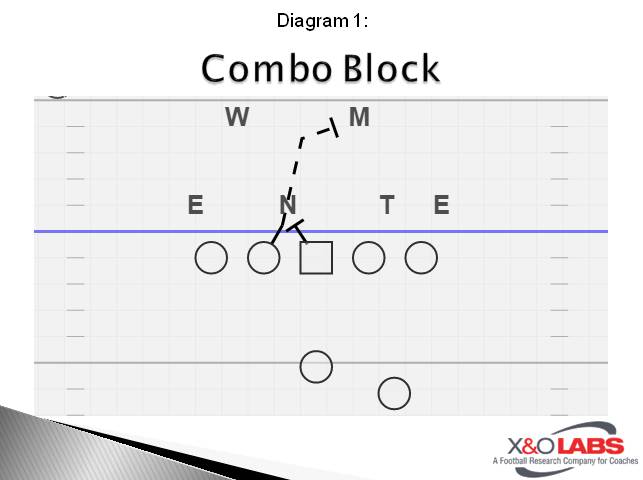
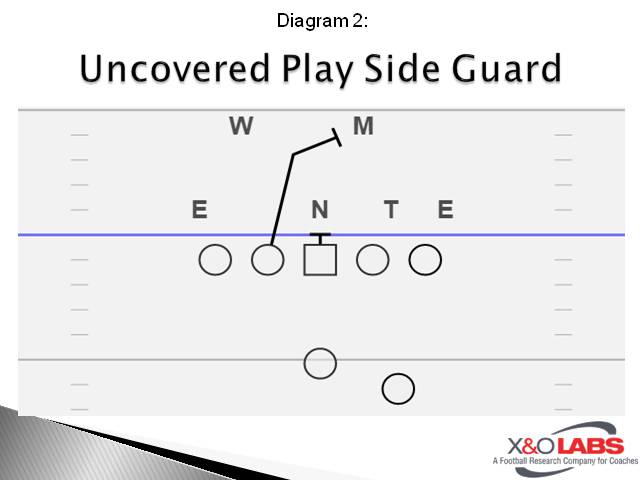
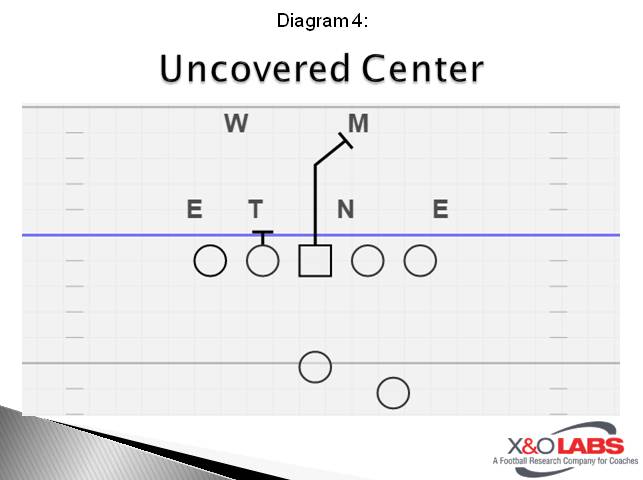
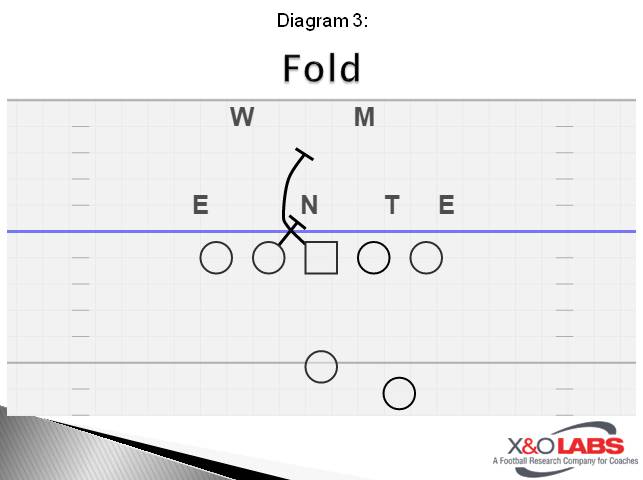
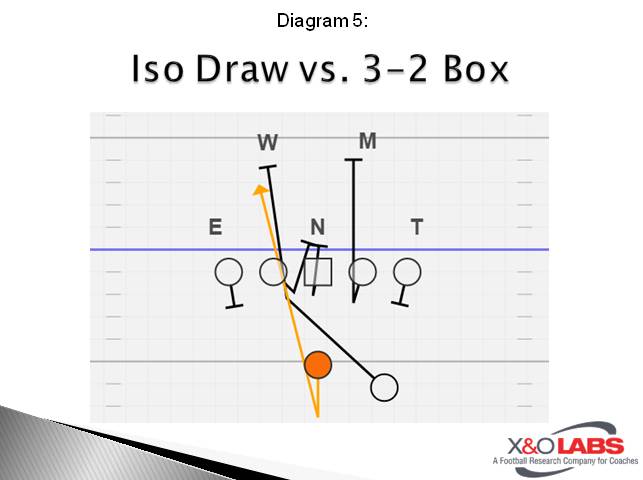
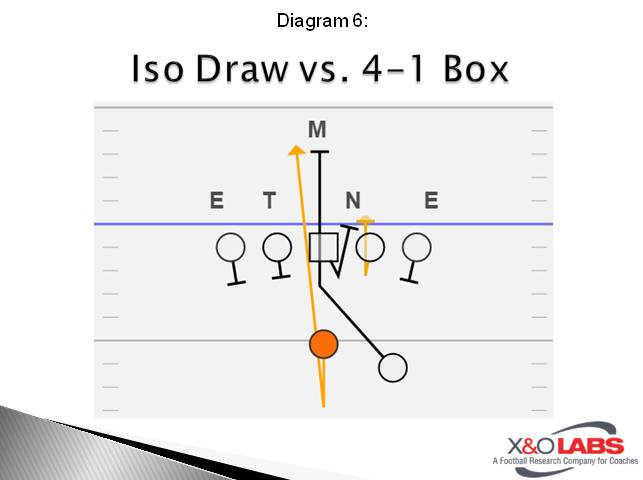
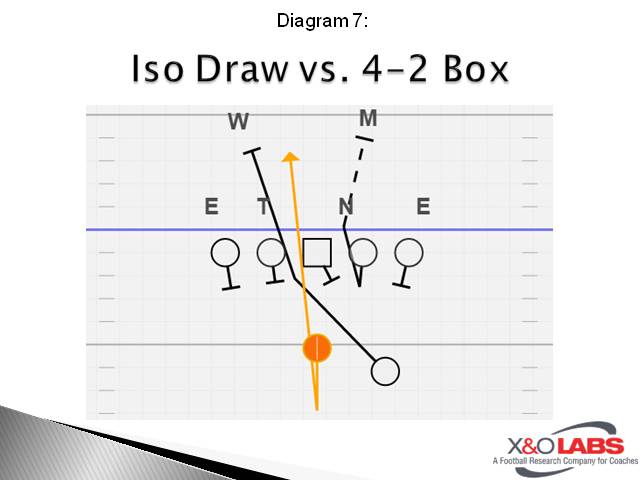
The blocking for this concept is simple but agile. We will have the play side tackle, back side guard, and back side tackle vertical set and wall out their defenders. This goes against almost any front. The changes take place when we get to the center and play side guard. These two players are responsible for the nose and back side backer in this scheme. They have three options that they can use to take care of their assigned players, a combo block, a base block, or a fold. What they choose, of course, is based on what they see in terms of defensive alignment.

If either of them are uncovered, they become a straight release player to the back side backer. In a gap situation, they are going to combo to the backside. If we get a really heavy shade, they will fold with the center folding around the play side guard then back to the back side backer. This works particularly well against teams that give us a 2i to that side to stop our Inside Zone.

Slide1Slide2Slide3Slide4Slide5Slide6Slide7

Read More

Throwing to Restack on Vertical Routes

By Matt Adkins
Passing Game Coordinator
Southern Oregon University

Introduction:

souSouthern Oregon has thrown for over 20,000 yards in the past five years and seen almost all school records broken, along with national passing records. We have appeared in the NAIA National Championship game the last two years, winning it in 2014. This happened for many reasons, but one of the most important is our focus on the details.

In this clinic report, I will focus on a few specific details that have allowed us to be so successful through the air. Those concepts include throwing the ball to restack, getting the quarterback in phase with straight sprint outs, and how we emphasize on our quarterback draws. These concepts are painstakingly simple, yet they are a special sauce for us.

Throwing To Restack

Every ball that we throw vertically we always throw with the same thought process on where the ball should land, it should allow the receiver to restack. By restack, we mean get back on top of the defender and lock him out of the trail position. We do this for a couple reasons. The first is that it fits in with our philosophy as a team. We have a saying amongst our staff when it comes to recruiting that “The first thing we recruit is character, the second is speed.” Throwing to restack on a consistent basis with a bunch of slow possession receivers is something that I would not advise. You are probably better served throwing the ball in the sideline box where only the receiver can catch it. For us it fits or focus on speed. The second reason is that fades caught at restack are touchdowns. Fades caught in the sideline box are typically just explosive plays. I like touchdowns however we can get them. If we can master throwing and getting to restack, our fades will turn into touchdowns, not just big plays.

Making this approach work requires execution from the wide receiver position. They have to be fundamentally fast. Here are three keys to making this happen:

  • We do not allow our wide receivers to hand fight on vertical balls. We teach them that hand fighting slows them down. Without your arm action you are substantially slower and have lost your ability to create separation. A lot of young receivers that we get want to constantly patty cake with the corner down the field. We emphasize that you only get one chance to hand fight. Additionally, they are not allowed to use any hand fighting that causes shoulder rotation that we do not want.
  • Teaching the fundamentals of running. We spend a lot of time with our athletes in the off-season working on improving their arm action and their knee drive. That is something that is extremely hard to touch on during season, there just isn’t enough time. One thing that we work on and can get results within a relatively short period of time is shoulder rotation. All kids will want to get over the top or in a hip to hip relationship with the corner and then open their shoulders to the quarterback. They never understand what running with open shoulders does to their speed. A lot of young wide receivers will want to get to hip to hip relationship with the corner open their shoulders and start playing patty cake. This is the most important moment on a fade ball in my opinion. You need to use one hand fight if needed, keep your shoulders square, immediately work to get back to restack and turn your chin.
  • Stance and start. We probably emphasize stance and start more than any other program in the nation. I fully understand that we are talking about fraction of seconds when it comes to demanding no wasted motion out of the stance and a great drive phase on a rep by rep basis. But we have a saying with the wide receivers is that “milliseconds turn into seconds, seconds turn into minutes and minutes turn into hours. That’s why we are hours faster than everyone else.” The next component is that we are going to work to true stack on release or just about every route we do against a soft corner. This gives us a three way go and has been extremely beneficial in squaring corners up, forcing them to open their hips the exact way they don’t want to and makes it harder for them to cut off the top of our fades.

In order for this concept to work you must make your quarterback trust it. Here are some notes on how to rep it and key coaching points we have found using the philosophy.

It all starts in the QB’s mind. You must first get your quarterback to understand what you want. We like to start out with film of great examples and use a couple key phrases. When throwing to restack you are throwing to a man, not a spot. You want to naturally bring the receiver back to the inside with the ball. When the receiver and the corner are hip to hip throw, we expect him to throw the receiver back to restack.

It is important to note that your quarterback is going to hate you at first. He is not going to get it. You are going to have a wide receiver not work to get back to restack and your quarterback is going to throw it perfectly and then he is going to give you a look like you are a mad man. This is normal, don’t fret! He is going to hate that the big time money ball is a work in progress, and that he is going to look dumb at practice in front of his peers. He has had a positive stimulation throwing to the box for fades, or had a kid he would throw jump balls to. I will tell you my number one reply when he starts to complain  “Grow up Peter Pan, you can’t live in Nerverland forever.”

In five seasons working on throwing to restack, the reality is that sometimes it takes until week 5 to get the quarterback and receiver on the same page throwing the ball to restack. You have to be part therapist and continue to coach your players and make them understand that these are the reasons why it is not working and this is why when it works it will benefit the team and the individual.

Read More

Sam Houston State’s Air Raid Evolution – Case 1: System Analysis and Role of Receivers

By Mike Kuchar
Senior Research Manager
X&O Labs
Twitter: @MikekKuchar


Introduction

case1picBefore continuing any further, we should address the entire foundation in which Sam Houston State’s offense is centered around: Finding space and exploiting it.

This philosophy comes in two-fold: Chasing space in zone coverages and creating separation in man coverages. That’s the crux if how this system works. Just as numbers are equated in the run game, space is created in the pass game and much of the onus of taking space falls on the wide receiver corps. One of the first things wide receivers coach Terence Archer told us was “our receivers will always be right. The quarterback has the responsibility to see what the receivers are doing. Our receivers get a lot of freedom here.”

It’s an up tempo, no huddle operation that just set the Southland Conference record for plays in a season, by amassing 1,275 snaps in 2015. Offensive coordinator Phil Longo rotates through a half dozen receivers each contest and each is ingrained with the mantra, “the receiver is always right.” This means that the responsibility is on the receiver, not the quarterback, to find the necessary voids in zones and the mismatches in man that are necessary to be successful. Sounds challenging? Maybe. But the roots of the Bearkats Air Raid system are grounded more on the ideals of big play potential through the air than a ground and pound, move the chains philosophy. According to Coach Longo, it’s a more sensible risk. “We are an Air Raid offense and when you think about Air Raid you think about passing the ball,” he asserts. “People that know me, know I love to pass the football. If you give me an opportunity to run a four-yard power concept or a 15-yard dig, I’m going to throw the 15-yard dig. It’s a higher return.”

According to Coach Longo, the success of its run game, the Bearkats ran the ball for 3,817 yards this season, came because of defenses being over prepared to defend throwing lanes. “We run the ball because defenses are spreading out,” he said. “We haven’t played a team all year with more than a six man box. We ran the ball for almost 8,000 yards the last two seasons. We also threw the ball for more than 8,000 yards. We run the ball more, but throw the ball less. Yet they equate the same amount of yards.”

Sam Houston State Offensive System

Sam Houston State is a tempo team that averaged 85 plays and averaged 16.2 seconds between plays and Coach Longo credits the speed of his offense to the simple line of communication he uses to get his players in the right situation.“We don’t use boards, wristbands, hats, etc. because when interns are doing that they are not doing the things they need to be doing such as coaching our guys each week,” Coach Longo told us. “We go too fast to worry about defenses getting our signal. They still have to get it fast enough and you need to still defend it.”

Editor’s Note: For more information on No Huddle communications, go here to read our No Huddle Study. 

In many situations, Coach Longo is providing the correct play call based off game plan tendencies by formation, which are detailed in case two.

The Bearkats by design are a 10, 11 and 20 personnel team and label their skill players as the following:

Z: Flanker

X: Split End

W: Slot

H: Slot

S: Super back

While much of their terminology is devised by the offensive staff, teh approach to personnel is rooted into the Air Raid system. According to Coach Longo, they only have three types of formations. The “R/L” signify the strength of the formation and concept side.

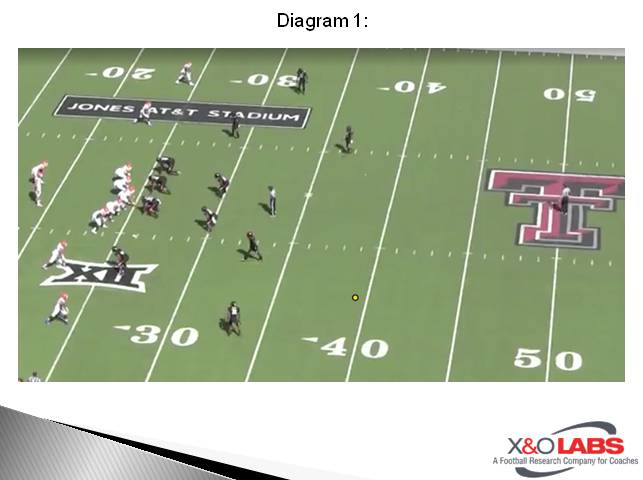
River/Lake: 2×2 (Diagram 1)

Slide1 

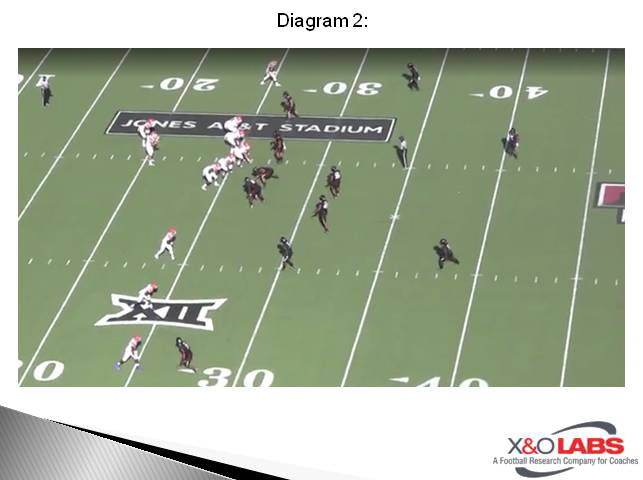
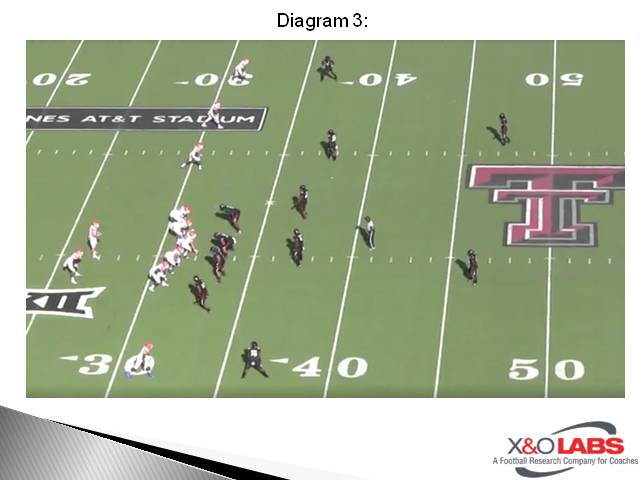
Ray/Lay: 3×1 to the right (Diagram 2) and to the left (Diagram 3)

Slide2Slide3

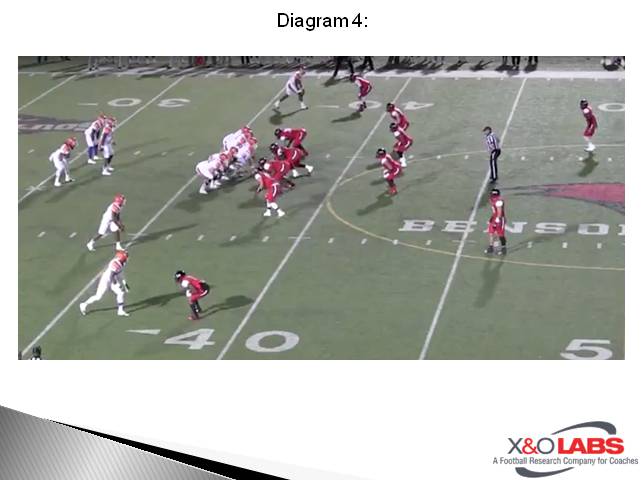
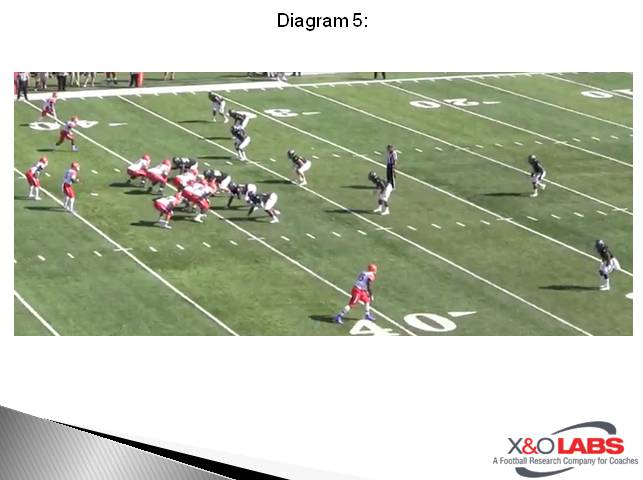
Ron/Lon: 2×1 to the right (Diagram 4) and to the left (Diagram 5)

Slide4Slide5

Read More

Sam Houston State’s Air Raid Evolution – Case 2: Role of the Quarterback

By Mike Kuchar
Senior Research Manager
X&O Labs
Twitter: @MikekKuchar


Introduction

case2picIn most spread offensive systems a lot of responsibility is placed on the quarterback. He’ll often have to identify the Mike, read the coverage structure, check the protection, align the offset running back and communicate the play call to the offensive line. That’s before the ball is even snapped. It was a daunting process and a world that Coach Longo doesn’t want his quarterback living in. So when he started crafting the system, his plan was to streamline the pre-snap thought process as much as possible. “Our quarterbacks don’t talk to the offensive line at all,” he told us. “They don’t signal anything to the receivers. It’s not his job. We don’t even call or check protection. We don’t want them doing anything but completing balls. We don’t want them to read defenders and know coverages. That’s why our sacks are low.” The Bearkats surrendered 1.4 sacks per game last season.

The premium is set on getting the ball out quickly to receivers who heave learned the value of exploiting space.  Coach Longo will reference the term “screaming” often, which means that the route has to be clearly open for the quarterback to throw the ball. “We have incompletes because of bad throws, incomplete passes and poor quarterback decisions or by pressure,” said Coach Longo. “It’s usually not because we are covered. The route progression is usually there.” But make no mistake. Even then, Coach Longo and his staff continue to alleviate the signal caller’s responsibilities, it does take a dynamic leader to run this offensive system. The last quarterback to run it was the 2015 Southland Conference Offensive Player of the Year. “We need a quarterback who can think and throw,” said Coach Longo. “He is a distributor of the ball to our talent base. Anything more is icing for us. We will take advantage of a quarterback who can also run, but we don’t want an athletic quarterback who cannot think and throw.”

According to Sam Houston State head coach KC Keeler, having variety at the quarterback position, the Bearkats rotated between two signal callers last season, just adds to malleability of the offensive system. “You can win in a whole different variety of quarterback play here,” said Coach Keeler. “We can win with a dynamic quarterback that runs the ball because they have to crowd the box and he’s a run threat because it opens up throwing lanes. But we have used another quarterback that if you crowd the box against him, he will kill you on the routes on the perimeter. You don’t need a particular quarterback to be successful here. We are not stuck in one mantra where we have to have a (Joe) Flacco (Coach Keeler coached Flacco the University of Delaware).”

Pre-Snap Understanding

Now as far as what the quarterback is expected to know pre-snap, much of it relies around two coverage types: Nickel (one-high) and Dime (two-high). That’s it. Really.  Many of his decisions are made pre-snap based on those two coverage structures. There are no “coverage beaters” in this system. Each route is designed to attack any coverage. The ball just might end up in a different place. And as far as rotations are concerned, that is usually game planned as well. “We evaluate the safeties in all our games to tell us which one is our indicator,” said Coach Longo. “Many times it’s the boundary safety. One of those safeties will be identified as to whether or not he is going to spin. Each team is different. Most defenses tip it off. Pre-snap we see where the space is and we take it. If the QB sees more space, he knows where he is going. We only work a third of the field.”

QB Progressions

There is a major difference in Sam Houston State’s Air Raid system as it pertains to quarterback progressions, there are not reads, just “looks.” In its clearest sense, the quarterback doesn’t read defenders. He looks for open receivers. These looks are classified as first look, second look and third look. If the third look is not there, the quarterback tucks the ball and finds space in the front (like a receiver would) to gain yards. The quarterback should already have a pre-snap understanding of where he is going with the ball based on the where the space is in the defense pre-snap. “Which route is coming open first is the first look,” said Coach Longo. “Which route will come open second is what I throw next. We look at the vertical routes first then go from there.” It’s important to note that even though the quarterback might know where he is going, it’s that imperative that to look off defenders, he must use his facemask, not his eyes. “We work to get our facemasks in that direction, not the eyes,” he said. “We decide on the first look in our drop if the ball is going there. To do that, we need to have our eyes over there. My facemask needs to be down the middle of the field. When a quarterback reads a defender my eyes have to go to the defender then to receiver then to second receiver. That takes more time. Some teams will not even plan pressures because there is no way they are getting to the quarterback or getting a free run on him,” said Coach Longo. “They just planned on using man coverage and getting underneath throwing lanes. When you don’t put pressure on the QB and he can get through all three looks and it’s very difficult for us to get stopped if we can get through all three looks.” Coach Longo reaffirms this with a story from when Patrick Toney, a former assistant from rival Southeastern Louisiana came on board at Sam Houston State. “He told me they didn’t gameplan a lot of pressures against us in our playoff matchup the previous year,” Coach Longo recalls. “They didn’t feel they could get to the quarterback because we triggered the ball so quickly. That’s the world we want to live in.”

To study drill work on how Coach Longo teaches the facemask look off, click on the video below:

Read More

Sam Houston State’s Air Raid Evolution – Case 3: Routes and Concepts That Attack Space

By Mike Kuchar
Senior Research Manager
X&O Labs
Twitter: @MikekKuchar


Introduction

case3picIn this case, we delve into the specifics of the pass game at Sam Houston State University. The pass game is centered on quick game concepts with even quicker release points by the quarterback. All of the fundamentals and techniques emphasized in case one and two are tied into each of the pass concepts described in this section. Coach Longo and his offensive staff break their pass game down into the following components:

  • Quick Game Tags: These are pass concepts tied into the run game. Receivers are running the called pass tag while the offensive line is blocking for the run. The quarterback makes the decision based on pre-snap leverage of the secondary whether to throw or hand the ball off.
  • Twins Pass Concepts: These are two-man pass concepts that are designed as half-field read concepts.
  • Trips Pass Concepts: These are three-man pass concepts that are designed mainly out of detached trips formations. These are mainly half-field read concepts.
  • Full Field Concepts: These are concepts like mesh where the quarterback is asked to read the entire field.
  • X Games: These are concepts that are relevant to only the single receiver side of trips formations. Many of these routes are backside routes that tie in the super back (offset back) to run a route. They are five man protection schemes.

Editor’s note: Before detailing these pass concepts, it’s important to note that the concept side of the route is always tagged to the formation strength. If it is a balanced formation such as 2×2, the call side is predicated based on the formation call. River would mean the right side is the play side and left side is the backside.

Quick Game Tags

These quick game tags are the crux of the Sam Houston State’s quick passing game and according to Coach Longo the main reason why the Bearkats rushed for nearly 4,000 yards in 2015. In fact, wide receivers coach Terence Archer told us that “it’s so ingrained in our system, it would be weird for our players if we weren’t using them.” There are 18 tags (including pass tags) in the Bearkats system, but they will use a steady diet of eight during most game. According to Coach Longo, the reasoning is simple, some slots are better runners than backs and why have them block if they don’t have to. “We don’t’ have to beat our slots by telling them they have to block a 235-pound outside linebacker,” he told us.

According to Coach Longo every year it gets harder and harder to throw RPOs, particularly third level reads, because the emphasis is now on linemen down the field. “Defenses are taking those concepts away by playing man free coverage,” said Coach Longo. “RPOs are being relegated to the shorter throws because the longer throws are being affected by linemen downfield. We answer with our quick game tags. It may seem like we’re running RPOs, but they are just tags. The bottom line is you’re either playing corners off or corners hard, and as long as that is the case, I’m going to use tags. Most people will say that offensive coordinators are not patient enough to throw 30 hitches down the field. That’s when defenses will play the deep ball and allow us to take things underneath. I don’t care how boring it is. If that’s what you are going to give us than that’s what I’m going to take. We’ve done all this with lesser talent in years and we’ve been successful.”

In Coach Longo’s system the quarterback is expected to make a decision pre-snap based off leveraged defenders. He will always instruct them to take the numbers advantage and when all the numbers are equal, go with the lesser number. Two-on-two is better than three-on-three and one-on-one is better than two-on-two. He’ll often prefer a hitch between a quarterback and wide out before running the football. “We will break the defense down into thirds,” he said. “We will see if we have numbers to either side of the formation. If we have numbers to either side, we throw the corresponding route. If all numbers are even, we know we have six in the box and we can run the ball in the read game. We like running the ball against a six-box. The quarterback makes the decision based off advantage.”

These tags are built off every run concept in the Bearkats offensive system, but there is a protocol for mixing and matching them. Perimeter concepts. If an outside scheme is called like speed option or outside zone, the receivers to the side of the play concept are expected to block on the perimeter. But if an inside run is called like inside zone, dart or power, the tag talks to whole receiver picture. It usually becomes a mirrored route to both sides of the formation depending on what looks good that week against the defensive structure. “We run slant, hitch, out, pivot, etc.,” he told us. “We will tag all our run schemes with whatever I think looks good that week. We just focus on how to beat Nickel, Dime and cover zero.”

The quarterback simply looks to the perimeter to see if he has numbers. “Whatever we do, our quarterback will ghost throw everything,” said Coach Longo. “If he hands off the zone, he fakes the fade route. We try to hold somebody’s eyes. Our running backs will carry out fakes for 10 yards. If you watch those safeties you will see them hanging their eyes on the back that doesn’t have the ball rather than tracking the bubble screen. You’re creating more space when you hold their eyes. He might be the touchdown saver, but if hold him for a minute it affects the play. Sometimes the back could actually spring loose and block a homerun corner down the field.”

Read More

Coordinator-to-QB Communication Protocols

By Mike Kuchar
Senior Research Manager
X&O Labs
Twitter: @MikekKuchar


Introduction

hendrixWhen directing a tempo offense, communication is everything and a simple miscommunication can result in travesty within seconds. There are two key cogs in running the tempo offense- the offensive coordinator and the quarterback and how these two individuals work together is in direct relation to how proficient the offense becomes. On a play-by-play pre-snap basis, the quarterback is asked to survey information, digest information and communicate information in a matter of seconds. All of this information is provided by offensive coordinators during the course of the game week. We wanted to research specifically how these communication is conveyed between the coordinator and the quarterback so we surveyed nine offensive coordinators at both the high school and college level to ask them the following questions:

  • How they teach their quarterback to identify defensive fronts and how many types of fronts he is expected to identify.
  • How they teach their quarterback to identify coverage and how these coverages are labeled in their system.
  • What landmarks these coaches use to define the “box count” and how a box is labeled.
  • How leverage is defined on the perimeter, particularly as it pertains to covered and uncovered receivers.
  • What these coaches are doing in the film room and the meeting room to teach their quarterbacks these concepts.

Their responses are left anonymous because, well…like we said communication is everything in their system. It’s the tight lipped, CIA style of these no-huddle signal callers to not tip their hand. But they did disclose the method by which they design their communication and we segmented their responses based on whether they are high school (prep) or college coaches. The participants to the study are below:  

Participants (in alphabetical order):

Dave Brown, Fort Lewis College (CO)

David Buchanan, Quabbin Regional High School (MA)

Dan Ellis, Great Valley High School (PA)

Bryon Hamilton, Shasta College (CA)

Jordan Neal, Henrix University (AR)

Chris Parker, Pikens County Schools (GA)

Mike Schmitz, Ohio Northern University

Joe Spagnolo, Iona Prep High School (NY)

Henry Stanford, Hiram College (OH)

Steve Steele, Pierre TF Riggs High School (SD)

Explain how you teach your quarterback to identify defensive fronts. How many types of fronts is he expected to identify? How do you name or tag these fronts?

NCAA Coaches Responses:

“When it comes to identifying defensive fronts, the only thing I concern my quarterback with is counting the front and deciphering between—in most cases—an even front with four defensive linemen or an odd front with three defensive linemen. Although we do, on occasion, witness bear fronts (50 or double eagle front) and a 6-man (6-1) front, those are extremely rare for us. There are typically enough other factors on the back-end, such as press man coverage and the presence of a single deep safety that tip these rarities off and allow us to adjust accordingly. Otherwise, we can expect a basic even or odd front. Once our quarterback determines 4 or 3 down linemen, he is conditioned to simply reduce his math down to two remaining variables: How many second-level defenders are there? Once that is determined, he can, more or less, make an assumption about the coverage. For instance, if there are four down linemen, then the only remaining question is, where are the other seven defenders located and how are they configured? The second question is, how many safeties are there? The quarterback should be able to gather a significant amount of intelligence prior to the snap of the football based on the simple determination of how many defensive linemen there are. Because there are too many variables involved with various run blocking schemes, we do not expect our quarterback to concern himself with specific DL techniques. We don’t run the inside zone only to a 2i, and we don’t only run power to a 3 tech. Because we encounter such different DL nuances from week-to-week, we don’t spend a great deal of time coaching the QB to check those plays either way. We teach our offensive line to block vs. best-case scenarios and worst-case scenarios. This allows us to play fast and limit the amount of information our QB has to process on a given play.” 

Read More

Velocity Based Training in the Weight Room


By Matt Gildersleeve MS, CSCS, Director of Strength and Conditioning, Akron University


The offseason is in full swing. Check out what Akron is doing to make their athletes more explosive for on field results.


By Matt Gildersleeve MS, CSCS
Director of Strength and Conditioning
Akron University

Introduction:

Have you ever heard of the expression, “Look like Tarzan, and play like Jane?” Or even better, “LIFT like Tarzan, and play like Jane?” Assuming you have, obviously a large part of this motto can be attributed to the “SOFTification” of American society which has produced young men that can display some severe cases of mental weakness. The athlete that doesn’t mind working hard, certainly looks the part, but just doesn’t have that “dog” in him on 4th and 1. Yes, that Tarzan piece of the pie certainly exists; however, I’m here today to tell you about the other side of the story. While mentality is clearly a huge factor in playing strong on the football field, there is also a physiological factor that you may be doing in your weight room that is creating Tarzan looking athletes, with Jane playing abilities.

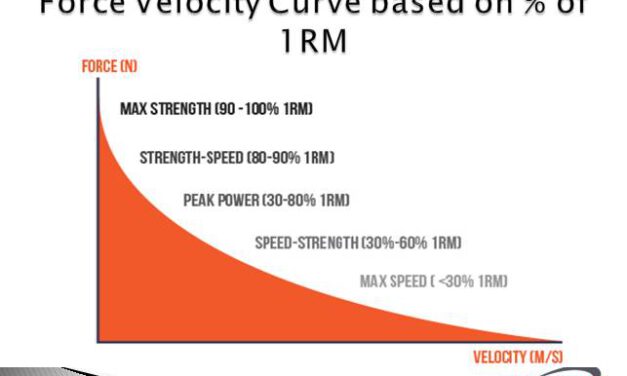
When people ask me what Velocity Based Training is, I always like to start off by answering their question with a question. A very basic, simple, and in most cases a question that the majority think is asked in the rhetoric tense. So here it is Coach, the million dollar question, “Why do we do Power Cleans?” Well we Power Clean to develop power… Duh… right? Coach, I have three words for you, NOT.SO.FAST. A few years ago Bryan Mann, a Strength and Conditioning Coach at the University of Missouri conducted a correlation study between Power Cleans and sports performance. After running the results what he found was quite unexpected. He determined that there was no correlation between an increase in power clean and power performance, zero. In other words, let’s say Athlete A increased his Power Clean 15 pounds in an 8-week off-season program, which is a tremendous jump. What Mann found, was that there was no correlation between Athlete As increase in his 1 rep max on the Power Clean with an increase in, let’s say, the vertical jump (which is a power output exercise).

So for all these years you’re telling me we have been power cleaning for no reason? No, that’s not what I’m telling you. Increasing your 1 rep max in the Power Clean means that you have improved your Absolute Strength, you are now stronger than you were, however, you are not more powerful. Let’s briefly talk about the difference between strength and power. First off, strength is crucially important; it is the base for everything sports performance related. However, it can’t be the only attribute you possess as an athlete. Absolute Strength is simply the most force your muscles can produce; however, there is no time limit on that strength. On the other hand, Power, is how FAST you can produce that strength.

Let’s dissect the sport of football versus a 500 pound 1 rep max Back Squat. When you’re in the rack, chalking up, getting ready to break a personal back squat record I want you to visualize this event. The bar gets unracked, you take your two steps back, set your feet, take your deep belly breath, drop down in the hole, and then fight like hell for 5 seconds on the way back up. Yes, you just produced a mass amount of strength; however, you did it extremely slow. Now let’s talk about football. You are playing nose tackle, its 4th and 1 and the ball is snapped. You are now in a situation where you must produce mass amounts of force in the snap of a finger… not a 5 second span. This is where power comes into play. This is where velocity based training WILL make your 500 pound back squatter play like Tarzan.

So here is the issue that might be happening in your weight room. You have a bunch of competitive guys that love lifting; I mean they love getting after it. You’ve done a great job of coaching technique, and your boys are plain and simply STRONG. You guys had a great summer and you thought to yourself, this is going to be a great year. Our team is filled with Tarzans and we are going to physically dominate our opponents… and then things just didn’t quite happen the way you thought they would. Guys didn’t seem as strong on the field as they did in the weight room. Enter, velocity based training. All summer long you were moving a lot of weight, slowly. So your athletes gained Absolute strength. But you never trained moving the bar FAST(power). Which left you with a bunch of athletes that could move a lot of weight slow but when it came to producing it on the football field, their bodies don’t know how to produce that strength at a fast enough speed to actually utilize it.

Read More

Varying the Off-Set Back’s Alignment in the RPO Game


By Mike Kuchar, Senior Research Manager, X&O Labs


In 2×2 sets Morehead State offensive coordinator Pat St. Louis will run mirrored RPO route concepts just to give the quarterback a better idea of who that extra run fitter will be post-snap. Read about it here…


By Mike Kuchar
Senior Research Manager
X&O Labs
Twitter: @MikekKuchar

Editor’s Note: The following research was conducted as part of XandOLabs.com special report on “Designing RPO Systems,” continue reading for more information on this report.


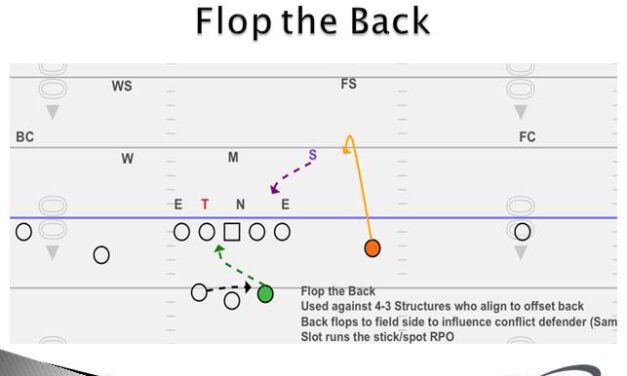
Flopping the Back

Read More

RPO Design off Front Structure and Box Count

By Mike Kuchar
Senior Research Manager
X&O Labs
Twitter: @MikekKuchar


Introduction:

The following research was conducted as part of XandOLabs.com special report “Designing RPO Systems.”

Designing Runs off Front Structure

Some runs work particularly well against different fronts. We all know this as coaches. But there are some coaches who put a premium on which run concept they are calling based off the front that they are seeing. We’ve found that in general terms, coordinators who plan against even front structures are more susceptible to call gap scheme run concepts, particularly against play side 3-techniques in order to get movement at the point of attack. These are also the same coaches who will choose to run zone concepts at the bubble (or shade/5-technique) side so their front side guard can climb to the next level. Alternatively, coaches that are designing their RPOs against predominantly even front teams have chosen to use some double pull concepts, mainly in the form of buck sweep and other pin and pull variations, because of the probability of getting two linemen out at the point of attack.

Eric Davis at Mankato East High School (MN) told us his power and counter gap schemes were less efficient vs. 3-4 teams, partially due to our inability to block the outside linebacker when our kick out player blocked the 4-techhnique or 5-technique.  “We also had some struggles getting to the backside linebacker with our backside guard on inside zone vs. 3-4 teams.  So we’re hoping that an expansion of our RPO package will fix that problem. We did run our buck sweep very effectively against those teams as well as power out of tackle over. While inside zone was not great against the 3-4, it was extremely effective against the 3-3 Stack, probably due to the fact the gaps the defenders were responsible for were more clearly defined immediately post-snap.”

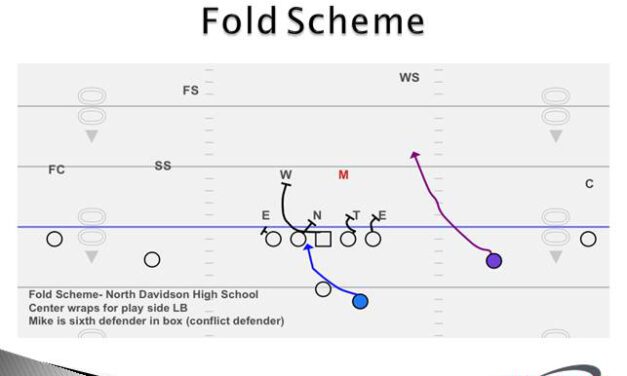
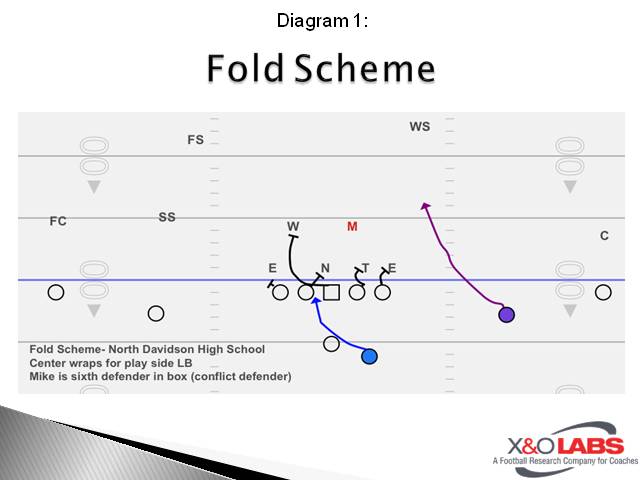
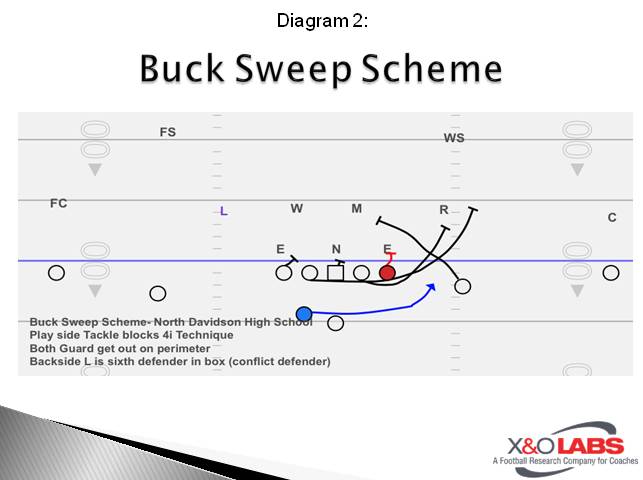
Mark Holcomb at North Davidson High School (NC) will break the run concepts from his RPO package into attacking front structure as well. Against four man fronts, Coach Holcomb will use his fold scheme, where he will block down on the nose and wrap the center or the uncovered lineman for the play side linebacker (Diagram 1). It’s a way for him to block the sixth man in the box. Against three-down looks, the gap blocking structure of the buck sweep helps even against 4i-techniques because he will use his tackle on that player in order to have two puller with the guards (Diagram 2).

Slide1Slide2 

Joe Osovet, the former head coach at Nassau Community College (NY), will check the portions of his RPOs to the shade techniques in four-down fronts. Although his run portions are not married to his RPOs at all, he told us he will run the best run concept that we will think is best against the front we are going to face. Then he tags his RPO concepts to what we think the back end of coverage is going to look like. “If we had our druthers, we want to gap things,” said Coach Osovet. “We want to run our inside zone to the low shade, our G/T counter to the high and our dart scheme is predicated on where the bubble is or the second level linebacker alignment is.”

Read More

Pairing Four Verts With QB Draw as an RPO

By Mike Martin
Offensive Coordinator/QB Coach
Madison High School (OH)
Twitter: @MikeMartin98

Introduction:

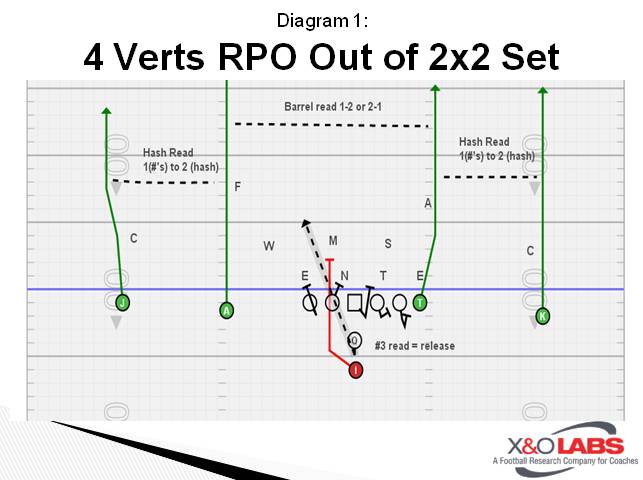
madisonThis past season we really needed to look at the factor of efficiency. We are a 65% run game team, mostly from 11 personnel out of shotgun formations. It was critically important for us to take a look at the time we were investing into pass concepts and make sure that the time put into teaching and improving was yielding proper results. So what we implemented was a time saving, simple solution to increase productivity that turned our 4 verticals into more of an every down play by pairing it with our QB draw.

In the end, the results spoke for themselves. This past year we called 25 reps of 4 verticals. Of those 25, we had 12 completions that averaged 35 yards per completion and led to 4 touchdowns. In addition, there were 5 read progression scrambles that averaged 13.5 yards with 4 of the 5 resulting in first downs. The remaining reps resulted in 3 called pass interferences, 4 incompletions, and 1 interception. So when looking at the play, we are very happy with an efficiency rate where 25 reps resulted in 19 first downs or scores. My offseason breakdown tells me that we should have run it more.

Route Progression:

In 4 verticals, we are a landmark team running vertical release routes outside the numbers on the outside and on the outside of the hash marks up the middle (we call it the barrel). 2×2 sets make that easy (Diagram 1).

Slide11

The only time we really change the basics of the route is if we are in closed trips, which is a favorite formation for us. When we are in closed trips we turn that attached receiver’s route into a corner route to get to his landmark shoulder turned back that way.

In the past, I have taught various route adjustments against to two high coverages. We have used “benders” and “sit downs” at times, but we have found that these options were not comfortable for anyone. The end result was just wasting a lot of time.

Read More

Screen Game Special Report: Case 1 – Advantageous Formations and How They Stress Defenses

By Mike Kuchar
Senior Research Manager
X&O Labs
Twitter: @MikekKuchar


Introduction:

The screen game is all about timing, both with determining the time to call it and developing the timing of the execution. When it’s called at the right time, the play can be lethal, particularly if it’s done the right way. It can yield big numbers in efficiency and can be a back breaker for defenses that don’t expect it. While we found that most coaches utilize slow or slip screens, 91 percent according to our research, this study consists of exactly how these coaches are efficient in scaffolding their screen concepts.

But before we delve into the specifics on how timing is so essential in the screen game, we wanted to explore the formation structures that coaches were using to run them.

Formations:

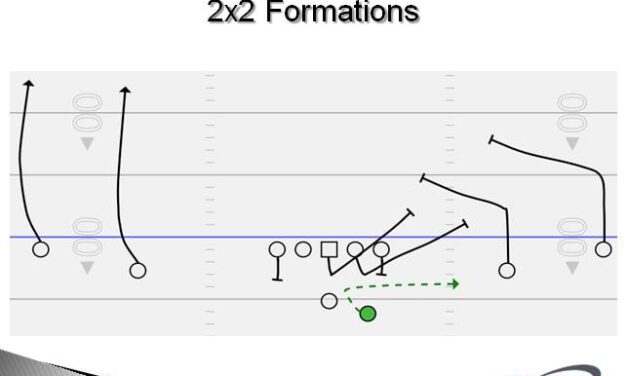
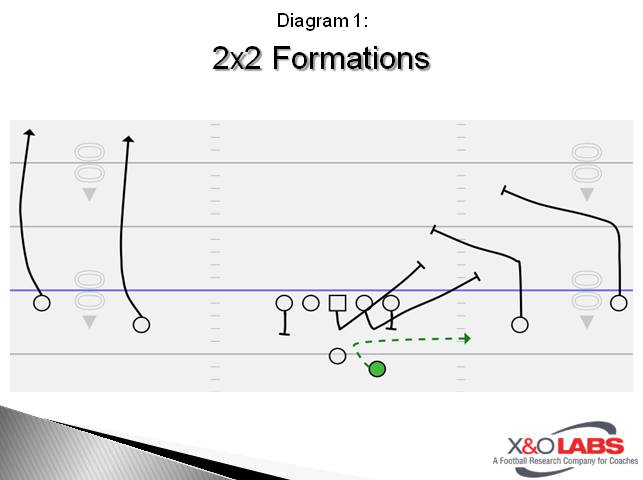
2×2 Formation Structures (Diagram 1)

Slide1

Not surprisingly, 2×2 formation structures ranked as the highest formation in our researching of the delay screen game.  Most spread sets are 2×2 opens sets by nature. According to our research, some of the reasoning as to why coaches prefer their screen game out of 2×2 sets includes:

  • It provides balance.
  • It allows protection of the screen player by putting the slot on the force player to provide the receiver an opportunity to get up field.
  • Doubles formations removes defenders from the box in two high structures.

Some of the more specific responses from individual coaches include:

Landon Miller, Lincoln Northeast High School (NE): “We use 10 personnel to gain advantage on the edge of the defense for running concepts. This makes the defense align in a way that gives us a slight advantage in the screen game with that formation. We also do a lot of half field reads out of our 2×2. We use our screen game to keep the blitzers at bay since we only use a 5 man protection in our half field concepts.”

James Housdan, Parkers Chapel High School (AR): “Our 2×2 formation works best. It allows us to get the outside linebackers to play wide on the #2 receivers. It helps to open up the inside zone. When the outside linebackers start working in to help on the run it gives us the leverage pull and throw the bubble screen to the #2 receiver.”

Christian Raphael, Munich Cowboys (Germany): “We like 2×2 against two deep safeties because the linebackers usually get caught spot-dropping on the hook/curl and are easier to block for our wide receivers and offensive line.”

“It allows us to spread the field and run off defenders with our vertical concerts. It cleans up the box for our offensive line and allows them to show pass and get to there landmarks.”

“A balanced formation because we don’t see much blitz or zero so the balance formation allows our slot receivers to draw attention from OLB and our OL to block the ILB who may be spying the RB on slow screen concepts.”

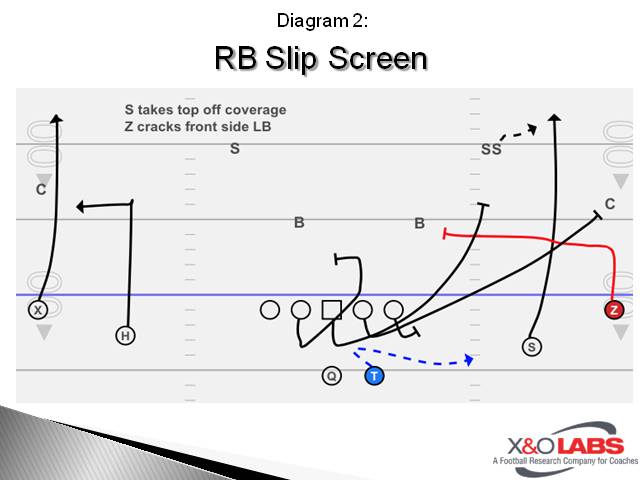
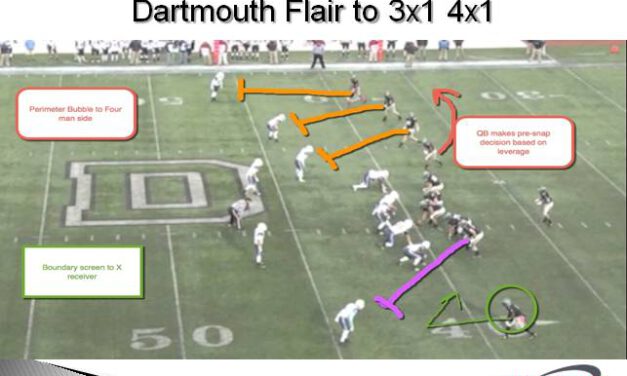
At Dartmouth College, offensive coordinator Keith Clark chooses to run his running back slip screen to two receiver sets. But what he will do is have number two clear the top off the coverage number two and crack with the outside receiver  (Diagram 2). Number two runs off and deep stalks the safety, while the number one receiver is still the crack to the first LB inside. It helps to clear the alley and their rules stay consistent. 

Slide2

To study game film on this concept, click on the video below:

Read More

Screen Game Special Report: Case 2 – Developing the Timing of your Offensive Linemen

By Mike Kuchar
Senior Research Manager
X&O Labs
Twitter: @MikekKuchar


Introduction:

Any screen offense will admit to the maxim that the timing of the offensive line is imperative in making the scheme successful. We’re not just referring to the timing necessary to release from the line of scrimmage on screen concepts, but we’re also referring to the timing necessary to make blocks on perimeter defenders. While it may be true that the “big uglies” are getting more athletic with each generation, having them square up against perimeter defenders like safeties and corners require great technique and execution. In this case, we present our research on how coaches are training the pre-snap and post-snap timing off offensive lineman in the screen game.

Before we differentiate our research based on the separate types of blocks offensive lineman will make, we wanted to summarize what we found were common threats in teaching offensive linemen to block the screen game. Below were some generalities we found in our research:

  • A two-count release from the line of scrimmage continues to be the timing of choice to set up the screen game. But we did find that some coaches are moving away from this fundamental because “individuals do not count in the same rhythm.”
  • In order to set up first level defenders, offensive lineman are being taught to set to the nearest defensive technique. If there is an inside technique, set inside and vice versa on an outside technique.
  • Have “patience” continued to be a coaching maxim among offensive line coaches instructing their players on the screen game. Releasing too soon from the line of scrimmage can throw off the entire timing of the play.
  • Making the defensive line think that they’ve won the battle was a useful coaching point we found in our research.
  • Staying flat down the line of scrimmage for kick out blockers can be difficult, so we present various ways to do this in our research. One of the more valuable coaching points we’re heard regarding this includes “do not cross a defensive lineman’s face”
  • Selling a vertical set also is congruent with setting up the screen concept. To this defensive lineman it must feel like a vertical set to get a hard up field charge.

Teaching the delay screen concept to offensive linemen usually consists of three phases, the flat blocker, the alley blocker and the peel-back blocker. What you’re naming those types of blocks are never as important as the technique in which you’re teaching to execute them. Coaches have different fundamentals they stress to get these blocks accomplished. So we wanted to differentiate our research based on those three specific components and how coaches are teaching the timing of these blocks.

Release Methodologies:

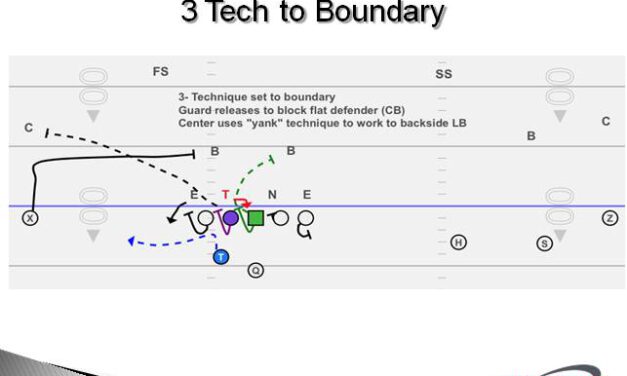
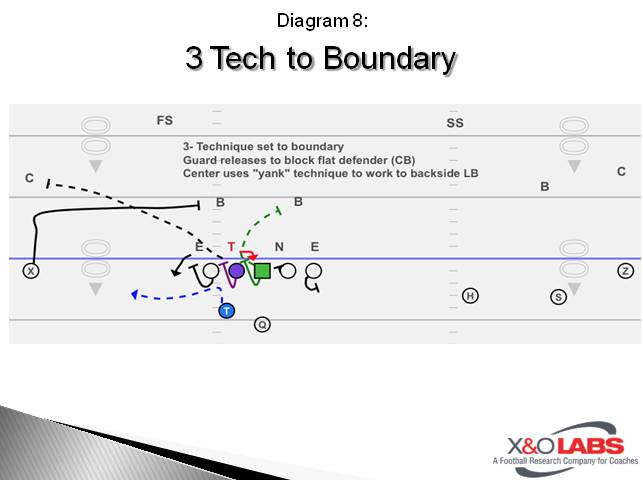
2-Count Methodology: At Dartmouth College, the screen game is based off the drop back pass game and offensive coordinator Keith Clark uses a slide protection scheme to the side of the screen. It’s basically empty protection with a two-count methodology. “They have to have the mental clock of 1,001 and 1,002 in their heads,” said Coach Clark. “They all want to rush it when they get to the field and they have to slow it down.” In order to make sure the timing and the technique mesh, Coach Clark will teach what he calls a “yank” technique which is a pass set on the line of scrimmage to the direction of the slide.  “We want to ‘stab and grab’ with the hand on the side the defender rushes,” said Coach Clark. “When the ‘count clock’ goes off in your head, yank or violently pull the defender down past your hip, kicking back with that same side leg and release on your screen path.”

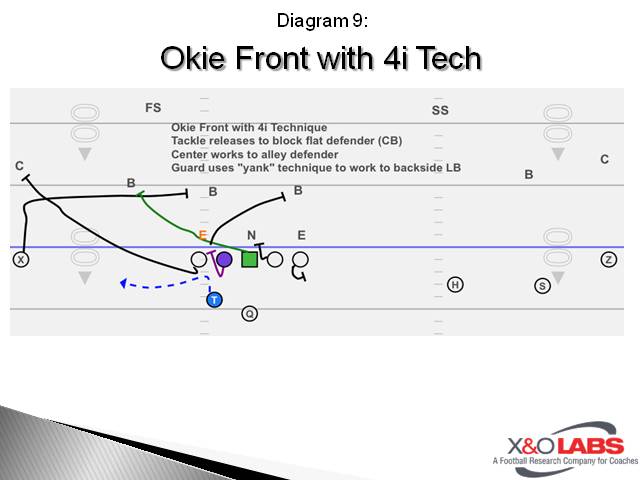
“If the 3-tech is to the boundary and we slide to him. He will naturally butt side the slide protection so he will become an A gap rusher real quick. That allows us to release the guard first and the center must engage and use a yank technique on the A gap player and be in the screen (Diagram 8). If it’s a 4-techinque such as in Okie fronts, he won’t make it into the A gap, so the guard will yank and the Center will have the open gap and he may release first (Diagram 9). It’s about how the defense rush reacts. Which lanes to they take?”

Slide8Slide9 

To study this technique, click on the video below:

Read More

Screen Game Special Report: Case 3 – Developing Skill Players’ Timing

By Mike Kuchar
Senior Research Manager
X&O Labs
Twitter: @MikekKuchar


Introduction:

In order to make the delay screen proficient, the timing of the offensive linemen and skill players must correlate. The wide receivers must be in sync with the offensive linemen, the offensive linemen must be in sync with the running back and the quarterback must be in sync with everyone on the field. So, in this case we studied how our contributors were “meshing” up the screen game with their skill players to develop a rhythm. Since the quarterback is the centerpiece of the operation, we’ll start our research there.

QB Timing in the Delay Screen Game:

At Dartmouth, offensive coordinator Keith Clark teaches his quarterback to use a three-step rhythm in the slip screen concept. “We’ll tell him to drop three steps, pause and retreat to find a throwing lane to the running back,” said Coach Clark. “There is an art to that. Some kids are better than others.” Since Coach Clark combines his slip screen with a field-side passing concept such as stick, it’s essential that he keep his rhythm. “It’s three steps, hesitate, look at the stick and then come back to the open path to the running back,” said Coach Clark. “He needs to keep his feet moving. Players get their feet glued in when the rush comes. We need to bring the rush to us and drop it over their head.”

To study cutups of this concept, click on the video below:

Read More

Screen Game Special Report: Case 4 – Timing Drills

By Mike Kuchar
Senior Research Manager
X&O Labs
Twitter: @MikekKuchar


Introduction:

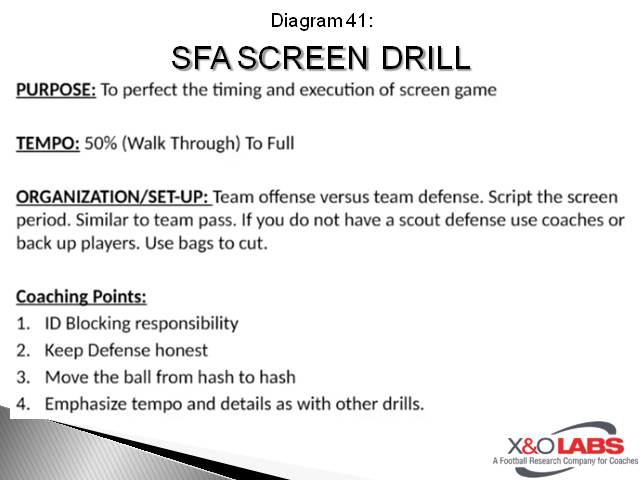
Because timing is vital in perfecting the screen game, a good deal of time has to be spent in working through these screen concepts, either on air or against an opponent. Our research has shown the majority of coaches, 36 percent, spend 10 minutes or more per week in practice on the screen game. We wanted to provide research on what coaches believed were the most productive drills to teach the screen game. We segmented our research based upon what specific technique these drills are emphasizing.

Full Team Screen Drill: Stephen F. Austin University (TX)

Slide41

To study cutups of this drill, click on the video below:

Read More

3-Step Plan to Develop an “Uncommon” Program Identity

By Luke Mertens
Head Coach
Lakes Community High School (IL)
Twitter: @LakesFootball1

Introduction:

Being the first and only head football coach in the short history of Lakes Community High School has proven to be one of the most unique experiences in my career. It was my first experience working in a public, co-ed school, and although I thought I had all the answers as a first-time head coach, I was quick to learn that I was not as ready as I had originally thought.  For the first couple of years, I did all of the things “good” programs do: year-long lifting program, an extensive summer camp, strict discipline, holding players to high standards – all that I had learned from being a product of Chicago Catholic schools.  We had some success with this blueprint, but not enough to satisfy my competitive spirit.  I knew something was missing, so I started to really evaluate my program, and I concluded that two vital components were missing:  tradition and spirituality.  My next challenge became ‘How do I incorporate tradition and spirituality into a new public school?’

My first action step was to create an identity for the program that would encapsulate the tradition and spirituality I felt were missing, and Tony Dungy’s book, Uncommon, held the answer. Since adopting that simple word, “Uncommon”, we have qualified for the state playoffs 7 straight years, won 5 consecutive conference championships, and haven’t lost a conference game since 2011. More importantly, we have created a program that teaches our players lessons that they carry with them for years to come.  Below are three examples of what we do to make our program “Uncommon.”

1. Don’t Make It About Football

I knew that if my players were to believe in “Uncommon” we would need to create something that was not ordinary – something that would not be found in other programs.  Consequently, I authored a book that teaches our players not about football, but rather how and why being uncommon will help them to be successful in life.

The book I created is broken up into chapters, such as Attitude and Effort, Confidence, Discipline, Excellent Character, Failure, I in Win, Leadership, No Excuses-No Explanations, Passion, Preparation, Pressure, Together, and Vision.  In addition to my own thoughts, each chapter has quotes, anecdotes, interactive questions, and even poetry.  Starting in the off-season and continuing through the end of the season, we are teaching our players what it means to be “Uncommon”.

In the off-season, we typically cover one lesson per month.  During summer camp, we will move to bi-weekly lessons, and once the season begins, we meet with our players twice per week.  How each lesson is presented varies too greatly to adequately cover, so I will only describe what we typically do in-season; however, what we do works for us.  Each year I survey my seniors, and they always talk about the impact of the lessons.  It is what they remember most, which is a very telling sign.  Their comments never focus on wins/losses, play calling, etc. but always on how we are teaching them to be uncommon.

By the time the season starts, our players have a solid understanding of what being uncommon means, so I then have them take ownership of the weekly lessons. They are assigned to groups, an assistant coach volunteers to be the moderator, and that group presents a chapter of their choice on game day.  Earlier in the week, I will have introduced the weekly theme, but other than that, I purposely do not give any instructions or parameters for their presentations. I want them to sculpt it to their vision, and they usually exceed my expectations. Their presentations have included movie clips, musical lyrics, PowerPoints, and even very personal background stories related to their topic. I LOVE Friday nights, not due to the game, but rather to see what the groups have prepared.  

Following their presentations, we break into small, coach-led groups to further discuss. I give my assistants complete autonomy on how to run their small groups. Some coaches will have players share their answers to the discussion questions in the book, while others just let the conversation go wherever it leads. Either way, both the coaches and players enjoy this time together. It really unites and allows us to truly understand each other. After the small group discussions, we meet as a whole team to view highlights from the previous game. Although the creation of the weekly highlights is an onerous task, it is well worth the time. Each video contains cutups, pictures, heart-pounding music, along with embedded messages highlighting the week’s topic. Players really enjoy watching themselves performing at high levels from previous games, and the entire organization exits the meeting feeling confident and ready for the next opponent.

Read More