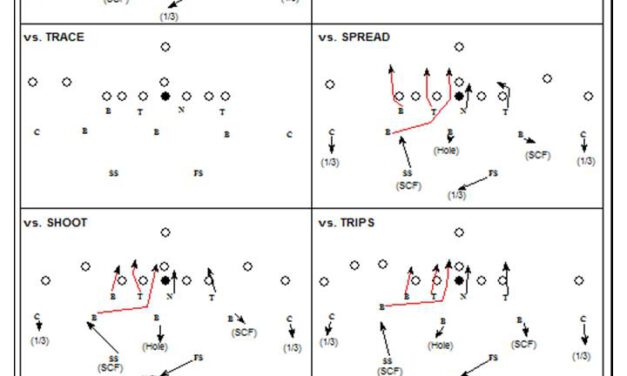
Seattle/Waco Blitz Checks to B.O.B. Protections

By Mike Kuchar
Senior Research Manager
X&O Labs
Twitter: @MikekKuchar


Editor’s Note: The following research was conducted in part of XandOLabs.com special report on “Blitz Checks”, continue reading for more information on this special report.

Introduction:

Read More

Adjusting the Stick to Attack Multiple Coverages

By Kyle Richardson
Head Coach/Quarterbacks Coach
Northwestern High School (SC)
Twitter: @NHSTrojansFB

Introduction

DSC 5038The Air Raid Stick Concept is one of the most versatile passing concepts in use. Not only does this concept work in a variety of down and distance situations, but it also can work against almost any coverage. For us, the real advantage of the stick concept comes through the way we teach the pre-snap and post-snap read ensuring that it is the same every time. We want to make sure that the reads are simple regardless of the formation we are in or motion we use.

Slide1

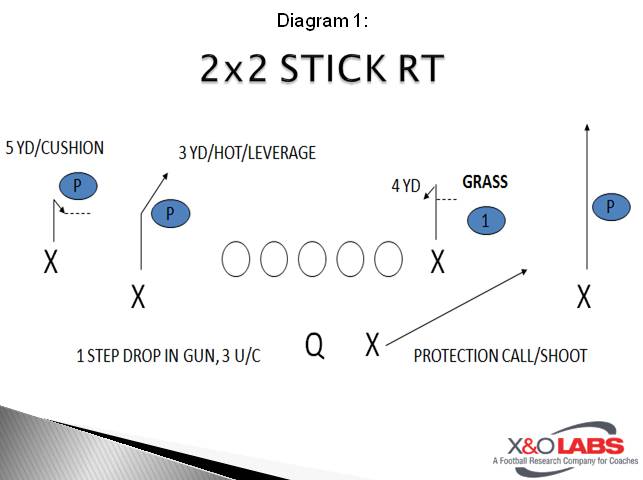
Stick Route Breakdown

  • Outside WR – Hitch Route: Five-yard hitch. He must be prepared for an outside shoulder throw. Upon catching the ball, the receiver should use momentum of ball placement to take you into your next step up field.
  • Slot WR – Skinny Slant Route: This route can be hot if a defender is blitzing. If the hot blitz is not detected, the receiver will run inside slant route, which we call skinny slant, and work up field vertically once he is underneath the slot defender.
  • Slot WR – Stick Route: We run our stick routes at 4 yards and the receiver has the option to work inside or outside on the stick based off of defender leverage. The receiver must be prepared for quick throw that will be thrown to the shoulder away from the slot defender. Once completed, the receiver’s first step must be north or down field very quickly to avoid oncoming defenders from inside the box.
  • Outside WR – Go Route: We like our receivers to take an outside release if possible and push vertically with speed. Once they are past the defender, their eyes should be on the quarterback and they must be prepared for a hole shot throw away from the safety.
  • Running Back – Shoot Route: The shoot route is aimed at the back foot of the outside receiver’s pre snap alignment. The shoot route should be a straight line with no drifting up field or backwards. On the 3rd step, the back’s eyes should be on quarterback prepared for a throw. Once completed, he needs to quickly turn up field and run. He must let the momentum of the ball carry you up field.

While some people may make adjustments against certain looks, we have found that it works better for us to keep it the same. We believe that there is no reason to change or convert the routes because this play is great against any coverage. The only change that we ever use is the occasional l double move against 0 man coverage. That said, when we do that the post snap read turns into only one route read which is the double move stick. This is only run if we are taking a shot

Read More

4 Ways to Build Character, Boost Players Bonds, & Make Practice Fun

By Mike Rowe
Head Football Coach/OC
Rocori High School (MN)
Twitter: @coachmikerowe

Introduction:

I always find that valuable lessons are learned not when things are going well, but when adversity has set in. After my second season in 2010 our program was in need of a shot in the arm.  We finished the season 2-7 and I felt all the fun had vanished from practice because all we cared about was the almighty “W”. After the season ended I met individually with all 75 football players. What I learned from my players would forever changed how I will build and coach my teams.

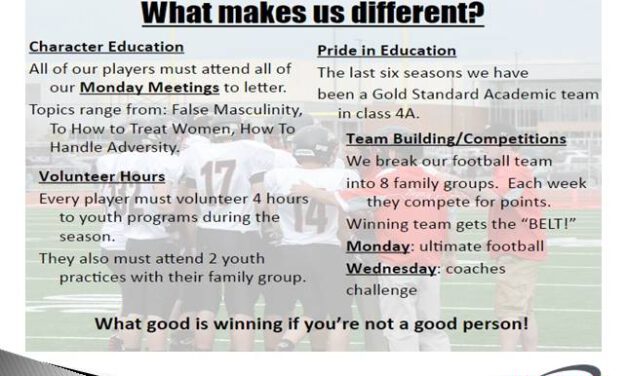
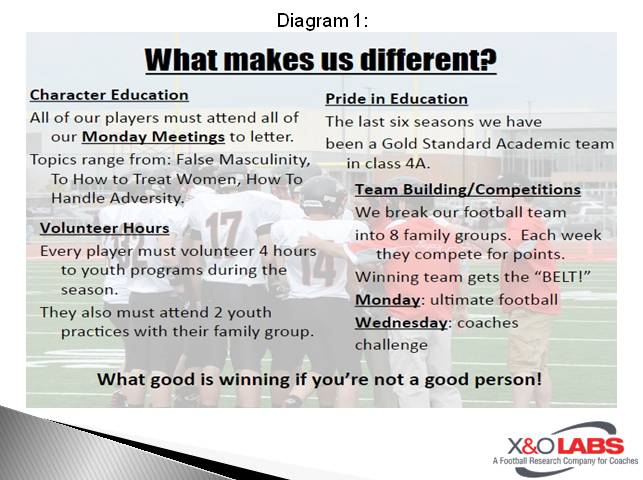
Lesson 1: Family Groups: In 2010 our sophomores stated there was a disconnect between them and the seniors and that they didn’t always get along.  This was a concern because each year we usually have any where from 4-8 sophomores that play varsity.  The solution was to create a family atmosphere where everyone will care and help out one another. In our program, we make eight colored teams that compete against each other in lifting, attendance, and coaching competitions.  We call them Family Groups. These Family Groups compete for a trophy called the “belt”. The belt is awarded to the team that accumulates the most points at the end of the year.  What we found is that everyone wanted to win the belt. It created a strong bond that surprised even our coaching staff.  We found that our seniors were more willing to pick up our sophomores that couldn’t drive for morning lifting.  They even developed a phone list to call to make sure athletes were up so they wouldn’t miss morning lifting. By building relationships through competitions it created a bond with our players that would not break.

Slide1

Lesson 2: Character Development: Another change we made in the program was creating a character education program called “Monday Meetings”. During our 2-7 season we lost a lot of games because when things got tough we backed down.  By installing a character education program, we were able to create a weekly topic that would match that week’s game theme. Even more importantly, the character education program strives to also teach these young men how to be better people outside of our program. As a coach, I believe it is our responsibility to teach our football players how to be men. Times have changed and we believe it is no longer only the responsibility of parents to mentor young students. In order for our athletes to earn a letter, they needed to attend every one of our Monday Meetings. Some of the topics we covered were: gratitude; being a man for others; false masculinity; empathy; and how to treat women. Our athletes were extremely receptive to these topics and made changes to their daily lives that we observed, as well as were reported to us by their family members, faculty, and members of their communities. By creating a culture that takes away the importance of winning it has created more success for our program and I could have never imagined that happening.

Read More

Tagging the Backside of Air Raid Concepts


By Nick Coleman – @QB_CoachColeman

Offensive Coordinator

Itawamba Community College


Offensive football in today’s college football world has evolved over the past 20 years.  With more programs running an up-tempo spread style offense and the argument of the 10 second rule by defensive coaches, it is obvious this style of offense has caught the attention of the college football world.  One of the most popular spread offenses is the “Air Raid” offense and its light it up passing attack.  These concepts have been putting up record breaking numbers at every level of college football from FBS, FCS, Division II, Division III, and NAIA for over 20 years.  Although there are many different versions of the Air Raid in college football today, a lot of the same base concepts are prevalent throughout each program.  The most successful version I ran this past year was taking basic Air Raid passing concepts and adding backside tags.

The reasoning behind adding backside tags to these concepts is to give the QB an option based off coverage.  Instead of running mirrored concepts we put tags on the backside of basic Air Raid concepts.  Every tag and concept has basic rules that puts the QB in the correct spot to throw the football. 

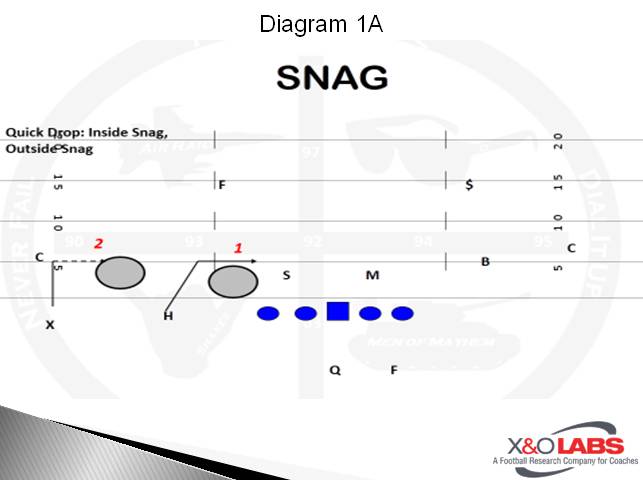
The first backside concept is the “Snag” concept. 

Slide23

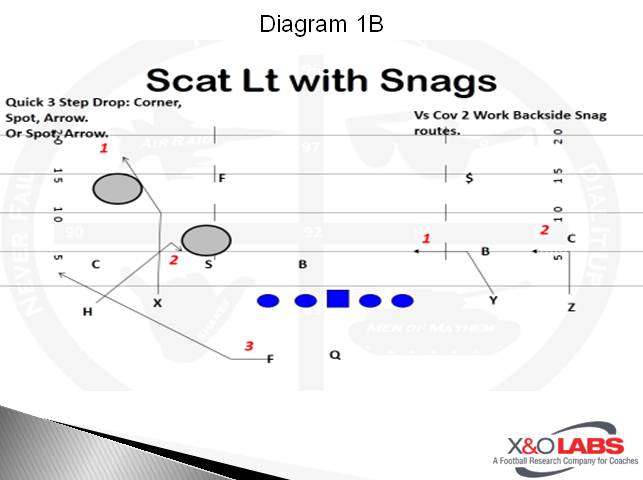
Most Air Raid offenses run backside slants opposite of the base concept.  We would tag the “Snag” concept to give the QB a better option against 2 high safeties.

Here is the “Scat” concept with the “Snag” routes tagged on the backside:

Slide1

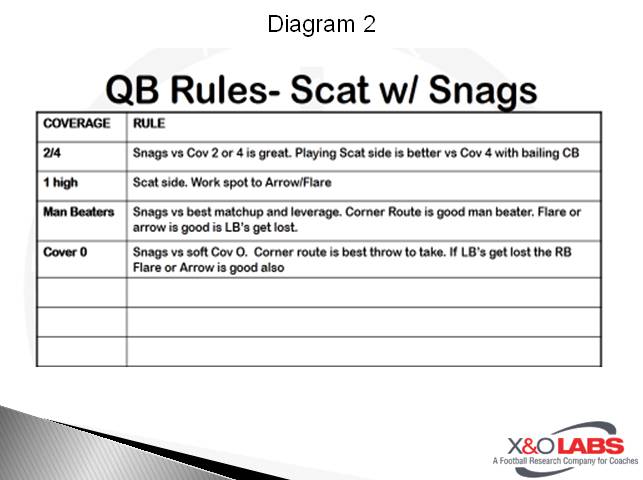
Here are the QB rules:

Slide2

Click on the link below to view this concept in action:

Read More

Jet Sweep and Power Read Landmarks

By Brian White
Offensive Coordinator
Rose-Hulman Institute of Technology
Twitter: @CoachWhite_RHIT

Introduction:

The Jet Sweep is a play carried by most offenses in some fashion.  One of the popular ways to run this play today is associated with an interior run read, such as Power Read, or a “wrong way run” with a zone working opposite the sweep.  Many offenses choose to use a crack scheme on their perimeter to account for the inside Linebacker on the Jet Sweep side.  This concept creates a one-on-one match-up between the ball carrier and the unblocked cornerback.

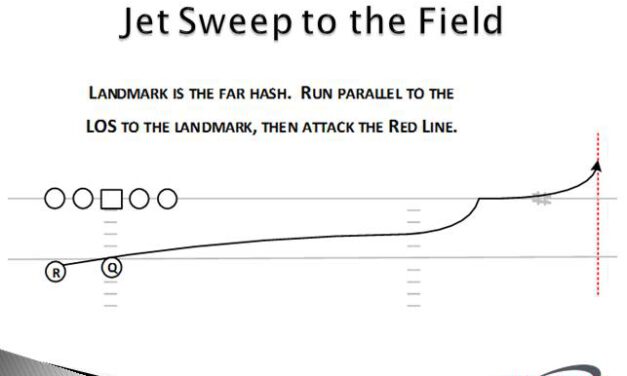
An alternative to leaving the play side CB unblocked is to leave the inside linebacker unblocked and allow the course of the ball carrier to out-leverage a defender running from inside to outside.  This is the option that we implement in our offense. On any Jet Sweep, the ball carrier is instructed to run parallel on to the line of scrimmage until he reaches a specific landmark on the field before he can make any type of cut. 

Jet Sweeps fall into our category of “Red Line” plays.  These plays that intend to hit wide near the Red Line, which is 4 yards from the sideline.  On Red Line plays, the Offensive Line is blocking a different play, therefore the pursuit of the defense will not be accounted for in the blocking scheme.  For example, when we run Power Read, the OL is blocking Power and not chasing defenders flowing outside of the box.  This means that there will be some angry “free hitters” pursuing the play.  On a Red Line play, the ball carrier knows that he cannot cut back because he will be at risk of absorbing a blindside hit from one of the free hitters.  Any cut made must be a vertical up-cut and then he must work back out to the Red Line.

These are the rules we give our Jet Sweep runner:

          Jet Sweep to the field = Landmark is the opposite hash

          Jet Sweep from the middle = Landmark is the logo (halfway between the hash and the inside edge of the number)

          Jet Sweep to the boundary = Landmark is the inside edge of the number.

Read More

PPO: Running Back Screen

By Kevin Wallace
Offensive Coordinator
R.B. Glenn High School (Kernersville, NC)
Twitter: @KRWallaceFb


Introduction:

glennOur tailback screen has proven to be one of our most efficient and explosive plays over the past 4 years. This past season, we averaged an explosive play (16+ yards) 20% of the time that we ran this play. As a result, this has been a staple in our offense.

We use screen plays on any down and anywhere on the field. It is also used as part on an RPO, or more accurately, a Pass-Pass Option play. Our no-huddle, up-tempo style of offense benefits tremendously from the running back screen game and the PPO off of it.

Screen Rules

Our offense is mainly a 10 and 11 personnel based offense that adapts to our talent from year to year. We practice screens in a half-line version during the in-season every day. These screens are paired with our smoke and bubble screens, which we tag to nearly 95% of our run plays.
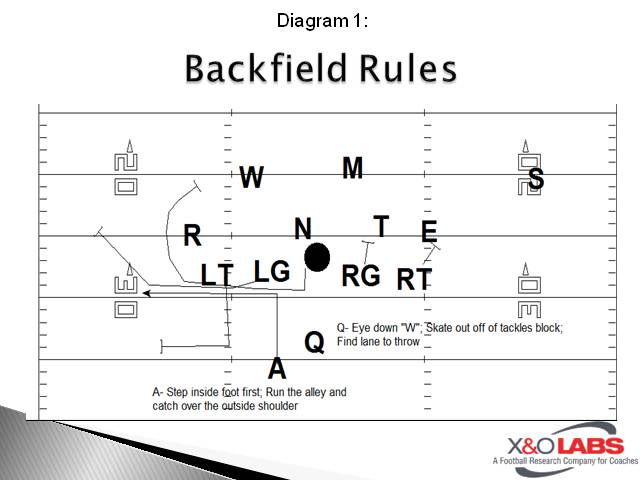
This is not a slow screen to the running back. We want the running back to align behind the play side guard. On the snap, the running back will take 3 steps forward stepping with his inside foot first. As he moves forward, his eyes are focused on the play side guard’s backside. This should put the running back about 2-3 yards behind the line of scrimmage. When the play side guard releases, the running back will turn and run to the sideline and catch the ball over his outside shoulder. He will then read off his blocks.

We will mix up the back’s alignment during the season and put the running back opposite the call side to break tendencies. Each year, we start by installing this screen out of a 2 x 2 set (usually run to the field). From there, we install it out of our 3 x 1 formation that we run a lot in the red zone and on the goal line.

Slide1

Once the quarterback takes the snap, he will eye down the first linebacker inside the box to the play side. The quarterback will “skate out” depending on the block of the playside tackle. He is looking to find a path to deliver the football to the running back. This path could be under the or over the top of the tackle. We teach the quarterback to run to the sideline until he has a clear path to deliver the football to the running back. We emphasize to “never throw over a defensive player.”

We talk about finding the hole to throw, we compare it to a hockey player taking a penalty shot. The farther away the player is from the target, the less room it looks like to score in hockey. It looks like the goalie is taking up the entire goal. This is similar to dropping back away from the defensive end. The defensive end looks like he is taking up all the windows for the quarterback to deliver the football. Instead, we want the quarterback to find a lane and deliver the ball to the running back. There are times that the quarterback will run and deliver the football to the running back near the sidelines. We coach the quarterback to not throw the ball away until he is near the sideline.

Blocking the RB Screen

Our most inside wide receiver will crack the first linebacker in the box. Ideally, we want him to decleat the linebacker and make a momentum changing hit. We give him a right to miss. Any other playside wide receiver will stalk block the defensive back or run off vs. man coverage. The backside most inside wide receiver or tight end, has the “Touchdown Block.” He must go attack the play side safety. This is a long developing block and occurs around 25-35 yards downfield on the opposite numbers.

Read More

How Western Michigan Drills Feet and Hands in Pass Pro

By Mike Kuchar
Senior Research Manager
X&O Labs
Twitter: @MikekKuchar

Editor’s Note: The following research was conducted as part of XandOLabs.com special report on Man Pass Pro Drills. Continue reading to learn more about this special report.

Introduction:

When we initially began conducting our research on this topic, we were presented with a dilemma. We knew both the hands and feet were vital in pass protection, but we were curious to see which of these two components offensive line coaches placed more of an emphasis on. Of the ten contributors in this study, almost all of them suggested that the feet are more important than the hands and the reasoning is simple: The feet put an offensive lineman in the best position to stop an inside or an outside charge in man pass protection. While many offensive line coaches teach different techniques on the punch, the footwork to get him there remains vital. We started our research process by asking our contributors what the most important techniques are when coaching the feet in pass protection. Before we delve into the techniques these coaches use and the drill work that corresponds with it, a brief background on who our contributors are:

The Contributors (in alphabetical order):

  • Chennis Berry (CB), Offensive Line Coach, Southern University (8 sacks allowed in 2014, 4th in FCS).
  • Brian Callahan (BC), Offensive Line Coach, Western Michigan University (allowed 1.8 sacks per game in 2014).
  • Vin Giacalone (VG), Offensive Line Coach, Valparaiso University (5 sacks allowed in 2014, 1st in FCS).
  • Herb Hand (HH), Offensive Line Coach, Penn State University.
  • Art Kehoe (AK), Offensive Line Coach, the University of Miami.
  • Brandon Jones (BJ), former Offensive Line Coach at East Carolina University (371 passing yards per game in 2014, 3rd in FBS), currently at Cal Berkeley.
  • Jonathan Leibel (JL), Offensive Line Coach, Central Connecticut State University (11 sacks allowed in 2014, 10th in FCS).
  • Cameron Norcross (CN), Offensive Line Coach, Fresno State University.
  • Ryan Stancheck (RS), Offensive Line Coach, Alcorn State University (7 sacks allowed in 2014, 3rd in FCS).
  • John Strollo (JS), Offensive Line Coach, Ball State University (13 sacks allowed in 2014, 12th in FBS).

We started by asking a general question on footwork. Our contributors’ responses are categorized by their initials.

MK: What are some of the most important coaching points you emphasize when teaching the feet of offensive lineman in pass protection?

Read More

Old Dominion’s Scramble Rules

By Brian Scott

Associate Head Coach / Offensive Coordinator

Old Dominion University


Editor’s Note:
 Coach Scott is the offensive coordinator at Old Dominion completed his sixth season with the program in 2012.  Prior to the 2012 season, the ODU offense under Scott was one of the best in the nation, ranking in the top-10 nationally in several categories. This season the Monarchs led the FCS in scoring offense with 45.15 points per game, passing offense at 393.85 and total offense with 548.23 yards per game.  In 2009, Coach Scott was among the four finalists for FootballScoop.com’s D-1AA Coordinator of the Year.
 

The success we have had in our program at extending the play stems from our overall offensive philosophy of running an up-tempo offense at a high rate of efficiency. Our system is simple which makes us efficient, we refuse to have “paralysis of over-analysis”, we cannot execute our system with the speed and tempo that we need if we are over thinking. The success that we have comes from our quarterback; he must be a great decision maker and put our offense in the best situation at all times during the game even when a play breaks down.

Quarterbacks must always bring calmness to the offense, even amidst the “chaos”. Our rules are simple; just take what the defense gives you.

Again, we KEEP IT SIMPLE. This allows our quarterback to react “on the fly” and make plays when things break down. There are very few plays in a football game where everything happens the way it is drawn up in the playbook, our quarterback needs to adjust and make the best out of every situation.

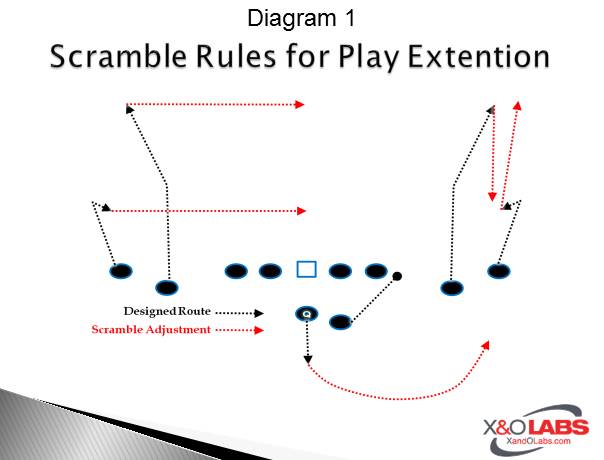
In scramble situations we keep the rules simple for our receivers; the biggest thing we preach is that they must get in phase with/in the vision of the quarterback. If the quarterback cannot see you while he’s running for his life then you are no longer a viable option for him. We give our players a lot of freedom in our offense so that they are able to do the things we recruited them to do, which is simply make plays. The rules for our receivers in a scramble situation are as follows:

  1. If a receiver is on the side in which the quarterback is escaping the pocket then their adjustment is based off of their original route. For example, if a receiver is running a route of 10 yards or less and the quarterback is escaping to his side he will go deep, if the original route is 10 yards or more then he will come back to the quarterback.
  2. On the backside of a scramble situation the receivers will break horizontally in order to get in phase with/in the vision of the quarterback, this is no different than the rules for a receiver running an over or crossing route on the backside of a naked play.

Read More

Shotgun Buck Sweep RPO Package

By Eric Davis
Head Football Coach/Offensive Coordinator
Mankato East High School (MN)
Twitter: @davismn6

Introduction:

mankota

Like many programs, one of our off-season tasks as offensive coaches is to conduct a thorough efficiency analysis of every scheme we run. Our definition of efficiency is not revolutionary, but here is our definition:

  • 4+ yards on 1st Down
  • Half the needed yardage on 2nd Down
  • Conversion on 3rd Down

Following the 2014 Season, we realized that one of the plays we installed late in the year, the Buck Sweep, was by far our most efficient play at 86% (albeit a small sample size). Since anything over 50% is good and anything under 40% poor, we were ecstatic to see the numbers on the Buck Concept.

Entering the 2015 Season, we made the Buck Sweep one of our staple plays. Thanks in part to some ideas we picked up from xandolabs.com, we added a Run Pass Option (RPO) component to the play and this is an idea we will definitely be expanding upon in 2016. The case for running RPOs off the Buck Sweep include:

  • It creates tremendous horizontal pressure on the defense with full flow, including pulling linemen, one way and a potential pass being thrown the opposite direction. Also, we have found that the QB is able to get into a throwing position much easier after faking to a back running a horizontal path on the Buck Sweep than on some of our more vertical run schemes.
  • It should NEVER result in an ineligible man downfield if it’s run correctly, due to the fact that your linemen are either pinning or pulling and not (with one exception on one scheme) heading directly downfield for a LB.
  • It is a great concept for a program (like ours) that is better at run blocking than pass blocking. Due in part to an increase in RPOs on several of our run schemes, we reduced our sacks allowed from 32 in 2014 to 8 in 2015, including no sacks allowed on RPOs. The concept also allows us to package 2 plays together, which allows us to repeat plays with multiple attack points in our no-huddle and limits the number of plays we need to carry into a game.

One note on the following schemes and concepts: Last year we were inexperienced at QB, so we made the run/pass decision from the sideline, but we may look to put that on the QB in the future.

Basic Buck Sweep Schemes

Some of the position labeling in the following diagrams may be confusing. We don’t use traditional X and Z designations. Instead, we have Field (F) and Boundary (B) receivers. We also use what we call Big Field (BF) and Big Boundary (BB) receivers in our compressed formations. These are hybrid players and could be bigger receiver types or extra TEs. It’s a great place to put basketball players who might not be burners, but aren’t afraid to mix it up a little. Our H receiver is a traditional slot type who is our primary fly sweep runner.

Read More

Boston Concept: High Percentage Run Action Pass

By Gabe Fertitta
Offensive Coordinator
Catholic High of Baton Rouge
Twitter: @fertitta_gabe

Introduction:

fertittaAs part of our multiple spread offense at Catholic High, we incorporate multiple formations and personnel groups to run a base set of plays. One of our most popular running plays is power from a traditional 2×1 set with an H or sniffer back. This past season, we incorporated more speed sweep into our running game as well. When looking to add some play action to our base system, it made sense for us to have a run action pass that looked exactly like our power, power read, or power read sweep. We wanted the concept to be simple for our quarterbacks to understand and versatile enough to attack any coverage. Our answer was a quick game concept that we had already been running. We made adjustments to our basic bubble slant concept so that we could use it in our play action game as well.

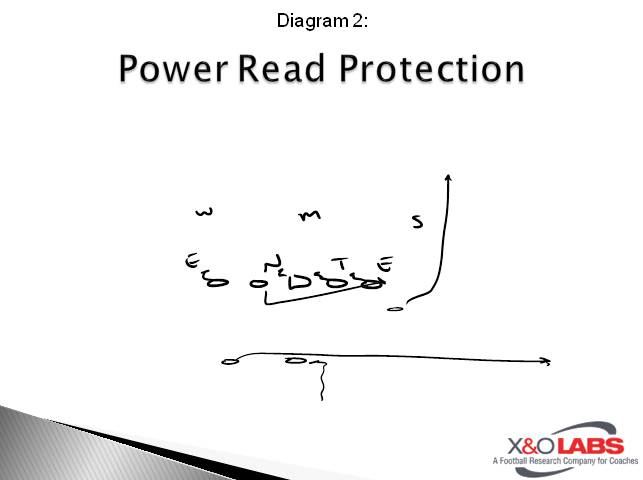
Power Play Action Protection

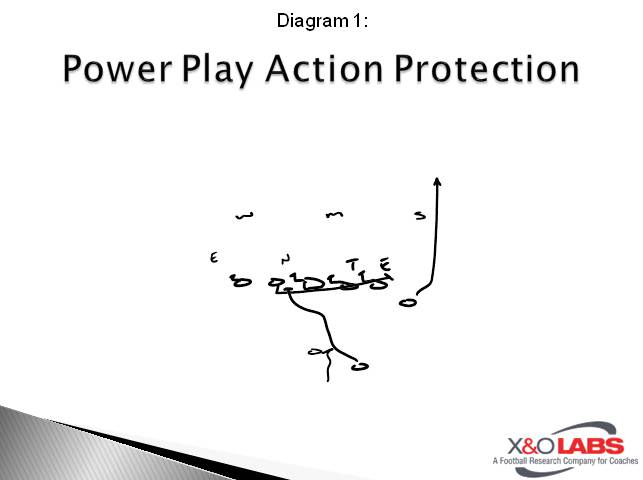
We use a variety of protections when running Boston, but our power play action protection is the most common. There are a few factors that determine our decision to use this protection from week to week. This protection gives the most realistic run action, but is also more susceptible to pressure from blitz. If we decide that a defense runs too many edge pressures, isn’t reading the guards for run game, or has defensive linemen that run up field more than squeeze, then we will simply use an aggressive half man half slide protection instead.

Power play action for us involves blocking down with the play side tackle, guard, and center. The techniques of these sets will vary depending on what type of defender they are blocking. Sometimes these sets will look more like a traditional slide protection and other times they will be more aggressive.

The key to the protection is pulling the back side guard to give linebackers and safeties a realistic run action look. We pull the back side guard to kick out the front side defensive end. Depending on the technique of the back side defensive tackle, the guard will flat or skip pull in order to work to the front side end. The back side tackle will man set the back side defensive end. Depending on which run we are faking in the backfield, we may be able to use the running back to fill in the backside B gap for the pulling guard.  If we are faking power read or sweep read, we will not have the RB in the protection. That said, if we are faking downhill power, we can use the back as a 6th man in the protection.

Slide1Slide2

Read More

Formationing the Shotgun Buck Sweep

By Josh Floyd

Head Coach

Shiloh Christian HS (AR)


Editor’s Note:  Coach Floyd just completed his 10th season as Head Coach at Shiloh Christian High School, compiling a 99-29-1 record.  During this time, Shiloh has won 4 State Championships & 1 State Runner-up finish, while also finishing nationally ranked 3 times.  Coach Floyd has developed 5 different QB’s that are currently in the top 10 in the Arkansas State record books for offense, and also coached the 2010 USA Today National Offensive Player of the Year.  The Shiloh Hurry Up Offense has averaged just over 40 points/ game during the last 10 seasons.  The American Football Monthly magazine recently listed Coach Floyd as one of the Top 10 coaches in the country under the age of 40.


Introduction

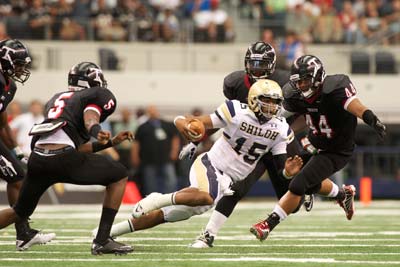
shilohThe buck sweep is one of our top four run plays every year at Shiloh.  We run power and outside zone that helps complement this play as well.   We always try to put the defensive ends in a bind.  We want to show them several different looks throughout the game.  On the power, we’ll kick the defensive end out, and then try to get the edge on him and hook him on the buck sweep.  Then we’ll also zone him up on our outside zone.  We will do all these out of similar formations so that we give the same look. 

It’s an easy adjustment against any type of defense.  We will use several different formations to run this play, and either the RB or the QB will carry the ball.  We will run this play in a 2 x 1 – 2 back formation, a 3 x 1 set and use a TE when necessary.  We like using a TE when we are having trouble blocking the DE, either by his alignment or maybe he’s just a great player.  Sometimes it’s easier for the blocker (TE) to already be on the LOS in order to make the block.

Giving the DE Different Looks

Motion is always good with this play as well.  Once again, the key block is the DE, and there are many different ways to attack him.  We usually just block him with our FB, but we can also bring our #1 receiver in motion and “blast” the DE.   This then allows our FB to loop around and try to block the corner. 

The key to the play is getting the DE blocked down and establishing the crack block, which usually comes from our #2 receiver.  On the “crack” block, we obviously aren’t looking for any type of “cheap” shot or anything.  It doesn’t even have to be a big hit or an “earhole” type shot, sometimes it’s just a deal where you shield that LB.  We’ll make sure we are teaching a good, clean block on the LB. 

The most important thing is the first few steps of the FB.  He must take a great angle to block the DE.  We’d love to get the DE blocked down or “hooked” but sometimes that’s not possible due to alignment.  We must at least get to where we are even with him face to face because we don’t want the DE to get outside of our block. 

Deuce Rip Formation

We will run this formation, usually with some high motion from our #1 receiver coming behind the QB or he can block the near safety as shown below.  This can be difficult for the FB to block the end due to his alignment, but we run the power play out of this formation so teams are used to us blocking the DE out. 

Read More

Manipulate the Box with the Bunch Formation Pop Play

By Eric Bendig
Offensive Coordinator
Ashley Ridge High School, Summerville, SC
Twitter: @coachbendig

Introduction:

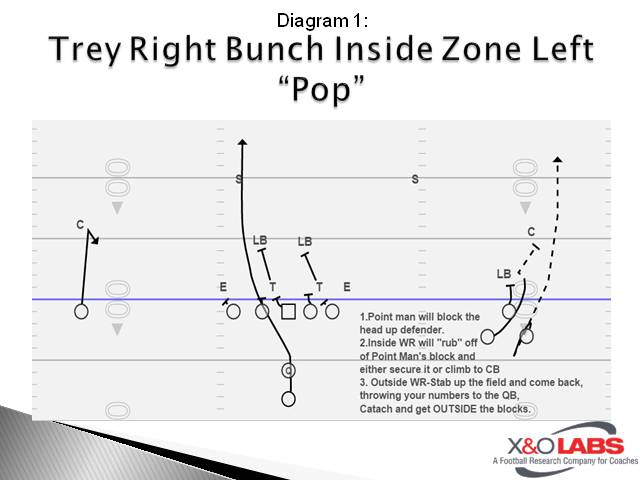
A lot of spread teams, like ourselves, are really starting to hone in and perfect the concept of run pass options (RPO’s) and how to utilize them in your game plan and philosophy. After going back and researching the season, we found that we relied heavily on two Bunch play concepts and became very good at executing them over the season. We did balance out our Bunch formation with runs and passes as to not be too easily scouted by opposing defenses, but this article is focused on how we used a 3 option RPO concept out of Bunch sets and a Bunch pass play we have a lot of success with on 2nd and 3rd and medium situations.

Slide1

Bunch Formation

One of the ways we tried to help get the ball in space or at least help us loosen the box for our run game was to utilize the Bunch formation in different areas of the field. You can break down the options/rules into three simple steps for the quarterback, while the ten other players ran the play called no matter what the defense gave them.

One great aspect of the play is the ability to set it anywhere we are on the field. Maybe you don’t have the arm at QB to make the throws across the field. You may also get a glimpse of what the defense will do during your film study. However you decide to set the play, wide or boundary doesn’t change the concept of the play. All the reads remain the same and the QB must be aware of his reads and keys. Set the bunch wide enough to spread the field, but you can still keep them close enough as to not make dangerous throws, an example being if the ball is on the left hash we like to put the bunch on the right hash.

Pop Option #1: “Got It, Take It”

Slide2

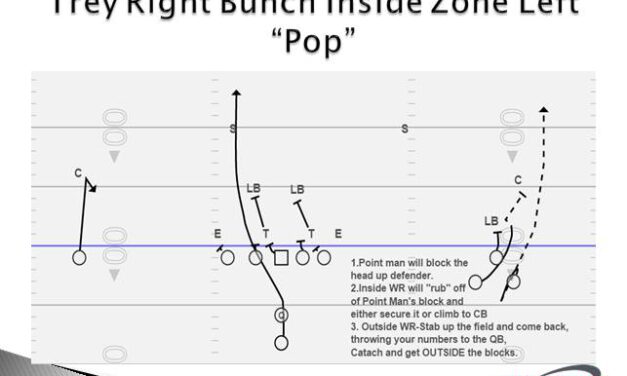
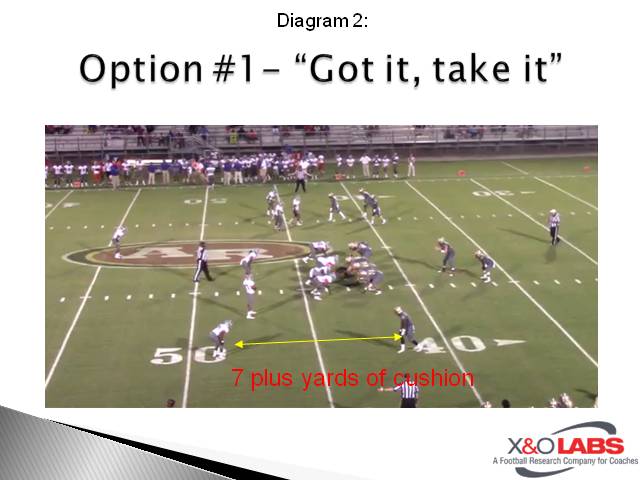
Within the concept of the Pop play, the single receiver has a hitch route. The first read, no matter the run play called, is to see the corner cushion on the reciever to our single side. If we have cushion of seven or more yards and there is not an alley player in a prone position to play the ball, we will throw the hitch route. The quarterback takes a “catch, rock and throw” mentality with the football. The idea is to get the ball out in space to one of our better athletes and have him make a one on one play. The odds are in our favor that the play will result in at least 5 yards with the high percentage that it will result in more. We always would rather have a corner trying to make a tackle than any other defender on the field. If the cushion is within five or less yards, or the alley player is in a dangerous position pre snap, we will take a look to our next option.

Read More

Packaged RPOs in Stack Formations

By Joe Osovet
Head Football Coach/Offensive Coordinator
Nassau Community College (NY)
Twitter: @coachosovet


Introduction:

osovetOur “Stack” and “Stack Extend” concept is something we benefited greatly from in our spread no huddle offense in 2015. The alignment and built-in manipulations (RPOs) packaged with our read game allow us to severely stress safeties and overhang players both pre and post snap.
Additional Attributes:

  • Gives offensive linemen and quarterbacks a nice clear picture of the box.
  • Creates more explosive plays in run game, as a result of outside hash-aligned safeties.
  • Limits stem disguises by defense.

Alignment:

We have the ability, regardless of personnel grouping, to line up in our stack or stack extend configuration at any given point during the game. All alignment communication is signaled in from the sideline.

Stack alignment:

Any double or triple width wide receiver alignment (2×2-Trips open, Trips closed, etc.)

  • Ball in the middle of the field – WR will align on the bottom of numbers.
  • Ball is on the hash
    • Field side: WR aligns bottom numbers/3 yard from sideline. This is predicated on secondary manipulation built in off of “pull read.”
    • Boundary side: WR aligns 3 yards from sideline

Stack Extend:

  • Ball in the middle of the field – WR will align on the top of numbers.
  • Ball is on the hash
    • Field side: WR point man splits hash/numbers
    • Boundary side: WR aligns 3 yards from sideline

Objective:

Make overhang players declare if they want to be a box player and separate safeties outside hashes to be late in run support.

Read More

4 Coverage Options for 3×1 Formations

By Jason Brown
Defensive Coordinator
Dutchtown High School (Geismar, Louisiana)


Introduction:

The popularity of the spread offense has made this formation and it’s variations a major concentration for defensive coaches at all levels. With offenses becoming more and more prolific it is on us as defensive coaches to find more and better ways to defend and give our teams a chance to win. It is my goal to present some concepts we have used to combat this very popular formation, and to stimulate thought in an effort to come up with even more ways to defend this formation.

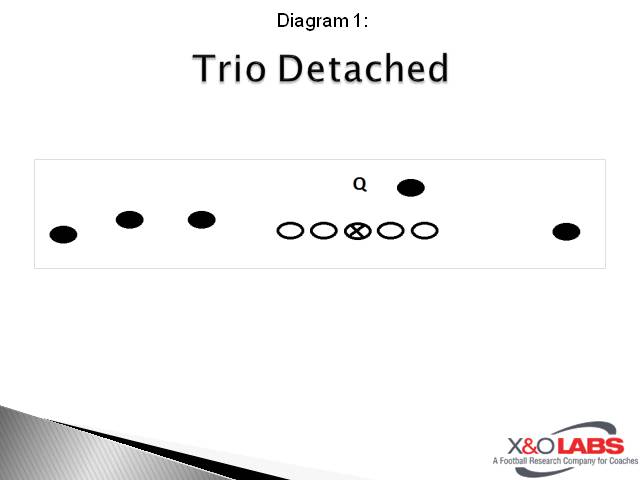
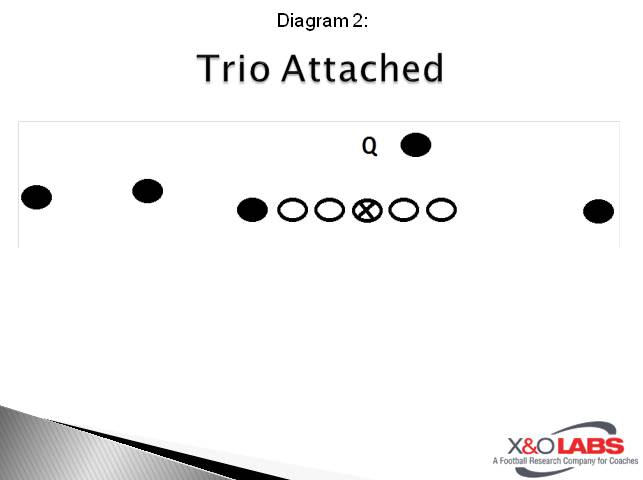
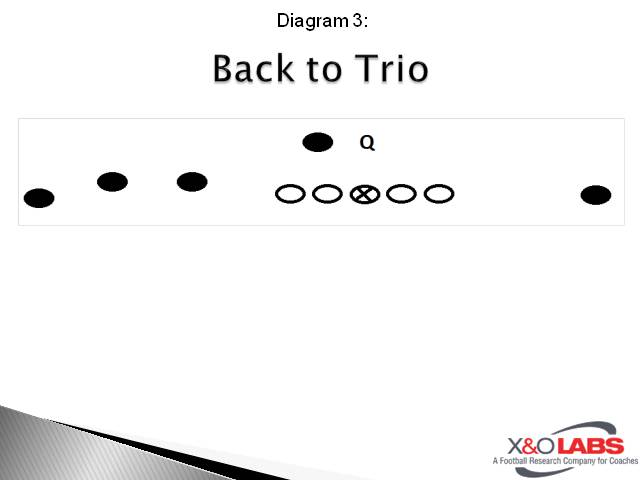
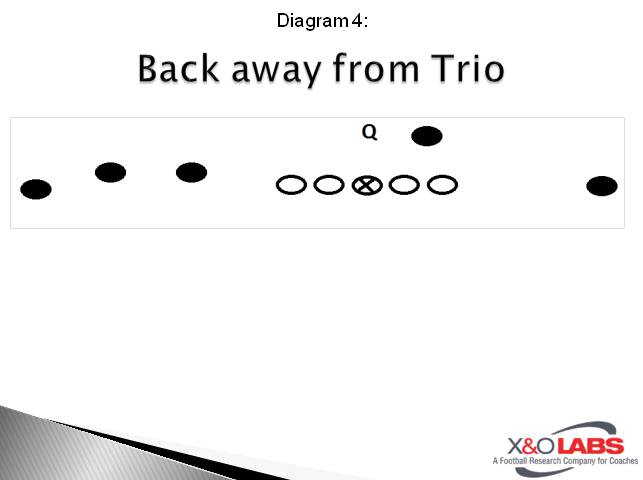
When identifying trio formations, we must know if it is a 3×1 detached or attached formation (Diagrams 1 and 2), and if the back is set to or away from the trio (Diagrams 3 and 4). These variations help us in scouting and help us match up our coverage preference against each set.

Slide1Slide2Slide3Slide4

When we defend 3×1 formations, we think it is imperative to have multiple ways to attack. Each 3×1 coverage has its weakness and it is important, as a coordinator, to move the stress points of your defense around. In other words, if you defend the formation the same all the time, the offense will identify the stress and exploit it. It is our belief that we should control when and how we expose our weaknesses in coverage rather than have the offense dictate vulnerabilities by virtue of formation.

Loaded Zones

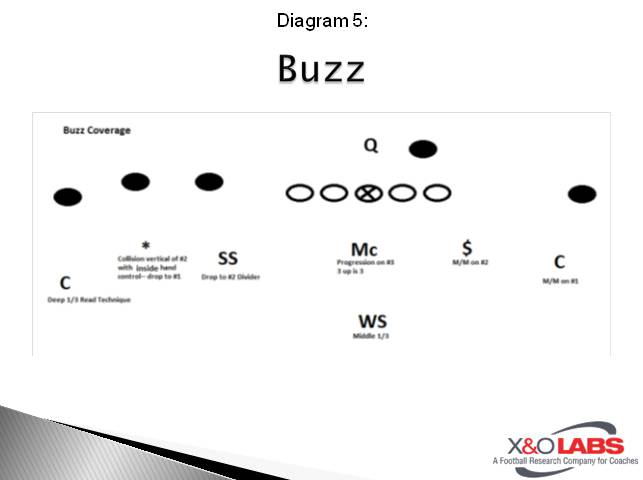
This concept basically allows us to play a pushed over 3 deep zone to 3×1 sets where you have 5 on 3 zone to the trio side and man to man backside. The 5 on 3 numbers allow us to be very good versus a myriad of passes to the trio side, and helps us be very good versus the run. The weakness of the Loaded Zone is the fact that it is man to man weak side and teams will exploit the coverage on the weak side until they get tired, especially if they have a favorable matchup at the wide receiver or running back.

We have three different Loaded Zones that we play:

  • Buzz (Diagram 5) Strong Safety plug into divider
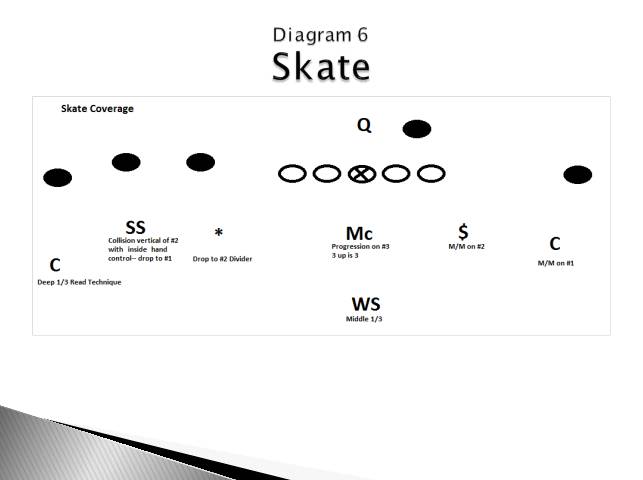
  • Skate (Diagram 6) Strong Safety Role down to flat
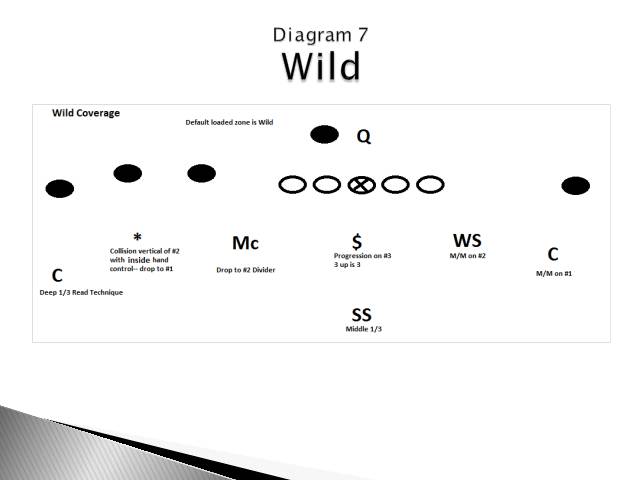
  • Wild (Diagram 7) Weak Safety roll down opposite the trio and be the man to man on #2 player.

Slide5Slide6Slide7

Read More

Lead Draw/Spot RPO

By Scott Girolmo
Head Football Coach
R.E. Lee High School (Staunton, VA)
Twitter: @CoachSGirolmo


Introduction:
renoThe following article will outline several of the variations of second level run/pass option plays that you can utilize to provide your QB with multiple weapons to exploit defensive vulnerability. Each of these variations is in and of itself a peripheral adjustment of one of our core schemes, and serves to both protect that scheme and also to exploit defensive aggression against it.

It is important to note that this is part of a greater offensive thought progression that started with optioning down linemen and LOS defenders, and has moved to optioning second and even third level defenders in space. Conflicting the eye progression of those defenders who are both run and pass responsible is done by utilizing both surface and backfield reactions. We will highlight how we hope to accentuate these reads for the defense, and then how we put the players in space to attack defensive reactions.

Optioning Sideline to Sideline: QB Lead Draw + Spot Route + Read Screen + Quick Game

This is our version of the R.P.O. “Stick-Draw”, and serves as a multi-faceted fast-break play requiring very quick and very accurate decision making by our QB. This scheme can be quickly adjusted to better accommodate your quarterback’s skill-sets by improving the run aspect or pass aspect respectively. We like this particular combination play from a 3×1 set with our RB set to the 3 receiver side [Diagram 1].
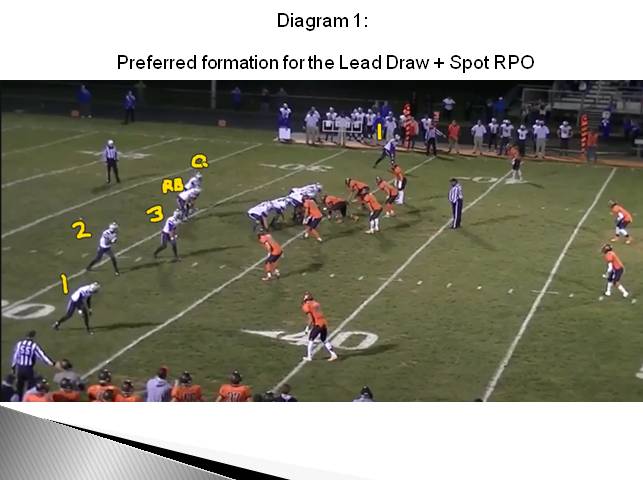
Slide1

SINGLE RECEIVER QUICK GAME – COVER 0 / COVER 1 BEATER

We designate our single receiver as a match-up dependent quick game option. Cover 1 with tight man coverage underneath is the best defense we have seen against all of our RPO plays. The catch for cover 0 and cover 1 man defenses is that your best match up receiver should go to the single side. Doing this provides you with a weapon to attack the one on one match up. Our quarterback is given a series of potential quick routes to use to attack various coverage vulnerabilities [Diagram 2]. We signal non-verbally the route we want to run and the QB has the freedom to attack the match-up if it is available.
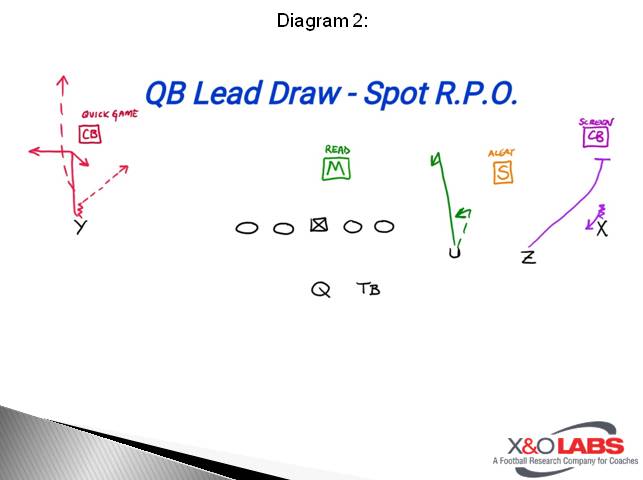
Slide2

SPOT ROUTE and QUICK SCREEN

To the three man side, we have the Spot route and a two man screen combination. The keys to the spot route are for the slot receiver to prepare for the opponents specific underneath coverage and what depth and width from the center he will be able to find route space. His job is to attack the inside hook zone between the ILB and OLB on his side [Diagram 3]. Within his rollover step, he needs to be able to identify any open space in coverage, and any blitzer that crosses his face. If the coverage opens very short, he may only be running a 3 yard route. If the coverage space is open wider than his alignment he should stem to that width and sit on the outside half of the hook zone [Diagram 4]. In the case of a blitzer, we tell him if any bad color flashes past you – turn your head, look for the ball immediately and keep running through the zone. We hope to catch that ball on the run. The same goes for any pre-snap press man coverage on the #3 receiver.
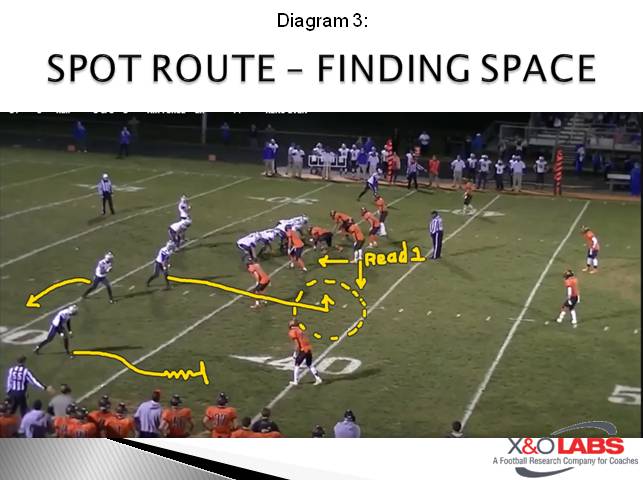
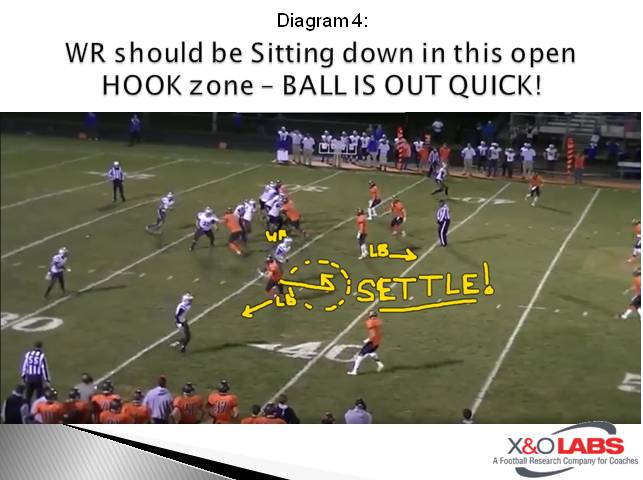
Slide3Slide4

Out wide, our two split receiver’s run a quick screen, choosing the bubble or quick (now) screen to the #2 or #1 receiver based on the depth of the corner. If the corner is aligned with off cushion the ball should go to the #1 receiver. Conversely, if he is closer the ball should be thrown to the #2 receiver. Against press man coverage, they will adjust to a game plan dependent rub combination and both receivers will be in-route.

QB LEAD-DRAW

During the installation process, I have found it beneficial to marry as much of the teaching of our lead draw scheme with our basic ½ slide protection as possible. In addition, if this is to become a primary play for us next season, we will need to mimic many of the techniques we show in our pass blocking. In our ½ slide protection, we pass set man on man at the play-side, and the first uncovered offensive linemen will slide to the back-side to help combo. The same blocking rules will be used for the Lead-Draw.

Offensive Line

Our play side guard is the primary coach on the field for the Lead-Draw scheme. He will dictate to the other linemen to the back-side how we will handle the interior cylinder of the play. The guard chooses what to do based on the defensive alignment. He is either “covered” to the play side by a defender, or “uncovered” and has a free gap.

When he is “covered” by a defender, his assignment is simply to “Stick” on that defender, one on one [Diagram 5]. You can have him communicate that with a call, such as “Stick”, or by tapping the center at a specific location on his leg. For example calf tap = covered. If the play side guard identifies himself as uncovered he now becomes a zone combo player with the center, and he will be “hunting” the first Linebacker back side off of the mid-line of the front [Diagram 8 & 9 Below]. He will indicate that he is helping with a verbal call such as “combo” or another tap on the center for example his hip.

Read More