Summer is Coming: Build More Champions

By X&O Labs Staff

A very wise person—no doubt a coach—once said, “The best athletes are made in the offseason.”

Coaches know that hard work in the summer pays dividends. That’s why the best ones have a plan to engage, motivate, and challenge their athletes to put in work during the summer months. Whether it’s lifting weights, conditioning, camps, or passing leagues, they know that the off-season is when individuals and teams improve.

At the same time, coaches understand that not all athletes have the dedication and discipline to complete the off-season work on their own. In a world of distractions, some athletes live in the gap between intent and action.

Getting these individuals to take action during the summer months can be a challenge. When plans fall short, coaches need something extra to help engage these athletes. Programax may be just the thing to bridge the gap.

Here’s What We Like About Programax—And How It Can Make Your Summer Much More Effective and Efficient

A few months ago XandOLabs.com highlighted Programax, a coaching app with a wide range of functionality to help football coaches lead a better program. We had a number of readers check it out and it’s made a really positive impact on their programs. As Coach Yashinsky from Onalaska, WI said – “It’s like Hudl for managing the details that are a pain to keep track of.”  We included feedback from some others below.

As summer approaches, we wanted to revisit Programax because it provides a bunch of helpful tools for summer. 

As a coach you can:

  • Deliver texts and emails to players and parents from one place
  • Create live schedules that sync to everyone’s personal calendars
  • Deliver daily workouts with videos and tools to track
  • Generate live leaderboards right on your athletes’ phones
  • Manage your camp-sign up process

…and so much more. Check out a brief demo video here.

We at XandOLabs.com love the tool, and recommend you try it out. For a limited time, our readers can receive 10% off with this special offer from Programax (Sign up here and enter code “xandosummer” at checkout).

Communication Made Convenient

Read More

No Huddle: Case 1 – System Philosophies and Play Calling

By Sam Nichols
Managing Editor
X&O Labs
Twitter: @SNicholsXOLabs


Introduction:

When we released our no huddle survey, it quickly became one of the most extensive to date. We surveyed over 1,000 coaches nationwide, from all levels of football, and found some incredible results that shed light on what works in no huddle systems and, more importantly, why it works. This special report will provide insight to even the most veteran of no huddle coaches while helping rookies as they look to get their own no huddle system off the ground.

In some ways, a report on the no huddle can be extremely broad. There are a myriad of angles from which we could research. In the end, we decided to follow our instincts and start where the research led us. That is to a very simple, yet layered question… Why run the no huddle?

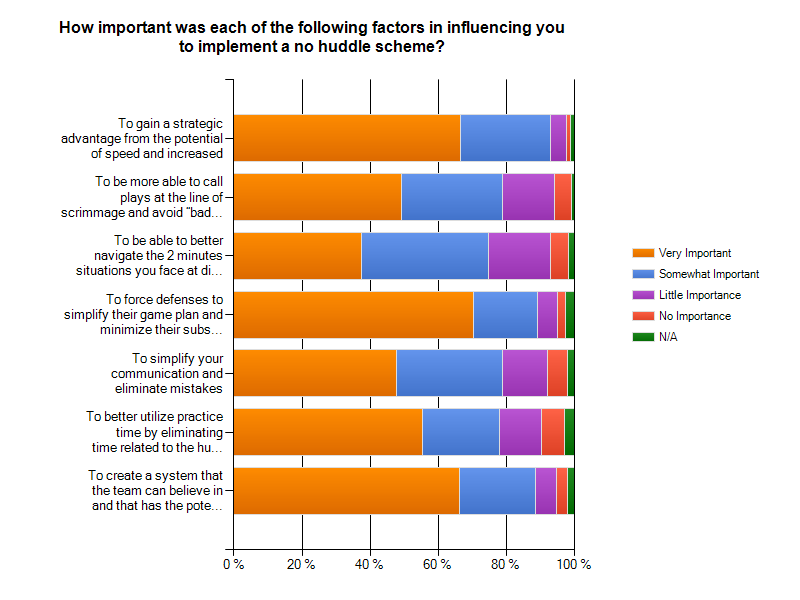
We start here because it was a consistent thread in every interview that we conducted throughout this process. We heard countless times how important it was for the teams that run no huddle schemes to have an unwavering belief that adding the no huddle to their offensive system would help them reach their offensive and team goals. The coaches that responded to our survey gave us some insight into those goals by rating the importance of different potential reasons for implementing the no huddle.

Below are the results:

Here are a few things that we ascertained from this chart…

“Very Important” was the top response for each of the seven reasons given. This shows just how motivated coaches were to install these systems and how vital they saw them to helping their teams succeed.

The highest number of “Very Important” and “Somewhat Important” responses connects to the strategic advantage gained by a faster pace of play. This implies that while not all no huddle teams are moving at a breakneck speed, many of them at least want the option to do so if needed.

One of the top reasons that coaches choose to use the no huddle was because of its power to bring identity to their football program. Coaches told us how the no huddle and all that comes with it gave their kids and coaches more confidence and allowed them to create more excitement around their program.

Many teams went to the no huddle to simplify their communication and eliminate mistakes. To those who have not used no huddle schemes, this may seem counter intuitive. Hopefully the next section on Communication Systems Analysis will help clarify the simplicity argument.

While the vast majority of those surveyed spoke positively about their no huddle experience for the reasons above, they also cautioned that the transition to the no huddle should not be taken lightly. We were repeatedly told how important it is for the no huddle to become part of the team’s culture and identity for it to really have an impact. Coaches also stressed the need for the entire coaching staff to understand the impact of a no huddle tempos on the different parts of their game be it defense, special teams, or off-season preparation. Once everyone is on the same page, teams can then start to dig in to the different ways that they can install and operate their no huddle concept.

Production:

According to our research, no huddle offenses score more points than traditional huddle teams. One could argue that this would be the case regardless of any strategic advantages that are garnered by the no huddle. There also is a certain amount of scoring that increases because of increased opportunity. In other words, teams that run more offensive plays and have more offensive possessions have more chances to put points on the board. Many of the coaches we talked to in creating this report cited the desire to increase opportunities as a reason for their particular brand of no huddle.

One great example of this focus comes from Chuck Markiewicz the longtime head coach of Arundel High School (MD). When asked about his no huddle scheme Coach Markiewicz explained that…

“Over the years our off season evaluation told us that we averaged a touchdown for every 3 possessions, which averaged 36 points per game. This was roughly our average until 2005 when we made a conscious decision to find some ways add three more possessions per game to try and up our average to 42 points per game. The project became trying to add things that would enable us to find those 3 more possessions.

“We didn’t try to do this all in one year. Our goal was to try to add something every year, test out our theory to see if it held up and add more the next year. We feel like our ideas have some merit because since we started to implement the changes in 2005 we have averaged over 42 points per game. We are still actively engaged in trying to find are still ways to add more possessions.”

Read More

No Huddle: Case 2 – Use of Tempo

By Sam Nichols
Managing Editor
X&O Labs
Twitter: @SNicholsXOLabs

libertyOne buzz word that came up repeatedly in the surveys and interviews we conducted for this report was the word “tempo.”  Through that research, we found that this term has different layers of meaning to no huddle coaches depending on what they are trying to do.  Here is the working definition we derived from the research:

Tempo = a methodical approach to creating a strategic advantage for the offense by controlling the pace of play in a football game.

In short, “tempo” is more than just going fast.  It can mean doing slow at times, short spurts of speed, or even creating a rhythm for the defense so their increase comfort can be used against them.  It all comes back to the teams game plan and having the tools in place to take advantage of the defense through the pace of play.

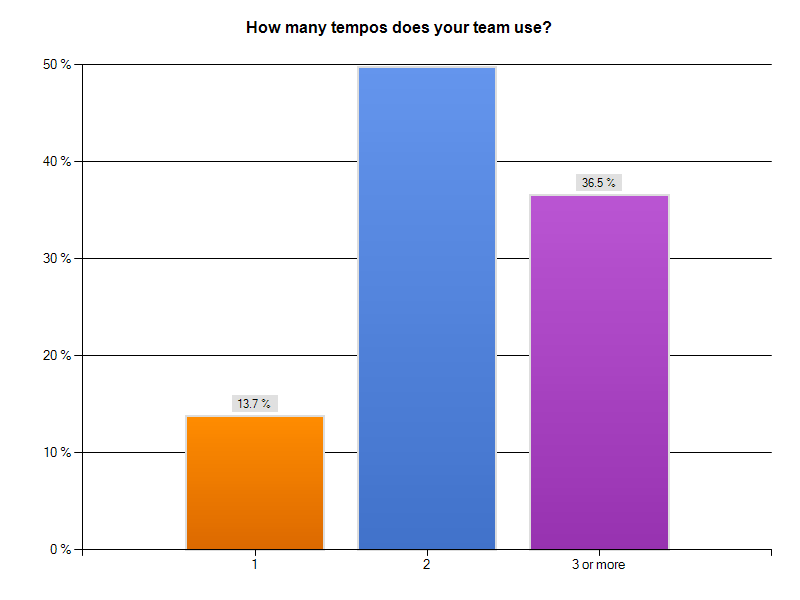
Before we get into the different strategies that teams use to control the tempo, let’s take a look at the data.  Our research shows that 86% of schools are intentionally running multiple tempos in games with 36% using 3 or more tempos commonly.  In addition, coaches in our survey identified “creating a strategic advantage” and “forcing the defense to simplify” as the top two reasons for adopting the no huddle in the first place.  This shows just how important the concept of “tempo” is to no huddle teams.


One buzzword that came up repeatedly in the surveys and interviews we conducted for this report was the word “tempo.” Through our research, we found that this term has different layers of meaning to no huddle coaches depending on what they are trying to do. Here is the working definition we derived from the research:

Tempo = a methodical approach to creating a strategic advantage for the offense by controlling the pace of play in a football game.

In short, “tempo” is more than just going fast. It can mean going slow at times, short spurts of speed, or even creating a rhythm for the defense so their increase comfort can be used against them. It all comes back to the team’s game plan and having the tools in place to take advantage of the defense through the pace of play.

Before we get into the different strategy that teams use to control the tempo, let’s take a look at the data. Our research shows that 86% of schools are intentionally running multiple tempos in games with 36% using three or more tempos commonly. In addition, coaches in our survey identified “creating a strategic advantage” and “forcing the defense to simplify” as the top two reasons for adopting the no huddle in the first place. This shows just how important the concept of “tempo” is to no huddle teams.


One could argue that without utilizing some sort of “tempo” philosophy, a team might as well still be huddling. One coach we spoke two during the research process explained how his head coach was so slow calling the plays that they went from “no huddle” to “slow huddle” (minus the huddle of course). Unfortunately, that coach is not alone. We received many additional comments from coaches who felt that they were not able to really take advantage of the potential “tempo” advantages of the no huddle.

That is where studies like this are crucial. We have dedicated the next several pages of material to showing coaches how coaches around the country are managing “tempo” for their teams and ways that any coach can refine and implement those concepts today.

The Power of Tempo:

“Tempo” may not mean “fast,” but the coaches that participated in this study suggest that increased offensive speed sets up the team to change the tempo in different ways. In many cases, these coaches argued that the tempo was almost as important as the offensive scheme itself.

They would inevitably go on to list some, if not all, of the following advantages:

  • Makes Conditioning a Factor: An increased speed that leads to a longer game rewards the team that is prepared physically for those extra reps. Teams can then use that concept as a motivator for their own players and create a culture of endurance.
  • Ability to Read the Defense: Reading a defense isn’t just about x’s and o’s. It is also about their demeanor and their conditioning. Teams that have mastered the art of using tempo in games are always looking to see if the defense is getting tired, changing personnel, or getting too comfortable and then reacting with the appropriate tempo change to take advantage.
  • Triple the Reps John Konecki from Crete-Monee High School (IL), said it best in our survey when he responded, “The secret sauce of the no huddle is the number of reps a team can run throughout a practice session.” Some coaches said they were literally getting three to four times the reps since eliminating the huddle. That not only creates better conditioned players, but it allows for a significant more opportunities to get better at what you do.
  • Engagement and Excitement: The ability to engage the players in a practice and team philosophy can’t be underestimated. In our research, coaches mentioned repeatedly the positive impact that more reps in practice has had on team moral citing more reps for non-starters, faster pace, and shorter practices as the things that the players liked the most.
  • Create Rhythm: Aaron Sauter, Northwest High School (IN): “We use tempos to get our primary playmakers active in the game from the beginning of the game. If we feel that going at a specific tempo will give us a significant advantage we will begin with that tempo to start the game. If we find that our playmakers are not getting in a rhythm during the game or if we do not gain an advantage, we will use the tempo that our team feels most comfortable working at regardless of opponent. A key advantage that we gain is th

Read More

No Huddle: Case 3 – Practice Planning

By Sam Nichols
Managing Editor
X&O Labs
Twitter: @SNicholsXOLabs


This section of the No Huddle Study will focus on the different changes that can occur as part of implementing a no huddle system. It should be noted that many of the coaches we polled went out of their way to explain that their system of practicing the no huddle has been a journey. Like many things in life, these coaches experienced both pros and cons because of the switch. For most coaches, it has been a long process of discovering exactly how to make this all work best for their team. Fortunately for you, they were willing to share their experiences and resources with us as part of this special report to help coaches avoid some of the trial and error experience that many no huddle pioneers experienced.

Coaches that responded to our survey made one point exceedingly clear: Running the no huddle will change the way your practice forever. At the very least, the simple act of NOT huddling saves a significant amount of time that coaches can use in other ways to benefit their teams. That is only the tip of the iceberg when it comes to the impact of the no huddle on the way coaches run their practices.

So, we segmented our research into providing what we found where several differences in coaching in the no-huddle system.

Difference #1: New Definition of Coaching

Football, more than any other sport, requires all of the coaches on the field to be on the same page. That concept is even more true on no huddle teams that look to maximize the opportunity to change the way they practice. Unfortunately, many no huddle teams run into issues early in the installation process because they don’t properly prepare their coaches for the new way of practicing. The comments we received in our research suggest that coaches will be more successful in preparing their coaches if they focus on initial buy-in and stress “coaching on the run” from the start.

We repeatedly heard from coaches that if one coach isn’t on board with a fast practice, it will not work. That means it is even more important that the head coach and offensive coordinator make the expectations very clear early in the process that they expect everyone to coach in a very specific way. Of course, that is easier said than done, but coaches told us that they have been able to make even the most skeptical coaches fall in line.
Here are some ideas coaches suggested to help get the staff on the same page:

  • Involve ALL Coaches In the Process: By bringing everyone into the conversation, the coaches will feel they are choosing to be part of the change as opposed to feeling forced.
  • Start With the End In Mind: Instead of starting with the scheme (no huddle), start the conversations with the goals (ex: What are we trying to do? Score more points? Create more possessions?). From there you can set the goals and then work back to how that affects the way each individual coach practices.
  • Hold Them Accountable: We all want accountability. Early in the process, coaches are likely to revert back to old practices, and this will happen quickly if not addressed. Maintain early, honest communication with your coaches to help them do what you are asking.

Coaching on the Run:

Perhaps the most important element in creating continuous reps and tempo in practice are the coaches’ willingness to “coach on the run.” No huddle “gurus” will tell you that if you ever stop practice for any reason you are costing your team reps. These experts suggest that coaching on the run is essential for a no huddle team to be successful.

The problem is that this idea is very difficult for some coaches to implement because it is very different than what they are used to. One coach shared that, “some of our older coaches had to get used to coaching on the fly because they were used to an hour of team time and running a play and talking about it for 5 minutes.”

Now this may be an exaggeration, but we all know what he is talking about. The issue is that a team can only practice as fast as its slowest coach so teams must have a clear plan if they are going to try to coach on the run.

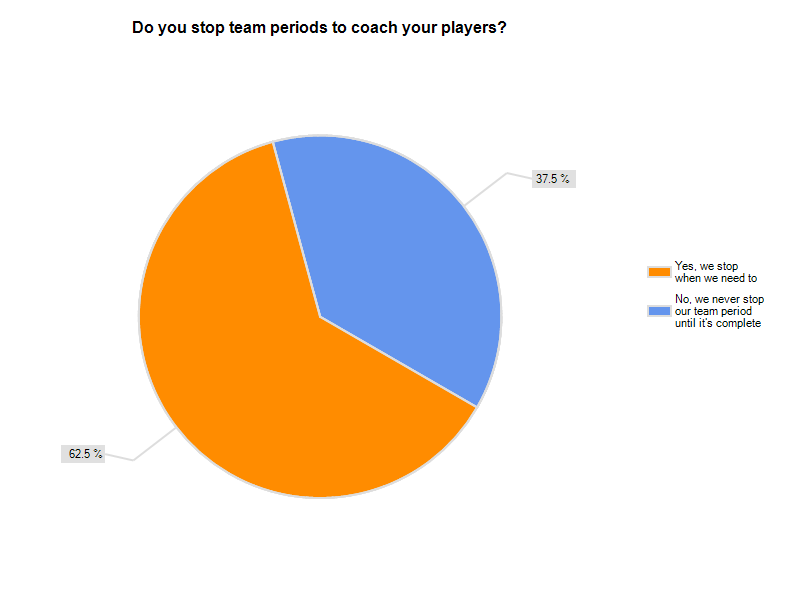
Having said that, many coaches do feel it is necessary to stop practice to instruct players if necessary. According to our polling, 60% of coaches said that they do stop team periods to coach their players, a thought that makes other no huddle coaches cringe.

Team Periods:


Read More

No Huddle: Case 4 – Communication Systems Analysis

By Sam Nichols

Managing Editor

X&O Labs


At its core, the no huddle is about streamlining communication. Each of the coaches that responded to our survey has their own twist on what works best to communicate with their entire team from the sideline. Sure there are some who are part of no huddle systems, but even within those teams you will find slight variations. Each was created as simply and effectively as possible to communicate the next play’s formation, direction, type, motion, and responsibilities to the players on the field.

From the outside these communication systems appear to be quite complicated and even random, but our research has shown the truth to be quite the contrary. The research shows that teams’ communication methods are often directly linked to the goals they have for their offense. For example, if a team is looking to maximize the impact of increasing tempo it would be focused on using the fastest method of communication. These teams are willing to give up complexity for speed. Another team might focus on communication methods that are more flexible so that they can attack the defense by checking the play at the line of scrimmage. Either way, they have made their system fit their needs.

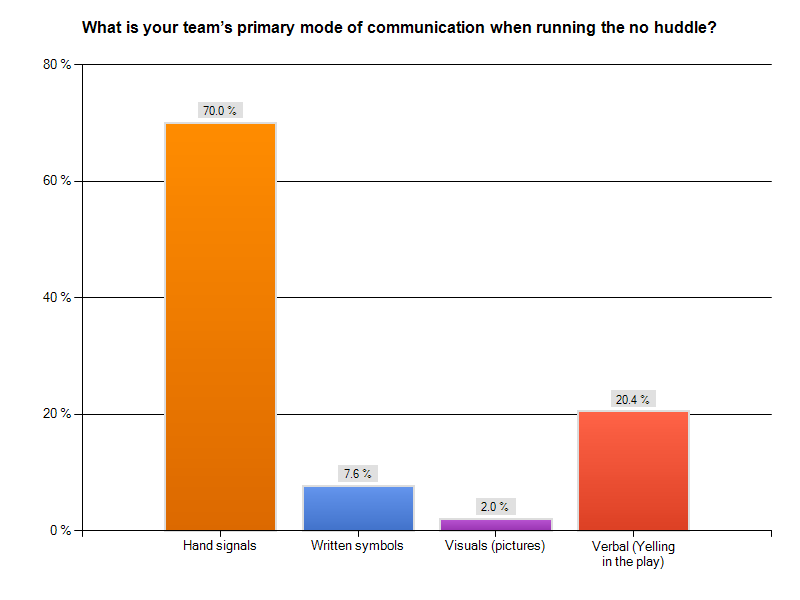
As part of our survey, coaches were asked to categorize their communication system as one of four distinct types; hand signals, verbal relay, written, and visual.

Here are the raw results:


The results show that the overwhelming majority of coaches are using hand signals are their primary method communication. While these systems vary greatly, they have many concepts in common. These systems are discussed in much more detail in the following sections.

Primary Communication Methods:

As you can see from the above data, hand signals are the preferred choice by the vast majority of those surveyed. Further analysis shows that within this broad category, there are two distinct camps. One group of coaches uses hand or body signals for the players that tell them all of the information that they need for that play. The second group uses similar signals to point the players to information that they have on their wrist cards.

Before we get into the differences and advantages of these two approaches, it should be noted that both coaches on both sides of this argument provided strong and justifiable responses. On one side, countless comments stated how helpful the wrist cards are in making their team function and win. Still others argued that the cards slowed them down and caused more problems than they are worth. These differing opinions show just how important the individual team circumstances in determining the best communication approach. For that reason, we have set up the reviews of the individual signal systems to clearly lay out the pros and cons that coaches shared with us.

The Symbol System:

In contrast to the wrist card hand signal, the symbol system can be as complex as you want. Coaches are not restrained by a limited number of digits or colors in the spectrum, but only by his imagination in developing new signals. The signals that the team uses are unique to their team and, in most cases, have developed over time to fit the needs of the team. This approach is used by roughly 30% of teams including most collegiate programs we surveyed.

Since this system often carries many more signals than wrist card systems, coaches take great care to ensure that all of the players know the entire signal catalog.
Here are a few of the tactics that coaches suggested:

Symbol System “Musts”

  1. Involving the players in the initial creation of the signals.
  2. Teach the signals at lower levels (middle school and even youth levels).
  3. Using signals exclusively during practice with no verbal reminders to reinforce the importance of comprehension.
  4. Test players on the sidelines (in practice) on the signals.
  5. Removing players from the field that do not know the signals. Reward those who do.

The detail associated with these signal systems makes them much more difficult to share in their entirety. With that said, a few coaches were willing share some of their rationale for their individual systems.

Read More

No Huddle: Case 5 – X&O Labs Exclusive No-Huddle Interviews

By Sam Nichols
Managing Editor
X&O Labs
Twitter: @SNicholsXOLabs


Throughout this research process, we were fortunate enough to talk to some great coaches from all over the country. Some of those coaches were willing to give us an even closer look at how they run the no huddle. In this case, you will find the following interviews:

  • Pac 12 Offensive Coach: This no huddle veteran explains how his team’s culture is built around their no huddle philosophy.
  • Phil Longo: Championship college coach explains the no huddle concepts that have made his teams successful at multiple stops.
  • Joe Osovet: Veteran no huddle coach explains how his system helped increase their plays per game by 15 over the course of the 2012 season.
  • Jason Thomas: This former Chip Kelly assistant outlines how he has taken his brand of no huddle to the high school ranks.
  • Brian Tabatabai: Southern California coach outlines how the no huddle changed the culture of his football team and helped them break countless records in the process.

Each coach in this section has a unique perspective that I felt would help readers better understand how the no huddle can change the way a team operates.


Using Pre-Snap Tempo to Manipulate Defenses:

An Interview With Joe Osovet, Offensive Coordinator, Nassau Community College (NY)


Editor’s Note: Coach Osovet is serving his second stint as offensive coordinator at Nassau Community College in New York. Prior to coming back to Nassau, he served as the wide receiver coach at LIU-Post from 2010-11. This past season, Coach Osovet’s offense ranked 11th nationally averaging 40.8 points per game. His team also boasted two 1,000 yard rushers and a rushing offense that ranked 6th in the nation. X&O Labs’ Managing Editor Sam Nichols had the opportunity to talk with Coach Osovet about his no huddle system.


Sam Nichols (SN): Coach, thank you for taking the time to talk with us today. I know you have been successful with the no huddle for years now and we look forward to hearing some of the keys that you have found to make that happen year-to-year. So let’s start with this question…why do you stick with the no huddle?

Joe Osovet (JO): I think the biggest thing as I have been at different levels, be it D2, Junior College, whatever, is that the no huddle forces the defense so show their hand. Very rarely in a game are you going to be stuck in a bad play because you have so much time at the line to make the changes. The quarterback has more time to scan the field and get you in the right play and over time those seven and eight-yard runs add up and you bust those into 50 yard explosive plays in the second half. I think those factors combined are dangerous for an offense.

SN: I agree coach. The no huddle can be hard to stop if you aren’t prepared. Tempo is an important part of making that happen. Tell us how you use tempo to control the game offensively?

JO: First of all, just so you understand where we are coming from, you need to know that we are all hand signals. That said, anything that is a lot of verbiage we put it on the wrist card. We will take the card with those 10 to 12 plays and use it to keep us moving fast even if we want to run a more complicated play.

We keep it really simple with tempo. We use a snap variance cadence so predominantly have one snap count. From there, we will use a freeze cadence that gives us a chance to get out of something that we have called. That is sent in with the play as a code word. If we just want to get the defense on their heels, the center will signal to the QB he is ready by flashing his hand between his legs, the QB then says “Hut, Hut,” throw his hands up, and then look back at me.
What a lot of teams have started doing is they look back to their sideline and change the play as well during that time. To counter this, we have another code word that tells our guys to fake the look to the sideline and catch them looking over for a new play. We aren’t necessarily snapping the ball on one, two, or three. It is all based on the center and quarterback. The other thing we can do is use a few words to speed things up. The first word, “copy,” tells the players to get lined up in the same personnel and run the exact same play. If the defense adjust to that we have code words, like “Oregon” that mean flip it too the other side. The opposite play can be made in the prior to the previous play as well. When we do this, we can get it snapped in about seven seconds, as long as refs cooperate.
In the end, we think the combination of the same play quickly, the false cadence, and the freeze or “look” cadence is all we really need to adjust the tempo. We don’t have an “indy” or “nascar” call like some teams.

Read More

No Huddle: Case 6 – Exclusive Clinic Reports

By Sam Nichols
Managing Editor
X&O LabsTwitter: @SNicholsXOLabs


In creating this special report, we set out to make the most complete review of the no huddle to date. As part of that plan, we reached out to coaches across the country (and the world) and had them write about areas of the no huddle where they have a particular expertise.
Each of these reports is included in this case and they cover the following topics:

  • Utilizing a Comprehensive “Check with Me” System: Jay Wilkinson, Offensive Coordinator, Broken Arrow High School (OK)
  • Play-to-Play Mechanics of an Efficient No Huddle Offense: Matt Kerstetter, Offensive Coordinator, Trinity High School (FL)
  • No Huddle Philosophy and How to Go Fast: Chuck Markiewicz, Head Coach, Arundel High School (MD)
  • How to Coach On the Run: Dan Ellis, Head Coach, W.C. East High School (PA)
  • Implementing a Communication System: Zach Harrod, Offensive Coordinator, Prague Lions (Czech Republic)

Utilizing a Comprehensive “Check With Me” System

By Jay Wilkinson, Offensive Coordinator, Broken Arrow High School (OK)


How many times have you reviewed film the day after the game and said that a play you called was dead before it started  because of the defensive look you got? The freeze and check with me methods are a way to eliminate dead play calls. We use the freeze and check with me methods to take a quick picture of how the defense is lining up and making the best play call we have versus that look. Some of our biggest plays have come from these methods.

On its most basic level, the “check with me” concept allows an offense to make the play call or change the play at the line of scrimmage. We have two different ways that we have this built into our offense.

Here is a more in-depth look at each concept:

Freeze Concept:

When using the freeze concept, we will signal in the formation and no play. The QB will go through the pre snap process and signal for the snap. If we don’t draw the defense off sides, then we will call a play from the sidelines. This allows us to look over the defense and call a play based on the look we are getting.

Check Concept:

The check starts with us calling a formation and a play and tag a check to it. The QB will dummy signal for the snap and look to the sidelines. If we like the play called, we will leave it on and the QB will call for the snap and run the play. If we don’t like the play we have called, we will tell the QB to erase it. He will then tell the team to look to the sidelines to get the new play and we will signal the new play and run it.
We prefer this method as opposed to the ‘fast as you can’ model because it helps us from running a play into a look we can’t be successful against. We do have some plays that we feel like we can run vs. any look. We include these plays in our fastest tempo mode.

Benefits:
We have found that checking at the line of scrimmage gives us many advantages. It allows us to look at the defense and call a play based on the look we are getting. For example, if it is 3rd and 7 and we don’t know if we are going to get base defense or coverage. We can freeze it, see how the defense is going to play us, then call a play that give us a chance to be successful. Similarly, if we want to run the zone at the 3-technique, we can call zone right and tag check. If the 3-technique is on the left, we can just flip the play.

Implementation:

Building either or both of these check concepts into your system is really just a matter of mechanics. We use our normal play calling as the base and build from here. Here is what our kids expect to see on a normal play:

1. Set personnel (if changing)
2. Signal formation
3. Signal play
4. QB will make sure everyone is set and then signal for the ball
5. Center will call snap count and snap the ball when he is ready

Read More

Identifying and Attacking Pass Protections

By Jason Bornn
Head Football Coach
Saugus High School (CA)
Twitter: @JasonBornn1

Introduction:

shsvsventuraWe are a 3-4 multiple blitz scheme team which means that we will see subtle differences in pass protections to the standard even front static fronts that some teams employ. One of the challenges we have as an odd front defense is identifying the type of pass protection a team is going to use against us. I sat down with Tim Tulloch, the defensive coordinator at San Mateo CC (CA) and discussed this problem. It was after reading his material and discussion with him that we were able to better understand pass protection schemes and how to best attack them.

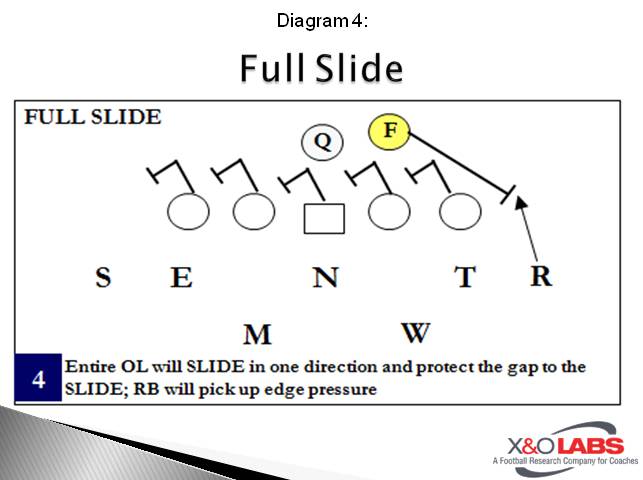
We have several ways to determine which one a team will employ versus us. We classify the pass protections we most often see into eight categories. The first four are:

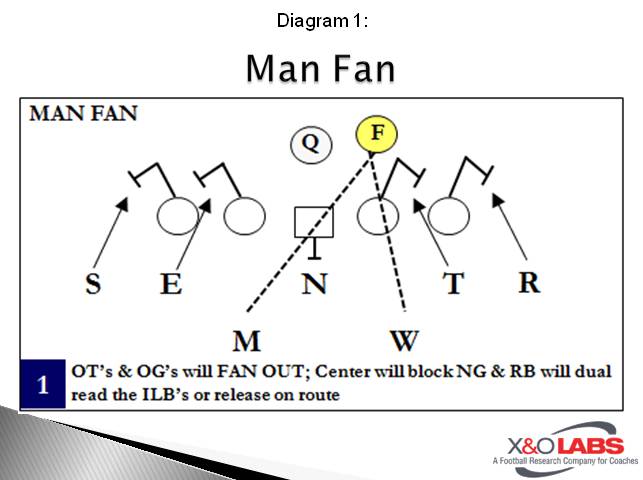
1. Man Fan (Diagram 1)

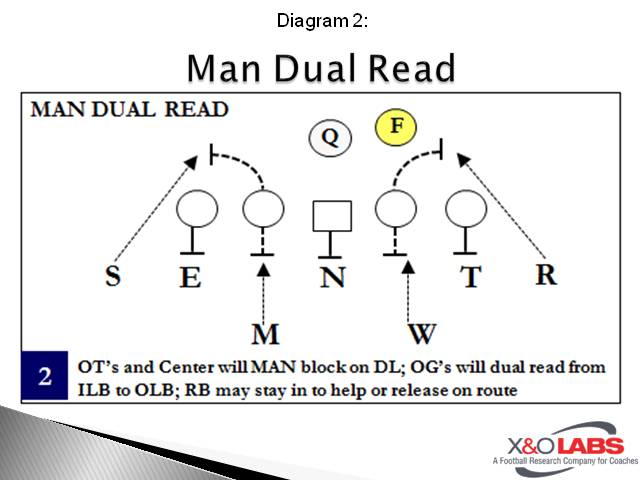
2. Man Dual Read (Diagram 2)

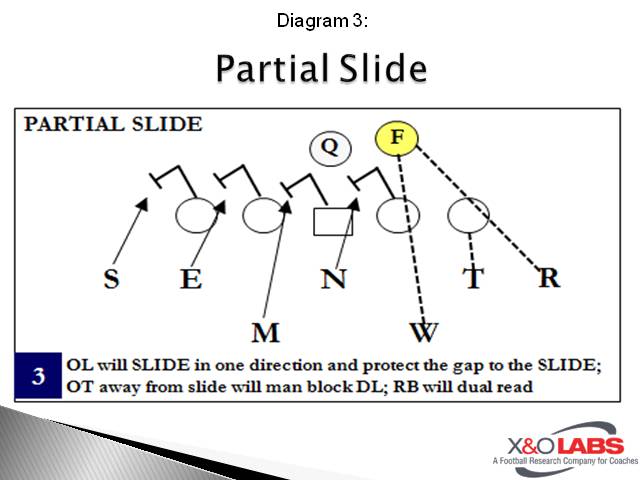
3. Partial Slide (Diagram 3)

4. Full Slide (Diagram 4)

Slide1Slide2Slide3Slide4

In each of these, the RB can be utilized as either a blocker or receiver.

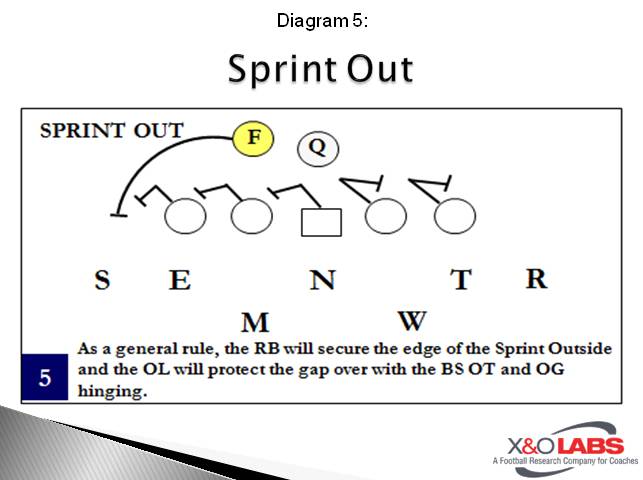
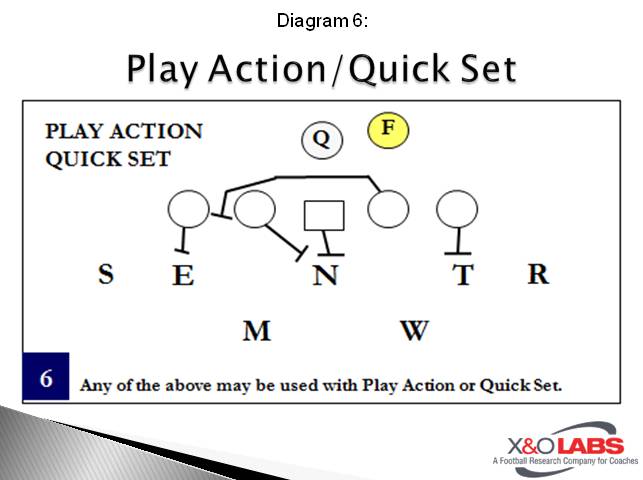
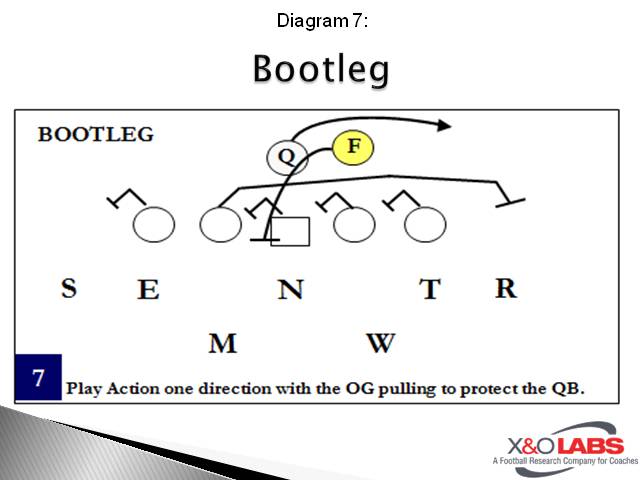
The other categories we designate are:

5. Sprint Out (Diagram 5)

6. Play Action (Diagram 6)

7. Bootleg (Diagram 7)

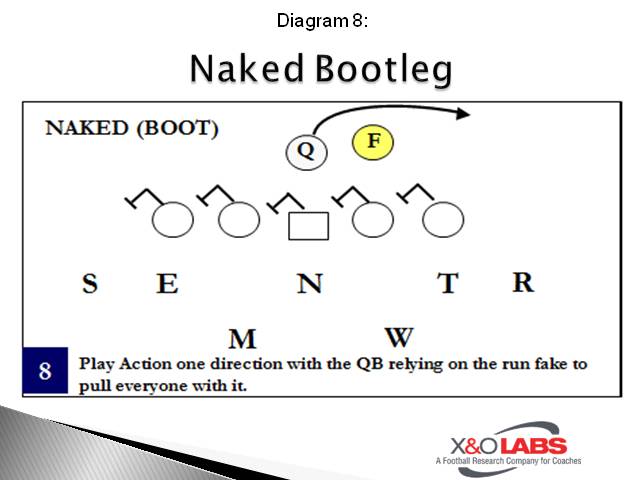
8. Naked (Diagram 8)

Slide5Slide6Slide7Slide8

In each of these four, there are specific rules and actions of the OL and RB that apply. We do you have certain attacks we will employ versus these but for the purpose of this article, we will focus on the four we see the most of (Man Fan, Man Dual Read, Partial Slide, and Full Slide).

For each of these protections, we will have a 4 man, 5 man, and 6 man attack that we will utilize. Once we identify the pass protection that we will face each week, we will create a menu for each of the attacks (4 man, 5 man, and 6 man) that will employ. For example, if a team is a Man Fan Pass Protection team, we will have two or three 4 man schemes, two or three 5 man schemes, and two or three 6 man schemes. We will go over one of each for the four pass protections we see the most of each week.

Read More

Mike Leach Praises Sam Houston State Air Raid Study

By Mike Kuchar
Senior Research Manager
X&O Labs
Twitter: @MikekKuchar

Introduction:

leachLast month, we released our special report on Sam Houston State University’s evolution on the Air Raid offensive system. In order to increase productivity, the Bearkats offensive coordinator Phil Longo places more of an emphasis on wide receiver play, rather than quarterback play, and the numbers spoke for themselves. Sam Houston State finished first in total offense at the FCS level, stockpiling over 531 yard per game.

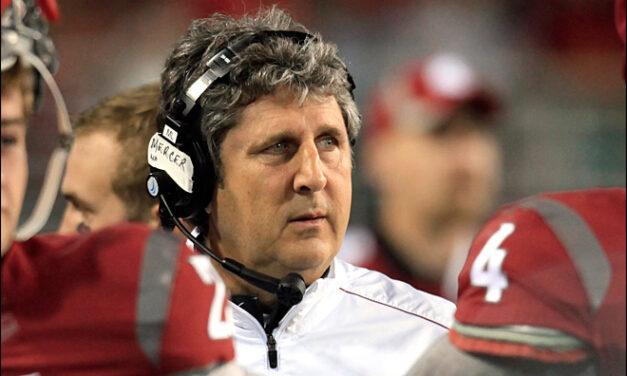
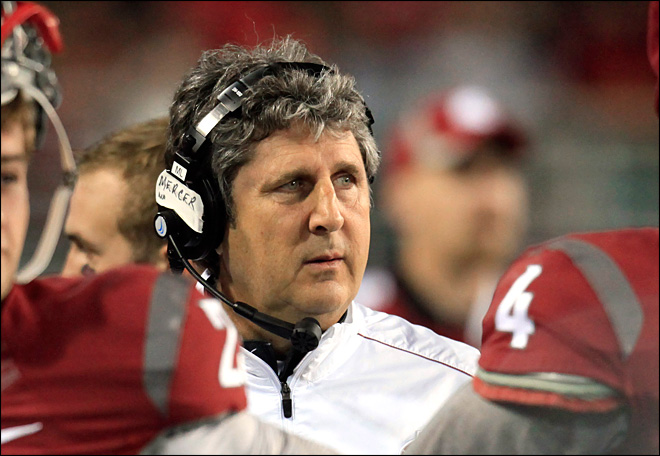
We were curious to see if this shift was becoming a trend among Air Raid enthusiasts, so we went directly to the source in a first person interview with the grandfather of the system itself, Washington State University head coach Mike Leach.

MK (Kuchar): What is your perspective on Sam Houston State’s version of the Air Raid offense?

ML (Leach): “I’ve had a lot of admiration for what Coach Longo has done with the system. Sam Houston was a solid program for awhile then they exploded and Coach Longo is a huge part of that.”

MK: At Sam Houston State, responsibility is placed more on the receivers than the quarterback to identify coverages and make adjustments. How is that different to what you do in your system?

ML: “That’s very different than what we do. Our quarterback is equipped to call the offense post-snap and it takes constant training to put them in a position to do it. When Coach Longo put less on his quarterback what he did was give him an ‘if/then’ thought process pre-snap where there is an initial concept side and a backside that would complement it if the front side didn’t cooperate. I thought that was excellent.”

Read More

Quick Passing Game With Backside Boot Progression

By Barry Merritt
TE/Wonder Back Coach
AL Brown High School (NC)
Twitter: @coach_merritt

Introduction:

merritWe all like pass plays that gain yards, can be completed at a high percentage, and that involve all of your receivers. This year, the “90 Right/Left” was our go to concept as it combined quick game concepts and boot concepts into one powerful combination. It strained the defense with a pass play that does not have a back side and makes all of our receivers a threat. In turn, they all run hard routes because they all know they could be the guy getting the ball.

This concept involves a 3-step pass to a #1 WR on one side with a 3 level bootleg on the backside. The QB has the option to throw that 3-step pass if the coverage or talent match-up is good for us; then he throws that ball on time. If they take that away then he can boot out the backside. Sometimes we call the specific pass route we want run on the quick pass, other times we will call an option route where the receiver chooses his route based on coverage.

If you already throw a bootleg pass you’re just taking the backside post route and substituting a quick pass. This simple change can be very powerful.

90 RT/90 LT

We like running our “90 Rt/90 Lt” out of 10 personnel, but we can do it out of 11 personnel using our TE or W-Back in the route concept, and we can organize them in either a 2×2 set or 3×1. We teach the 3×1 set first. 

Lt Trips 90 Option Right

QB: He is looking to the #1 receiver to the right for the 3-step pass. We use only a few of our 3-step routes with this concept; hitch, slant, fade. You can add in more, but we like using only a select few so there is less confusion between WR and QB. We do not use a signal to communicate what he will choose, they must be on the same page. He takes this throw if they are playing off coverage and give us the hitch, slant; or if they’re in press coverage and we have a good match-up for the fade.

If he does not like what he sees we teach him to two hand pump fake a throw there to pull the defense and he will reverse out to get depth quickly to 10 yards, and boot out attacking the backside progression. We like for him to work his normal boot progression, looking deep first then working back down to the flats. He must not take a sack if everyone is covered make a play with his legs in space.

Read More

Using Trey and Solo Coverage to Defend Spread Sets

By Jim Cancellari
Defensive Coordinator
John Jay High School (NY)

Introduction:

Offensive coordinators like to use formations and route combinations to get an advantage so we felt that combining man and zone responsibilities was our best answer for handling shifts, motions, and the various route combos that spread teams are now running. We start by teaching our players in “if-than” scenarios and pattern reading and combining man and zone principles in our coverage.  We teach our defenders that receivers can really only do one of three things on pass plays. They can go inside, they can go outside or they can go vertical. Our coverage system is all about teaching the corners, the OLBs, and the free safety how to react when their receiver does one of these three things. 

Base Concept:

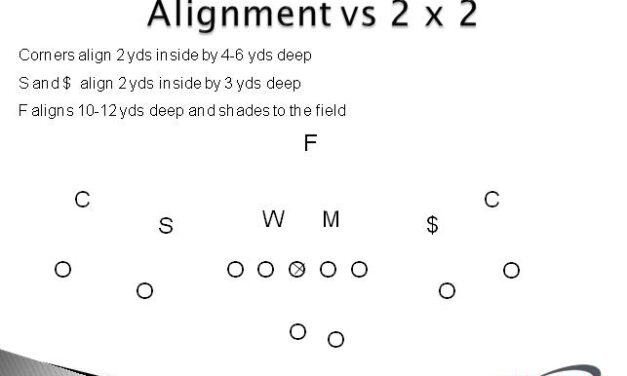
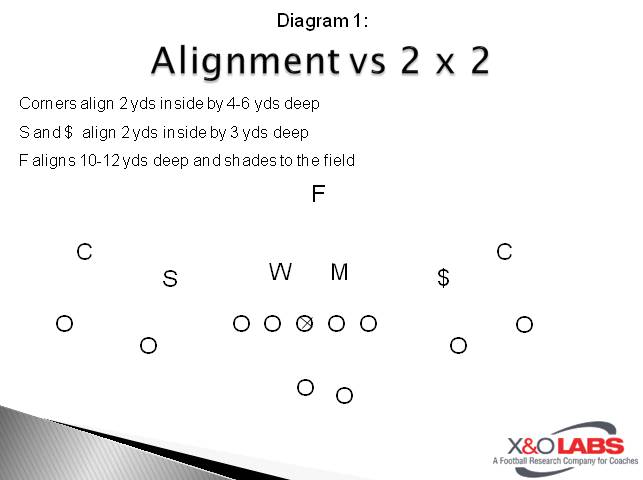
Our base alignment to any 2×2 formation is a 1 high look (Diagram 1). We play all defenders in an inside alignment because we want to force long throws to the outside. Our OLBs are 2 yards inside and 3 yards deep of any split inside receiver. They will be 2×3 to the outside if #2 is a TE. Our corners play at a depth of 6 yards and are shaded 2 yards inside and looking in at the near tackle for their run/pass read. The free safety is aligned over the field side guard at a depth of 10-12 yds. We may play with his depth or width depending on the situation but this is our starting point.

Slide1

SOLO COVERAGE is our 1 high coverage. 

SOLO starts as a man-free Cover 1 concept.  We want to give our free help versus inside vertical routes. Responsibilities in this coverage are as follows:

Outside Linebackers: They have #2 on everything except shallow crossing routes. They must pass crossers off to the ILBs and get depth, looking for a crossing route coming back at them. They must make a “CROSSER” call.  Help on any deep crossing routes. They are responsible to fight across any blockers and be the first defender to any WR screen.                                                                                   

Cornerbacks: Expect to play the receiver man to man on every route. If #1 runs a post, he must make eye contact with the FS. If the FS gives you a “CUT” call, zone turn deep to the outside looking to get over the top of a wheel route. If no “CUT” call is given, continue to run with the post route. If he sees #1 run a Screen, he must make a “SCREEN” call as loud as possible and play deep for any tricks plays off the screen. Once the ball is in the air, he can rally to the screen late.                

Free Safety: He is making his run/pass read off the guards. If he gets a pass read, he will read QB’s eyes and scan the field while getting depth. If a post is coming at him, he must peek to the #2 receiver on that side to check for a post-wheel combo. If there is a post-wheel combo, he must make a “CUT” call alerting the corner to zone turn to the wheel and the FS will then play the post route. If there is no post-wheel combo, he is responsible for the deep middle helping out on any crossing routes deeper than 8 yards.             

Applying the Free’s Rule:

Once our free reads pass, he starts his rule by getting his eyes to #2 to the field.  #2 can do 1 of 3 things. He can release inside (like a mesh route), he can release vertically (like a hitch or a go route) or he can release to the flat (like a slide route or a bubble route).

If the Free sees #2 go to the flat:

We teach the free to snap his eyes to #1. If #1 is running towards him, he will make a “CUT” call to the corner. This tells the corner that the FS will take over #1 and the corner must get back to the deep third. The biggest coaching point is to get the free to recognize post-wheel as quickly as possible so he can make his “CUT” call early and release the corner. We tell our free if he doesn’t like the angle #1 is running or if the corner is running parallel to the LOS, he can get over top of #2 if he wheels. 

If the Free sees #2 go verticle:

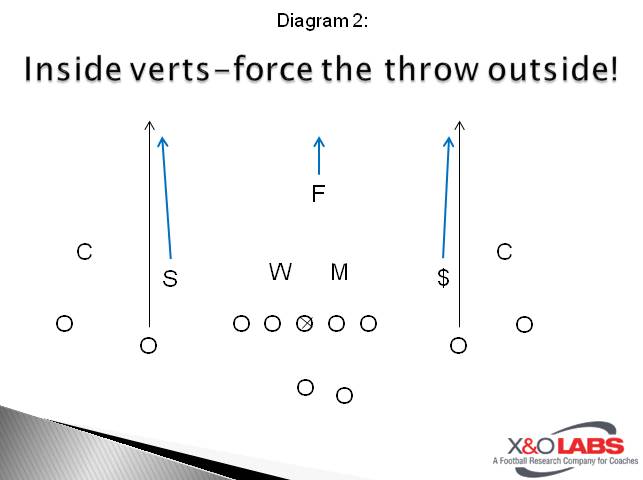
If #2 is climbing vertical, the free must continue to get depth and peek at #2 weak. This tells him if he is getting inside vertical routes. Our free will try to stay in between both inside verticals and react to the ball when it is in the air, he cannot be moved by the QBs eyes. (Diagram 2)

Slide2

Read More

7 Drill Categories Used To Simulate RPO Reads

By Mike Kuchar
Senior Research Manager
X&O Labs
Twitter: @MikekKuchar


Editor’s Note: The following research was conducted as part of XandOLabs.com special report on “Run/Pass Options.”

Even though the majority of coaches choose to rep their RPOs during team sessions, we wanted to explore the methodology of the 30 or so percent of coaches that use other forms of drill work such has half-line drills, mesh reads and group work to rep the RPO reads. We asked them to select one drill that they felt reinforces the reads of the RPO for the quarterback. Some of the more general responses are below, followed by specific types of drills.  

Question: What is one thing (individual work, group work, walk though, etc.) that you do in practice that best teaches the QB to make the right decisions in the RPO system?

Reader Response:

Jeff Russell, Wethersfield High School (CT): “Our first RPO that goes in is a combination of an Inside Zone?play and our Stick passing concept. Our receivers coach will?be working Stick with the receivers during individual, our QBs and RBs will be working on the mesh keep/give concept of our running plays from different alignments, and our offensive line will be working on zone blocking with an emphasis on double-teaming the LOS, and slowly working to the second level. Then we see how it all comes together in team and troubleshoot it. If we see an uncovered offensive linemen flying up to the second level too fast, and putting us in an “illegal man downfield” situation, then our offensive line coach will talk to them about securing the defensive line first and only attacking a LB who is attacking you. The QB reads usually take care of themselves with repetitions. The QB will slowly start to see that he can’t predetermine the read.”  

Mike Martin, Madison High School (OH): “We evolved into using our perimeter game teaching/thud sessions on Tuesdays (outside zone leverages, WR screens, RPO) as the biggest prep on this. As I scripted Tuesday practice, the RPO aspect of it just evolved into being an aspect of the game plan that the kids knew we would be covering and shoring up at that time. Teach the scheme and any adjustments, walk through any coverage/alignment variations, get some full speed repetition, then just make sure that you create a few definitive pull reads in your team scripts to make sure the kids have comprehension and can execute.”

Josh Franke, Edgewood High School (OH): “Film, film, and more film. Using a flip cam, we have a manager film our team sessions from behind the quarterback. We are then able to break down each read he makes, correct him if need be, and explain why. This teaches the QB to ‘read’ the play and not ‘run’ the play. Too many times, my young QBs get anxious, or want to run the ball, or want to throw it, that they don’t read the play, they know what they’re doing before the ball is snapped. Film can help get them out of this habit.”

Doug Taracuk, Dublin Scioto High School (OH): “I think the key is getting quality teaching periods and then putting the offensive unit in as many live/semi-live/run through reps as possible. We may have only run 33 RPO plays during our games. We ran close to 200 live or semi-live reps of the plays during pre-season practice, scrimmages and game prep practices. With the Draw/Stick, we start with a QB, RB and TE working against a linebacker. The line and defensive front gets added next, so the back can read the draw blocks. We finish with the rest of the skilled positions and defense. When working with the whole unit once they ‘get it,’ you need to add the ‘what if’s’ or defensive adjustments. We show them every defensive answer our opponents have used on film and on the field during the pre-season. During week one, our opponent changed the nickel back’s alignment to take the ILB out of his assignment conflict. Our QB simply threw to a different receiver. The more the QB can react and not think, the better you are with these combination plays. As I said earlier, with the Draw/Stick drill, we start with the QB, the RB and the TE working against one LB. We try not to clutter the teaching process up. Here, we can work on footwork, handoff and throw effectively. We add pieces as the practices progress. With the Jailbreak, Bubble, and Shark, we like to work against the defense. It becomes almost an old fashioned ‘Oklahoma or Hamburger’ drill. We work one receiver against a defender. The ball is thrown to a second receiver who reads the block. A second DB comes from depth or and OLB comes from width to tag off on the ball carrier. This is done once a day in pre-season, while inside run is being conducted. We found that this helps us understand safety leverage and OLB leverage and how it affects our decision making.”

Scott Girolomo, Offensive Coordinator, Liberty High School (VA): “We run our RPOs in our SKELE (perfect pass) and it allows the QB to locate the read defender a little easier. We do not have much time for indy during the week, so the RPO did not get indy practice time after pre-season. We rep a specific RPO in SKELE and then call the same RPO from the same script in team.”

Rick Bouch, Waterford Mott High School (MI): “We run a drill we call Triple Drill every day. The drill uses all the skill positions vs. perimeter defenders, including a DE. For example, we can Zone Read with a Bubble. The QB reads the DE first, and then continues to the next read if he pulls the ball. The repetition of the drill helps him make the right decision come game time.”

Read More

St. John Fisher’s X Concept to Defend Read Zone

By Mike Fox
Defensive Coordinator
St. John Fisher College (NY)
Twitter: @sjfcfootball

Introduction:

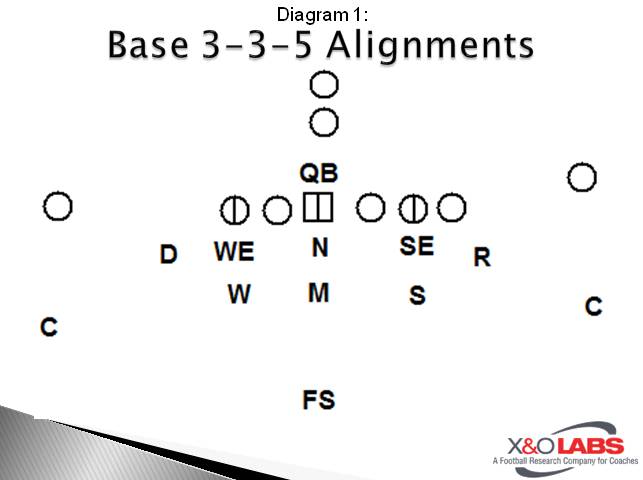
At St. John Fisher College our philosophy is to proactively keep opponents off schedule in the run game by creating negative plays on first down. We take an aggressive approach to this philosophy out of our 3-3-5 base defense by using calculated five-man pressures at the point of attack based on film and tendency study.

In this clinic report, I am going to share one of our favorite base pressures used against a zone read scheme offense. This pressure is simple in concept, but I believe the details and teaching in the run fits are what makes them most effective.

At St. John Fisher, we are a base 3-3-5 defense utilizing two 4-techniques with our defensive ends, 3 true inside linebackers and 3 true safeties. We are primarily a cover 3 or 3 under 3 deep base coverage team, but occasionally being run out of a two high safety shell.

Slide1

It has become common thinking that football has become an offensive driven game. Multiple formations, multiple tempos can create problems for any defensive coordinator. All that said, I believe running the 3-3-5 puts the pressure back on the offense. Preparing for the 3-3-5, duplicating scout looks, and overall scheming against this defense can become a nightmare for offensive coaches.

X Concept

Read More

Individual Mechanics of the Shotgun Rocket Sweep

By Blair Hubbard
Head Coach
Lutheran High School (CO)
Twitter: @CoachHubb2

Introduction:

Since learning the under center Jet Sweep at a clinic in 2003, I have been a believer in having some sort of speed sweep in our offense.  The threat of hitting the perimeter at full speed with lead blockers in front, forces defenses to thin themselves out somewhere, either by alignment or as the motion is happening, to get enough defenders in pursuit to the perimeter.  Identifying where the defense is vacating or leaning is key to knowing where to attack next.

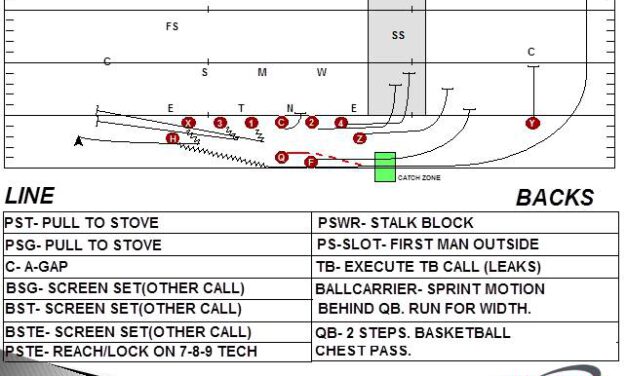
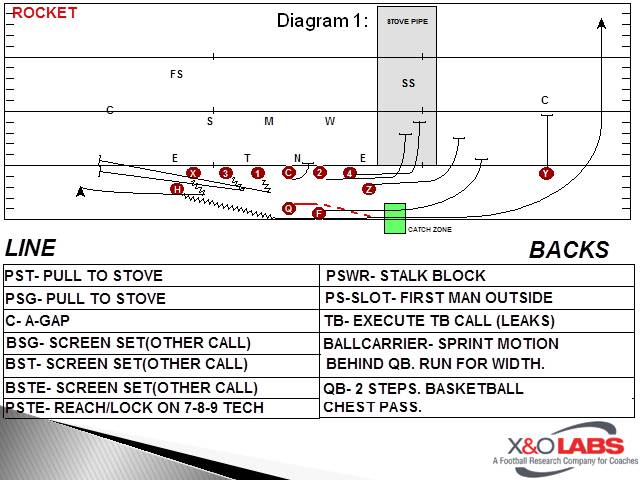
Through the mid-2000’s, we evolved from UC-Jet, to UC-Rocket Sweep, to now attacking with Gun Rocket Sweep. We transitioned to gun in the winter of 2009 to be able to involve our QB more in the running game. When we started in the gym with our QB reversing out in gun and making a toss like we would under center, the ball was all over the gym, and we could not get complement runs into the los with efficient timing. I told our QB, a basketball player, to simply front out and make a basketball chest pass. The pitch was crisp, quick, and on target, and now in an instant we had the ability, from a shotgun set, to hit the perimeter very fast with our Rocket Sweep. We were also still  able to get our complement runs: Powers, G-Schemes, Traps, and Counters into the los with efficient timing. 

From that day in 2009, we have worked hard to build our offense utilizing complement gap running schemes, conflict-creating blocking schemes, screens, quick passing and play action passing, and just enough option to force teams to play assignment defense. The offense is perfect for coaches looking to utilize their QB in the running game without the heavy investment in the option game. In this article, I will share with you how we execute our Gun Rocket Sweep including blocking assignments and techniques by position. I will also share our blocking variations and some of our manipulators.  

Advantages of the Gun Rocket Sweep over the Fly Sweep

  1. It hits the perimeter faster than the fly/jet sweep. With the fly sweep, when the snap hits the QB’s hands, the sweeper is on the back side by 2 to 3 steps of where you want the ball to go.  With the rocket sweep, the sweeper is at least even or 1-2 steps beyond the QB at full speed:  width is the goal. This gives the rocket sweep a 3-4 step advantage over the popular fly sweep, forcing defenses to play that much faster to defend the perimeter.
  2. The rocket pitch is easier to handle at full speed. It’s a catch vs.  a hand-off.  Therefore, it’s no new skill/technique for your players to learn and for you to rep in practice.
  3. It’s less mesh point critical.  Timing issues and bad snaps can easily be overcome by your QB. Timing issues or bad snaps can be disastrous with the fly sweep.
  4. The speed of the sweep, faster than the fly, forces defenses to decide faster, stem or rotate, or simply play unsound defense. This can be taken advantage of through complement runs and play action passes.
  5. Play action and quick passing are enhanced because the QB’s eyes can be downfield seeing any back-end rotation. Because of defensive movement, the screen game can be enhanced.
  6. Pass protection has been enhanced due to softened edge rushers and less blitzing.  Defenses have realized that blitzing defenders lose them necessary sweep pursuit.

Rocket Sweep Breakdown

hubbard1

Quarterback – Aligned with heels at 4 yards, the QB secures the snap and opens with the play side foot to the sideline then crosses over with the backside foot. This will position his shoulders completely perpendicular to the line of scrimmage. From here, he simply makes a fundamental basketball chest pass (thumbs down) to the sweeper, hitting him in the hands.

Read More

Multiple RPOs Off Inside Zone

By David Weitz
Offensive Line Coach
Warren Central High School (Indianapolis, IN)
Twitter: @DWeitz7

Introduction:

Our offense is looking to spread the field in order to get the ball into space. For us, getting the ball in space could be throwing to an open man in space or running Inside Zone into a 5 man box. We do this by giving our players the ability, and the skills, to get the ball to the man who has the most space and best opportunity to make a play. Our Inside Zone RPO is the way we feel we can best accomplish this. It allows us to use a sound blocking scheme that can handle 6 in the box while having a passing scheme that can stress the defense both horizontally and vertically.

Box Play

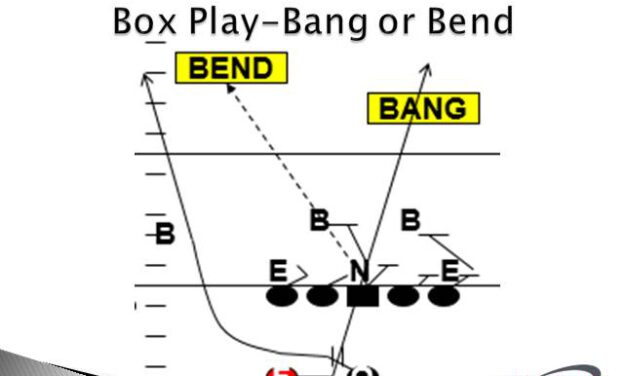
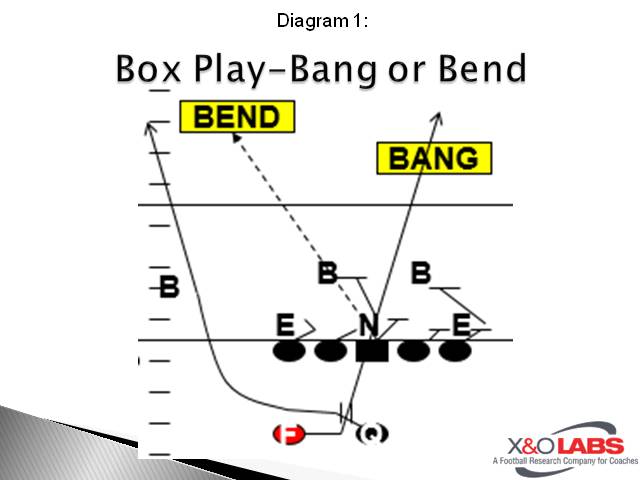
The blocking of Inside Zone could, and has, taken plenty of articles for itself. As an offensive line coach, I hate to breeze by line play but there is no way to do it justice and still include the relevant information for the RPO. We block Inside Zone by leaving the backside end man on the line of scrimmage for the quarterback to read. One concept that we really try to hammer home is that, while our double teams must get vertical movement, we want them to be controlled and methodical in their movement of the defensive lineman to the linebacker. Since our QB has so many options on a pull read, he more time before our lineman get downfield. We’ve also found that our kids do an excellent job of getting a feel for if it is a run or a pass and are able to shut it down around the 3 yard line.

The mesh between our quarterback and fullback is a huge part of this play. From the running back’s perspective he is looking to take the ball coming straight downhill with his shoulder square to the line of scrimmage. There are several coaching points we use to help insure this. The first is the alignment of the fullback. We will have him stagger 1 yard behind the QB. In addition to this we will tell our QB to get perpendicular to the line of scrimmage and reach the ball straight back. This creates a situation where, if the fullback wants to get the ball on a clean path, his natural path is to step directly behind the QB and come straight downhill. From the perspective of the QB, we stole a page from the flexbone coaches and tell him that he is going to give the ball unless the read man can tackle him for less than 2 yards. We tell him to read far shoulder, far hip, near knee and just about any other body part imaginable but in the end we found, with practice and film work, our QBs get a pretty good feel for what the end man on the line of scrimmage is going to do. We also try to stress the idea that the longer the ball is in the running back’s pocket the more time he has to read the intentions of the defender.

Slide1a

We tell our running backs that Inside Zone is a physical play and the physicality starts with their running style. Our fullback is going to get his shoulder pads square to the line of scrimmage and chase the play side hip of the center while looking to bang the ball through the play side A gap. In the event that the play side hip of the center isn’t getting movement, he will plant, lower and bend the play through the backside A gap. Just like with the QB, we’ve found the best way to get the running back to play fast is to give him one way decision making. In this scenario, we are telling him you will bang the ball through the play side A gap unless there is no movement. We also tell him we will never get mad at him for banging it through the play side A gap.

Read More