

Inside Zone: Case 3 – Combination Block Fundamentals and Techniques


By Mike Kuchar

Senior Research Manager

X&O Labs

Introduction

This case is focused on the techniques that are taught when combination blocking the inside zone scheme.  These are used when two offensive players are responsible for blocking two defenders.  Before we start to address the “how” used by coaches to teach this technique, we’ll start with how lineman are taught to identify the “who” to block.  

IDENTIFYING SECOND LEVEL TRIGGER POINTS

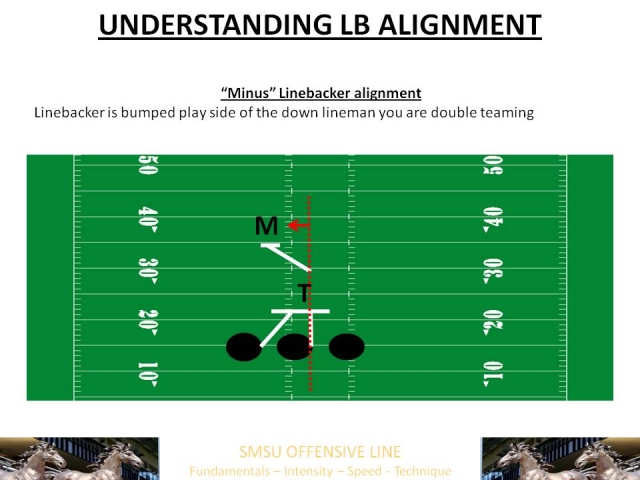
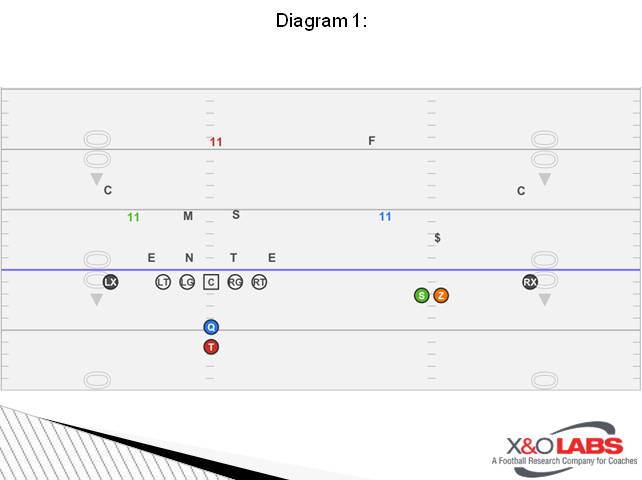
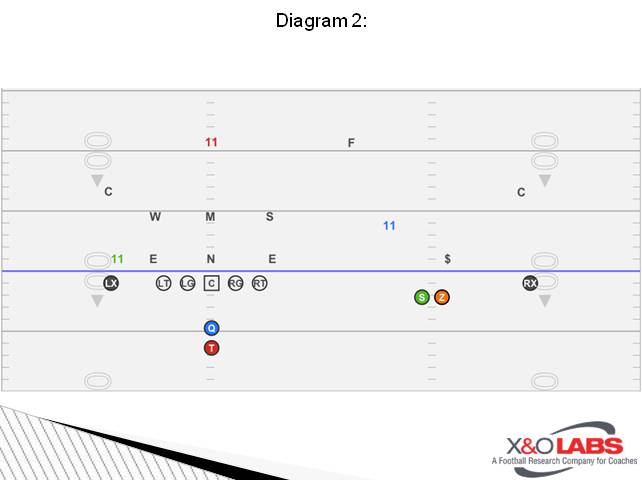
Many coaches put a premium on identifying the leverage of the second level player that the combination will be working up to.   Lineman need to not only identify the linebacker they are working to, but also understand where that player is situated the footwork needed to get there.  Jeremy Darveau, the offensive line coach and offensive coordinator at Southwest Minnesota State University, is one of those coaches that educate his players frequently on the location of linebackers.  Darveau talks about a “Plus” and “Minus” leverage point for linebackers.  A plus alignment refers to the play side linebacker being “plussed” over, which means wider from the box (Diagram 1).  In this situation, Darveau schools his play side offensive lineman to expect to climb to linebacker level while he tells his backside offensive lineman to sell out to reach the down lineman because of the little chance of him climbing to linebacker depth.  In order to teach the reach, Darveau uses a bucket step, which he calls six inches off the line of scrimmage and eight inches width.  “We want to cover the width of the defensive lineman with the depth of the first step,” was Darveau’s coaching point.    “We are going to expect more of a stretch here,” Darveau told us.  “They really don’t need to get off the double team because there is a good chance that 3-tehnique will spike into the A gap and the Center will wind up taking him over.   In a minus alignment (Diagram 2) the linebacker is tighter to the box.  This would essentially, switch the roles of the lineman.  The backside offensive lineman should now be prepared to climb to linebacker depth while the play side offensive lineman should be aggressive with his second step to get vertical displacement.   In this situation, Darveau teaches more of a flat step to his uncovered offensive lineman because of the probability of getting more of a vertical, not horizontal push.  Darveau’s flat step is what he calls enough of a first step to get to outside framework of covered defender.  It’s an aiming point of the play side number in 7-9 inch area.  “He must stay square in that situation,” said Darveau. 
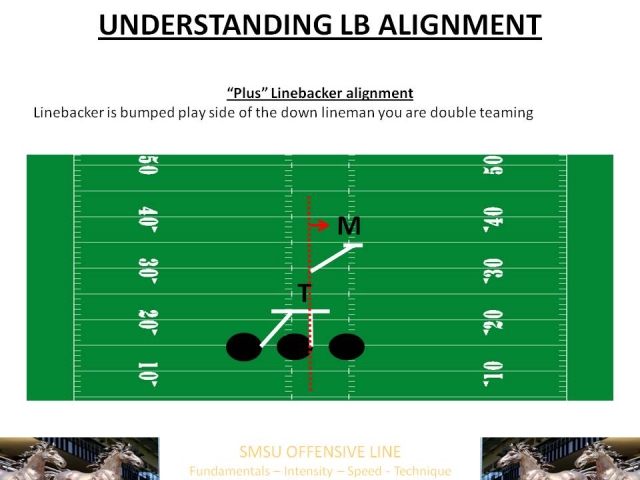
Slide1Slide2

Damian Wrobleski, the former offensive line coach at Rutgers University this season, also uses an indicator system to identify linebackers in the zone run game but he uses a “thick” vs. “thin” scenario.  Thick is the terminology that refers to a situation where a second level linebacker is tight to the Center, which requires the offensive lineman to get more of a piece of him.  The linebacker could be either head up on the offensive lineman.  “In this case, he will use more of a shoulder point and lift technique on first level defender,” said Wrobleski.  A “thin” situation means the second level player is wider, requiring the offensive lineman to not get as much a piece of him.  “In this case, we’ll teach the lineman to use more of a side flipper or hand just to deter him and work to linebacker depth,” said Wrobleski. 


There are two main drills that Darveau uses to teach his offensive lineman block linebackers in space.  One of these drills that Darveau organizes is what he calls Sack Draggers.  It teaches lineman to be able to play with a great base while moving laterally.   The points of emphasis of the drill are below (Diagram 3).
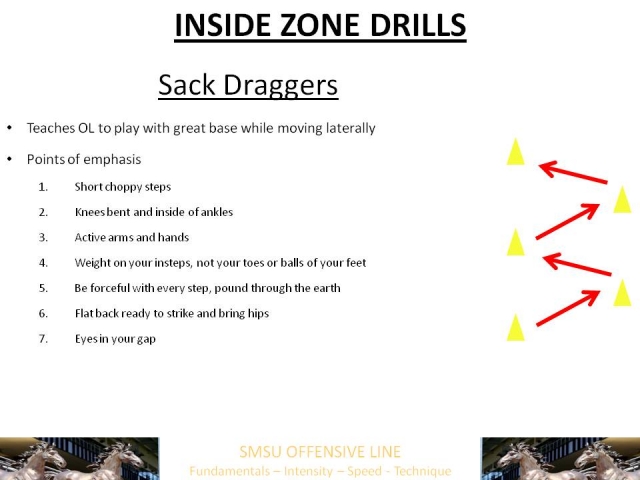
1Slide1


To see video of the Sack Draggers Drill, click on the link below:
Read More

Horizontal Read Options (HROs) Off Jet Sweep

By Jeffrey Russell
Offensive Coordinator
Wethersfield High School, Connecticut
Twitter: @coach_jrussell


Introduction:

russellRPOs have been a major part of our offense for the past couple of seasons in part because of the type of QB we’ve had. This season we replaced our all-state QB with an athlete who was one of our leading receivers the previous season. A lot of time was spent in the offseason as well as the pre-season developing a game plan/offensive identity that fit our new personnel, especially in the backfield. We needed more than just the Zone Read and the Power Read to stretch the defense with our speed at the skill positions as well as our running ability with the QB.
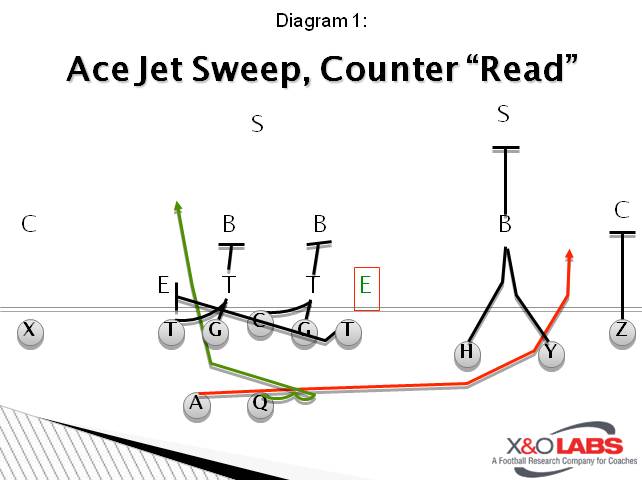
Our horizontal run read or “HROs” are designed to stretch the defense and force them to stop the run from sideline to sideline, hopefully slowing down our opponents ILBs and keeping them honest (Diagram 1). These packages aren’t entirely new, but just a combination of traditional Zone Read and Power Read. This season, HRO’s were a small part of offense but we still managed to average 8.5 yards per play (including plays where the QB predetermined and/or made the incorrect read).

Slide1

Zone Read Elements

Much like the Zone read, the play is designed to stress the front side and the backside of the defense. Since the read comes from the play side DE and not the back side DE, it helps to eliminate some of the strategies that a defense will use to stop zone read (i.e. scrape exchange).

Power Read Elements

Much like the Power read, the play is designed to stress the assignment of the “end man on the line” (EMOL). In a 4 man front, the edge player or EMOL is usually a pretty easy read just based off of alignment. Against a 3 man front, the read gets a little more challenging as it’s usually unknown pre-snap whether or not that EMOL is going to be a “C” Gap/Contain or a “B” Gap player.

Play Call and Concept

We are a no-huddle varying tempo offense that uses hand signals to send plays into the QB and the rest of the skill players. The QB then provides the offensive line with a “code word” and a “call side” to let them know what run concept they’ll be blocking. Because of this, the offensive line is sort of “in the dark” when it comes to knowing who the ball carrier is and where they’re going. This is fine because it’s all apart of the true “sell” of both concepts by the offensive line and the skill players.

If you broke the hand signals from the sideline down into a sentence it would read (after the formation) “Running Back Jet Sweep Left, Counter Right, Read,” as an example. The skill players are looking for the initial information of which player is tagged and what concept they’re running. They are taught (in our offense) that the “Jet Sweep” is always blocked by the skill players when a “run play” follows in the signals. When a pass concept is signaled following the jet sweep, the receivers will run the pass concept instead of blocking the Jet Sweep (this would be in our RPO concept).

The QB is taught to look for the “READ” hand signal, which tells him what information he’ll be providing to the Offensive Line. If the signal came in as “Running Back Jet Sweep Left” then the QB would be providing the offensive line with whichever code word represents “Jet Sweep” in our offense, but once you add in the “READ” hand signal at the end of the play call, the new preceding run blocking concept would be relayed to the offensive line.

The Decision

I don’t always like to refer to the EMOL as the read player, because a lot more goes into deciding whether or not we hand the ball off to the running back or keep it. For example, our QB will make an RPO count on every play. He does this on both sides of the formations allowing him to always know “who the read” player is on RPO concepts. This simple math also lets us know whether or not we have a blocking advantage in the Jet Sweep or not. While this count might slow players down initially, but in the end it’s no different than having a player count the box to determine run/pass.

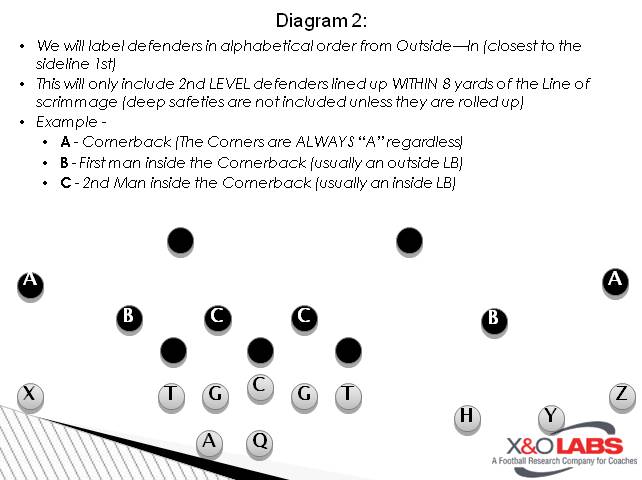
If we are running an RPO, we label defenders in alphabetical order starting from the CB or the defender closest to the sideline (Diagram 2).

Slide2

Note: for more on this approach to labeling players, read the report by Western Connecticut’s Drew Owens.

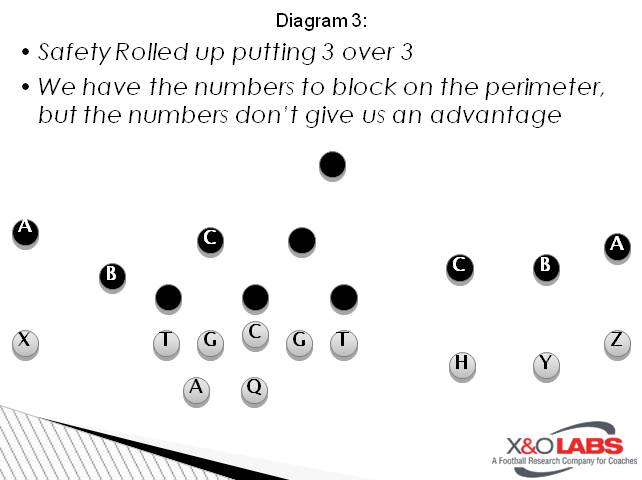
We only count players who lineup within 8 yards of the LOS before the snap. Often times, if a safety’s pre-snap alignment puts 3 defenders over our 3 receivers, then it will make the “pre-snap” decision for us (Diagram 3). Slide3

Read More

Using Trips to the Field Exclusively

By Kurt Earl
Head Coach
Lincoln Christian School (Lincoln, NE)
Twitter: @KurtEarl14

Introduction:

lcSeveral years ago as we transitioned into a 100% no huddle offense, we realized we weren’t operating at a pace that was actually giving us a competitive advantage. As we began searching for ways to shave off extra seconds in between plays, we soon realized one of the things that was slowing us down the most was changing formations nearly every play. Changing formations took up time while signaling the play in and while players moved into the formations. Thus, we began to tinker with the idea of running one formation exclusively throughout a game.

Over the past five seasons, we have used one formation almost exclusively on offense. While we have used other formations at times we have never entered a game with more than three formations in the game plan. There are three important factors that you have to understand if you are going to run 95% of your offense from one formation. First, you have a to pick a formation for your offense and your understanding of how to attack a defense. Second, you have to embrace a “take what they give us” mentality and drop a “this is our bread and butter” mentality. Finally, you have to have answers to the defense’s potential adjustments to your play-calling.

Why Trips to the Field

Over the years, I have evolved into a true spread option, RPO, zone-based blocking scheme coordinator. When I see a defense line up against 10 personnel I immediately start to see zone reads tagged with bubble screens, inverted veer, four verticals off of play-action, etc. Therefore, as we’ve traveled this journey towards becoming a one formation offense I’ve settled on a formation that fits my thinking as a play-caller.

If you don’t think about offense the way I do, it would be a mistake for you to copy what you see me doing in this article. If you’ve been a Wing-T guy for years than you need to pick a Wing-T friendly formation. If you’ve traditionally used more of a pro style approach than pick a formation that is conducive to calling pro style types of plays.

The point I am making here is that we settled into what we call an Open formation because it fit the way I have learned to attack a defense. Our open formation is a 3×1 formation, with the trips to the field, using 10 personnel. From that formation, I have all of my favorite options available to me. I can run my base RPO, speed option, inverted veer, etc. I can isolate my best receiver on the boundary side and attack with verticals or spacing concepts on the field side. The point is, I suggest that you take what I share here and find ways to apply the principles and ideas to your way of thinking about offense.

“Take What They Give Us” Mentality

You don’t have to be a football genius to know that there are too many defenders in both of the diagrams below. The point I am making with those diagrams is that most defenses line up in either a 4-2 or 3-3 front and the only real difference between defenses is the location of the 11th man. Yes, there are dozens of possible variations to the defenses in the diagrams, but you can begin to anticipate most of those as you study film. Each DC only has a handful (or fewer) variations he’s comfortable running against our tempo and the diversity of concepts we bring from our one formation.

Slide1Slide2

Read More

Army’s Two-Gap Technique to Defend Zone Runs

By Mike Kuchar
Senior Research Manager
X&O Labs
Twitter: @MikekKuchar


Editor’s Note: This research was conducted as part of XandOLabs.com special report on “Odd Front vs. the Run Game,” see below for details…


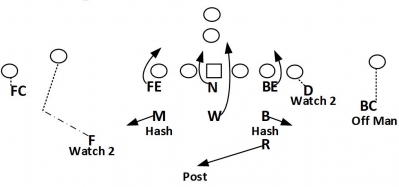
This is a technique used by Army defensive coordinator Jay Bateman 50 percent of the time in base situations, mainly when the back is set away to the side of the open side end. It’s a technique used when the defensive end is working with a linebacker to defend two gaps. It eliminates the ball hitting on a linebacker or safety. “If we play Robber defense, where we get speed receivers to the field, we will have the defensive end play both B gap and C gap because we don’t want that safety being the only player to play the C gap,” said Coach Bateman. “The Mike and Will can play a backside gap (Diagram 4). If the offense is in a gun formation with the back away from me, I’m a kill player. I will go up and under on that offensive tackle. It’s a jab step and come underneath. It’s a two-inch step. I just want the line to come with me. When they can’t use another blocker on you in a two-man surface, we know where the back is coming from based on everything else we know. If the zone is coming to me, I may take an up field step and then come underneath.”

Read More

Defending RPO and Triple Option – Case 4: Man Coverage Structures to Defend Run/Pass Option Concepts

By Mike Kuchar
Senior Research Manager
X&O Labs
Twitter: @MikekKuchar

Introduction

When we first conducted our research on defending RPO concepts, we were under the assumption that many defensive coordinators will use man coverage structures against them. But as noted in case three, the majority of coaches decide to use split field coverage principles against these types of concepts. This is done in order to negate certain types of route structures based on field/boundary, formation or personnel tendencies. However, there are pockets of programs- such as the ones studied below- that believe whole heartedly in utilizing pure man coverage structures (either cover zero or cover one) to defend RPO concepts. We found that while man coverage concepts may be easier to teach, the success of using these principles are tied to the fundamentals in which they are taught. We examine the different man coverage fundamentals coaches are using in this case.

We decided to segment our research in this case to certain coverages that coaches are using to defend RPO concepts. We also detail which types of RPO concepts or constraints (stick draw, zone bubble, zone pop, etc.) that these coverages are efficient in defending. This case will focus on zone-based configurations, whether it be split field variations or whole field variations. Our research shows that 14 percent will use man coverage principles to defend the RPO game.

We selected four sources that have had a win percentage of .750 or higher in defending these offenses to explain how they were successful. Their system analysis is below.

Source 1: Westfield High School (VA) 
Defensive Line Coach Mike Giancola

Run First/Pass First Methodology:
According to Coach Giancola, where it all got challenging in defending RPO concepts is with teams that started recognizing players that were responsible for the run and the pass. “We had to struggle with the number of adequate guys in the box and an adequate number of guys in the secondary playing pass,” said Coach Giancola. “So teams started running RPOs like fade out and not only picking on an overhang, but seeing what our second level flat defenders were doing. We’ve also seen teams letting the window open up more off the read player and taking a shot on us 15 yards down the field.”

Because of this, Coach Giancola and the rest of the staff started to designate at least one player, mainly a linebacker, to play the pass regardless of his run read. There was a different pass first defender based off the coverage calls. “We have to tell that kid if you get a run read and you are the pass player you have to slow yourself down and alert yourself to the near receiver on the tailback side,” said Coach Giancola. Since many RPO concepts are tagged to the side of the back, it’s that receiver closest to the back that needs to be accounted for in the RPO game. “We tag these with coverage calls,” he said. “In all of our coverages and fronts we know who is pass first or run first. Linebackers need to be run first players or otherwise dictated. We found that tagging the coverage with something like a ‘Tampa’ or ‘Trace’ that you can slow down on the run and favor pass.” Coach Giancola was clear that when that player does see the ball handed off they come up and make the play. “The linebacker reads line through the tailback,” said Coach Giancola. “You see run read and see the mesh point, the next place your eyes have to go is the near receiver to the tailback side for the pass.”

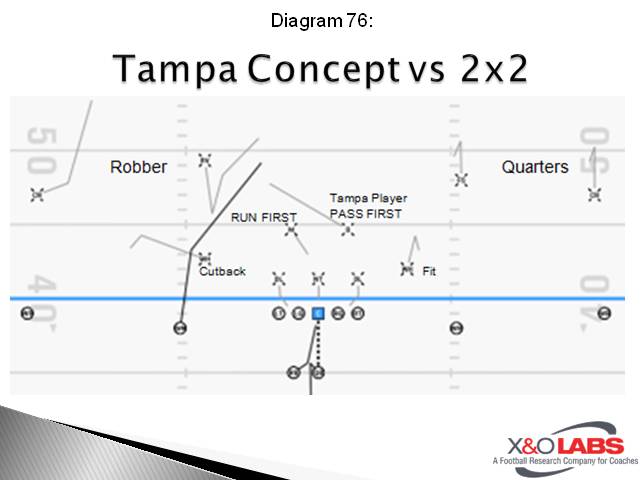
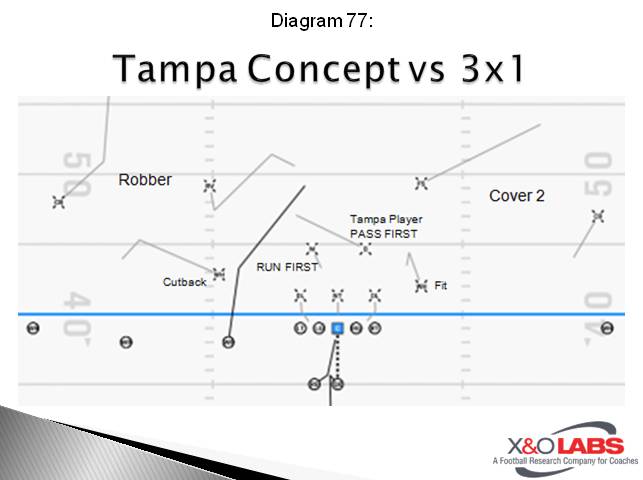
Coverage: Tampa
Constraints Defended: 2×2 and 3×1 Backside Pop or Skinny
Tampa tells the secondary Mike linebacker, or linebacker away from the back, that he needs to key the receiver closest to the tailback side. “We do this with teams that run the number two receiver down the seam with the back to the same side,” said Coach Giancola. “We needed to give our guys help underneath in the secondary because when linebackers were forced to play the run it opened up a hole in the play action game.” Coach Giancola will not give that player a run gap responsibility. The overhang away from the back will be tied into the fit as the C gap player; the defensive end will play the B gap and the nose can two-gap technique. The apexed linebacker away from the pass first player plays cutback, while the first linebacker play side is clued in on the run. “We protect him inside with 4i-techniques he can be late to the football,” said Coach Giancola. He will play a robber concept to the field and a quarters concept away.

Slide76Slide77

To study game cutups of Tampa coverage against RPO concepts, click on the video below:

Read More

Seams and Verticals to Stress Third Level Defenders

By Lee K. I. Boyd
Wide Receivers Coach
Saint Louis School (HI)


Introduction:

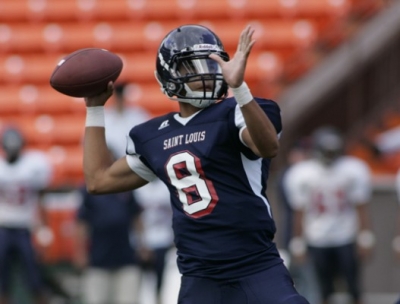
MariotaHere at Saint Louis School, we’re a no huddle Run and Shoot offense. As part of that scheme, the majority of routes will adjust post snap. We do this to get the best routes against the coverage we face each down.
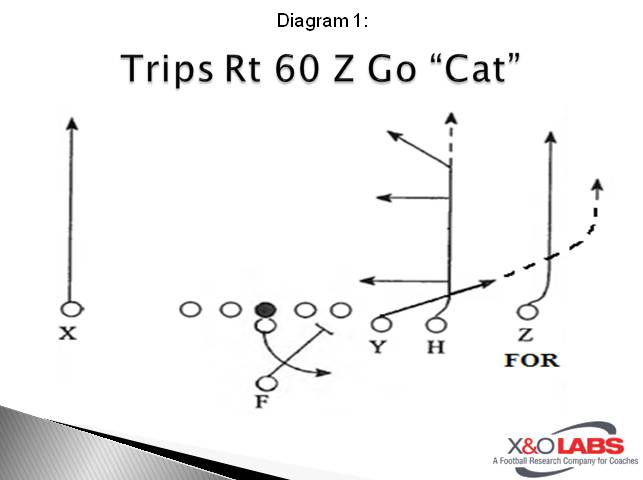
Orchestrating the offense to the degree in which it appears organic and fluid in nature along with our receivers attacking coverages with controlled natural instinct is critical in this offense. It requires us to invest much of our time teaching players how discipline their thought process. This increases the accuracy of their decisions by making them recognize when and where to put their eyes as they root themselves in the moment of the play.

Our philosophy is simple. We’re going to get good at what we do. We line up in 3×1 and 2×2 and play fast. The simplicity of our formations plus tempo allows us to always see the defenses alignment pre-snap, regardless of coverage scheme. When the play starts we’re going to execute what we do, better than you execute what you do.

“60 Z Go”

Our base concept is what we call the “60 Z Go.” The go route sets up everything else in the offense, so we start teaching it on day 1. The transferability and versatility are some of the best aspects of this play.

Slide1Slide2

The whole process for us starts in the spring. At that time, we teach our players the strengths and weaknesses of coverages. This facilitates their understanding as to why our routes change so we can inflict the most damage to that coverage. Although there are multiple variations of coverage we put them into 5 basic categories. We want to keep it simple so that we can play fast and get the receivers and quarterbacks on the same page.

The coverage concepts that we teach are as follows:

  1. 3 deep zone “Cover 3”
    1. Cover 3 Sky –Safety is the flat defender
    2. Cover 3 Cloud- Cornerback is the flat defender
  2. 2 deep zone “Cover 2”
    1. 2 deep man under
  3. 4 deep zone “Cover 8”
  4. Man free
  5. 4 across man (blitz)

Back Side #1 Receiver “Up Route”

The back side receiver will align at the bottom of the numbers and execute an up route. He is responsible for creating a vertical stretch on the defensive coverage and preventing the backside cornerback from becoming a factor to the playside.

The up route receiver has two key jobs on this play. First, he must tie up the coverage on the backs side of the concept. Secondly, he must also test his cornerback’s use of cushion both pre-snap and post-snap (backpedal) regarding his ability to sustain his coverage responsibility. Determining his potential advantage to get vertical on the defender, gives the receiver confidence and lets our play caller know we can attack the weak side cornerback with our “Choice” concept when he’s put into a one-on-one situation.

Read More

Teaching Contain, Chase, Inside and Outside Blitz Angles

By Jeff Rogers
Defensive Coordinator
Armstrong High School (MN)
Twitter: @J_E_Rogers


Introduction:

rogersExecuting a pressure can be difficult. With all of the different pressures that we run it could become difficult for the players to know their blitz responsibilities. So, we came up with four different type of blitzers: Contain, Chase, Inside & Outside.
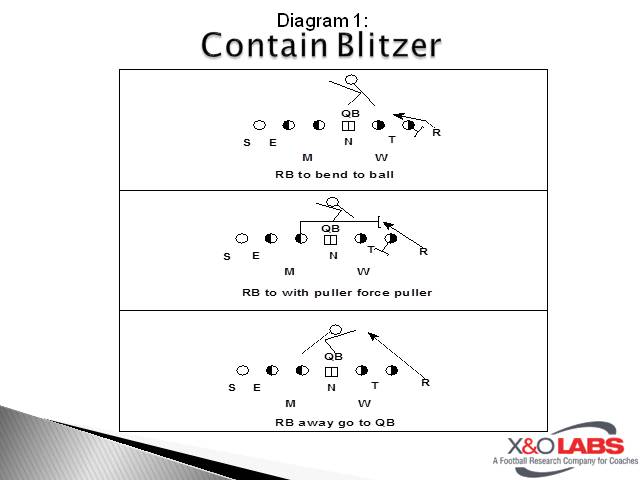
This system allows the players to know what type of responsibility they have in each pressure based on what type of blitzer they are in the pressure. This allows our players to play faster because they clearly know their responsibility. Naming the type of blitzers allows for coaches to use the same language with all players.

CONTAIN BLITZER

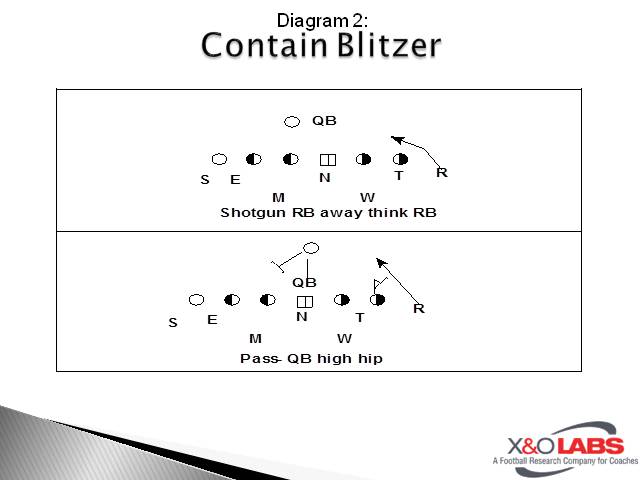
A contain blitzer is a blitzer off the edge. This type of blitzer will force the ball to the inside. The blitzer should have his eyes on the EMLOS to the deepest back. His aiming point should be the deepest back in the backfield. This angle will help set the edge behind the offensive line and condense the play. The blitzer should attack the edge of a blocker and keep his outside arm free.

A contain blitzer has a few rules of how they attack a play. Quarterback opens to you go to the ball carrier. The blitzer should go to the quarterback’s up field hip if the quarterback opens away thinking boot. If the quarterback is in the shotgun and running back is to the contain blitzer. The blitzer should think they have quarterback. In shotgun running back is away from the blitzer think running back. When the quarterback drops back to pass the blitzer attacks up field hip of quarterback. The rule for a contain blitzer versus option teams is you have quarterback.

Slide1Slide2

CHASE BLITZER

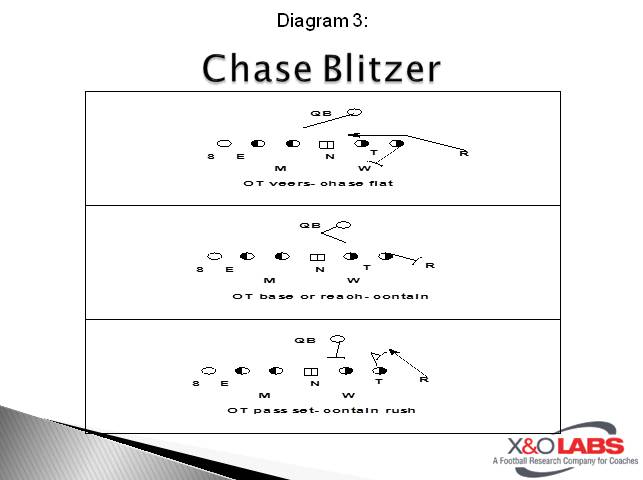
A chase blitzer is blitzing off the edge. This type of blitzer was created for pressures versus zone read teams to change up who has quarterback and running back. The chase blitzer should have his eyes on the EMLOS to the deepest back. The chase blitzer could become a contain blitzer based on what block he gets from the EMLOS.

Chase blitzer gets a base, reach or pass set then becomes a contain blitzer. This blitzer gets a veer block then close flat and play running back. When closing flat, spill all flat pullers and all deep pullers redirect for late contain. The nice thing about the chase blitzer you are never wrong as long as the player reacts to the block properly.

Slide3

CONTAIN & CHASE TECHNIQUE/DRILLS

The contain blitzer must understand his rules in order to execute the technique properly. Type of technique the blitzer uses is based on the block he gets from the EMLOS and ball carrier. The blitzer gets a reach or base block with run to, should attack the outside edge of the blocker while getting knock back on the blocker. Blitzer gets a veer block by EMLOS he should start to squeeze toward the veer block eliminating the space and make sure the blitzer doesn’t get to far up field and create vertical seam. Veer block with run to the contain blitzer should look down the LOS for pullers if a puller comes be ready to force the puller by giving the tip of inside shoulder to puller. Blitzer should keep his inside foot up just in case the ball bounces outside it is easy to rip off the block and redirect outside to make the tackle. Veer block with run-away the contain blitzer should attack the QB’s up field hip to check for boot or even a reverse. Contain blitzer gets pass block work the edge of the man don’t counter unless pass QB depth. With pass rush like the contain blitzer to beat with speed and use different rip moves and bull rush as a changeup.

Read More

Abilene Christian Vertical Settle RPO

By X&O Labs
Twitter: @XandOLabs

Editor’s Note: The following report is an excerpt from X&O Labs’ brand-new, 250-page book, The Complete RPO Manual. To request your copy of this book, please go here.

Vertical Settle RPO Concept:

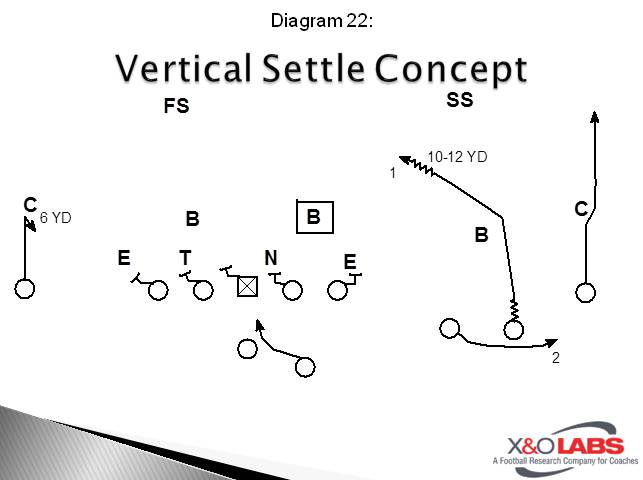
Instead of running a Stick/Draw concept, Abilene Christian uses what offensive coordinator Nathan Young calls a ‘vertical settle’ concept (Diagram 22), which is paired with, Inside Zone run action. The quarterback will read the back side inside linebacker on the play. “If he runs with number three or bails to zone, we give the run,” said Young. “If he sits at all, we are working the vertical settle to the bubble. If he likes the hitch pre-snap, he can take it now,” said Young. According to Young, the settle can’t be run at top speed. “The ball should be caught around ten to 12 yards,” said Young. “Find the dead spot in the zone behind the linebacker and in front of the near safety and shuffle. We do not come to a stop as we want to hit him on the move. Do not bend it so sharp that you get into the back side safety’s business.”

Slide22

To see cutups of Abilene Christian’s Vertical Settle Concept, click on the video below:

Read More

Mixing Coverages Behind Zone Pressures

By Zach Watkins
Co-Defensive Coordinator/Special Teams Coordinator/Linebackers
Washburn University (KS)
Twitter: @Zach_Watkins


Introduction:

washburnIt is always important for a defense to mix up and disguise what they are doing. This is especially true when blitzing. If a blitz is given away early or executed too late, its effectiveness will most certainly be lost. We mix in all kinds of blitzes in our defensive package. We will bring anywhere from 4-7 guys, as well as changing up the coverages behind those blitzes. We feel that you must switch up the coverages to be effective.
In the past few years, we have started to use more zone blitz concepts within our scheme. We have found this to be difficult for an offense to read pre-snap, effective at pressuring the QB and provides certain advantages to us in game planning.

When To Call Zone Blitzes

All downs are possible for us to run our zone blitz packages. Passing situations are obviously more conducive to having success with the blitz, but the run fits are sound for those times we don’t call it at the perfect time. 3rd and long situations (6+) work well, especially with the 1 back sets we most often see. We always want to try to create a 2 for 1 for the RB in their protection so that we have dictated our play for the offense to adjust to.

Pre Snap Alignment

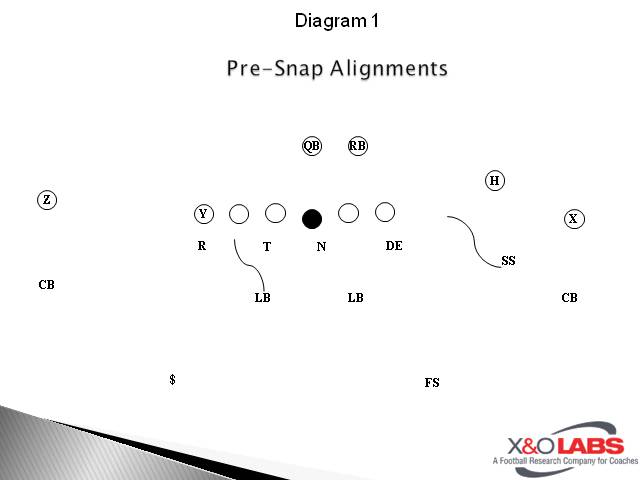
We try to confuse the offense and dictate the protection by “stemming” around pre snap. This includes sugaring our 7 underneath players (DL, LB’s and strong safety (SS)). We will give the same 10×2 high shell look every snap with our free safety (FS) and stud ($), regardless of blitz or coverage (Diagram 1). Our corners can show any leverage and depth, as long as they are in position to play the zone that is called. By maintaining this two high look with the safeties, and with the underneath LBs/SS in our 4-2-5 scheme moving around, we believe it makes it difficult for the offense to diagnose what we are doing. This alignment also gives our guys confidence in their blitzes because if they have stemmed around often enough, their blitz should be disguised.
Slide1

Blitzes

Within our blitz package, we have the ability to bring anywhere from 4-7 guys and still play zone concepts behind the blitz. All of our zone blitzes are states. This helps our players to categorize the blitzes within terminology of the rest of our defense. I will detail three base zone blitzes that we use, Florida, Texas, and Kansas with the different zone coverages we play behind them, 6 Drop, 6 Rush, and Trap 2. We can also “pop” (single blitz) any player who is not a DL and play zone coverage behind it.

Below, I will detail one blitz with all the coverages, and then expand to other blitzes. For the purpose of simplicity, I’ve drawn each diagram to show the field to the right and boundary to the left. We also play man free (Cover 1) behind these blitzes, but I’ll detail the zone concepts for this article.

FLORIDA

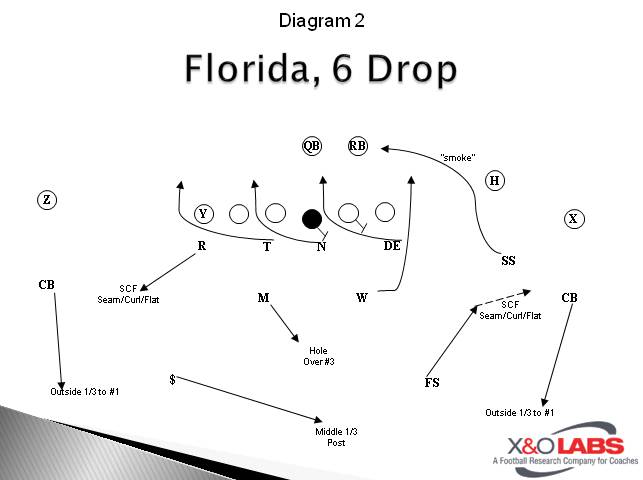
Our main zone blitz is the traditional Fire Zone. “Florida” is used with Cover 6 Drop (3 under, 3 deep, with a DE dropping into coverage) behind it (Diagram 2). Because we run a 4-2-5 and read to the multiple WRs, we typically bring this from the field. We have some flexibility in how we can roll and adjust the coverages, and that we have some more speed coming off the edge in our SS rather than an LB. As in all zones, we will get hands on and be physical with receivers and force them over the top.

Slide2

BLITZERS

Up front we call our strength to the TE, and will keep it that way no matter that blitz. This allows our front to have different looks on film within the same blitz. We will read to the multiple WR side, just like in our base scheme. We could read specifically into the boundary or towards the field if we want to bring the blitz from a certain side based on game planning. We give our DL very simple instructions. They will all “long-stick and read” (hard lateral lead into the direction they are slanting). This slant usually takes place into the boundary.

Read More

Virginia Union’s Top Quarters Beater

By Toriano J. Morgan
Pass Game Coordinator/WR Coach
Virginia Union University (Richmond, VA)
Twitter: @Toriano81


Introduction:

vunionA great deal of Virginia Union’s recent success and resurgence can be attributed to the emphasis they have placed on improving their passing game. That emphasis paid off this season as the Virginia Union Panthers finished 8-3 capturing an invitation to the D-2 playoffs for the first time in 24 years. The Panthers offense has also set several new school records over the past two seasons.
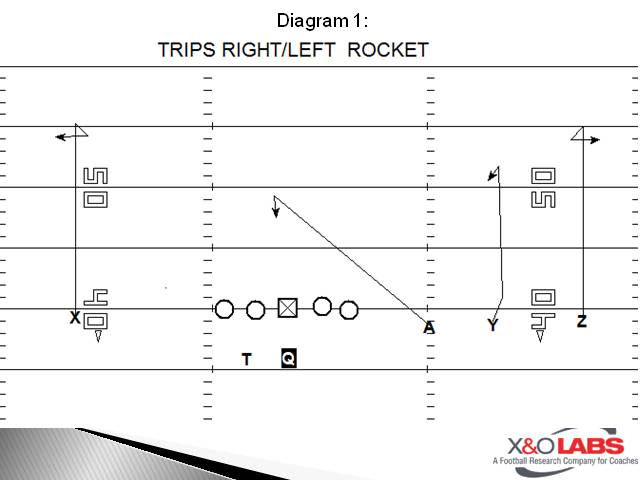
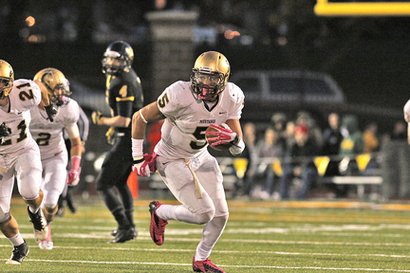

When installing a new offense, we looked to become more explosive and put a concentrated effort on moving the chains and being efficient in our passing game. Our Rocket concept and has allowed us to accomplish both goals and improve our overall offensive production. In just our first year, we finished the 2014 season ranked 1st nationally in yards per completion (17.6) and ranked 4th nationally in Passing Efficiency (168.4) while averaging 277ypg passing up from just 69 ypg a year prior. We also finished 1st in our conference (CIAA) in passing in both 2014(2,772) and 2015(2,618).

The Rocket concept encompassed everything we were looking for. It was simple while looking complex and it allowed us to put the ball in our athlete’s hands. Most importantly, it fit right in to all of our protection schemes.

Rocket Concept:

The Rocket concept is a simple concept that we use out of our 3×1 set majority of the time. This concept entails a 15 yard stop route by the #1 receiver, a 12 yard option route by the # 2 receiver, and a 12 yard sit route by #3 receiver (as shown in diagram 1). We have experienced a lot of success with this concept as it allows us to attack the defense vertically and gives us unlimited options against blitzing defenses and quarters coverage. We have found that this concept is a very compatible to our quick game and has a direct effect on defenses when it’s time to stretch the field vertically.

Slide4

Coaching the Stop Route:

We require that the receiver use a speed release off the football. We coach our guys against a soft corner to attack the defenders technique splitting the midline of his chest while quickly closing his cushion. Once he feels he has created a two way go he should step on the defenders toes, causing him to open his hips. Once he has opened the defenders hips, he is coached to continue to push the route to 15 yards. He will make his break opening his hips 45 degrees expecting the throw to be on his up field shoulder, providing him the opportunity to run after he makes the catch.

Read More

Southwest Minnesota State’s Draw/Hitch RPO

By Mike Kuchar
Senior Research Manager
X&O Labs
Twitter: @MikekKuchar


swmnfbEditor’s Note: The following research was conducted in part of XandOLabs.com special report “The Run/Pass Option” study, which can be accessed by clicking here.
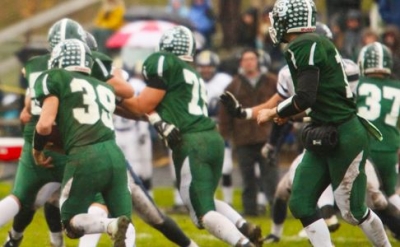
Instead of using the play side inside linebacker as a movement key in the hitch concept, Head Coach Cory Sauter chooses to put the perimeter outside linebacker in run/pass conflict. The run action is quarterback isolation, while reading the apexed player. Sauter will use hitches, outs or bubbles by the number two receiver to get the apexed player to widen. The quarterback will read number two play side. “If number two doesn’t blitz, we throw the easy hitch if he reacts off the QB draw,” said Sauter. “If he blitzes, we simply throw one of the hitches or we may convert to a fade if we see press.”

Read More

Teaching Gap Double Teams vs. Zone Double Teams

By Rich Alercio
Head Football Coach, Assistant Athletic Director
St Johnsbury Academy (VT)


Introduction:

coverThere are differences and similarities between combination blocks and double teams for offensive linemen. Regardless of your offense (Spread, Pro-style, Wing T), or your offensive line schemes (Man, Zone, Gap) you will inevitably have scenarios where two offensive linemen are engaging with one defensive lineman and working to a linebacker. Combination blocks are most often associated with zone blocking schemes, but they occur in almost every scheme you could run.
The Combination Block

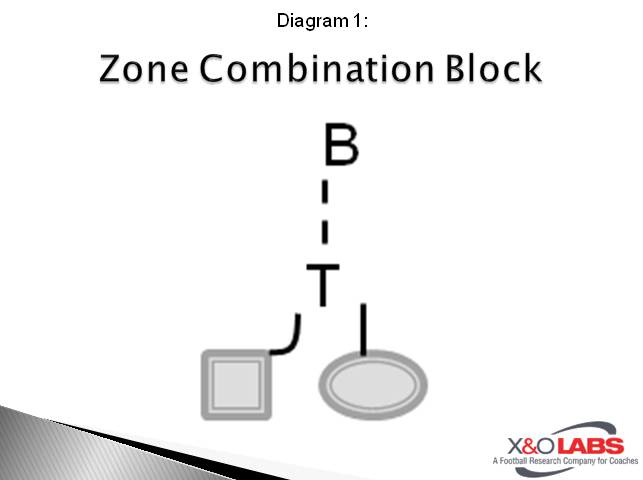
There are four scenarios in zone blocking for offensive lineman. They can be either covered or uncovered. When covered, they can be covered with a defensive lineman on their playside shoulder or backside shoulder. A head up defender is treated as covered on backside shoulder for the purposes of combination blocking. When uncovered, they could have a defensive lineman in their playside gap or their playside gap could be open.
The combination block scenario is created when one offensive lineman is covered with a DL on his backside shoulder (inside zone right with the DL on his left shoulder) and an adjacent offensive lineman to his back side is uncovered (See Diagram 1).

Slide1

In the zone blocking scheme, all offensive linemen must step with the same foot. On inside zone right, for example, every lineman steps with his right foot. In Diagram 1 (above), the covered lineman (right guard) will take a base step (vertical drive step) with his right foot. The uncovered lineman (Center) will execute a reach step (vertical step with lateral displacement) with his right foot. Both will utilize the “Heel Replaces Toe” concept in determining the vertical distance of the step. The lateral distance of the reach step of the uncovered lineman is dictated by split and alignment.
The second step for each lineman will mirror the path of the first step. The covered lineman will vertical drive while the uncovered lineman work for lateral displacement. The vertical distance of the second step is such that the heel of the second step lands at the same vertical depth of the toes of the first step (heels never pass toes).

Read More

4-2-5 LB Play: Case 1 – Bucknell’s Fits Based Off Run Concepts

By Mike Kuchar
Senior Research Manager
X&O Labs
Twitter: @MikekKuchar

Introduction:

bucknellIf you operate out of the 4-2-5 defensive structure than you know how vital it is to get those two box linebackers trained on their keys. In most cases, you’re playing with six in the box (an unloaded box), so you need to rely on the perimeter defenders to add on to the run game to get a plus one defender against quarterback runs. But how you choose to fit your defenders relies on several components, including offensive formation, coverage structure and field/boundary protocol. Here at X&O Labs, we wanted to conduct comprehensive research on how linebacker coaches were teaching their players to fit the one-back run game out of the 4-2-5 defense. And what we found were three common threads among our research:

  • Coaches either fit gaps or schemes… we present both of these philosophies
  • Coaches are finding ways to get a plus one defender on the read gap in Zone Read schemes… whether it is Inside Zone Read (C gap read), Mid Zone Read (A gap read) or Power Read (B gap read).
  • Coaches are using eight man fit principles to defend the Y-off formation and the pre and post snap motion associated with it.

So we spent time with four programs that operate out of the 4-2-5, successfully we may add, that all fit one back run concepts differently:

  • Bucknell University (PA)
  • Marshall University
  • Tennessee Chattanooga
  • California University (PA)

The run concepts we focused on were the Inside Zone, the Middle Zone, the Power and the Power Read. What we found common among all of our contributors was the ability to outnumber the offense by either putting two defenders on the running back or two defenders on the quarterback, depending on which phase you want to eliminate. How each program did this varied, and is explained thoroughly in this report.

We’ll start with Bucknell…

The Bucknell Methodology

At Bucknell University, the Bison defense vary its fits based on the run concept. They distinguish their run fits based off two types of zone schemes- the middle zone and what linebacker coach Brad Fordyce calls the cutoff zone. The middle zone has a probability of hitting front side, while the cutoff zone has a higher probability of hitting back side. Because of this, they train their play side linebacker to “fall back” to play the cut back, which is different than programs that use perimeter players to handle this responsibility. The Bison primarily utilize a quarters coverage structure on the back end and by having the play side linebacker responsible for cutback it allows the perimeter players to defend the common RPO (run/pass option) scheme spread offenses employ. In this case, Coach Fordyce details how he fits the various run concepts he sees out of one-back formations.

Contributor: Brad Fordyce, linebacker coach

Stats:

  • • Been in the top 10 in total defense at the FCS level the last four years in a row.
  • • Finished 11th in rushing defense in 2014, surrendering 3.04 yards per carry.
  • • Finished 10th in total defense in 2014, surrendering 302 yards per game.

Personnel and Base Structure of Defense:

Bucknell operates purely out of a 4-2-5 defensive structure and is mainly a Quarter, Quarter, Half coverage team (Diagram 1). Against one back offenses, Bucknell chooses to set its 3-technique to the side of the back regardless of formation. In its purest sense, the 3-technique will be set to the field or tight end side, yet both interior tackles are interchangeable because it presents the ability to line them up head up and move into a shade pre or post snap. Bucknell uses an open side defensive end and a closed side defensive end. The Sam is the field side inside linebacker while the Mike is the boundary side inside linebacker. The strong safety (N in some of the diagrams below) is the field side linebacker. The Whip is the boundary safety while the free safety is the field hash player. Bucknell also plays with a field and boundary corner, mainly because it’s field and boundary oriented.

Read More

4-2-5 LB Play: Case 2 – Marshall’s Fits Based Off Field and Boundary

By Mike Kuchar
Senior Research Manager
X&O Labs
Twitter: @MikekKuchar

The Marshall Methodology

marshall1Marshall University mixes quarters coverage and man free coverage in their secondary, which means it will vary between playing the zone read game with even numbers or with a plus one defender. Because of this, linebackers coach Adam Fuller has built in concepts, which notify the read side defensive end whether or not he has help on the quarterback. Much of what Marshall does relies on the field linebacker (or Nickel) to be the extra hitter in the one-back run game, but there are several formations that stress that defender causing adjustments to be made. Coach Fuller details those adjustments and how he handles pull plays in case two of our special report.

Source: Adam Fuller, linebacker coach

Accolades:

  • Finished 13-1 and 22nd in the AP poll after 2014 season.
  • Won Conference USA title for the first time in school history.
  • Finish 18th in scoring defense at the FBS level, surrendering 21 points per game.
  • Finished 10th in tackles for loss at the FBS level, averaging 7.5 per game.

Personnel and Base Defensive Structure:

At Marshall, holding the split safety disguise is vital, considering the various types of spread offenses that are prevalent in Conference USA. Much of what Marshall does to get the eighth defender to defend quarterback run concepts is done post-snap. In its base structure, Marshall operates out of a 4-2-5 and utilizes Man Free coverage concepts 50 percent of the time and Quarters coverage concepts 35 percent of the time. The rest is delegated to Fire Zones. Because much of what Marshall does relies on a Man Free system post-snap, they will use their free hitter to the field side, whether it is the Nickel or Sam linebacker. This is needed to get the eighth defender to defend the quarterback run in the option game. They will rarely have their boundary fitter (weak safety or corner) play an interior gap in the run game.

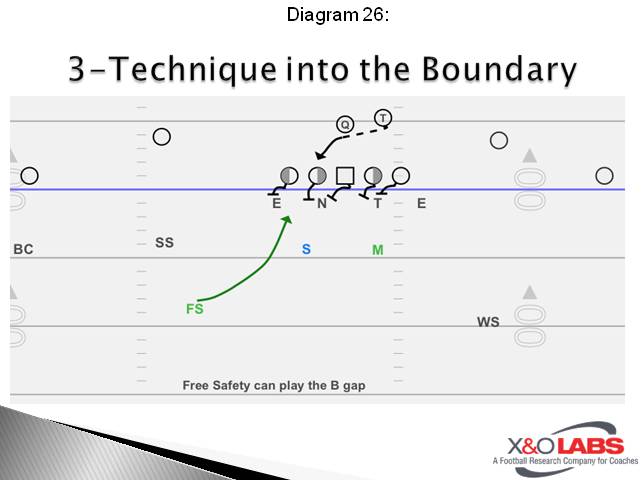
In order to do that, Marshall will set its 3-technique into the boundary so that the field hitter doesn’t need to play an interior gap such as an A gap (Diagram 26). “It’s a lot easier for him to play a B gap particularly when the Zone is moving towards him,” said Coach Fuller. “It’s less distance to travel.” It’s important to note that Coach Fuller refers to Quarters fits as any two-high safety fit, which could be Quarter, Quarter Half or Cover Zero.

Slide26

Linebacker Pre-Snap Protocol:

Coach Fuller is big on making sure his linebackers are reactionary, therefore he spends a lot of time talking to them about fit concepts and not so much coverages.

“You always have to coach the picture because that is what kids see,” Coach Fuller told us. “We key the back to unlock our movement and then key the linemen to better understand what we’re seeing. For example, if teams are running the tackle pull play we want to see the tackle. On the Power play, we want to see the double team at the point of attack. On the Zone schemes, we want to feel the tempo of the back. It’s all based on what you see most frequently.” Which is why Coach Fuller will vary his pre-snap keys for his linebackers. Any time an offense is in a shotgun set, he’ll have them key near back to flow of the offensive linemen. But when the quarterback is under center, or in Pistol formations, he’ll use an under key such as the line of scrimmage as a pre-snap read.

Linebacker Post-Snap Protocol:

There are three basic techniques that Coach Fuller uses with his linebackers as a post-snap reaction. They are all used in different circumstances and are described below.

Motor Technique: This is used when box linebackers get Zone action to them. The coaching point is to keep moving your feet and trying to keep feet connected to ground by gaining ground. “We talk about pounding our feet into the ground in a balanced position such as motoring our feet,” Coach Fuller told us. “Sometimes they move too much on those Zone schemes. You can’t move to much.”

Read More

4-2-5 LB Play: Case 3 – Tennessee Chattanooga’s Fits Based on Formation

By Mike Kuchar
Senior Research Manager
X&O Labs
Twitter: @MikekKuchar

The Tennessee Chattanooga Methodology:

tennchatAt the University of Tennessee Chattanooga, much of the one-back run scheme its defense sees comes in the form of either 2×2 or 3×1 sets which is why linebackers coach Rusty Wright has a different run fit concept for each. Coach Wright will adjust his fits based on 2×2 open/closed and 3×1 open/closed sets and will rely on his Dime defender to be the adjuster. The Mocs face a good deal of zone bluff and power read run concepts, which is why he trains his box linebackers to focus on the movement of the Y post-snap to give them their correct keys. When defending the Pistol formation, he refers to the “turn (of the quarterback) and the Yo (movement of the Y post-snap) to alert his linebackers on whether or not they play the gaps in front of them, or they fall back to play behind. This is all detailed below in case three of our special report.

Source: Rusty Wright, linebackers coach

Accolades:

  • Finished 4th in total defense in 2014, surrendering 277 yards per game.
  • Finished 11th in scoring defense in 2014, surrendering 19.4 points per game.

Personnel and Base Defensive Structure:

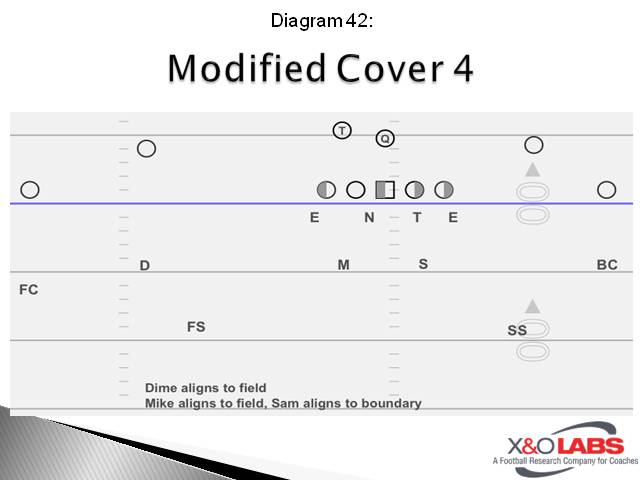
The University of Tennessee Chattanooga bases off a 4-2-5 structure with what Coach Wright calls “a bastardized version of cover four.” The Dime will go to the field with the free safety while the strong safety or boundary safety (Diagram 42) aligns to the boundary. Coach Wright preaches his simplicity of the Mocs defensive structure based on the fact they don’t move too much. Against three man surfaces, the 3-techique will be set to the field while the defensive end will play a 6-technique on the tight end. “We look like a Quarters team, but we’re getting to an eight man front pretty quickly,” said Coach Wright. “It’s get a hat in the gap and go.” According to Coach Wright, the Mocs base their fit off either 2×2 or 3×1 sets based on where the help is. The free safety is not in the fit because of the Quarters coverage structure they play behind it.

Slide42

Linebacker Pre-Snap Protocol:

The Mocs play with a field (Mike) and boundary linebacker (Sam), who line up in 30 techniques on every snap. Coach Wright tells us these two players are among the smarter players on the defensive unit because their fits can change weekly. According to Coach Wright, they could be the same player, but the boundary linebacker may be a hair faster because he has to run with number two in pass situations.

Base Zone Read Run Fits:

In order to understand how the Mocs fit the Zone Read play, it’s important to know that in shotgun formations, the extra defender in the fit will be the Dime linebacker who will align to the field. The Mocs based their support off where the off set back is in shotgun sets. If the back is away from the Dime, he lines up tighter because the Zone would work towards him. If the back is to him, he’s a little wider to play the wind back. Like Coach Fuller, Coach Wright stressed the importance of putting two people on the wind back of the Zone. In most situations, the eighth defender will be the Dime, so the help comes from the field. If the back is set to the Dime with the zone going away from him, he becomes the C gap wind back player with the defensive end. The Mike is B gap player and the Sam is A gap player (Diagram 43). If the back is set to the boundary away from the Dime (and away from the help player), the Dime has the B gap, Mike plays the A gap and the Sam is the wind back player with the defensive end (Diagram 44). “If the back is away from them, then we call it playing behind,” said Coach Wright. “The Zone comes to them so they don’t have to go run it. You step and fall back into it.”

Read More