


Odd Front vs. the Run – Case 3: Closed Side Defensive End Techniques vs. 3 Man Surface Runs
By Mike Kuchar
Senior Research Manager
X&O Labs
Twitter: @MikekKuchar
Introduction
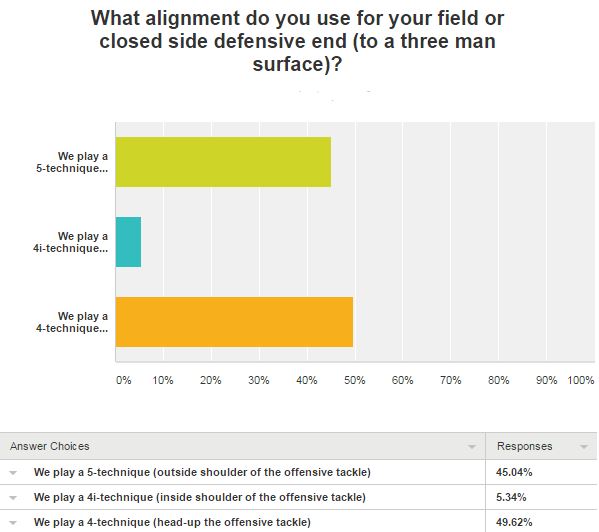
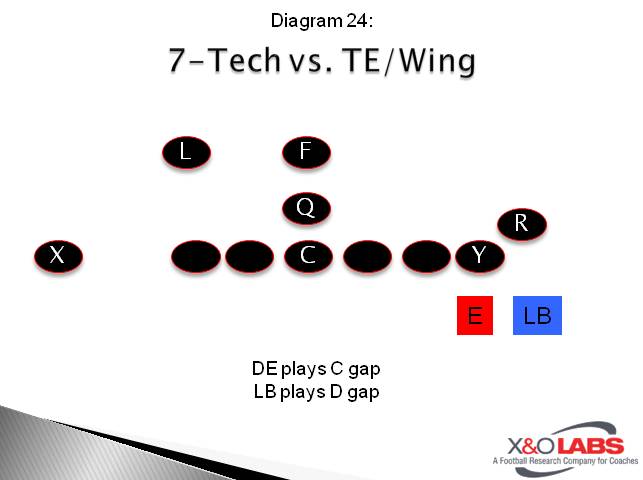
The presence of a closed tight end may raise some concern for odd front coaches and for good reason: it creates an extra gap along the front. So in order to account for that space, we found that 45 percent of coaches will use a 5-techinque alignment with that player. This was only four percentage points lower than the 4-techinque alignment, which was the most common answer. Only 5 percent of coaches chose to stay in that 4i technique alignment that is synonymous with the closed or boundary side defensive end.
Characteristics of the Closed Side (three-man surface) Defensive End
We surveyed coaches to find out the differences in technique between the boundary and open side defensive end. Many of our responses stressed the need for this player to be explosive with his hands and “rangy” enough to cover ground to the field side. We found that many coaches will also target this defender to be one of the better pass rushers among the front because he will mainly be matched up with the tackle. While this report is purely focused on defending the run game, we did want to highlight which characteristics coaches were looking for to fit their personnel in defending the run.
Below are some of the qualities that odd front coaches look for in developing their field side defensive end:
Coach Sturgis, Clinton Central High School (IN): “Our defensive end to the tight end side is typically a little of a better of an athlete than his counterpart to the open side.”
Coach Busmente, Sterling High School (CO): “He’s more of a plugger type for us and less athletic than our 4i technique. He’s most likely bigger.”
Coach McClain, West Laurens High School (GA): “We prefer a bigger plugger here if possible. He’s more like an athletic 3-technique in the even front. This guy will bump down into a 3-technique on occasion and we want a run stopper here.”
Coach Sarchet, St. John Paul the Great Catholic High School (VA): “He’s probably a bit bigger than the open side tackle. We don’t look for kids to get up the field as we do as maintaining gap control, taking on trappers, and squeezing our feet.”
Coach Calloway, Madison Middle School (NC): “He’s our best defensive lineman against double teams and getting off blocks.”
Coach Godwin, Gulf Breeze High School (FL): “This player has to be a little leaner and longer than the other two defensive linemen. He needs to have more speed because there is more ground to cover in defending the run game.”
Coach Desrochers, Sunrise Mountain High School (AZ): “We are looking for the lineman who is long enough and tough enough to play against a tight end, yet has enough wiggle to get a good rush on.”
Coach Baechler, Canton High School (MI): “We normally will have him be our Loop or C gap tackle. We would like him to be a bit bigger, but again speed and strength are more important than size.”
Technique of the Field Side (3-Man Surface) Defensive End
Once that player has been identified, we researched exactly how odd front coaches were training that boundary side defensive, based on the blocks he was seeing.
Some of our survey responses are below:
Coach Busmente, Sterling High School (CO): “He must drive into the tackle and help squeeze the B gap. He cannot get his shoulders turned out by the offensive tackle to create a seam there. Try to keep the outside arm ‘free’ as much as possible.”
Coach Bell, Missouri Western State University (MO): “We have two distinct stances that we teach our kids. We have our ‘BASE’ stance and our ‘JET’ stance. In our Base stance, our kids’ feet are wider than their shoulders with about 40% of their body weight on their down hand. We have flat backs with our off hand up and ready to strike the offensive line gap shoulder in front of us. We align with down hand to man, so our kids have to be comfortable with either hand down. On the snap of the football, our kids are coached to shoot their off hand, or what we call their GAP hand to gain control of the OL gap shoulder. Our kids shoot their down hand to the V of the neck. Their first step is a very quick 6″ step and their eyes are trained to go from the ball to the offensive line screws in which they are aligned on. If they are aligned in a 4i or 2i, their eyes go to the offensive line to inside of them for a quicker read on against zone schemes. If the kids are head up on our nose, then they can put whatever hand down they are most comfortable with and they shoot both their hands to breast plate of the offensive line and are looking to get vertical push after the first initial 6″ step.”



 At Rose-Hulman, our offense is predicated on running simple play concepts and executing them as fast as we possibly can. As with most Spread offenses, we also want to make the defense defend the entire width of the field at all times. This is one of the reasons why Outside Zone has become a staple of our offense. We can run this concept in one direction with a Run Adjustment, such as a Bubble or Smoke screen, in the opposite direction. While I will detail our “one word play packages” in another report, I wanted to give as much detail as possible in how we block the outside zone, one of our most productive play concepts.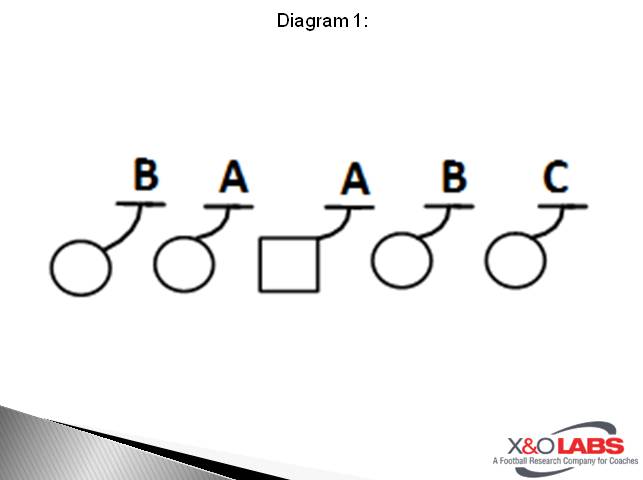
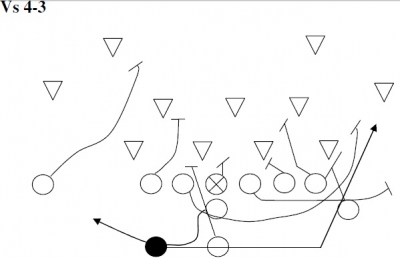
 Whether it is 10, 11, or 12-personnel, the Trips formation can present some unique challenges to any defensive scheme and, depending on your comfort level of what you do, may require multiple answers.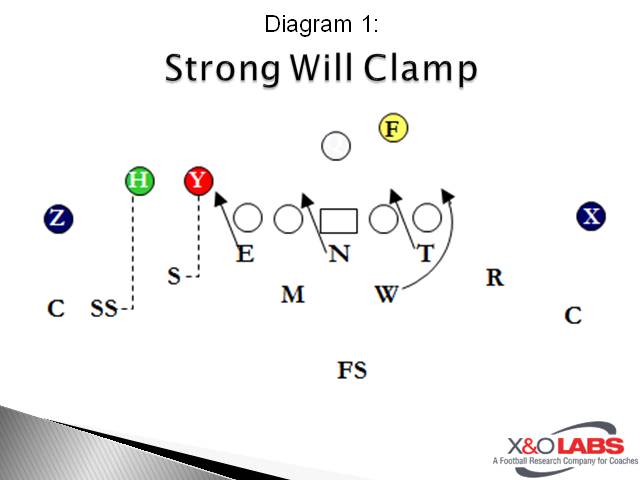
 Why is mixing science with quarterbacks so advantageous? You cannot argue with the scientific facts regarding the body and its functional ability. When we truly understand how the body works as a whole, we can then begin to figure out how to make our body perform to that optimal level as often and as possible. Playing the quarterback position may seem as simple as throwing a ball to a target, yet the complexity and kinematic sequencing that goes along with it is far from simple.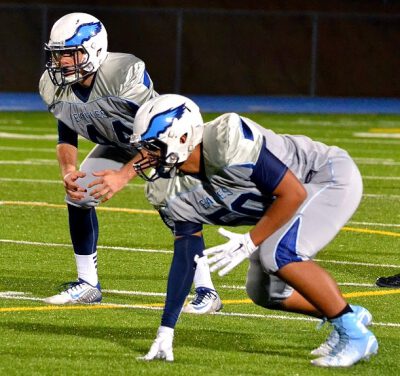
 Stopping the run. It has been and continues to be the most important job of any defense. That said, the task is getting harder to coach to this philosophy when teams are willing to pass the ball 80% of the time. And with that the days of having seven or eight players in the box are all but over.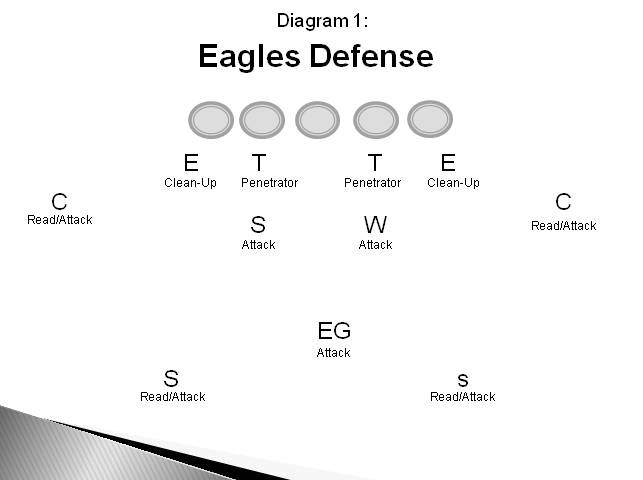
 Our offensive philosophy at Archbishop Spalding High School is to be a no huddle, multiple, downhill running team. The core of the offense focuses on the zone, power and counter run game from the pistol. That focus is complimented by quarterback runs, packaged plays and the focus of this article, play action shot passes.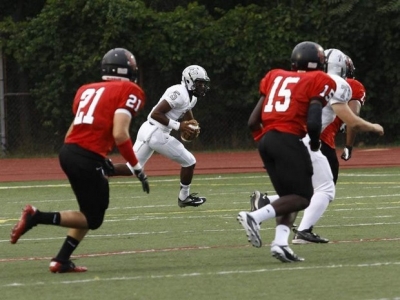
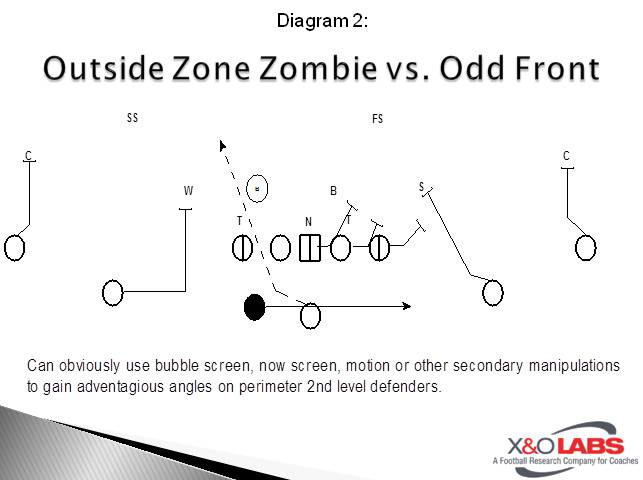
 Our offense, while somewhat dictated by personnel strengths from year to year, is firmly rooted in the outside and inside zone schemes. Variations of the outside and inside zone encompass probably 80% of our run schemes. This allows us to minimize the amount of thinking by our offensive line and helps us play at a fast tempo. The use of simple adjustments presents the illusion of complexity to the defense and meshes well with simple variations in who we’re reading, secondary manipulations and other tags. We are constantly saying, “We have two run plays!” While we certainly have more than two run calls, at our core we going to make our living on the outside and inside zone.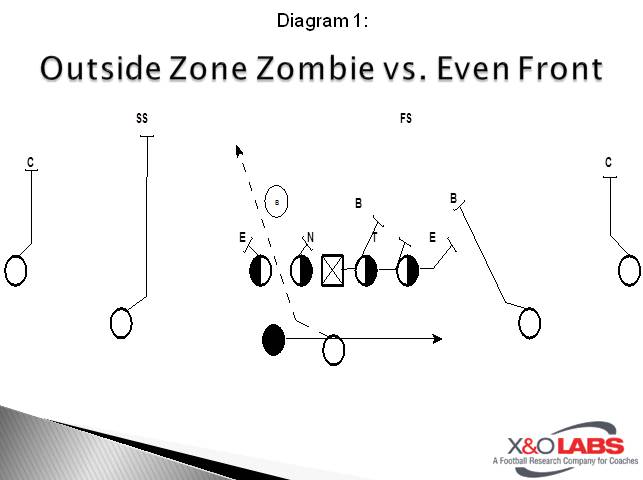
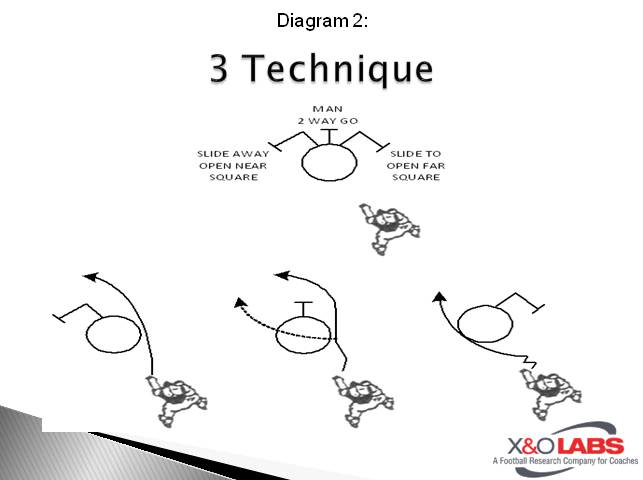
 At the University of Rhode Island we want to develop our defensive line as a unit based off cohesion and trust. In passing situations, we will disrupt QB rhythm with a pre-snap plan (straight rush or game). Our unit will be master communicators, giving us the best opportunity to rush the passer as a group. We will be active, violent pass rushers who play with effort and a relentless motor. Our objectives are to have a winning get off, work a pass rush every snap, and counter (at QB level) to keep him in the pocket. We believe if we do these three things, it will equal success.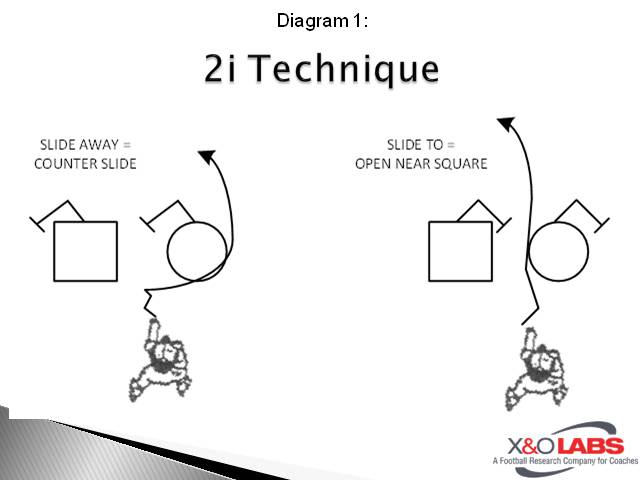
 Concept of Circular Force: Ball State University
 Introduction