


Manipulating Offenses with the Monster
By David Joyce
Head Coach
Mountain Home High School (AR)
Editor’s Note: Coach Joyce is transitioning into the head coach position at Mountain Home HS in Arkansas after serving as the head coach at Doherty High School in Colorado Springs this past season. An Arkansas native, Coach Joyce has been a head coach in Colorado for the past 6 years, and has turned around 2 struggling programs in the state. In 2013, Doherty won the 5A Pioneer League Championship, and won a playoff game for the first time in almost a decade. Prior to Doherty, Coach Joyce was the head coach at Battle Mountain, and led them to the playoffs for the first time in 18 years.
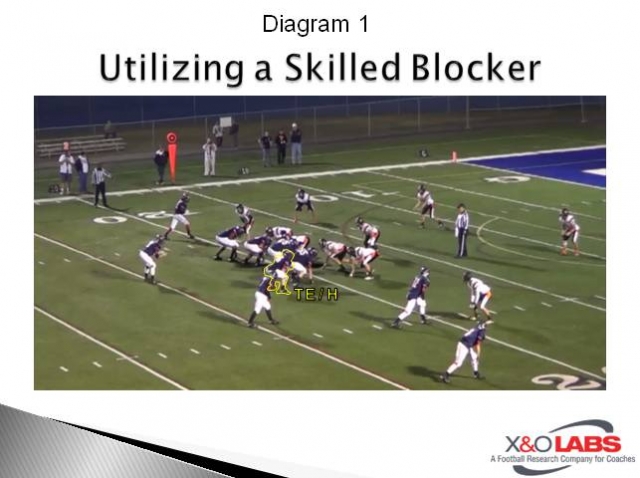
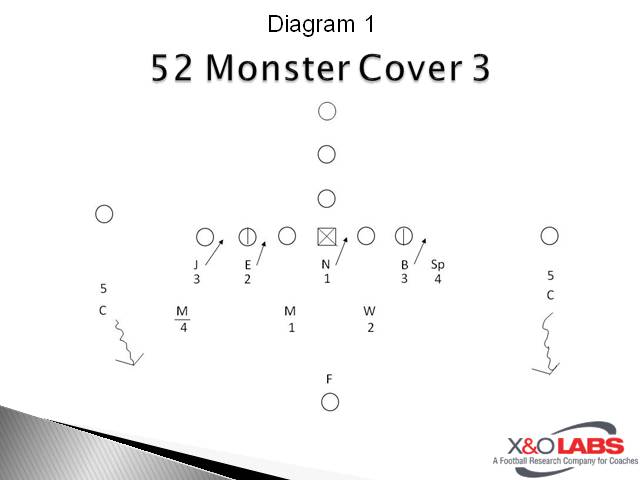
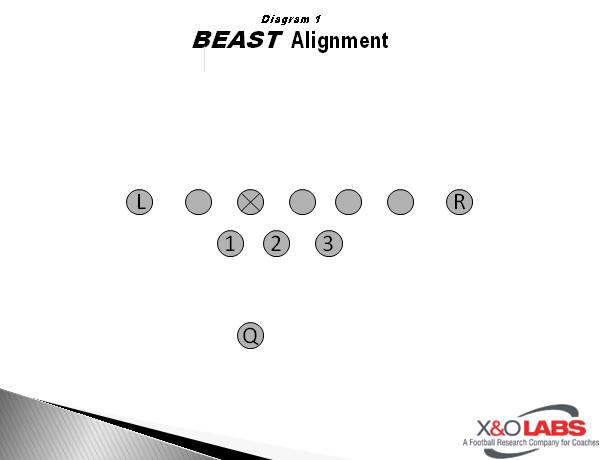
 The 52 monster defense was first used at Oklahoma and led to great success. This defense is a trap defense at its finest. I use the phrase trap because the defense is not symmetrical. There is a strong side with 6 players and a weak side with 5 players. The 6th player that creates the unbalance is known as the Monster, we refer to him as the Mobster, but I’ll get to that later. The monster is a hybrid type player, more of your traditional strong safety/rover, capable of covering man to man, and capable of playing in the box as well. To an offense, it appears that you should attack the weak side of the defense, as there is one less man, but this is the trap, because the defense will usually slant or stunt to the weak side creating a balanced defense, 5 on the front, 5 on the back, with the free safety head up on the center, see diagram 1. We still use the traditional 52monster with Cover 3 behind it, but when you’re facing the spread, the 5-2 is at a distinct disadvantage. This led to us creating the 3-2 Mobster defense.
32 Mobster
The 32 Mobster defense was developed as a spread version of the 52 Monster. At its simplest, the defense is designed to do exactly what the 52 monster did, that is trap the offense into making a mistake and running into numbers instead of away from the numbers. When you get further into the defense, the 32 Mobster is great at disguise, confusion, and my favorite, creating chaos. Our base front is a 3-4 with the Mobster rolled down splitting the difference between the OLB/ILB but this is only a look. The Mobster will always roll replace a LB. We will usually play Robber coverage behind it. And this is one of the many advantages of the system, as it allows you to get good at very few things, but window dress as much as you like.
Base-‘Whack’
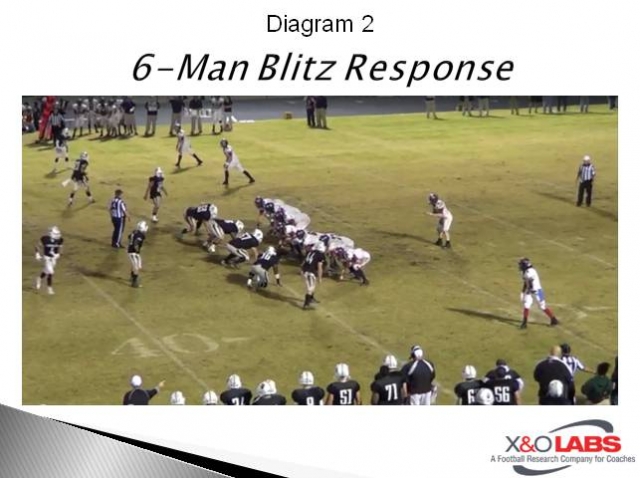
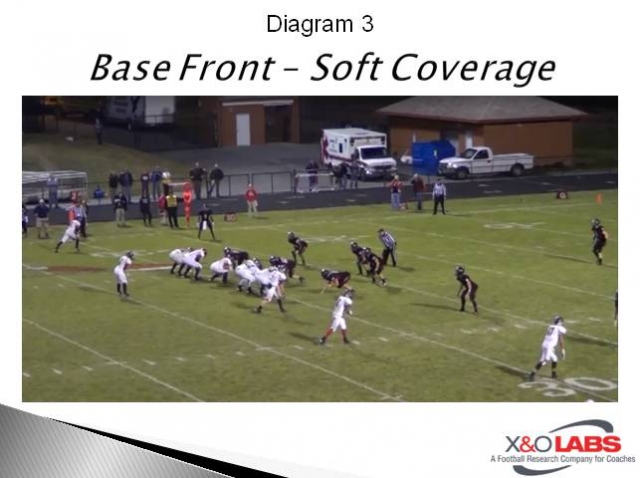
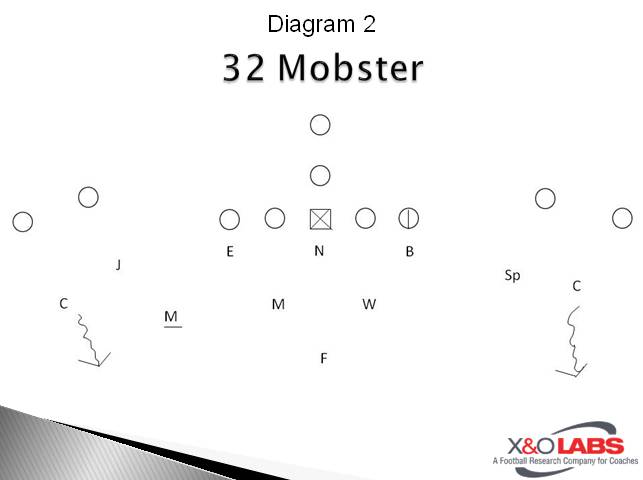
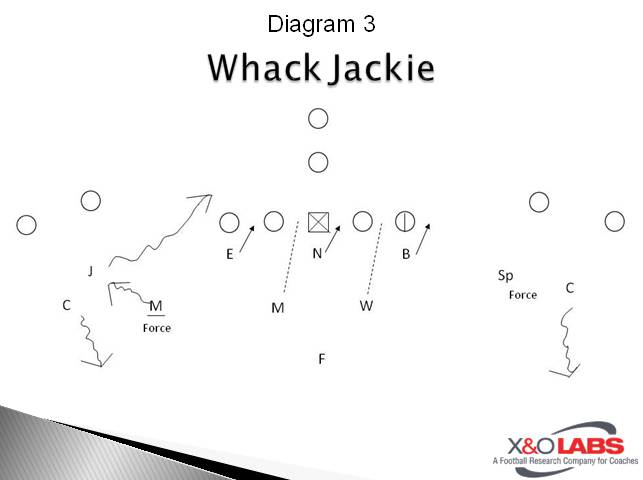
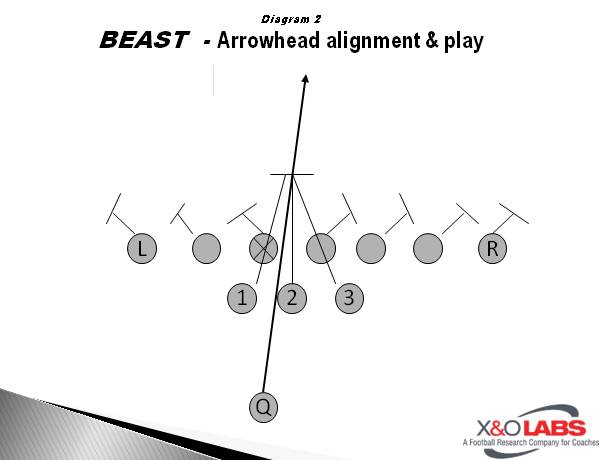
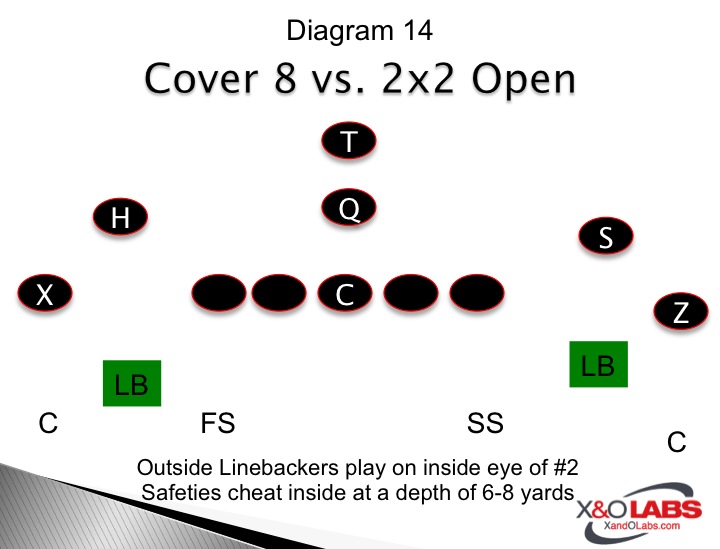
If we are facing a traditional 2 x 2 spread set, when we play our base. Our base will look similar to a traditional 3-4 box, except our Mobster will be lined up in between the ILB and OLB to the declared side. see diagram 2. We are setting the trap with the Mobster adding 6 defenders to one side, and 5 to the other side. From this location, one of the 2 will be blitzing, either the ILB or OLB, with the E, N, B slanting to the weak side, we call the weak side slant ‘whack’ for weak attack. The mobster will replace the blitzer and play his appropriate gap from that location. For example, when we give a weak slant call “whack” and the blitzer ‘Jackie’, the mobster will roll down, then stem to the OLB’s position, and play the force defender. See Diagram 3, Whack Jackie. This creates our symmetrical defense.
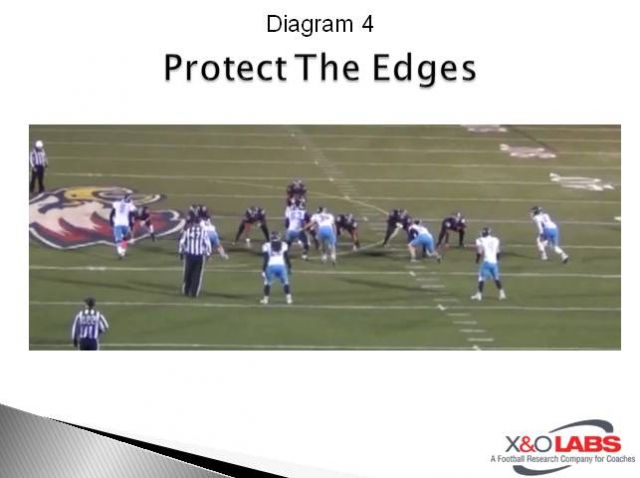
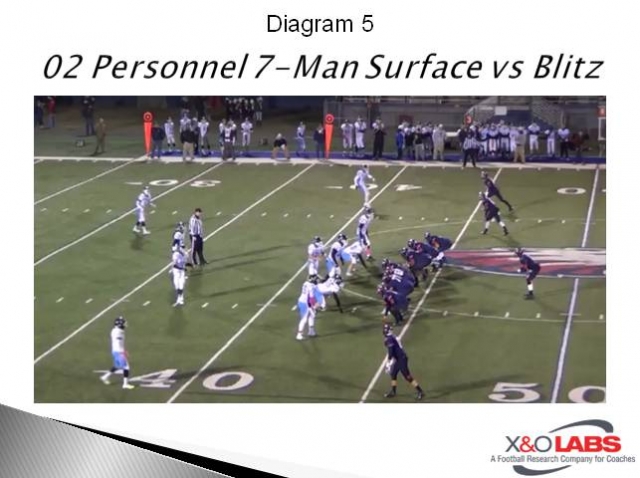
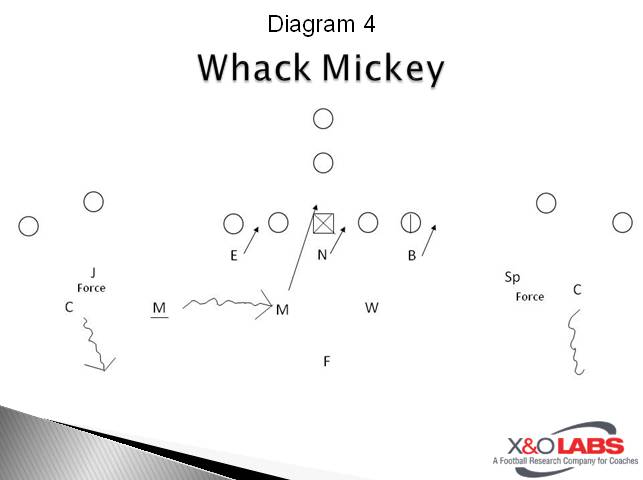
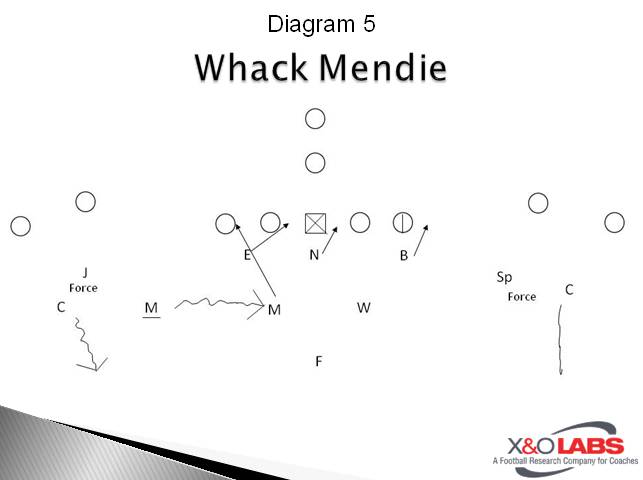
This base look has a few goals in mind for us, first, we want to create confusion with the offensive line and the QB. If you look at Diagram 3 and Diagram 4, you will see that we create different run fits, and reads for the QB if he is running zone read. A lot of coaches are hesitant about changing run fits, but when you are slanting and blitzing those gaps, then it’s easier for the players; and the Mobster only sees those run fits when he rolls into that position, it doesn’t change for him. Second, we will get penetration, maybe not every time, but when the ILB or OLB blitz, the line must pick it up, and we have x stunts that we will execute and this always causes the line problems, and we can dictate where the running back will cut if we are facing the zone read. See diagram 5 for both x stunts and zone read dictate.



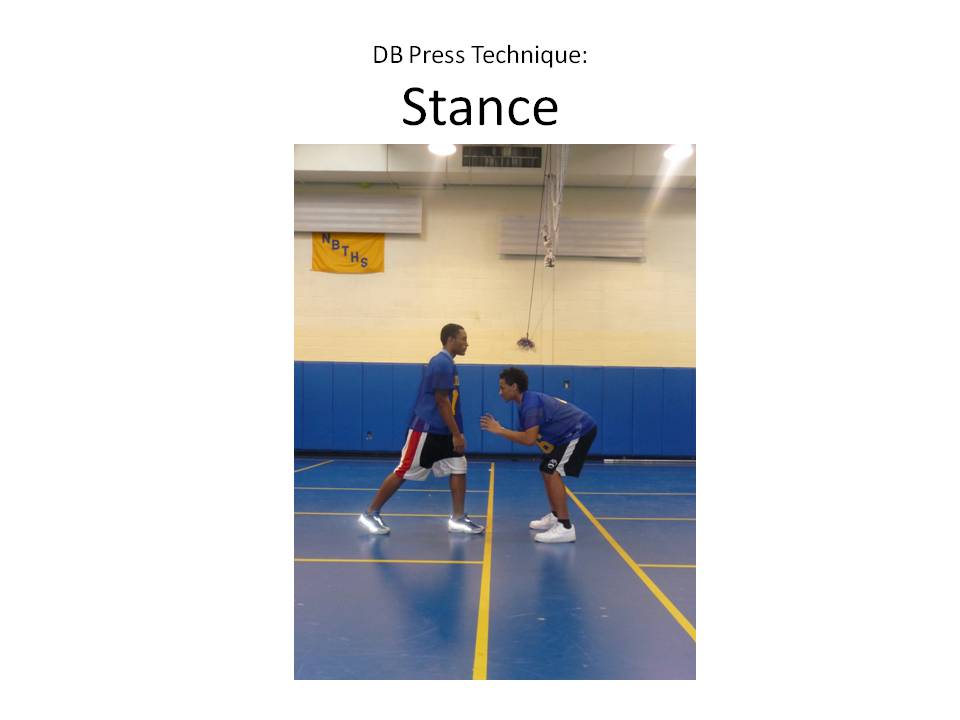
 I have been intrigued by the Shield Punt ever since I first saw it being used in a bowl game several years ago. My first impression was dismay that anyone would want to let the inside rushers run free and blow up the 3 guys standing in the backfield. As more and more teams went to the shield, I started seeing its benefits. Before deciding to implement it, though, I had to be convinced that the advantages outweighed the disadvantages. What finally sold me on the Shield Punt was a Glazier Clinic presentation by Grand Valley State showing that in 2012 they only allowed 3 yards in punt returns. We all know that a punt is one of the greatest weapons a team has in changing field position. This past season we punted 31 times and
 Editor’s Notes: Justin Iske begins his fourth season on the coaching staff at Fort Hays State in 2014. Iske coaches the FHSU offensive line and serves as the team’s strength coach. In Iske’s first three seasons at FHSU, he has coached seven All-MIAA selections on the offensive line, led by two-time second team selection Hawk Rouse in 2011 and 2012 and second-team selection Mario Abundez in 2013. The Tiger offensive line helped produce an average of over 2,000 rushing and 2,000 passing yards per year in Iske’s three seasons. Iske came to FHSU after two seasons at Northwestern Oklahoma State University where he was the offensive coordinator, special teams coordinator and offensive line coach. His 2010 team won the conference championship and led the conference in rushing offense, sacks allowed and kickoff returns.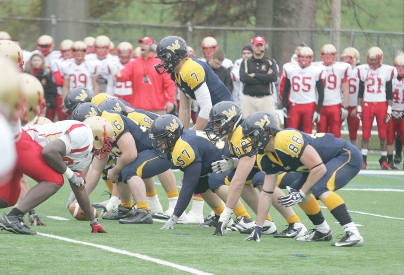
 Editor’s Note: Coach Rosenthal is the Tight Ends and Assistant Offensive Line Coach at Wilkes University. After graduating Wesleyan University and playing as a graduate student in the fall of 2010, I started my coaching career volunteering at Yale University, working with the offensive line during their spring practices in 2011. That summer I accepted a GA position at Endicott College, where I worked with the running backs for one season. That season I coached a CoSIDA 2nd Team Academic All-American. After one year, I went to Wilkes University where I have spent the last 2 seasons. Both seasons I placed a different player on the All-Conference list and have placed multiple student-athletes on the Academic Honor Roll every year.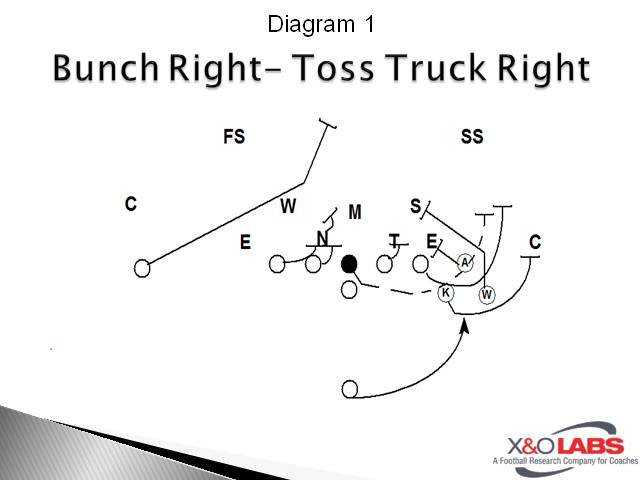
 Editor’s Note: Coach Weaver enters his ninth season as a member of the Gettysburg coaching staff and his eighth as the defensive coordinator in 2014. Weaver will also coach the linebackers for the seventh straight season this year. Prior to his arrival at Gettysburg, Weaver served as the defensive line coach at Bemidji State University in Minnesota from 2004-05. He also spent two seasons coaching the defensive line and serving as the junior varsity defensive coordinator at his alma mater, Wilmington College in Ohio, from 2002-03. Weaver guided his players to multiple postseason accolades at both Bemidji and Wilmington, including coaching one to All-America status at the latter.
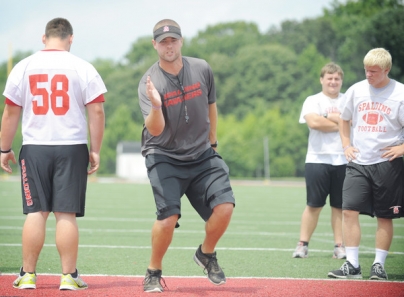
 For the Rose-Hulman offense, as with many offenses at every level of football, playing fast is of critical importance to our success. In 2013, we averaged 85.5 plays per game. However, we strive to ensure that we do not sacrifice speed for precision. Our goal every year is to identify the plays we feel are critical to our success as an offense and then find ways to drill these plays. Our staff works to develop drills that teach the requisite skills to execute the play and simultaneously emphasizing how to play fast.

 Each offseason our offensive staff evaluates our entire offense by play, formation and personnel in order to measure the efficiency of each. The goal of this evaluation is to fine tune the core of our offense. Ultimately, we are looking for new ways to window dress and disguise our core concepts. This process includes:

 By Mike Kuchar
 Editor’s note:
 Editor’s Note: Coach Holzer has served as the Meade Mustangs Head Coach for two seasons from 2011-2012. He was named Coach of the Year by Varsity Sports Network for the State of Maryland as well as by The Capital Gazette, Baltimore TD Club, & Annapolis TD Club. From 2008-2010 Rich was Head Football Coach at Parkdale HS in Riverdale, MD. 2004-2008 Rich was Defensive Coordinator/ Strength Coach at Westlake HS in Waldorf, MD. 2002-2003 Rich was a GA at Hofstra University. Rich is graduate of Hofstra University with a BS in Physical Education, where he was also a 2x All League Offensive Lineman for the Pride, & has a Masters in Educational Administration from McDaniel College.
 Editor’s Note: Scott grew up as a player for his father Steve Girolmo at Livonia High School in Western New York. A graduate of Cortland State (D-III – NY) he has coached at Castleton State College, and Western New England University as well as made stops in high school at his Alma-Mater Livonia and Liberty high School in Bealeton, VA. In 2012 he took over the offense at Liberty and has installed an ever-evolving hurry up no-huddle philosophy that mixes schemes from across the spectrum. As the Offensive Coordinator in their 2013 campaign the Eagles offense averaged 34.2 points per game, and was the 10th ranked offense in VHSL 4A. Scott is a diehard clinic enthusiast and encourages interactive Q & A regarding any of his contributions to the site.