
Interview with Jim McNally


By Mike Kuchar

Senior Reseach Manager

X&O Labs


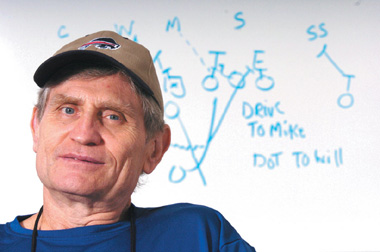
Editor’s Note:  Jim McNally has been alluded to as the “grandfather of offensive line play” during his 41-year tenure as an OL coach.  Continually known for being on the cutting edge of blocking techniques and fundamentals, currently McNally serves as an offensive line consultant for the Cleveland Browns, after having the same position with the New York Jets.  Much of McNally’s resources- including information on his yearly clinic- could be found at coachmcnally.com Mike Kuchar, X&O Labs Senior Research Manager, spent some time talking with McNally this off-season on the newest trends in offensive line play.    Coach McNally and the drill film included in this interview come to us courtesy of SOTL/FBU.  Check out more from them at:  http://www.sotl.com . 


MK:  Coach, you always preach that Offensive Line play always starts with the stance.  How have you found lineman to be more effective based on their stance?

JM:  You should get into a stance in which you can get the job done, as it refers to the stagger in the feet.  The Right Tackle in a right handed stance and has to go to his inside and his right stagger is too deep for whatever reason.  I think you need to get more parallel or get in a right handed stance and drop your left foot back because you can’t get to where you have to get to because a coach mandates that you have to have a stance that is a certain way.  Who cares who sees what you’re doing if you have to shift your inside leg a little bit?  I feel that too many coaches worry about giving things away.  Who cares?  They don’t know which scheme you’re running.  In the NFL the guys have so many assignments and responsibilities that I’m not so sure if they can tell if a guy is going left or right.  Whether it could be a reverse, counter, etc.  If it’s third and long and you’re a right tackle, stay up and put your right foot back as deep as you can.  I do know that it’s easier from the left side to put your left hand down and your left foot back in pass pro because it’s easier to get the kick slide on pass protection.  On the left side it’s tough to pass block someone who is wider so the left hand and foot is back.  You don’t want to cross over your body with your right hand. There isn’t many colleges or pro guys right now that are not left handed on the left side.  I think you can play the whole game in a two-point stance.  When you’re in a two-point stance you take that first step you can lower your center of gravity.  Except on third and one or on the goal line- I wouldn’t use the two point in that situation.  The reason I like it is because you can vary your splits pre-snap when a defense shifts.  As soon as you lock yourself down with your hand you can’t make any adjustments.   

MK:  How can offensive lineman gain an advantage by using their splits?

JM:  Unless the defensive team does a lot of stemming, I’m not sure that you should vary your splits.  If two guys have to work together I don’t care if they get foot to foot.  So much of offenses now are double teams and combo blocks.  Well, get foot to foot so that you can execute the block.  The guard sets the integrity of the split.  The defense may know something is up, but they don’t necessarily know that you’re on the backside of a zone play or the front side of a double team play.  If my backside guard is pulling on the power play I don’t care where he lines up.  Just get off the ball.  You may have a bootleg, reverse or naked where that guard pulls.  Do what you have to do to get the job done.  Conversely, if the backside is off the line of scrimmage, the front side should be on.  They need to be able to maneuver their blocks or the pulling guard may not be able to see his assignment if the front side gets knocked off the ball.  The pulling guard has more time and space to see his assignment.

Read More

Defensive Coordinator Research Study

By The X&O Labs Staff

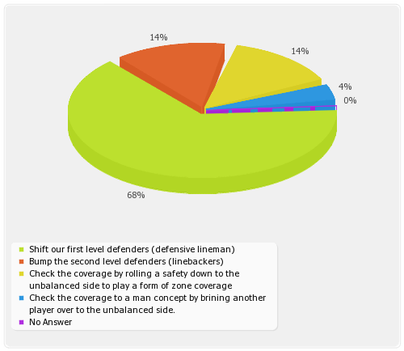
This installment of our Self Scout Your Career focuses on the many complex decisions that are made throughout the season by Defensive Coordinators.

As we mentioned before, survey is still ongoing (if you or your staff hasn’t taken it yet, check it out here), we wanted to share some of the insight that the surveys have unearthed. We also recognize that while many of you have already taken one survey from selfscoutyourcareer.com, you likely have not seen the results of the other 10 surveys. In addition to the Defensive Coordinator Coach Research Report you are currently reading, we will also be releasing our Special Teams Coordinator Research Report this week.

Here are a few of the highlights you will find in the graphs and questions contained in the Defensive Coordinator Survey results below:

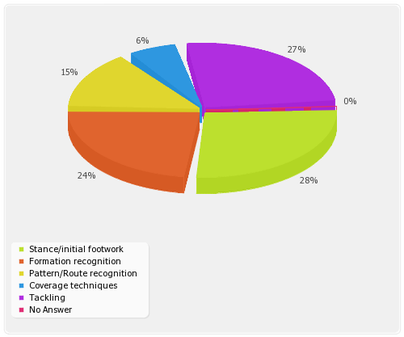
  • 51% of DC’s surveys also serve as their teams linebacker coach.  2nd highest was DB coach with 30%.
  • The 4-3 defense was the most common base defensive front use by the coaches polled (37%).
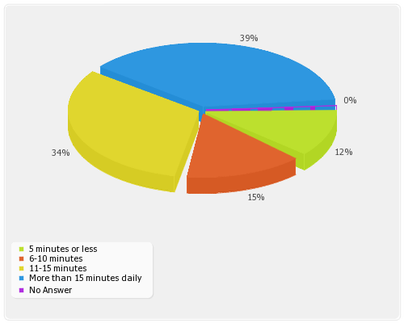
  • 58% of the DC’s stated that they want their individual periods to last at least 11 minutes.
  • Two thirds (66%) of DC’s carry either 2 or 3 fronts into each game.
  • 56% of defensive coordinators tell us they usually go into each game with between 4 and 6 different blitzes.


Check out each of those questions and their responses below and see how the information compares to your team. As always, we would love to hear your thoughts on the data presented in this report. Please feel free to share your opinions and thoughts in the comments section below.

**Note: The data shown below is the current information from our ongoing study. It will likely change over time and as that happens, we will be sure to keep you apprised of the trends as they become apparent. Again, if you or your staff has not already participated, or if you want to just take a different survey (you can use the same email address without a problem) please CLICK HERE.

Read More

ST Coordinator Research Study

By The X&O Labs Staff

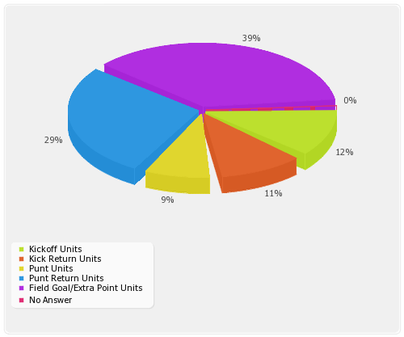
The final installment of our Self Scout Your Career survey project takes an in-depth look at the trends provide by Special Teams Coordinators.

As we mentioned before, survey is still ongoing (if you or your staff hasn’t taken it yet, check it out here), we wanted to share some of the insight that the surveys have unearthed. We also recognize that while many of you have already taken one survey from selfscoutyourcareer.com, you likely have not seen the results of the other 10 surveys. In addition to the Special Teams Coordinator Coach Research Report you are currently reading, we will also be releasing our Defensive Coordinator Research Report this week.

Here are a few of the highlights you will find in the graphs and questions contained in the Special Teams Coordinator Survey results below:


  • Only 7% of ST Coordinator’s surveyed serve their team exclusively in that roll.  The other 93% are at the very least a position coach.
  • 50% of coaches say that they spend the bulk of their ST time with their team doing full team special teams drills.
  • When asked to identify the most “under coached” aspect of special teams, the highest response was FG and Extra Point units.
  • ST coordinators most often choose the “middle return” as the most productive return scheme for the teams that they coached.

Read More

Valparaiso University Quick Passing Game

By Dale Carlson

Head Football Coach

Valparaiso University

Editor’s Note: Dale Carlson was named the 16th head football coach in Valparaiso University history on Jan. 14, 2010, and is just the seventh leader of the program since 1946. In 2013 he will be entering his 25th season as a collegiate head coach overall, having posted a 111-124-3 career mark. He embarks on year three with the Crusader program.

This fall will be my 25th year as a head college football coach. I have always been involved in a pass first offensive concept with its roots in the Run-and-Shoot. Our Quick Passing Game has always been one of our building blocks as our offense has developed over the years.

Our philosophy of offense is to attack defenses through the air and on the ground to open space given by defensive alignment and scheme. We want our opponents to defend the full width and depth of the football field. The Quick Passing Game is one part of our offense that allows us to accomplish this goal.

Quick Game Protection:

Our basic rules are to be aggressive with our offensive line and backs in the protection scheme. We have blocked the quick passing game in two ways: We have cut at the line of scrimmage at times and we have used a full slide protection with the back on the edge. The most critical aspect of protection in the Quick Passing Game is for all pass protectors to understand the depth of the quarterback as he sets to throw.


Our quarterback will be at five yards in depth. The offensive line and backs must give the quarterback a clean pocket and work to keep defensive rushers close to the line of scrimmage.

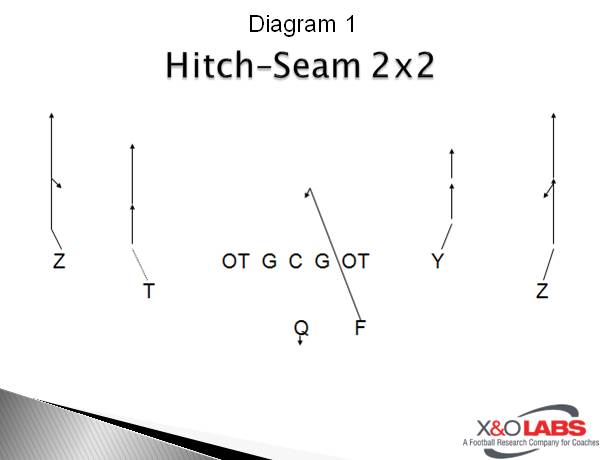
Hitch/Seam Concept


We number our receivers from outside in, 1-2-3. In a 2 x 2 set the fullback is the number 3 receiver. Our assignments are as follows as the basic play is mirrored.

Assignments

  • Number 1 Receiver: Hitch or Fade based on leveraged corner.
    • Bail corner-Hitch at 8 yards.
    • Squat corner-Fade. Take best release possible.
  • Number 2 Receiver: Seam. Must identify One High or Two High Safeties.
    • One High – Run through seam looking for ball at 12-15 yards.
    • Two High – Throttle down at 7-8 yards and protect ball from Safety over the top.
  • Number 3 Receiver: Hook.
  • Quarterback: Determine pre-snap which side you will throw. Take three-step drop from underneath center or one-step drop in Gun.
    • 1. Read Seam defender for Hitch or Seam.
    • 2. Stick Fade in hole vs squat Corner.
    • 3. Check down to Hook.

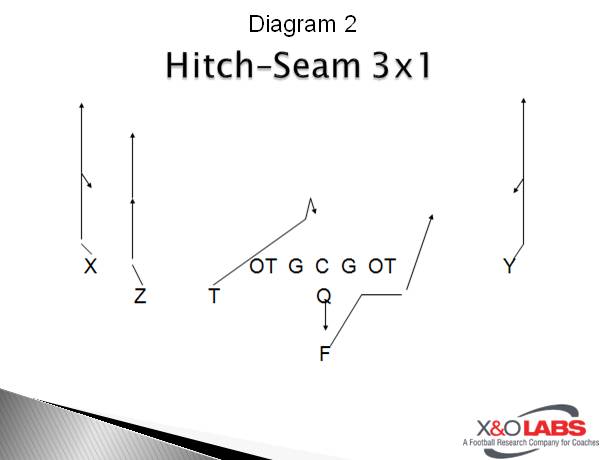
Hitch/Seam Concept from 3×1 Formations

From 3 x 1 the assignments of the receivers (1-2-3) do not change. However, as Diagram 1 shows the players aligned in those positions have changed.

Read More

Offensive Coordinator Research Study

By The X&O Labs Staff

This installment of our Self Scout Your Career survey project unearths a tremendous amount of insight into the decisions made by Offensive Coordinators.

As we mentioned before, survey is still ongoing (if you or your staff hasn’t taken it yet, check it out here), we wanted to share some of the insight that the surveys have unearthed. We also recognize that while many of you have already taken one survey from selfscoutyourcareer.com, you likely have not seen the results of the other 10 surveys. In addition to the Offensive Coordinator Coach Research Report you are currently reading, we will also be releasing our Quarterback Coach Research Report this week.

Here are a few of the highlights you will find in the graphs and questions contained in the Offensive Coordinator Survey results below:

  • Over half of offensive coordinators (54%) also serve as their teams Quarterbacks Coach which is more than double the second place option which was Offensive Line Coach (25%). 
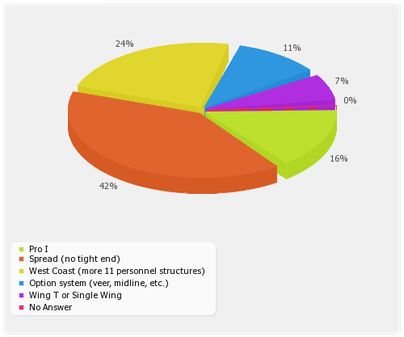
  • 42% of offensive coordinators classify their offenses as “spread (no tight end).
  • Contrary to the current belief that periods need to be 5 minutes at the most, the reseach shows that 80% of the coordinators still prefer team periods that are over 10 minutes long.
  • 51% of the coaches surveyed restrict live (1’s v 1’s) practice periods to 2 or less per week.
  • 50% of OC’s prefere the concept system of teaching passing plays to the numbers system (7%).  The remainder combined the two approaches. 

Check out each of those questions and their responses below and see how the information compares to your team. As always, we would love to hear your thoughts on the data presented in this report. Please feel free to share your opinions and thoughts in the comments section below.

**Note: The data shown below is the current information from our ongoing study. It will likely change over time and as that happens, we will be sure to keep you apprised of the trends as they become apparent. Again, if you or your staff has not already participated, or if you want to just take a different survey (you can use the same email address without a problem) please CLICK HERE.

Read More

Quarterback Coach Research Study

By The X&O Labs Staff

The last offensive position that we will look at this summer as part of our Self Scout Your Career survey project is the Quarterback position.

As we mentioned before, survey is still ongoing (if you or your staff hasn’t taken it yet, check it out here), we wanted to share some of the insight that the surveys have unearthed. We also recognize that while many of you have already taken one survey from selfscoutyourcareer.com, you likely have not seen the results of the other 10 surveys. In addition to the Quarterback Coach Research Report you are currently reading, we will also be releasing our Offensive Coordinator Coach Research Report this week.

Here are a few of the highlights you will find in the graphs and questions contained in the Quarterback Survey results below:

  • 57 % of quarterback coaches surveyed spend the most individual time on movement/footwork drills.
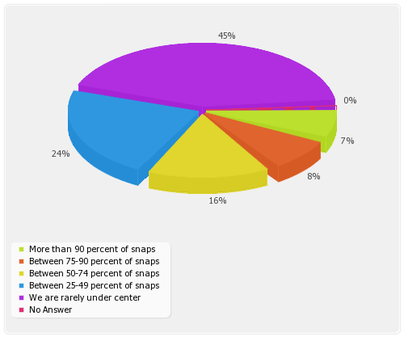
  • Only 31% of teams surveyed run 50% or more of their plays with their quarterback lined up under center.
  • Two thirds of the coaches polled tell theirquarterbacks to hold the football “in whatever way they feel most comfortable.”
  • Nearly half (49%) of the coaches in our survey teach their players to step at the target to increase accuracy. 
  • Coaches are choosing to teach their QB’s to “read specific players” more than any other method (50%).

Check out each of those questions and their responses below and see how the information compares to your team. As always, we would love to hear your thoughts on the data presented in this report. Please feel free to share your opinions and thoughts in the comments section below.

**Note: The data shown below is the current information from our ongoing study. It will likely change over time and as that happens, we will be sure to keep you apprised of the trends as they become apparent. Again, if you or your staff has not already participated, or if you want to just take a different survey (you can use the same email address without a problem) please CLICK HERE.

Read More

Press DB Resources

By X&O Labs Staff

As a follow up to the release of our press DB study, we have compiled a list of our best press DB resources for our X&O Labs readers.  Click the links below to read and watch some great instructional resources.

Desmar Black Press Technique Clinic Report

Read More

Defensive Back Coach Research Study

By The X&O Labs Staff

The next position that we have broken down as part of our Self Scout Your Career survey project is the ever important Defensive Back position.

As we mentioned before, survey is still ongoing (if you or your staff hasn’t taken it yet, check it out here), we wanted to share some of the insight that the surveys have unearthed. We also recognize that while many of you have already taken one survey from selfscoutyourcareer.com, you likely have not seen the results of the other 10 surveys. In addition to the Defensive Back Coach Research Report you are currently reading, we will also be releasing our Wide Receiver Coach Research Report this week.

Here are a few of the highlights you will find in the graphs and questions contained in the Defensive Back Coach Survey results below:

  • 57% of coaches surveyed identify their team as a pattern read team as opposed to spot drop/zone teams or man teams.
  • Only 31% of teams distinguish their corners based on the field and boundary with the majority using “right and left” to identify their corners.
  • 64% of coaches use the hip of the receiver as their aiming point in man coverage.
  • Two high coaches seem split on assigning the pre-snap read for safeties with 43% having their plays key #2 and 37% having them key #1.
  • Single high safety coaches, on the other hand, key the first uncovered lineman most often among the choices given.

Read More

Wide Receiver Coach Research Study

By The X&O Labs Staff

This week we offer a detailed look at how Wide Receiver coaches are training their players as part of our Self Scout Your Career survey results series.

As we mentioned before, survey is still ongoing (if you or your staff hasn’t taken it yet, check it out here), we wanted to share some of the insight that the surveys have unearthed. We also recognize that while many of you have already taken one survey from selfscoutyourcareer.com, you likely have not seen the results of the other 10 surveys. In addition to the Wide Receiver Coach Research Report you are currently reading, we will also be releasing our Defensive Back Coach Research Report this week.

Here are a few of the highlights you will find in the graphs and questions contained in the Wide Receiver Coach Survey results below:

  • When asked what they spend the most time on in their individual periods, Wide Receiver Coaches provide the answer route technique was given twice as much (42%) as the second highest topic.
  • Over half, 51%, of wide receiver coaches use the “inside foot up, hands at the ready” stance as their standard pre-snap body position.
  • The “club and rip” release technique was the most popular (54%) to beat press coverage.
  • 71% of coaches team their players to use steps as opposed to landmarks to determine proper depth and spacing in the quick game.
  • Near half of the coaches polled (48%) teach their players to read both the leverage of the corners AND the rotation of the safeties when compared to other coverage reading techniques.

Read More

Running Back Coach Research Report

By The X&O Labs Staff

Having covered both sets of linemen last week, this week we shift our focus to the survey results running back coaches provided as part of our Self Scout Your Career survey.

Remember, the survey is still ongoing (if you or your staff hasn’t taken it yet, check it out here), we wanted to share some of the insight that the surveys have unearthed. We also recognize that while many of you have already taken one survey from selfscoutyourcareer.com, you likely have not seen the results of the other 10 surveys. In addition to the Running Back Research Report you are currently reading, we will also be releasing our Linebacker Research Report this week.

Here are a few of the highlights you will find in the graphs and questions contained in the Running Back Coaches Survey results below:       

  1. Inspite of many high profile programs moving away from this technique, over 55% of the coaches surveyed teach their players to switch the ball to the outside arm during a run.
  2. 48% of the coaches surveyed claim to classify all of their backs as “running backs” and teach them all the same techniques dismissing the positions of H Back and Fullback.
  3. The most popular “evasion technique” taught by coaches, with over 55% or coaches choosing this method,  is the the simple act of dropping the near shoulder.
  4. 52% of coaches consider pre-snap reads and entry points as the most undercoached part of the running back skill set.

Check out each of those questions and their responses below and see how the information compares to the your team. As always, we would love to hear your thoughts on the data presented in this report. Please feel free to share your opinions and thoughts in the comments section below.

**Note: The data shown below is the current information from our ongoing study. It will likely change over time and as that happens, we will be sure to keep you apprised of the trends as they become apparent. Again, if you or your staff has not already participated, or if you want to just take a different survey (you can use the same email address without a problem) please CLICK HERE.

Read More

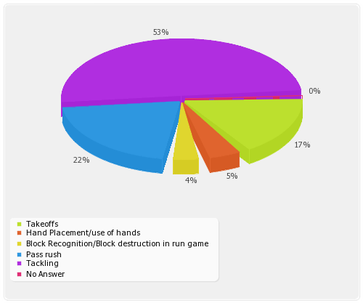
Linebacker Coach Research Study

With the defensive line covered in last week’s report, this week we turn our attention to the interesting results provided by Linebacker Coaches as part of our Self Scout Your Career survey.

As we mentioned before, survey is still ongoing (if you or your staff hasn’t taken it yet, check it out here), we wanted to share some of the insight that the surveys have unearthed. We also recognize that while many of you have already taken one survey from selfscoutyourcareer.com, you likely have not seen the results of the other 10 surveys. In addition to the Linebacker Coach Research Report you are currently reading, we will also be releasing our Running Back Coach Research Report this week.

Here are a few of the highlights you will find in the graphs and questions contained in the Linebacker Coach Survey results below:     

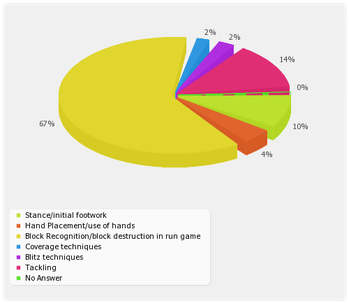
  • 67% of linebacker coaches say they spend the majority of their individual time on their players block recognition/block destruction.”
  • 55% of linebacker coaches told us that they teach their players to key the offensive lineman for their initial, pre-snap read.
  • 46% of coaches are teaching their backers to use the push/pull technique to get off of blocks.
  • Hand placement / use of hands was chosen as the most undercoached areas for linebackers.

Check out each of those questions and their responses below and see how the information compares to the your team. As always, we would love to hear your thoughts on the data presented in this report. Please feel free to share your opinions and thoughts in the comments section below.

**Note: The data shown below is the current information from our ongoing study. It will likely change over time and as that happens, we will be sure to keep you apprised of the trends as they become apparent. Again, if you or your staff has not already participated, or if you want to just take a different survey (you can use the same email address without a problem) please CLICK HERE.

Read More

Trinity College (CT) Four Vert Scheme

By Mark Melnitsky

Offensive Coordinator

Trinity College (CT)

Trinity College averaged 465 yards per game on offense this season and a good chunk of it came from their four vertical concept off play action.  Here is an inside look at their teaching materials and film that go with this versatile concept.  

Read More

Offensive Line Coach Research Study


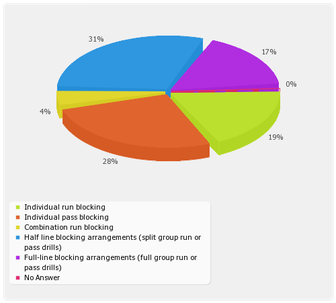
Last week, we started our annual review of the data gathered through our Self Scout Your Career survey, the largest football coaching research study ever completed. The second installment of our series breaking down this extensive coaching data will focus on Offensive Line coaches.

As we mentioned before, survey is still ongoing (if you or your staff hasn’t taken it yet, check it out here), we wanted to share some of the insight that the surveys have unearthed. We also recognize that while many of you have already taken one survey from selfscoutyourcareer.com, you likely have not seen the results of the other 10 surveys. In addition to the Offensive Line Research Report you are currently reading, we will also be releasing our Defensive Line Research Report this week.

Here are a few of the highlights you will find in the graphs and questions contained in the Offensive Line Survey results below:

  • 59% of O Line coaches believe that they need AT LEAST 20 minutes of individual work with their linemen to be successful.
  • The “Chute” is the most common piece of equipment used by O Line coaches while the “Sled” was the least common amoung the 4 choices given.
  • O Line coaches told us that hand placement fundamentals are the most under-coached aspect of offensive line play.
  • 59% of the O Line coaches surveyed believe the most important physical skill you can teach your linemen is to “stay on their course / finish blocks.”

Check out each of those questions and their responses below and see how the information compares to the your team. As always, we would love to hear your thoughts on the data presented in this report. Please feel free to share your opinions and thoughts in the comments section below.

Read More

Defensive Line Coach Research Study


The third installment of our Coaching Position Research Report series will focus on Defensive Line coaches using data gathered through our Self Scout Your Career survey, the largest football coaching research study ever completed.

As we mentioned before, survey is still ongoing (if you or your staff hasn’t taken it yet, check it out here), we wanted to share some of the insight that the surveys have unearthed. We also recognize that while many of you have already taken one survey from selfscoutyourcareer.com, you likely have not seen the results of the other 10 surveys. In addition to the Offensive Line Research Report you are currently reading, we will also be releasing our Offensive Line Research Report this week.

Here are a few of the highlights you will find in the graphs and questions contained in the Defensive Line Survey results below:

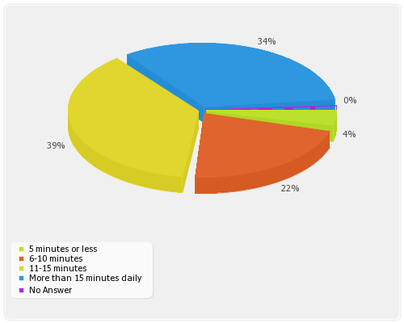
  • 65% of D Line coaches get more than 15 minutes per day to work in position individual with their players.
  • Over half of D Line coaches (51%) say they spend the largest part of their individual time focusing on Block Recognition / Block Destruction.
  • 59% of D Line coaches align their players based on using Strong Side and Weak Side scheme as opposed to right and left or field and boundary.
  • 45% of coaches vary the stagger of their defensive lineman’s feet to fit their ability and strengths.

Read More

The Four Vertical Concept – Part 2

Last week, X&O Labs presented the first installment of the four vertical concept – a staple for most programs entering this busy 7-on-7 season. We touched on pre-snap landmarks and post-snap route progressions for the outside and inside receivers as well as QB read off of one and two high safety defenses. Quite frankly, we were impressed with the intricacies of how coaches teach and develop this concept. There are various tweaks and adjustments that coaches make to the scheme based on factors like safety depth, corner leverage and linebacker leverage, etc. so we’ll start this week’s research report on how to utilize the four vertical pass game out of 3×1 formations.

Trips Adjustments/Variations:

It would be silly to address the four vertical concept without detailing how coaches utilize it out of 3×1 formations. We’ve found that this concept is becoming more present in these unbalanced formations, mainly because of two distinct reasons:

1. You have the presence of three vertical threats to one side of the formation. 2. You have the ability to isolate the single receiver (X) to the backside of trips; often creating a mismatch with your better receiver on the boundary cornerback.

Route Progressions for 3-Man Side:

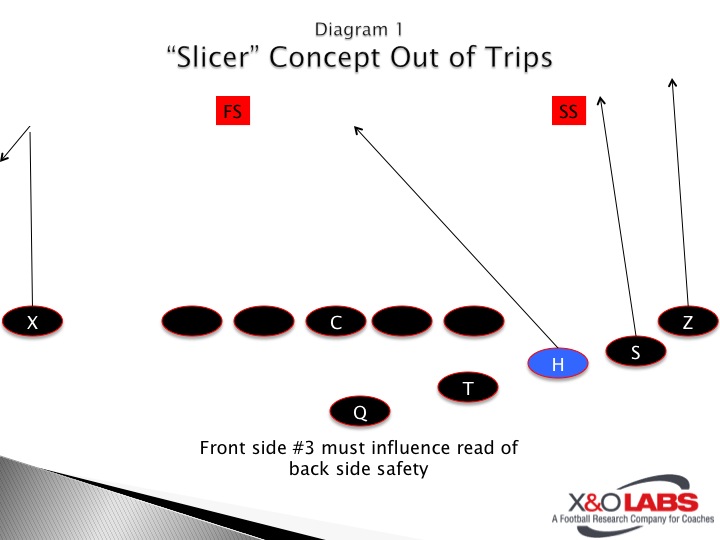
Not surprisingly, we’ve found that when using the four vertical concept out of trips formations, 76.6 percent use the opposite hash mark by the number three receiver in trips as a landmark. Many coaches will call him the “slicer” in the concepts, literally because it’s his job to cut through the defense, ending up on the opposite hash. In whatever way he gets there, he MUST make sure he influences that backside safety to distort his read (Diagram 1).

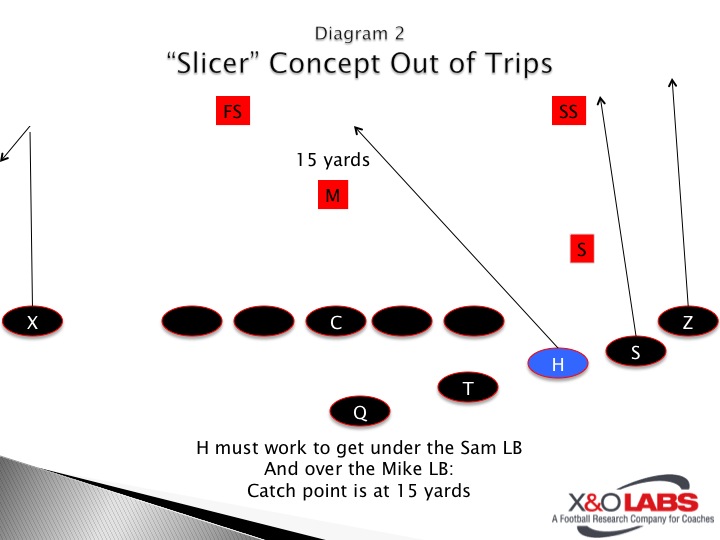
Nick Hajjar, the offensive coordinator at Ohio Northern University feels that the number three receiver in 3×1 formations should be the catalyst for the success of the play. It’s his job to understand coverage’s and what path he needs to get to his landmark, which is fifteen yards downfield crossing the near safety. Of course, which safety this is may change based on coverage, but he must find the best path to influence that near safety and react off his movement.


“Basically, we tell him (#3) to go over the Sam LB and under the Mike LB (Diagram 2),” said Hajjar. “That Sam should be splitting number two and three or over number three so he’s already underneath the Sam. He’s trying to catch that ball fifteen yards down the field over his shoulder and the ball should be on a rope. The QB shouldn’t be leading him out to dry.”

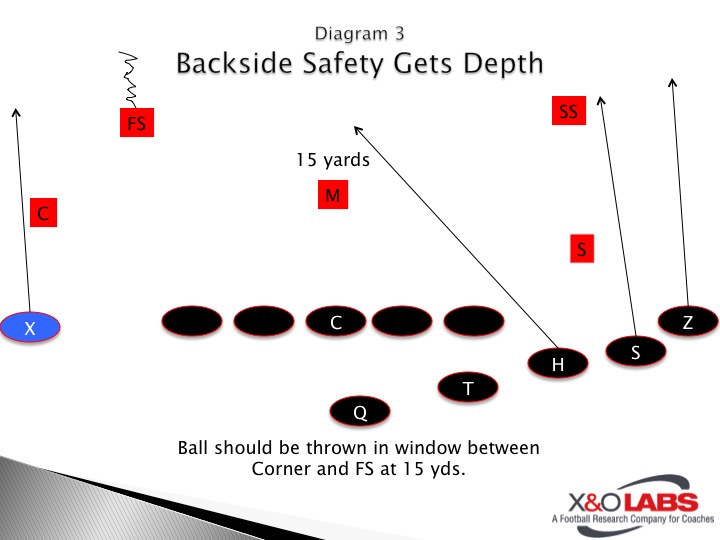
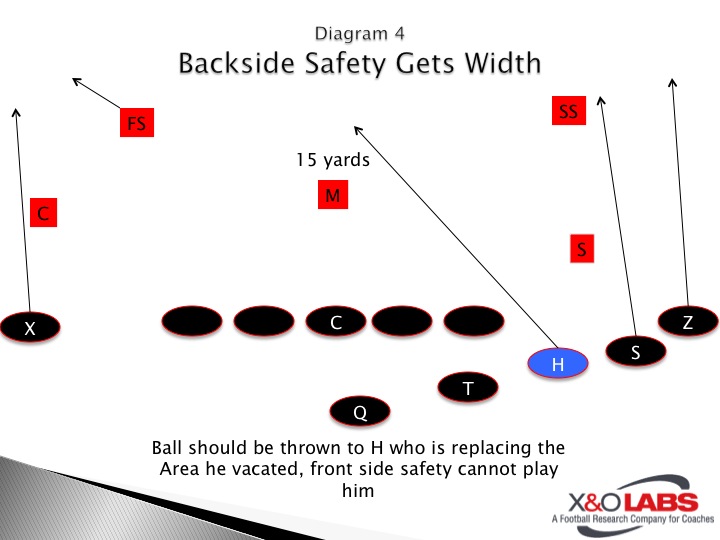
While Hajjar admits that his first read in a 3×1 progression is the X because of the possibility of single coverage, his QB must be able to decipher between “depth” and “width” safeties in any two deep shell. How can a QB tell if a safety will play with width or depth post-snap? Hajjar believes it’s all in the demeanor of the player. “If they are width safeties, they are opening up with their outside foot and getting into a crossover run for three steps and then backpedal,” he claims. “Some will weave at an angle, but it’s pretty easy for our QB’s to see their demeanor. If it’s a depth safety he’s on a vertical plane on a backpedal.”


So what’s all this mean? “If we get cover two with a safety getting depth, we may be able to throw that ball to the X right in the spot in the 15 yard rule and we’re off to the races (Diagram 3). But, if we see that post snap safety get width, we’re off him now, hoping we can get number three who is replacing his vacated area (Diagram 4).”


“The key for us is the number three receiver must understand whether it is a two-high or one-high safety read, and he has to do it immediately after he clears the Mike linebacker.” says Hajjar. “After he gets over the Mike, he has to understand is it one high or two high safeties. If it’s two high, we tell him to ‘split the crotch’ of the backside safety and go right down the middle of the safeties as quick as you can. Once again, we’re reading the boundary safety. If that safety is getting width, there is no way that front side safety to get over to play him. The biggest thing our number three has trouble with is the backside safety doesn’t get to the midline vs. trips. He gets just inside that backside hash and works for depth. By rule, our number three must cross his face, but he will see that it’s two high so he will take the middle of the field. So, if our WR messes up, he needs to just take the top of the route and get vertical and we’ll pass him up on our progression.”


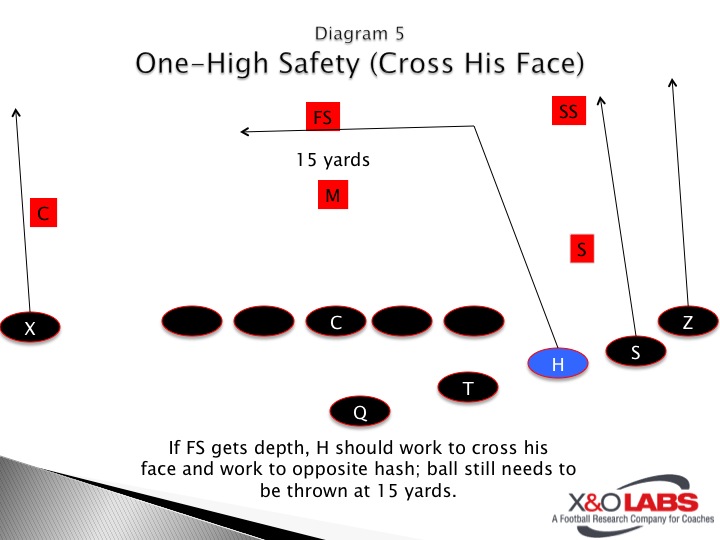
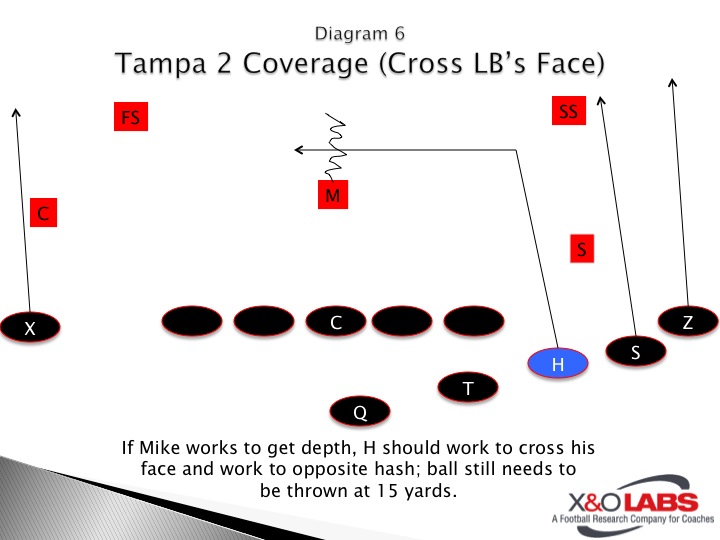
What about a one-high safety read? “If it’s one high, he’ll speed roll that thing in front of him to the opposite hash (Diagram 5)” says Hajjar. “The rule is to still cross his face.” Hajjar even classifies some form of Tampa 2 coverage to be one-high because of the depth of the Mike LB. “Some teams will drop the Mike to 15 yards which is where we are telling that guy he should expect the football,” he says. “So to him, that’s really a one high safety look. He’ll play his rule and speed roll in front of the Mike (Diagram 6).”


To see video of those adjustments that Hajjar makes out of 3×1 click on the link below.


Read More