


3rd Down Offense: Case 2 – 3rd & Short
Report #2:
Third Down Play Call Plan:
3rd and Short (1 to 3 yards)
By Steve Axman, Contributing Editor, X&O Labs
Introduction:
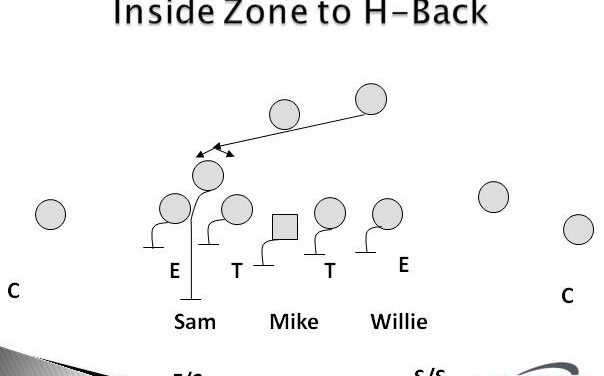
The best place to start your 3rd and short thinking is with your base run and passes games. These are the plays you should know how to execute the best and the plays you, your coaches and your players have put the most practice effort in. Slight adjustments might have to be made to be sound so that you can effectively execute such run and pass concepts against the various types of opposing teams’ coverages and fronts you will see. If you are a zone run team, find ways to effectively run such zone run concepts against the various types of opposing teams’ fronts and coverages you feel you will see. The same would be true if you run an off-tackle power play, a favorite short yardage run play of many teams. If you are an option team, find the option plays in your run option arsenal that you feel best attack short yardage defenses. If your zone counter play is an important play in your run package, then put careful consideration into its usage for 3rd down, short yardage run offense.
Some coaches feel counters are not effective plays to utilize on 3rd down situations because of how many defenses work hard to penetrate gaps to disrupt plays. Other coaches, who have strong counter run plays in their offenses, can think just the opposite. They believe that their counter play blocking schemes are extremely sound in shutting off, and sealing, defensive gap penetration efforts. The bottom line is that you start with your 3rd and Short run attack by determining which of the base offensive run plays you believe can be effective 3rd and Short run plays. One of the reasons I like have the off-tackle power play as a part of my base offense, beside being a great run play, is that it is also a great 3rd down offense run play.
What to Design:
Use Your Bread and Butter Plays:Third and Short (1 to 2 yards) is, without a doubt, crunch time. Coaches talk all the time about the goals of getting to a 3rd and manageable down and distance situation. Having to get a yard or two to convert to a new set of downs is, certainly, a manageable 3rd down situation. Yet, 3rd and Short can often seem to be about as tough as it gets in an offense’s efforts to succeed and move the chains. As a result, it is very important to be sure that you rely on “….your very best stuff, ….very best base offense!”
Divide Your Practice Time Based on Frequency: This does not mean from early on in your fall, pre-season practices that you can’t install plays for short yardage package that are, in themselves, special to this vital game situation only. Running a blast isolation run play or a toss sweep as part of your 3rd and Short offensive attack is fine as long as you give such plays the proper amount of practice time repetitions needed to make it a play your staff and players feel they can hang their hats on. The only problem with this is that if you have a significant number of such special situation run plays for all, or many, of the different special game situations that you may face at one time or another, you may find yourself overloaded in regard to the number of total plays you have to install, teach and coach. In addition, the use of loaded up defensive fronts with extra defensive line and linebackers and the use of extra, “….big…..,” tight ends and fullbacks on 3rd and Short situations can definitely add to the increased amount of volume an offense may have to deal with to properly get its 3rd and Short offense ready to execute successfully.
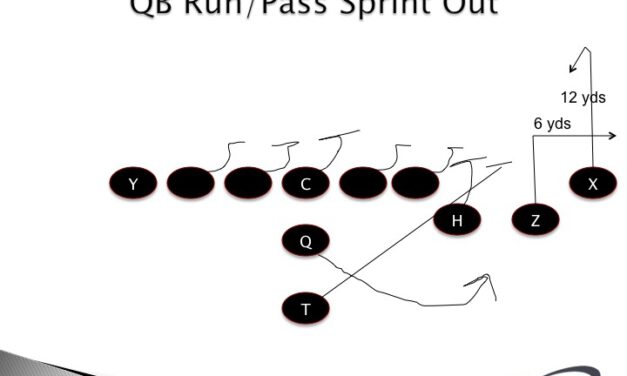
Use Play Action Schemes:Play action passes should be a “….big….” thought for 3rd and Short (1 to 2 yards) offense. The reason for this is that so many defenses are run stop oriented on 3rd and Short yardage situations that play action passes, with good run faking action, can greatly affect the play of 3rd and Short yardage defenses. Such 3rd and Short play action passing should, however, focus on quick play action. The offense has to keep in mind that 3rd down defenses are often in an attack mode, with penetrating stunt and blitz pressure a focal point of such an attack. Quick play action passing helps to effectively combat such 3rd and short defensive pressure. Remember, a quick and, possibly, short pass completion on a 3rd and Short situation will, probably, produce the amount of short yardage needed. Actually, this is also very true for quick, three step drop back pass action as it is for quick, play action passing.
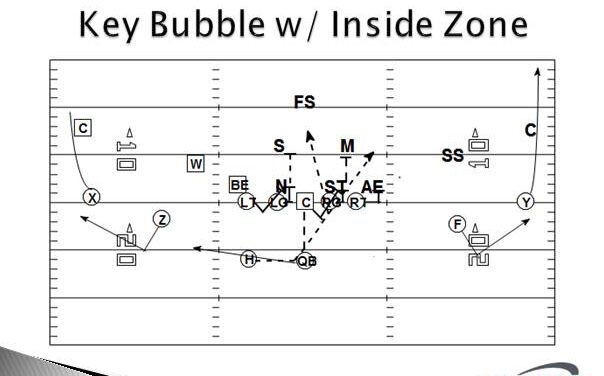
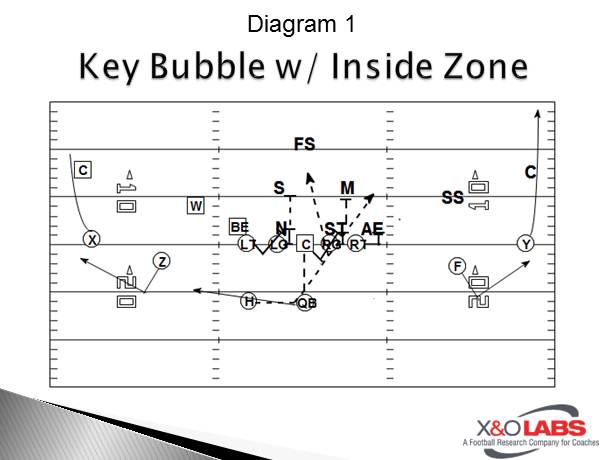
Create Space by Formation:Spread offensive formation usage has increasingly been put to good use in attempting to convert 3rd and short yardage situations. Such spread offenses can be as simple as utilizing 11 personnel, 2×2, balanced formation to isolate on an outside linebacker or nickel type defender.
Option Football Out of Spread Looks: The use of double and triple option run action from a spread offensive formation is also a very effective means of converting 3rd down yardage situation needs. A key thought about Spread offense usage is that spread formations spread out a defensive front. Defensive gap control, a positive factor for defenses when the offenses pack in its personnel with extra, BIG, tight ends and fullbacks, is now spread out to a much greater degree. A linebacker can, suddenly, find himself responsible for covering four to five yards of open space instead of a tightened, eighteen-inch gap. Add to this concept the fact that the defense may be faced with run option play assignments where the defenders are placed in far more vulnerable situations. Add to that a quick, nifty quarterback run threat and Spread run option offense is all the more threatening to a 3rd and Short defense.


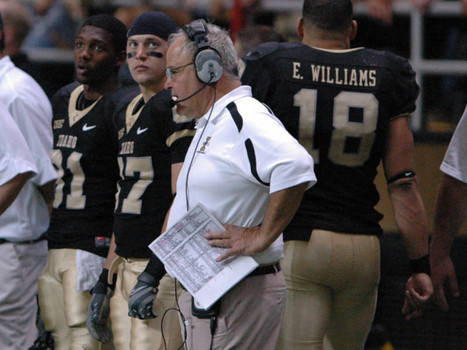
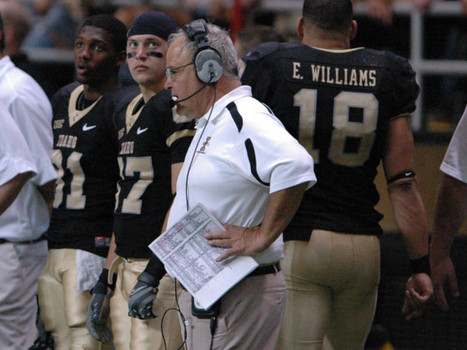
 If you believe that 3rd down offense is one of the most critical game situations your offense will face during the course of a game, then your offense must be fully made to understand the importance of this thinking. The thinking strongly goes along with the belief that you get what you emphasize. When we game plan, we start our game planning with the idea of starting with, what we believe, are the three most important facets of offensive play…..Base offense, Red Zone offense (which includes Goal Line offense) and 3rd down offense. We practice our 3rd down offense on Tuesdays, the first of our two heavy practice days (for a Saturday game). A major reason that we practice 3rd down offense on Tuesday is so that we will have two heavy practice days to practice against the blitz. Even if an opposing team’s defense is not a heavy blitz team, we must be sure that we are definitely ready to pick-up whatever blitzes we feel our opponents have shown. This goes along with a firm belief that you must be able to beat the blitz to win.
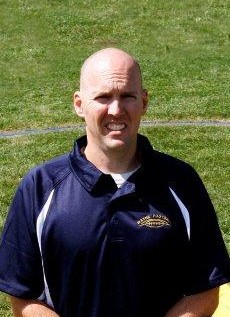
 Editor’s Note: Coach Marean has been with the Wayne Central High School Football Program (NY-Section 5) since the program started its first Varsity season in school history in 1998. Since taking over the football program in 2004, Coach Marean and his staff have made Sectionals 6 of the 9 years. He was named Coach of the Year by the league and also received the Finger Lakes Officials Coach of the Year Award in 2010. In 2011 they followed up with another League Championship and again he received the Coach of the Year Award by the League. In 2012 he was named to the Eddie Meath All Star East Coaching staff, of which they won with a dramatic field goal by one of his Wayne players. Coach Marean’s coaching record is 29-36 League (31-46 overall). Since implementing this new off-season point system, the past three seasons he has a record of 16-5 League (19-7 overall). Coach Marean resides in Hilton with his Wife Jennifer and two children, Andrew (8) and Megan (6). He currently is a High School Physical Education Teacher at Wayne High School.
 Teaching your corners to read through the 3-step is a must, especially as the high school passing game gets better each season. I’ll start by asking this question: Do you want your corner to be able to react to the QB’s release on the 3-step drop and be able to tackle the hitch as it’s caught or even break it up? I know your answer would be “yes.” You can’t take away everything, but if you could stop it in its tracks you would be happy, right? As you work your coverages according to your game plan you know you’ll complete a hitch or a slant but if you can tackle it or maybe take it away completely, that could change your opponent’s thought process! If you teach your corners to read through the 3-step drop you will be more confident to leave your best corner alone on the backside of trips. You will also be more confident in taking away the 3-step drop when you are not in a Two-deep or in press coverage.
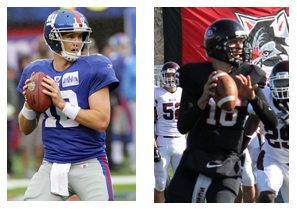 The proper carriage sets the foundation for your throwing motion. A correct and consistent carriage will provide your QB the initial environment needed to produce a repeatable arm circle. Right handed QBs should carriage the ball comfortably on their right peck with elbows relaxed and pointed toward the ground. You do not want the ball too close to the body, nor extended too far from the chest. A ball held too close to the chest will impede the initiation of the throwing motion (i.e. Check Point #2 Short Circle). Holding the ball too far away from the chest will cause balance issues and tend to draw your QB’s upper body toward their toes. Upper body posture is very important to the carriage, throughout the drop back and any step-ups or resets, I would like to see consistent carriage and upper body posture. I feel this provides a consistent platform to trigger the throwing motion. Below the waist, I like to see an athletic knee bend and active feet. I really like the analogy I heard once of a duck gliding across the pond. Looking at his torso you would never guess how hard his legs were working to keep him moving forward. That is what I am looking for.